Viewing chapter Acoustic Space (48 quotes)
“Don’t paint the object. Paint the space around the object.” John Constable (Painter, 1776-1837)
Quoted in McLuhan’s proposal for the book Through the Vanishing Point, with Harley Parker (published by Harper and Row, 1968)
Year: 1968
Chapter:
Acoustic Space
“When I walk down Eighth Avenue, man, I don’t see downtown, I see rhythms.”
Cab Calloway (Jazz musician, 1907-1994)
(Oft-cited line by McLuhan in classes and speeches)
Chapter:
Acoustic Space
“With the sense of sight, the idea communicates the emotion, whereas, with sound, the emotion communicates the idea, which is more direct and therefore more powerful.”
Alfred North Whitehead
(Oft-cited by McLuhan)
(Oft-cited by McLuhan)
Chapter:
Acoustic Space
Acoustic space is like the relationship of mother and child, which is audile- tactile, sound and touch.
Marshall McLuhan
“Technology and the Human Dimension”: Marshall McLuhan with Louis Forsdale (1978) in Marshall McLuhan: The Man and His Message (1989), p 17
Year: 1978
What silence is to acoustic space darkness is to visual space.
“An Historical Approach to the Media of Communication”, excerpts from manuscript of lecture given by Marshall McLuhan, July 25,(1955), p 2, also portions reprinted as “A Historical Approach to the Media” In Teachers College Record, Vol. 57, Issue 2, November (1955), p 1
Year: 1955
Chapter:
Space
We say ‘the night shall be filled with music,’ just as the air is filled with fragrance, in both, locality is irrelevant. No one worries about where a loudspeaker is located; it can be any place that permits good listening. The concert-goer may even close his eyes to avoid distraction.
“Acoustic Space”, In Explorations 4, (1955), p 17
Year: 1955
[W]hen FDR mastered the microphone, as a political instrument, he found it important, if not necessary, to pit his mike against the press, the oral against the written.
“Why the CBC Must Be Dull,”, in Saturday Night, February 16th, (1957), p 14
Year: 1957
Chapter:
Eye vs Ear
A bell is to auditory space what a polished surface is to a visual space - a mirror. ALP is river mirror of HCE the mountain. It is he for whom the belles toil.
“Television Murders Telephony,” in Explorations 8, October (1957), unnumbered page “section 23”, Issue later reprinted as Verbi-Voco-Visual, (1967); no pagination in the original or the reprint.
Year: 1957
We suppress or ignore much of the world as visually given in order to locate and identify objects in three dimensions. It is the objects which compel our attention and orient our behavior; space becomes merely that which must be traversed in getting to or from them.
“Acoustic Space” (1960), in Media Research (1997), p 39
Year: 1960
Auditory space has no point of favored focus. It's a sphere without fixed boundaries, space made by the thing itself, not space containing the thing. It is not pictorial space, boxed in, but dynamic, always in flux, creating its own dimensions moment to moment. It has no fixed boundaries; it is indifferent to background. The eye focuses, pinpoints; the ear, however, favors sound from any direction. We hear equally well from right or left, front or back, above or below. If we lie down, it makes no difference, whereas in visual space the entire spectacle is altered. We can shut out the visual field by simply closing our eyes, but we are always triggered to respond to sound.
"Acoustic Space" with Edmund Carpenter, in Explorations in Communication (1960), p 67
Year: 1960
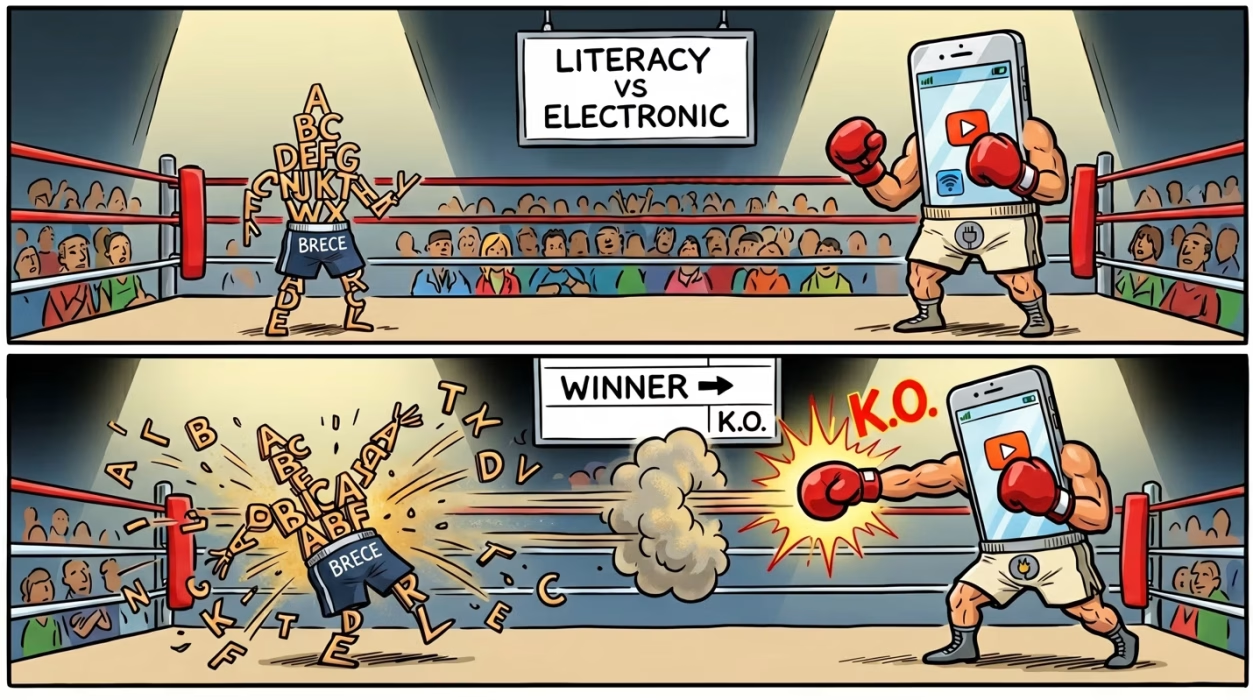
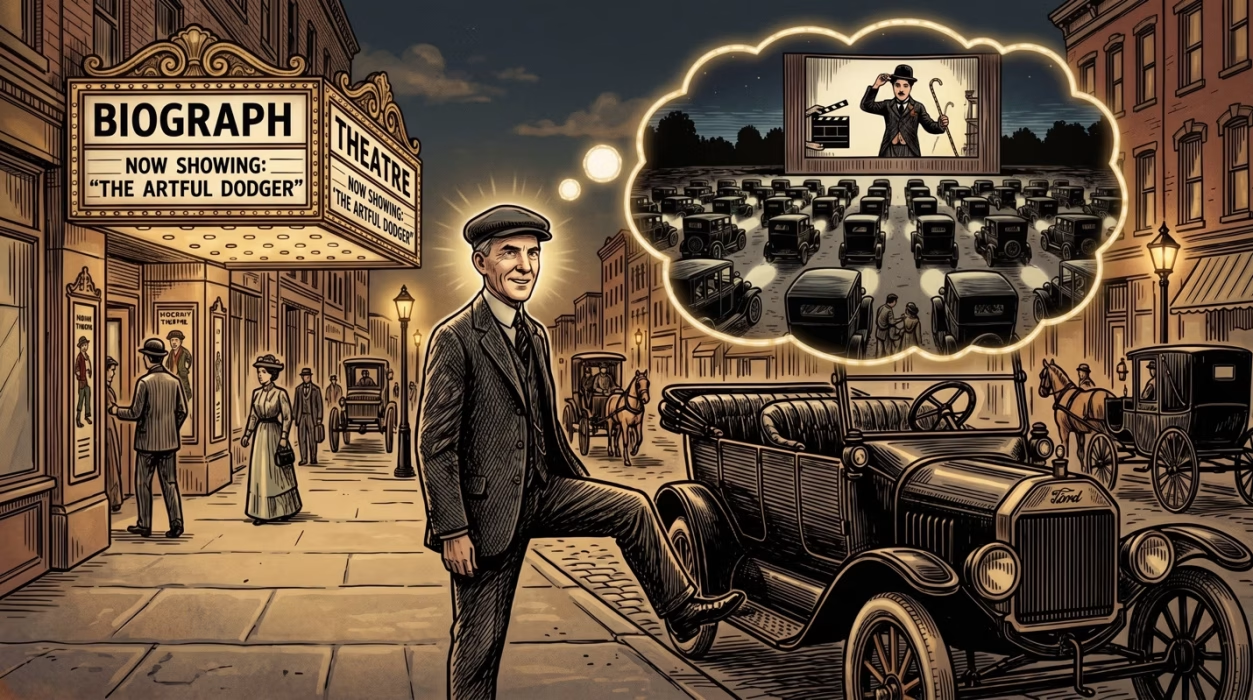

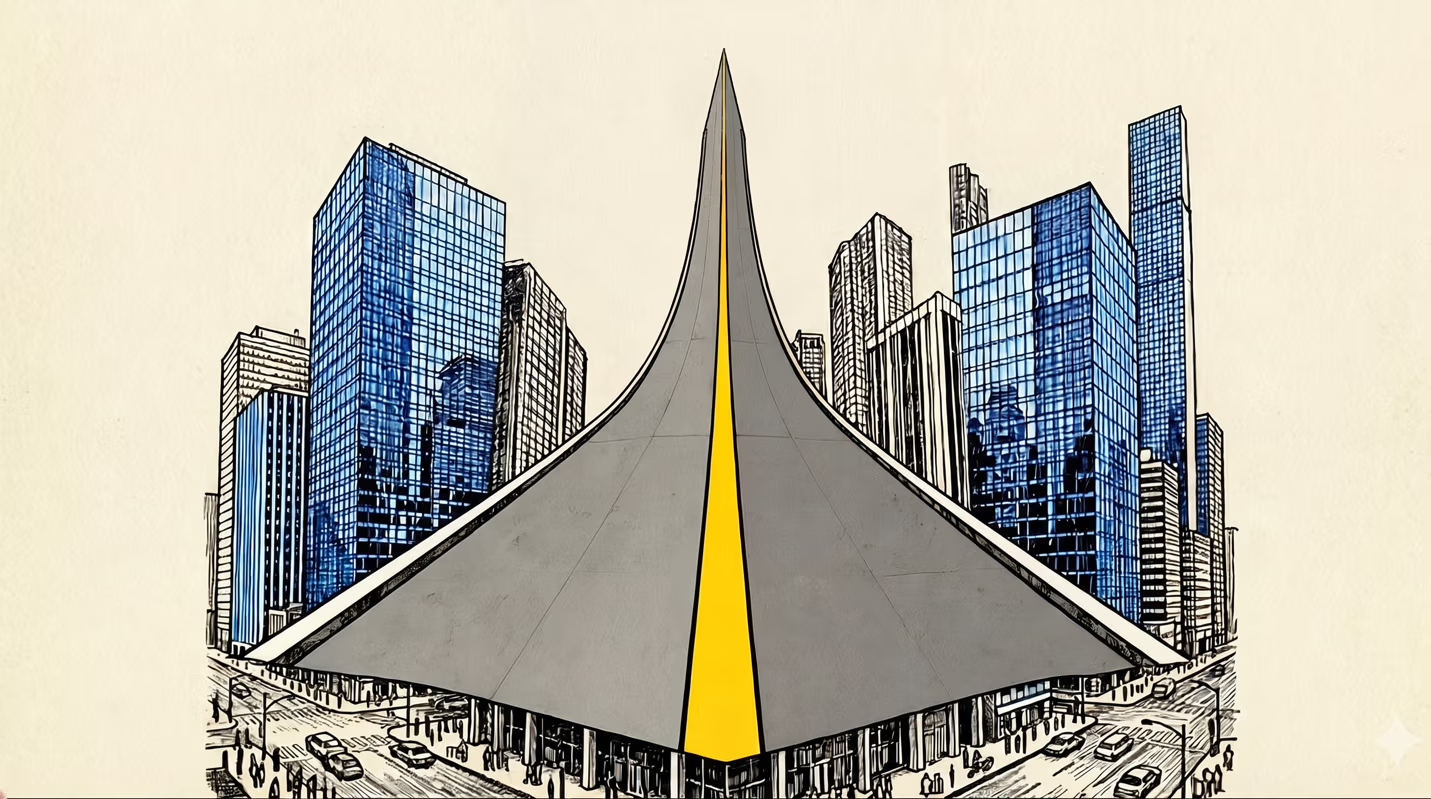
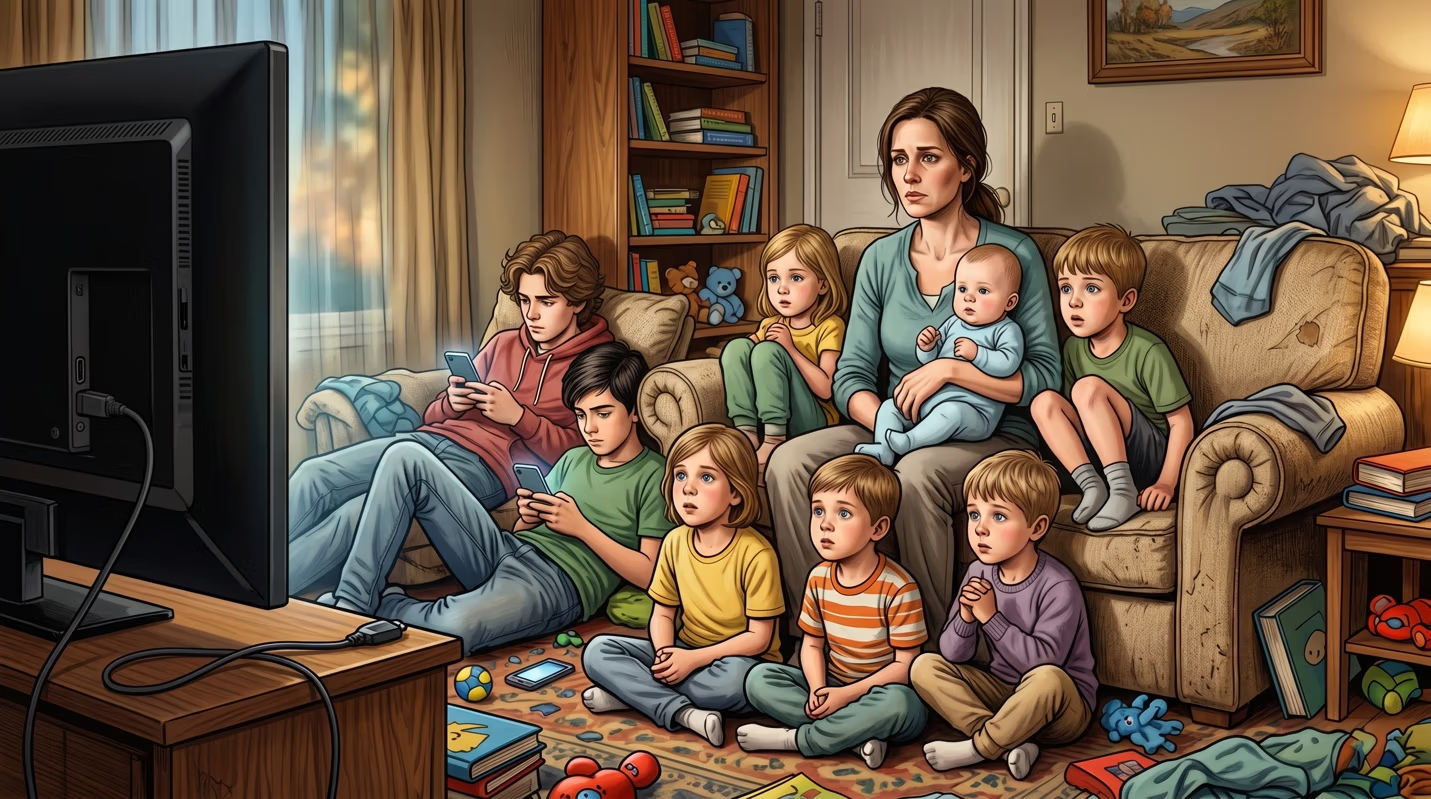

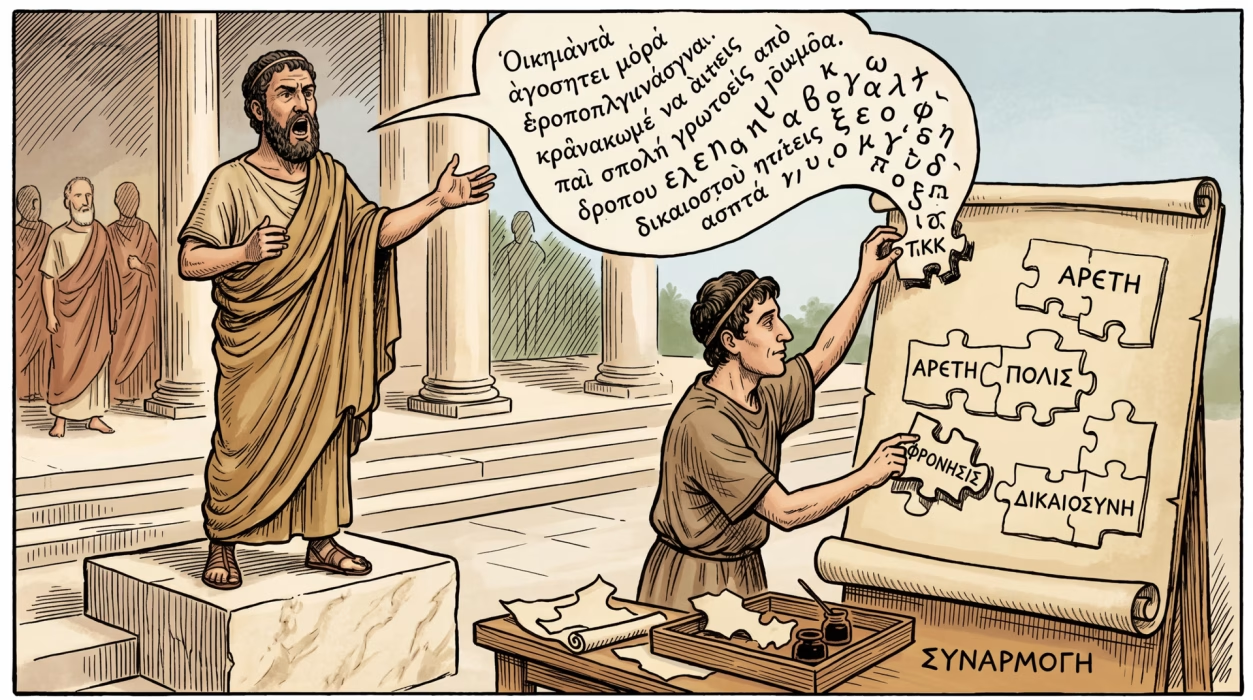

The painter learns how to adjust relations among things to release new perception, and the chemist and physicist learn how other relations release other kinds of power. Less and less, in the electric age, can we find any good reason for imposing the same set of relations on every kind of object or group of objects. Yet in the ancient world the only means of achieving power was getting a thousand slaves to act as one man. During the Middle Ages the communal clock extended by the bell permitted high coordination of the energies of small communities. In the Renaissance the clock combined with the uniform respectability of the new typography to extend the power of social organization almost to a national scale.
Understanding Media (1964), MIT/Routledge edition, p148
Year: 1964
Chapter:
Today’s Transition
…auditory structure is not composed of discrete components but of inter-penetrating components, as in musical forms. That is, perhaps, why auditory structures challenge rational awareness of causes, whereas visual structure yield perspectives, points of view, and systems of knowledge.
“Romanticism Reviewed” Review of Romantic Image, by Frank Kermode, in Renascence, Vol. 12, No. 4, Summer 1960, p 207
Year: 1960
…auditory space is a total field of simultaneous relations in which ‘change’ has as little meaning and appeal as it had for the mind of Shakespeare or the heart of Cervantes.
The Gutenberg Galaxy: The Making of Typographic Man (1962), p 30
Year: 1962
Terror is the normal state of any oral society, for in it everything affects everything all the time.
The Gutenberg Galaxy: The Making of Typographic Man (1962), p 32
Year: 1962
We are no longer prepared to encounter radio and TV in our literate milieu. . . Above all, their tribal mode gave them [indigenous peoples] easy access to the new nonvisual world of subatomic physics, in which long-literate and long-industrialized societies are decidedly handicapped.
Understanding Media, (1964), MIT/Routledge edition p 297
Year: 1964
Men in the older oral societies of middle Europe are better able to conceive the nonvisual velocities and relations of the subatomic world.
Understanding Media, MIT/Routledge edition (1964), pp 341-342
Year: 1964
The world of the flat iconic image… is a much better guide to the world of sound than the three-dimensional and pictorial art.
“Cybernation and Culture” (1966), in Understanding Me (2003), p 97
Year: 1966
…[in acoustic space] You’re in a world all by yourself. The frug and watusi [60’s dances] are territorialities.
“Understanding Canada and Sundry other matters: Marshall McLuhan “interview in Mademoiselle Magazine, January (1967), p 127
Year: 1967
But you cannot visualize auditory space, that is: a total field of simultaneous relations, without center or margin.
“The Hot and Cool Interview with Gerald Stearn” , in McLuhan: Hot & Cool: A Primer For The Understanding Of & A Critical Symposium With A Rebuttal By McLuhan ,(1967), p 268 -269, reprinted in Marshall McLuhan Essays Media Research : Technology Art Communication, (1997), p 54
Year: 1967
Until writing was invented, men lived in acoustic space: boundless, directionless, horizonless, in the dark of the mind, in the world of emotion, by primordial intuition, by terror. Speech is a social chart of this bog.
The Medium Is the Massage,(1967), p 48
Year: 1967
We simply are not equipped with earlids. Where a visual space is an organized continuum of uniformed connected kind, the ear world is a world of simultaneous relationships.
The Medium Is the Massage, (1967), p 112
Year: 1967
Sound, in this new world of dance and song, is not for listening, it’s for making.
The Medium Is the Message,” TV interview with Fletcher Markle on CBC’s “Telescope 67,” (1967), transcript, p 3
Year: 1967
Corbusier after careful studies discovered that the right place to put any form of sculpture was where you would stand, whether indoors or out of doors, to be heard. Insisting that sculptor is essentially an auditory, resonating, form that fills and makes its own space. The “archer” statue by Henry Moore is not representational, it´s participational. Many people are offended by this kind of thing because they can't classify it, they can't fit it into any little niche or category. And this is all one of its principal characteristics: it compels the viewer to make his own sculpture as he looks at it. It forces the spectator to become co-maker with the sculptor. You have to get into the act of making, not of classifying.
The Medium Is the Message,” TV interview with Fletcher Markle on CBC “Telescope 67,” (1967), p 3
Year: 1967
Chapter:
Sculpture, Sculptural
I'm suggesting that the very components that make for a divided consciousness also can, with a certain encouragement, become the means of an inclusive consciousness such as Bacon took for granted in his own case.
“The Marfleet Lectures” , March 16-17 (1967), reprinted in Understanding Me (2003), p 125
Year: 1967
Chapter:
Consciousness
The man who lives in an aural world lives at the center of a communications sphere, and he is bombarded with sensory data from all sides simultaneously.
Through the Vanishing Point with Harley Parker (1968), p 6
Year: 1968
Darkness is to space what silence is to sound, the interval.
Through the Vanishing Point with Harley Parker (1968), p 97
Year: 1968
If visual space is greatly dependent on our habits of seeing, acoustic space is entirely structured by our hearing. Psychologists tell us that acoustic space is spherical because we hear simultaneously from all directions.
Counterblast, (1969), p 112
Year: 1969
The ear creates acoustic space, whose centre is everywhere and whose margins are nowhere. This has often been mistaken for God by tribal societies as well as by neo-Platonists and the Oriental world.
Letter to Jacques Maritain, May 28, 1969 [Not in book of Letters]
Year: 1969
Acoustic space is totally discontinuous, like touch. It is a sphere without centers or margins.
Culture Is Our Business, (1970), p 110
Year: 1970
The Iroquois in high steel have no qualms since they don’t have the habit of visual perspective. If you never think to look down, a twelve-inch girder high above the street is as secure as a sidewalk.
Culture Is Our Business, (1970), p 150
Year: 1970
Cubism is an art form in which we are given, simultaneously, the underneath, the outside, the top and the bottom of an object. To have all sides simultaneously is not visual. It is acoustic and tactile. So abstract art is an art in which they have pulled out the visual connections. And that began about 1900.
“Living in an Acoustic World,” Public Lecture at the University of South Florida ,(1970), Marshall McLuhan Speaks, transcript, p 5
Year: 1970
There is no connection in auditory space, or tactile space; to the sense of touch there are no connections, there are only resonances – beats, rhythms, closures. And to smell, and all the other senses, kinetic movement and so on, there is no continuity, no connection – only discontinuity.
“Speaking Freely,” interview by Edwin Newman, WNBC, December 27, (1970), transcript, p 6
Year: 1970
As you know from many sources (e.g. Linus Pauling's The Nature of the Chemical Bond), there are no connections in matter, only resonant intervals. Such is the nature of touch. It is like the space between the wheel and the axle.
Letter to Frank Kermode, March 4, 1971, in Letters of Marshall McLuhan (1987), p 426
Year: 1971
Nils Bohr's complementarity that represents "atomic" interactions as both "acoustic" waves and "visual" particles is exemplified by every process involving the continuous interplay of simultaneous actions.
“The Argument: Causality in the Electric World”, in Technology and Culture, Vol.14, No. 1, January (1973),p 11, reprinted in McLuhan Unbound # 3, (2005), p 19
Year: 1973
TELEVISION, in sensorial terms, takes a large leap towards reassembling all the elements of interpersonal discourse which were split apart by writing and by all the intervening artificial media. For language itself is an acoustic medium which incorporates gesture and all the various combinations of sensuous experience, in a single medium of sound.
“The Post-Literate Man”, in Cycle 7: Essays, Short Stories, Poems for Freshman English, Science Research Associates (1973), p 230
Year: 1973
There seems to be some relation between right-side-up and literacy.
“Reading and the Future of Private Identity”, for International Reading Association, May 4th, (1973), reprinted in McLuhan Studies, Vol 1, (1996)
Year: 1973
Chapter:
Space
In the instantaneous world of information movement we live once more in Echoland. Everything bounces off everything. The whole world resonates.
“Medium Meaning Message” with Barrington Nevitt, Communications Journal, Vol 1, No 1 (1973), p 31
Year: 1973
Visual space, on the other hand, is continuous, connected, homogeneous and static. It is the only sensory mode having these characteristics. Visual space is infinitely divisible, whereas all the other senses have spaces that are quite indivisible. This is probably why the electric space of simultaneous information is transforming our entire outlook. That is, we are now using our eye as an ear, and vice-versa.
Letter to Gerald Mason Feigen, January 23, (1974), in Letters of Marshall McLuhan, (1987), p 489
Year: 1974
Chapter:
Visual Space
In acoustic space, the center is everywhere, the margin nowhere. Is not gravity of this nature?
Letter to Gerald Mason Feigen, January 23, (1974), in Letters of Marshall McLuhan, (1987), p 489
Year: 1974
The visual space of "one-thing-at-a-time or "a place for everything and everything in its place," flips to acoustic space at electric speeds, just as the controls on the old Spitfire reversed when it went through the sound barrier.
“Medium Meaning Message” (1974), p 32
Year: 1974
"Process" theology and the speculative theology of the descendants of Kant and Hegel is unconsciously in the grip of the merely acoustic dimension. This is the world of involvement par excellence. It is the anti-Graeco-Roman form of the pre-Socratic world of hoi barbaroi. The Third World is the world of the barbarians, of course. I do not pretend to perceive a providential plan or pattern in these matters, but I cannot see any reason for withholding intelligibility from the acoustic domain created by electric simultaneity. Have you, yourself, discovered any evidence of understanding these matters in their unique and antithetic structuralist terms? I have yet to meet a philosopher who understood what had happened to Kant and Hegal in their flight into the acoustic during their revulsion from the visual determinism of Locke and Hume.
Letter to John Mole, June 29, 1974, in Letters of Marshall McLuhan (1987), p 490
Year: 1974
GOVERNOR GERRY BROWN: How do you fit into this?
MARSHALL MCLUHAN: You don’t have to fit it. You tune it. Literally. Fitting is left hemisphere. Turning is right hemisphere.
“The Medium Brings His Message to the Governor,” in Los Angeles Times, March 12, (1978), p F1
Year: 1978
[Of cubist art]
Or you felt it. The inside and the outside of the same object.
“MM in Conversation with Harley Parker”, in Innis Herald, (1978), p 8
Year: 1978
The Eskimo can draw underneath the table just as readily as on top. It makes no difference if he can see what he is doing.
“MM in Conversation with Harley Parker”, in Innis Herald, (1978), p 8
Year: 1978
The space of early Greek cosmology was structured by logos – resonant utterance or word.
Laws of Media: The New Science with Eric McLuhan, (1988), p 35
Year: 1988
To say that a body or its gravitational field “bends in space” in its vicinity is to discuss visual space in acoustic terms.
Laws of Media: The New Science with Eric McLuhan, (1988), p 40
Year: 1988
Chapter:
Science
Relativity theory forced the abandonment, in principle, of absolute space and absolute time.
Laws of Media: The New Science with Eric McLuhan, (1988), p 43
Year: 1988
Chapter:
Science
The new electric environment of simultaneous and diversified information creates acoustic man. He is surrounded by sound - from behind, from the side, from above. His environment is made up of information in all kinds of simultaneous forms, and he puts on this electrical environment as we put on our clothes, or as the fish puts on water.
“Technology and the Human Dimension”: Marshall McLuhan with Louis Forsdale, in Marshall McLuhan: The Man and His Message (1989), p 15
Year: 1989
Acoustic space is created by our ability to hear from all directions at once. Electric information arrives from all quarters at once. Thus, in effect, acoustic environments were created by the telegraph and began to show up in the press as mosaics of juxtaposed and discontinuous items all under one dateline. Acoustic space is all touch and interplay, all resonance and sympathy. Acoustic space is like the relationship of mother and child, which is audile-tactile, sound and touch.
“Technology and the Human Dimension”: Marshall McLuhan with Louis Forsdale, in Marshall McLuhan: The Man and His Message (1989), p 17
Year: 1989
A Passage to India by E. M . Forster is a dramatic study of the inability of oral and intuitive oriental culture to meet with the rational, visual European patterns of experience. " Rational," of course, has for the West long meant "uniform and continuous and sequential." In other words, we have confused reason with literacy, and rationalism with a single technology. Thus in the electric age man seems to the conventional West to become irrational. In Forster's novel the moment of truth and dislocation from the typographic trance of the West comes in the Marabar Caves. Adela Quested's reasoning powers cannot cope with the total inclusive field of resonance that is India. After the Caves: " Life went on as usual, but had no consequences, that is to say, sounds did not echo nor thought develop. Everything seemed cut off at its root and therefore infected with illusion."
Understanding Media (1964), MIT/Routledge edition, p 15
Year: 1964
Chapters:
Between Two Ages | West and East