Viewing chapter Advice (48 quotes)
It is a pleasure to give advice, humiliating to need it, and normal to ignore it.
Anonymous
Chapter:
Advice
If we knew what we were doing, we wouldn’t do it
Marshall McLuhan
“Technology Kills Democracy, McLuhan Warns Exchangers,” University of Toronto Varsity (student newspaper), Vol LXXXII, No. 26, November 19, 1962, p 1
Year: 1962
It’s vital to adopt a posture of arrogant superiority; Instead of scurrying into a corner and wailing about what media are doing to us, one should charge straight ahead and kick them in the electrodes.
“Playboy Interview: Marshall McLuhan: A Candid Conversation with the High Priest of Popcult and Metaphysician of Media”. By Eric Norden. Playboy Magazine, March (1969), p 158, reprinted in The Essential McLuhan, (1995), p 267
Year: 1969
There are means of sustaining civilization by the very same media which have dissolved the older media and technologies.
NAEB Report on Understanding New Media, 1960, p 8
Year: 1960
Chapter:
Mastering Technology
In short, taking an intelligent interest in everyday things at once enlarges the area of attention and reveals the meaning for us all.
“Baseball Is Culture” (1952), p 4
Year: 1952
It seems to me that the great advantage in understanding the operational dynamics of various media is to quiet them down, not exploit them.
The Hot and Cool Interview (1967), in Media Research (1997), p 77
Year: 1967
Chapter:
Mastering Technology
It is wise to withhold all value judgments when studying these media matters, since their effects are not capable of being isolated.
Understanding Media (1964), MIT/Routledge edition, p 315
Year: 1964
Chapters:
Media Study | Values & Value Judgments
It is too late to be frightened or disgusted, to greet the unseen with a sneer. Ordinary life-work demands that we harness and subordinate the media to human ends.
“Media Log” (1954), in the original self-publised manifesto, Counterblast (unpaginated)
Year: 1954
Chapter:
Mastering Technology
This strange gap between the specialist, visual world and the integral, auditory world needs to be better understood today above all, for it contains the key to an understanding of what automation and cybernetics imply.
“Cybernation and Culture” (1966), pp 97-98
Year: 1966
Chapters:
Balance | Between Two Ages | Computer | Mastering Technology | Problem Solving | Specialism
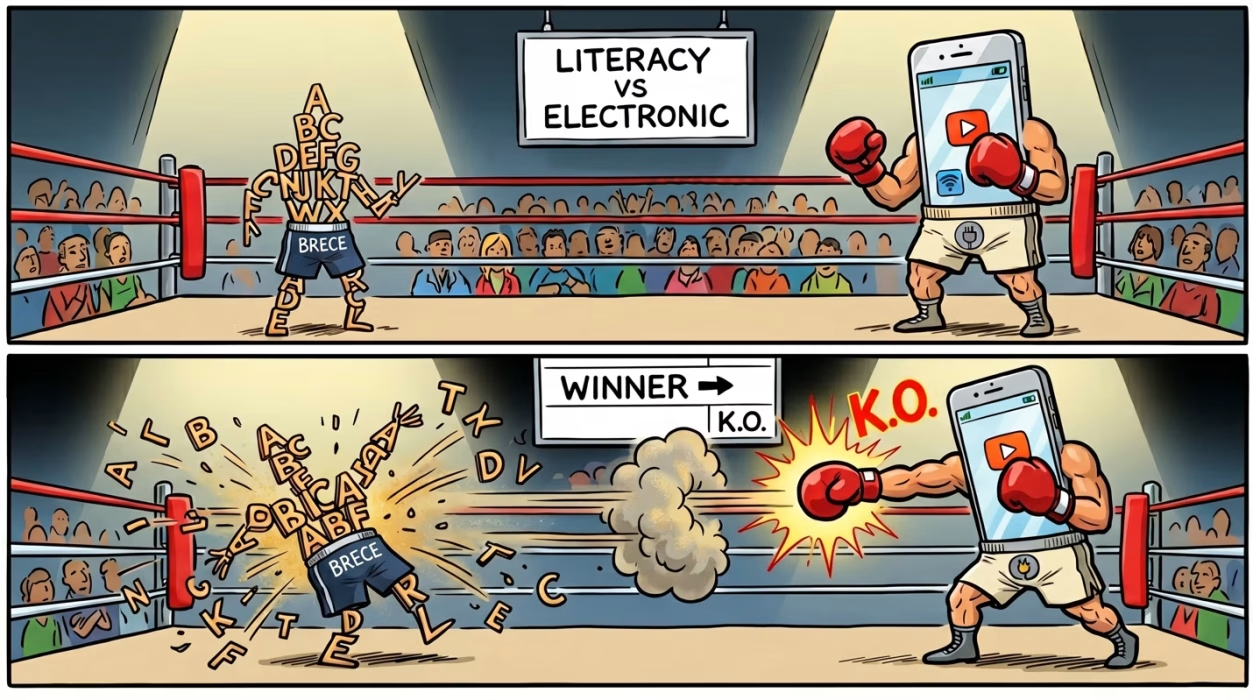




The printed book is thus the only available means of developing habits of private initiative and private goals and objectives in the electric age.
“Do Books Matter?” (1973), p 35
Year: 1973
Chapter:
Media Education
All of my recommendations, therefore, can be reduced to this one: study the modes of the media, in order to hoick all assumptions out of the subliminal, non-verbal realm for scrutiny and for prediction and control of human purposes. Such a program can most readily be instituted today at the level of secondary education.
Recommendations, in NAEB Report on Understanding New Media, June, (1960) p 3
Year: 1960
If we maintain lively dialogue with, and among, the technologies, we can enlist them on the side of traditional values instead of watching those values disappear while we play the helpless bystanders.
Letter to the Editor of Life Magazine (1966) in Letters of Marshall McLuhan (1987) p 334
Year: 1966
What I am asking is that he [the user] set up a dialogue with these media, that he fight back, that you should not sit there watching TV, that you should have a real dialogue with it and explain to it what it is, and that you are not going to be taken in by it one little bit….This has nothing to do with programming. This has to do with this coming at you [in] “Lord of the Flies” [manner].
TV Interview with Eric F. Goldman, in “The Open Mind, WNBC TV”, 1966. Transcript, p 19
Year: 1966
Chapters:
Dialogue | Mastering Technology
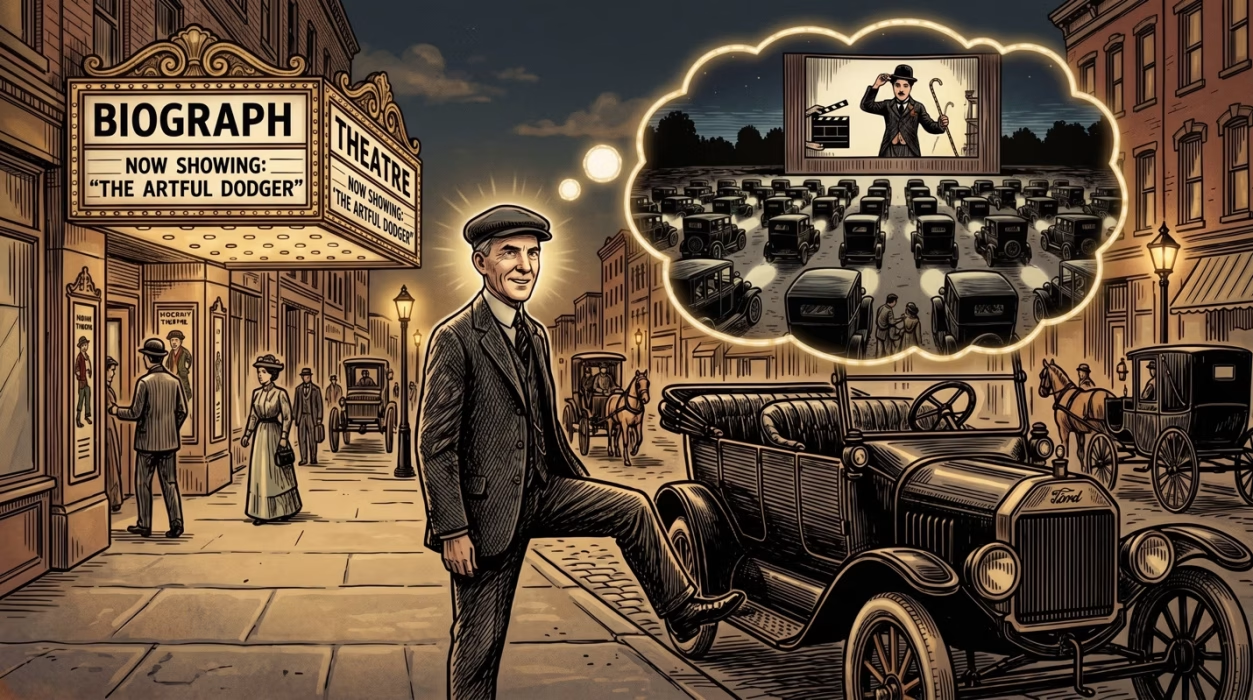
In the same way, the computer is not a new mechanical gadget for pepping up the old mechanical environment. The computer is not mechanical at all. Electric circuitry is an organic thing, an extension of our nervous system. Our natural impulse is to ignore the environmental aspects and to try to fit it into the old situation in the style of "horseless carriage" and "wireless." But our natural response is quite helpless and irrelevant, as the history of technology testifies.
“The Emperor’s Old Clothes” (1966), in McLuhan Unbound (2005), p 9
Year: 1966
Chapter:
Law of Implementation
Leasing our eyes and ears and nerves to commercial interests is like handing over the common speech to a private corporation, or like giving the earth's atmosphere to a company as a monopoly. Something like this has already happened with outer space, for the same reasons that we have leased our central nervous systems to various corporations. As long as we adopt the Narcissus attitude of regarding the extensions of our own bodies as really out there and really independent of us, we will meet all technological challenges with the same sort of banana-skin pirouette and collapse.
Understanding Media (1964), MIT/Routledge edition, p 68
Year: 1964
We must maximize rather than minimize the various features of our new media. It’s easy now to see that they are not mere vehicles for already achieved experience and insight. We have moved far beyond mechanization. Let us not lose ourselves by supposing that we have merely to contend with new forms of mechanization. Ratio and TV aren’t new ways of handling manuscript and book culture. The motor-car wasn’t a substitute for hte horse. It did what the horse could never do. Radio and TV aren’t audio-visual aids to enhance or to popularize previous forms of experience. They are new languages. We must first master and then teadch these new languages in all their minute particularity and riches.
“The Post-Literate Man”, 1973, Cycles 7, p 231
Year: 1973
[T]he designing of new products... requires a knowledge on the part of the designer of all the effects that that particular design or image is going to have on the whole public who are subjected to it.
“The Password Is Involvement”, 1967, p 20
Year: 1967
Chapter:
Effect
Today with electronics we have discovered that we live in a global village, and the job is to create a global city, as center for the village margins. The parameters of this task are by no means positional. With electronics any marginal area can become center, and marginal experiences can be had at any center. Perhaps the city needed to coordinate and concert the distracted sense programs of our global village will have to be built by computers in the way in which a big airport has to coordinate multiple flights.
Letter to Jacqueline Tyrwhitt, December 23, 1960, Letters of Marshall McLuhan (1987), p 278
Year: 1960
Chapters:
Predictions | Present [The]
Education is ideally civil defense against media fall-out. Yet Western man has had, so far, no education or equipment for meeting any of the new media on their own terms.
Understanding Media (1984), MIT/Routledge, p 195
Year: 1984
Chapters:
Mastering Technology | Media Education
The familiar idea of “making the news” now yields to making the world itself. For the best part of a century we have been programming human consciousness with retrievals and replays of the tribal unconscious. The complementary of this process would seem to be the “natural” program for the period ahead: programming the unconscious with the recently achieved forms of consciousness. This procedure would evoke a new form of consciousness radically different from former consciousness. Everybody becomes a voluntary participant in creating diversity without loss of identity. Man is the content of the environment he creates, whether of “hardware” or software,” whether of consciousness of unconsciousness. There is therefore no technical alternative to “humanism” even though for many this would include the divine grace of the superhuman. INNOVATION IS OBSOLETE, SO IS OBSOLESCENCE, AS INFORMATION SPEED-UP TRANSFORMS MAN AND HIS WORLD INTO ART FORM. AFINN-AGAIN-ARRAY-SURRECTION!
Take Today with Barrington Nevitt (1972), p 297
Year: 1972
If we persist in a conventional approach to these developments our traditional culture will be swept aside as scholasticism was in the sixteenth century. Had the Schoolmen with their complex oral culture understood the Gutenberg technology, they could have created a new synthesis of written and oral education, instead of bowing out of the picture and allowing the merely visual page to take over the educational enterprise. The oral Schoolmen did not meet the new visual challenge of print, and the resulting expansion or explosion of Gutenberg technology was in many respects an impoverishment of the culture, as historians like Mumford are now beginning to explain.
Understanding Media, 1964, MIT/Routledge edition, p 71
Year: 1964
Chapters:
Anticipating Change | Technology
Control over change would seem to consist in moving not with it but ahead of it. Anticipation gives the power to deflect and control force. Thus we may feel like a man who has been hustled away from his favorite knothole in the ball park b y a frantic rout of fans eager to see the arrival of a movie star. We are no sooner in position to look at one kind of event than i t is obliterated b y another, just as our Western lives seem to native cultures to be one long series of preparations for living. But the favorite stance of literary man has long been " to view with alarm" or " to point with pride," while scrupulously ignoring what's going on.
Understanding Media, 1964, MIT/Routledge edition, p 199
Year: 1964
The programming of computers calls for levels of human awareness about media and ourselves such as we do not yet possess.
"The Care and Feeding of Communication Innovation", Conference on 8mm Sound Film and Education, Dinner Speech, November 8, 1961, Teachers College, Columbia University, published version, p 4
Year: 1961
The antithetic electric power of instant information that reverses social explosion into implosion, private enterprise into organization man, and expanding empires into common markets, has obtained as little recognition as the written word. The power of radio to retribalize mankind, its almost instant reversal of individualism into collectivism, Fascist or Marxist, has gone unnoticed. So extraordinary is this unawareness that it is what needs to be explained. The transforming power of media is easy to explain, but the ignoring of this power is not at all easy to explain. It goes without saying that the universal ignoring of the psychic action of technology bespeaks some inherent function, some essential numbing of consciousness such as occurs under stress and shock conditions.
Understanding Media, 1964, MIT/Routledge edition, p 304
Year: 1964
In order to think, you have to forget most of what you are experiencing in order to relate it to earlier things you know, otherwise you can’t infer anything from what you are seeing. So, at the speed of light, which is now the normal speed of most information, on TV, radio, telephone and so on – at the speed of light the need to forget becomes a form of nostalgia.
Maclean’s, March 7, 1977; quoted by William Toye in Letters of Marshall McLuhan (1987) p 177
Year: 1977
We can invent the remedies for both fortune and misfortune.
The Argument: Causality in the Electric World” (1973), in McLuhan Unbound (2017), p 30
Year: 1973
The only “Control” exercised over the new forces would seem to consist of a fascinated withdrawal of perception from the new constitutive forces together with a panicky concern for the receding configurations. Such is the significance of the Goldwater mood and the rhetoric of Ayn Rand.
“Guaranteed Income in the Electric Age” (1975), p 68
Year: 1975
Attacking things head-on is like the horse chasing up the track at the locomotives. It isn’t really a serious strategy of encounter with reality.
Diebold Conversation (1966), published transcript, p 6
Year: 1966
All cultural situations are composed of an area of attention (figure) and a very much larger area of inattention (ground). The two are in a continual state of abrasive interplay, with an outline or boundary or interval between them that serves to define both simultaneously. For example, at a lecture attention will shift from the speaker's words to his gestures, to the hum of the lighting or street sounds, or to the feel of the chair or a memory or association or smell, each new figure alternately displacing the others into ground.
The Global Village with Bruce Powers, 1989, p 5
Year: 1989
Chapters:
Body Language | Figure/Ground
We now can foresee the consequences of any kind of situation so fully that it is no longer necessary to have the experience at all. We are inclined to regard such experience as merely a trap for the unwary, or for somnambulists. I would suggest that the power to foresee and to forestall in this way is inevitable in the electronic age. At the present phase of the electronic age we are merely percussed by the latest outering of our senses in the TV image – to wit our sense of touch.
“The Electronic Age - The Age of Implosion”, 1962, reprinted in MM: Essays Media Research (1997), p 38
Year: 1962
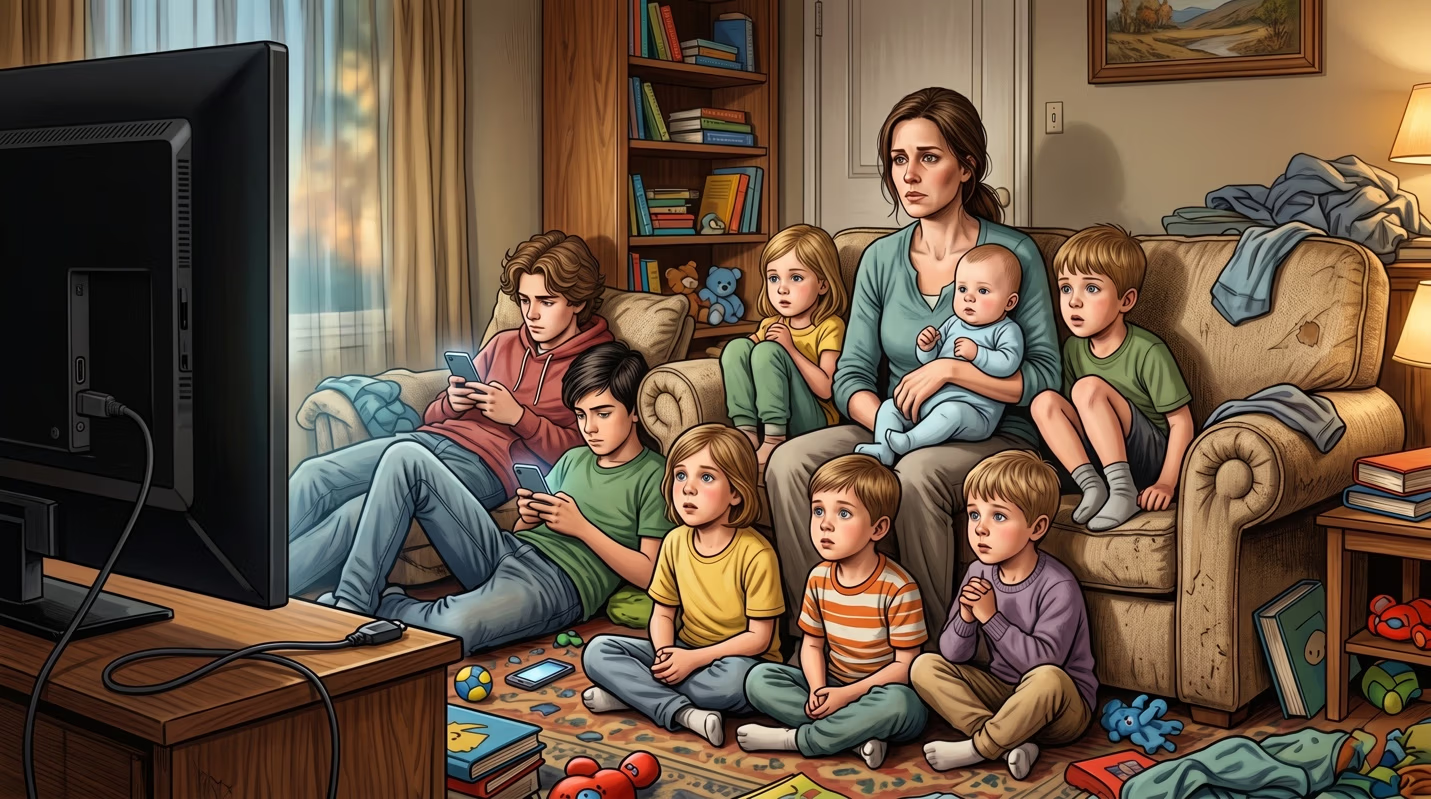
TV has a strange effect on the eye muscles. It tends to paralyze, or to hypnotize, the motor muscles of the eyes. So that the much television-viewing person tends to have a very poor ability to move his eyes across the printed word, or on the printed page. And he needs exercises to correct this. And the exercises need to be taken quite early while he's in his early years because otherwise they harden. But the ideal exercise for this purpose is the trampoline for loosening up the eye muscles.
Mike McManus TVO interview, 1977, transcript 15:54
Year: 1977
Chapter:
Television
I think we would do ourselves a considerable kindness if we closed down TV operations for a few years… It is destroying our entire political, educational, social, institutional life. TV will dissolve the entire fabric of society in a short time.
“Marshalling McLuhan”, in The Canadian Banker, Vol 66, No 2, March-April, (1969), p 4
Year: 1969
Chapter:
Anticipating Change
I think if there is a logic and a hopeful one that appears in this, it is the dispelling of all unconscious aspects of our lives altogether. That, in order to live with ourselves in such depth, in such instant feedback situations, we have to understand everything – so that our easygoing lolling about in the lap of the unconscious cannot endure, that we will have to take over the total human environment as an artifact. But it seems to be forced upon us, the need to become completely autonomous and aware of all the consequences of everything we’re doing before the consequences occur is where we’re heading.
“The Future of Man in the Electronic Age” (Interview with Frank Kermode), 1965, in “Marshall McLuhan Speaks,” transcript, 15:30
Year: 1965
Chapters:
He’s Hopeful | Mastering Technology
[We must] develop an awareness about print and the newest technologies of communication so that we can orchestrate them, minimize their mutual frustrations, and get the best out of each in the educational process.
“Alone in the Global Village,” Peterborough Examiner, March 22, 1967
Year: 1967
Chapters:
Mastering Technology | Media Study
O.K., throw the idea out. Don't explore my statements. Explore the situation. Statements are expendable. Don't keep on looking in the rear-view mirror and defending the status quo which is outmoded the moment it happens.
Weekend Magazine, March 18, 1967; quoted in Letters of Marshall McLuhan (1987) p 176
Year: 1967
Chapter:
Rear View Mirror
I propose a means of bridging this gap between the world of the genius and the child. It is this: instead of broadcasting our learning, let us advertise our problems; instead of giving the answers, let us give the questions. Twentieth century man has been called one who runs down the street shouting: “I have the answers. What are the questions?”
From an untitled, undated 4-page typescript in praise of ignorance (from the early 1970s), p 2
Year: 1970
Chapters:
Problem Solving | Questions He Asks
Knowledge removes all obstacles. Experience creates them. Perhaps we will find that in the pattern of the problems will be found the knowledge that is forever frustrated by hasty solutions. The fragmentariness of personal experience creates problems at an accelerating rate. Knowledge simply by-passes problems and allows them to wilt into insignificance. Points of view create confrontations and clashes, while knowledge generates love and charity that cover all faults and failings.
"Media -- And the Making of the Midwest," Chicagoland Magazine,1969, p 16
Year: 1969
Chapter:
Knowledge
The consequence of the image is (Hertz’s Law) the image of the consequences (the sense of our destiny?)
Dewline deck (1969)
Year: 1969
But the old values cannot be achieved by the old methods. And I do not mean that we should attempt to achieve the values of print culture by teaching print by film or television. The latter course is totally destructive of print values.
Letter to David Riesman (1960) in Lettters (1987), p 261
Year: 1960
For our problems, like our means and opportunities, are of a scope beyond those of any previous age.
“Symbolist Communication,” a review of A Reading of George Herbert by Rosemond Tuve in Thought, Autumn (1952), p 457
Year: 1952
Chapters:
He’s Doubtful and Hopeful | Problem Solving
Ours is the door to the positive powers of the human spirit in its natural creativity. This door opens on to psychic powers comparable to the physical powers made available via nuclear fission and fusion… Knowledge of the creative process in art, science, and cognition shows us either to the earthly paradise or to complete madness. It is to be either the top of Mount Purgatory or the abyss.
Catholic Humanism and Modern Letters” The McAuley Lectures: Christian Humanism in Letters, Saint Joseph College, West Hartford Connecticut, (1954), p 64, reprinted in The Medium and the Light (1999), p 160.
Year: 1954
The private psyche may be an artificial monster or the most precious discovery.
Liturgy And Media” in The Critic, Vol.31, No. 3, January-February (1973), p 21, reprinted in reprinted in The Medium and the Light: Reflections on Religion (1999), p 128
Year: 1973
Chapter:
McLuhanisms & Zingers
Liturgy on television affords every opportunity for full participation. It is possible to join one's intention to participate in the fullest extent, just as fully as in any church... Electric man has no ego and depends totally on close involvement with others. Similarly, electric liturgy would have no ego but a collective personality instead... The trouble with Christianity is that it has never had a theory of communication and a confrontation is fast developing between... the mystical body of the church and the electric environment.
"RC Church Should Accept Televised Liturgy as Valid Fulfilment of Sunday Mass: McLuhan," in The St. Catherine's Standard, Saturday, June 2, 1973
Year: 1973
It is critical vision alone which can mitigate the unimpeded operation of the automatic.
The Mechanical Bride, 1951, p 87
Year: 1951
Chapter:
McLuhanisms & Zingers
The future work of mankind is to achieve relevance.
Quoted in “The McLuhan Galaxy” by Ray Kritzwiser, Globe and Mail, January 4, 1964, p 9
Year: 1964
Chapter:
McLuhanisms & Zingers
All contemporary decision making confirms the habits of the past in reacting with a futile attempt to adjust. Reaction is the age-old attempt to adjust to the old, which is seen as “present” and “future.” At instant speeds all reaction and adjustment are inevitable, too late to be relevant. To keep up we must be far ahead.
Take Today with Barrington Nevitt, 1972, p 216
Year: 1972
Chapter:
Religion
If adjustment (economic, social, or personal) to information movement at electronic speeds is quite impossible, we can always change our models and metaphors of organization, and escape into sheer understanding.
“Effects of Improvements of Communication Media”, 1960, p 575
Year: 1960
Chapter:
Change
As we approach “instant” speeds of information, we have no choice but to anticipate the pattern of change itself.
Take Today with Barrington Nevitt, 1972, p 216
Year: 1972
Chapter:
Change
What is needed increasingly is a knowledge of effects before the effects take place. Many of them are taking us into a shadowy place where we do not wish to stagger.
Quoted in Tom Cooper’s Wisdom Weavers (2025)
Year: 2025
[His advice for speakers] Compress your aims into slogans
In conversation with William Kuhns in 1970
Year: 1970
Chapter:
McLuhanisms & Zingers