Viewing chapter Anxieties Caused By Change (19 quotes)
We have no precedent for this, no way of getting our bearings, nobody to tell us what's happening. We´re suddenly projected into a world where everything happens at once....
“The Marfleet Lectures”, March 16-17 1967, reprinted in Understanding Me (2003), p 129
Year: 1967
Chapter:
Electric, Electronic
Our “Age of Anxiety” is, in great part, the result of trying to do today’s job with yesterday’s tools—with yesterday’s concepts. With yesterday’s ideals.
The Medium Is the Massage (1967), pages 8-9
Year: 1967
Chapters:
Rear View Mirror | Today’s Transition
The reason we are so privileged yet so confused today is, from this point of view, that there are no historical or even archeological precedents for our state. If we are now beyond mechanization, we are also in a sense beyond history. We have stepped over all those familiar “lines of development” which we have so long accepted as historical and cultural guides.
Report to the Ford Foundation, 1955, quoted in W. Terrance Gordon’s MM: Escape Into Understanding, 1997, p 163
Year: 1955
The great speed-up of transactions creates a huge depression, or drop-out of human values. Radio did this in the 20’s and TV in the 60’s. When Henri Bergson was asked how could you tell if the speed of all things was doubled, he answered: “I could tell by the impoverishment of my consciousness.” What applies to the complex system of human awareness equally concerns the corporate life. The overall speed of transactions creates vast depression of body and spirit alike.
“Where It’s At, Where It’s Going,” unpublished 1969 essay, typescript, p 1
Year: 1969
[Of the currents of change we will be riding in the electronic era] It’s going to be a terrifying experience. It’ll be the first time some of us are conscious. It’ll be like a wild mescaline jag.
Quoted in “The McLuhan Galaxy” by Kay Kritzwiser, in Globe and Mail, January 3, 1964, p 9
Year: 1964
Electric speed mingles the cultures of prehistory with the dregs of industrial marketeers, the nonliterate with the semiliterate and the postliterate. Mental breakdown of varying degrees is the very common result of uprooting and inundation with new information and endless new patterns of information.
Understanding Media, MIT/Routledge edition, (1964), p 16
Year: 1964
Perhaps the terrifying thing about the new media for most of us is their inevitable evocation of irrational response. The irrational has become the major dimension of experience in our world.
“Culture without Literacy”, in Explorations #1, December (1953), p 126 reprinted in Essential McLuhan, (1995), p 311, additional reprint in Media Research Technology, Art and Communication (1997), p 136, and McLuhan Unbound #6, (2017)
Year: 1953
Chapters:
Divided by Media | From Tribal to Literate | Hardware / Software | Time | Today’s Transition | Warnings
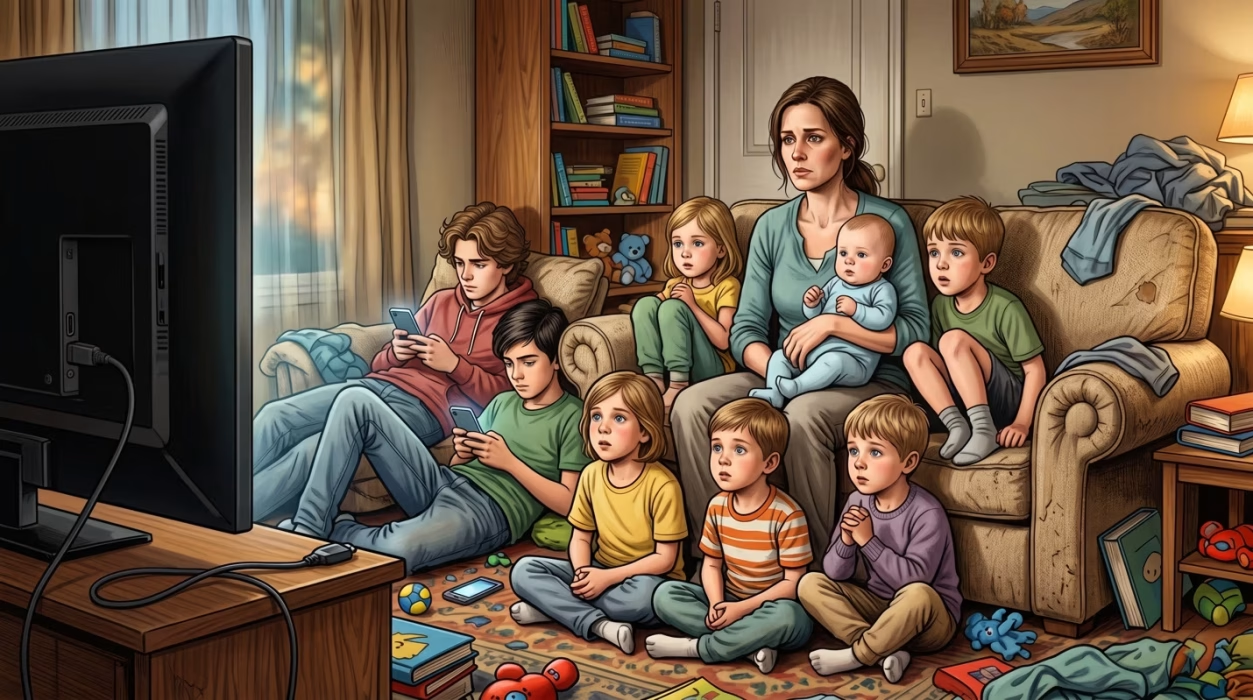





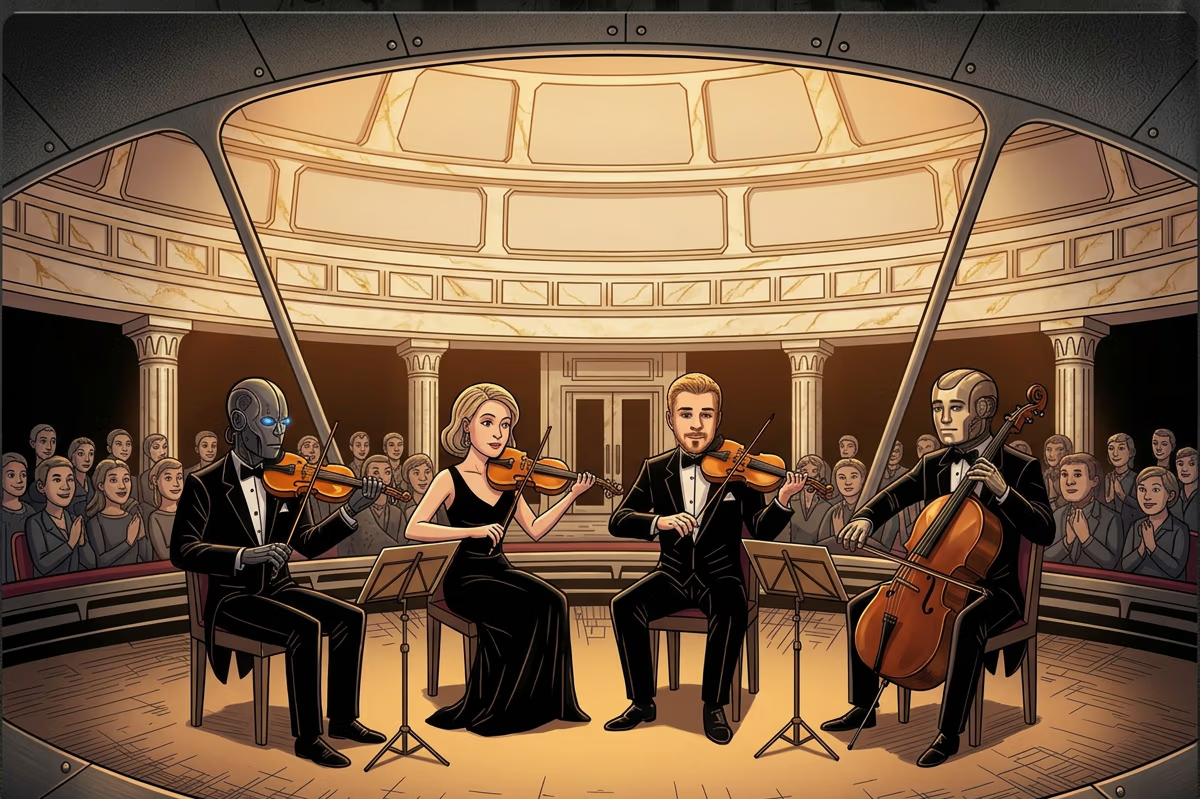

The principle of numbness comes into play with electric technology, as with any other. We have to numb our central nervous system when it is extended and exposed, or we will die. Thus the age of anxiety and of electric media is also the age of the unconscious and of apathy. But it is strikingly the age of consciousness of the unconscious, in addition. With our central nervous system strategically numbed, the tasks of conscious awareness and order are transferred to the physical life of man, so that for the first time he has become aware of technology as an extension of his physical body. Apparently this could not have happened before the electric age gave us the means of instant, total field-awareness. With such awareness, the subliminal life, private and social, has been hoicked up into full view, with the result that we have "social consciousness" presented to us as a cause of guilt-feelings. Existentialism offers a philosophy of structures, rather than categories, and of total social involvement instead of the bourgeois spirit of individual separateness or points of view. In the electric age we wear all mankind as our skin.
Understanding Media, MIT/Routledge edition, (1964), p 47
Year: 1964
We have been through the three stages of alarm, resistance, and exhaustion that occur in every disease or stress of life, whether individual or collective. At least, our exhausted slump after the first encounter with the electric has inclined us to expect new problems. However, backward countries that have experienced little permeation with our own mechanical and specialist culture are much better able to confront and to understand electric technology. Not only have backward and nonindustrial cultures no specialist habits to overcome in their encounter with electromagnetism, but they have still much of their traditional oral culture that has the total, unified "field" character of our new electromagnetism. Our old industrialized areas, having eroded their oral traditions automatically, are in the position of having to rediscover them in order to cope with the electric age.
Understanding Media (1964), MIT/Routledge edition, pp 26-27
Year: 1964
From the time of the telegraph onward, however, Western man began to live an implosion. He began suddenly with Nietzschean insouciance to play the movie of his 2,500-year explosion backward. But he still enjoys the results of the extreme fragmentation of the original components of his tribal life. It is this fragmentation that enables him to ignore cause-and-effect in all interplay of technology and culture.
Understanding Media, MIT/Routledge edition, (1964), p 270
Year: 1964
(In reference to the hellscapes of Hieronymus Bosch)
Today it is the iconic world that has become the container for the old visual space, creating not dissimilar nightmarishness in our world.
“New Media and the Arts”, (1964), p 241
Year: 1964
Chapter:
Art, Artists
If a work of art is to explore new environments, it is not to be regarded as a blueprint but rather as a form of action-painting.
“Letter to Wilfred Watson, October 6 1965”, in Letters of Marshall McLuhan (1987), p. 325; later quoted in "Author, Dies; Declared 'Medium Is the Message'" by Alden Whitman, The New York Times, January 1, (1981)
Year: 1965
Chapter:
Art, Artists
The task of art is to correct the bias of technological media.
“General introduction to charts”, in Report on Understanding New Media, 1960, p 22
Year: 1960
Chapter:
Art, Artists
The art object is replaced by participation in the art process. This is the essential meaning of electric circuitry and responsive environments. The artist leaves the Ivory Tower for the Control Tower, and abandons the shaping of art objects in order to program the environment itself as a work of art.
“The Emperor's Old Clothes” (1966), in McLuhan Unbound (2017), p 14
Year: 1966
Chapter:
Art, Artists
Jacques Ellul observes in Propaganda: When dialogue begins, propaganda ends. His theme, that propaganda is not this or that ideology but rather the action and coexistence of all media at once, explains why propaganda is environmental and invisible. The total life of any culture tends to be "propaganda", for this reason. It blankets perception and supresses awareness, making the counter environments created by the artist indispensable to survival and freedom.
From Cliché to Archetype with Wilfred Watson (1970), p 77
Year: 1970
Chapters:
Art, Artists | Dialogue
The literary artist is a person who seeks to arrange it in forms which will release that power
“The concept of space in art”, in Garbage Apocalypse (1971), p 23
Year: 1971
Chapter:
Art, Artists
Hypnotized by their rear-view mirrors, philosophers and scientists alike tried to focus the figure of man in the old ground of nineteenth-century industrial mechanism and congestion. They failed to bridge from the old figure to the new. It is man who has become both figure and ground via the electrotechnical extension of his awareness. With the extension of his nervous system as a total information environment, man bridges art and nature.
Take Today: The Executive as Dropout (1972), p 11
Year: 1972
At the speed of light, everybody is a nobody. There is a further dimension at the speed of light—everybody is discarnate, a nervous system without a body. Anger and frustration resulting from such sudden inexplicable situations and loss may well account for the extremities of violence and obscenities manifest in the new floods of pornography.
“Letter to Clare Westcott, November 26, 1975”, in Letters of Marshall McLuhan (1987), p 515
Year: 1975
Chapter:
Nobody
…Soren Kierkegaard had published his Concept of Dread. It was in 1844, the first year of the electric telegraph, to which he alludes in that work. And the message of Kierkegaard concerning the telegraph had only begun to reach us. The message was that all men are now totally involved, physically, in all mankind. Electric technology extends, not our bodies, but our nervous system, as an organic membrane of light and power and information, around the globe.
Unpublished, untitled essay prepared for the Los Angeles Times, 1979, p 1
Year: 1979