Viewing chapter Car (29 quotes)
The car has become the carapace, the protective and aggressive shell, of urban and suburban man.
Understanding Media (1964), MIT/Routledge edition, p 224-225
Year: 1964
Our motor highways…are centres of programmed mayhem, set at statistical levels of psychic tolerance.
“Abortion in Today’s World” (1972), typescript, p 5
Year: 1972
The Volkswagen is perhaps an illustration of a motor car which is named as a tribal object of the folk; it is curious that its pattern has changed scarcely at all; and in the same way with the new small cars, the design tends to be much more stable than the older cars, larger cars. The citizen of the Electronic Age is a do-it-yourself man, like the citizens of tribal societies. He prefers a car over which he feels a complete control, and which does not enclose him in a kind of boudoir, or living-room space.
Letter to Edward S. Morgan, May 16, 1959, in Letters of Marshall McLuhan (1987), p 254
Year: 1959
If the car is seen, not as an isolated fact, but as a Happening, as something that has many hideous consequences, then people suddenly feel the need to include the consequences in the object itself. The safety car has to be designed like the safety pin. Instead of just being pointed outwards, it folds back into itself. Even the driver is provided in the safety car with a padded cell to remind him that he is a potential killer.
“Great Changeovers for You”, in Vogue, July,1966, p 32
Year: 1966
For example, the use of a car or plane, insofar as it exceeds all private or individual human power, represents an aggressive manifestation of the human ego, which, on the one hand, asserts the identity of the driver or user and, on the other hand, threatens the identity or even the existence of those in the environment of this activity. If only for that reason, speed and power incite all people to use the same means to assert and protect their own identity.
Contribution to On Growth by William Oltmans (1974), pp 75-76
Year: 1974
To a considerable degree, the software of TV has begun to usurp the function of the car as a provider of privacy.
“Where the World Is Heading” (1973), p 2
Year: 1973
The Volkwagen is a wraparound car. It’s not to be looked at, it’s for you to put it on.
Quoted in “Oracle of the Electronic Age,” by Jane Howard, Life magazine, Feb 25, 1966, p 95
Year: 1966

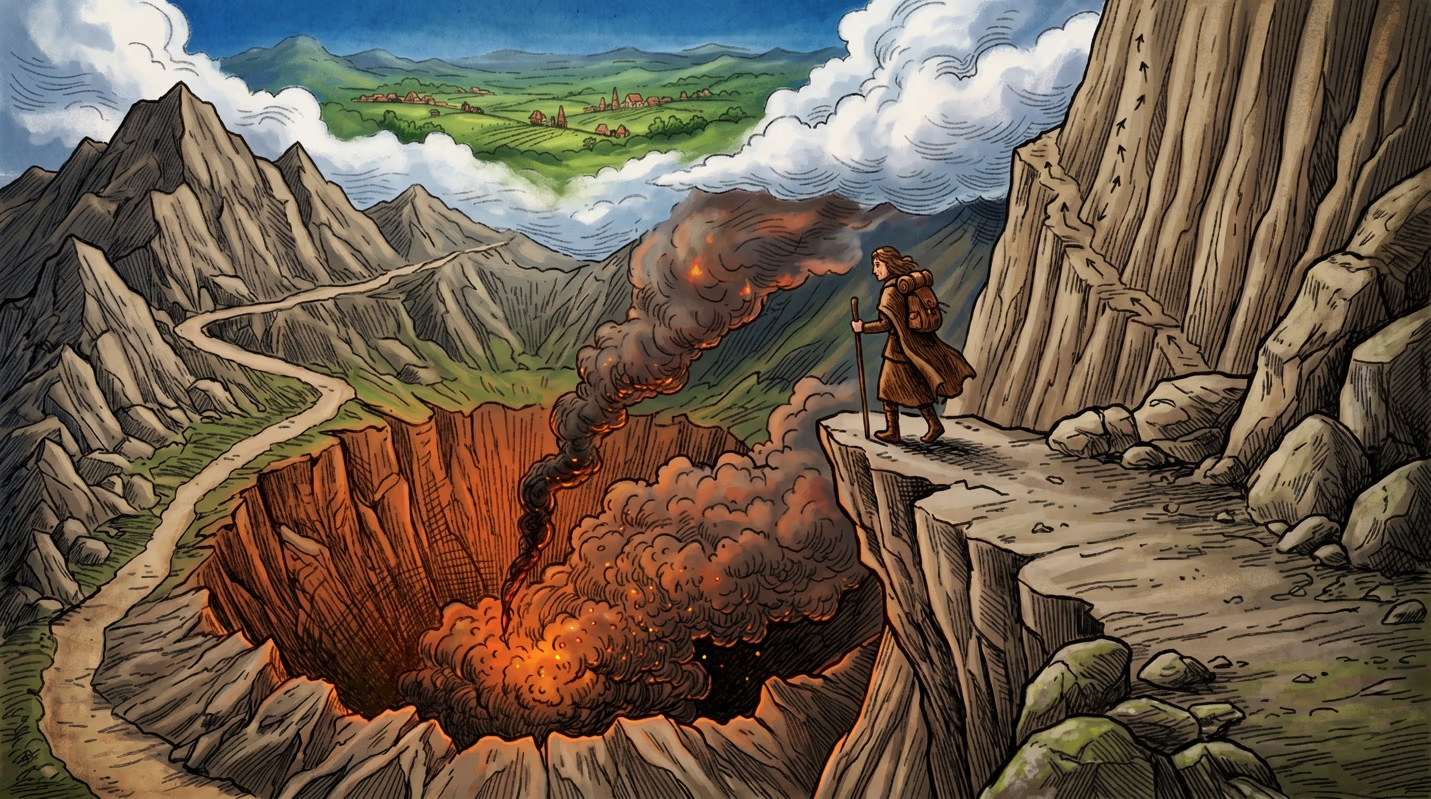


The motor car enhances private mobility, and pushes aside the old organization of the city in favour of the suburb.
Laws of Media: The New Science with Eric McLuhan, (1988), p 99
Year: 1988
When I say the medium is the message, I’m saying that the motorcar is not a medium. The medium is the highway, the factories, and the oil companies. In other words, the medium of the car is the effects of the car. When you pull the effects away, the meaning of the car is gone. The car has lost its place in the heart of the people. That doesn't mean it's going to disappear overnight. Not at all. All it means is the effects of the car are disappearing. And privacy and service environment are part of the effects
“Living in an Acoustic World,” Public Lecture at the University of South Florida, 1970. “McLuhan Speaks” transcript, pp 10-11
Year: 1970
If the car had not lost its real meaning in our lives, there would be no oil price hikes. That is, nobody would even dream of allowing the oil price hikes to occur. The rise in oil prices, of course, is a promotional deal. There's no question.”
“Living at the Speed of Light” (Speech U of So Fla), 1974, reprinted in Understanding Me (2003), p 241
Year: 1974
However, the American car had been fashioned in accordance with the visual mandates of the typographic and the movie images. The American car was an enclosed space, not a tactile space. And an enclosed space…is one in which all spatial qualities have been reduced to visual terms.
Understanding Media (1964), MIT/Routledge edition, p 327
Year: 1964
The car is the supreme form of American privacy which can be experienced only when we go outside our home. Of course, the British and European car performs no such function of privacy, and are built accordingly.
Unpublished, untitled essay prepared for Advertising Age from 1976, typescript, p 2
Year: 1976
Although it may be true to say that an American is a creature of four wheels, and to point out that American youth attributes much more importance to arriving at driver's-license age than at voting age, it is also true that the car has become an article of dress without which we feel uncertain, unclad, and incomplete in the urban compound.
Understanding Media (1964), MIT/Routledge edition, p 217
Year: 1964
If the motorist is technologically and economically far superior to the armored knight, it may be that electric changes in technology are about to dismount him and return us to the pedestrian scale. "Going to work" may be only a transitory phase, like "going shopping." The grocery interests have long foreseen the possibility of shopping by two-way TV, or videotelephone. William M. Freeman, writing for The New York Times Service (Tuesday, October 15, 1963), reports that there will certainly be "a decided transition from today's distribution vehicles. . . . Mrs. Customer will be able to tune in on various stores. Her credit identification will be picked up automatically via television. Items in full and faithful coloring will be viewed. Distance will hold no problem, since by the end of the century the consumer will be able to make direct television connections regardless of how many miles are involved.
Understanding Media (1964), MIT/Routledge edition, p 218
Year: 1964
Visually, the entire batch of European cars are so poor an affair that it is obvious their makers never thought of them as something to look at. They are something to put on, like pants or a pullover. Theirs is the kind of space sought by the skin-diver, the water-skier, and the dinghy sailor. In an immediate tactile sense, this new space is akin to that to which the picture-window fad had catered. In terms of "view," the picture window never made any sense. In terms of an attempt to discover a new dimension in the out-of-doors by pretending to be a goldfish, the picture window does make sense.
Understanding Media (1964), MIT/Routledge edition, pages 326-327
Year: 1964
The small car is worn like shoes or pants. IT transforms the motorist into a super pedestrian, and renders him odious and nauseating to all occupants of real cars. Noise is a necessary feature of small cars. Noise is part of the haptic, participational quality, a manifest flutter in the bottom.
“Inside the Five Sense Sensorium”, 1961, p 52
Year: 1961
… the American car did not level downward, but upward, toward the aristocratic idea. Enormous increase and distribution of power had also been the equalizing force of literacy and various other forms of mechanization.
Understanding Media (1964), MIT/Routledge edition, p 223
Year: 1964
It goes without saying that there is very little privacy in the North American home because we do not seek it there but, rather, outside in our cars.
“Inside on the Outside,” 1976, p 5 of typescript
Year: 1976
Chapters:
Outside to be Alone | Privacy
The simple and obvious fact about the car is that, more than any horse, it is an extension of man that turns the rider into a superman. It is a hot, explosive medium of social communication.
Understanding Media, 1964, MIT/Routledge edition, p 221
Year: 1964
So in the American car, as the French observed decades ago, “one is not on the road, one is in the car.”
Understanding Media, 1964, MIT/Routledge edition, p 327
Year: 1964
Each human being creates a kind of “space bubble” that he carries with him as his osmic mask. This hidden chemical vesture is enormously enhanced by the private motor car. It turns each of us into a kind of beetle with a steel carapace, or cover. Our attachment to this armour may well become more intense with crowding and noise, and may be one of the reasons for the common abhorrence of public transit.
Letter to the Editor of the Globe and Mail, March 12, 1970
Year: 1970
The North American car is designed and used for privacy. Unlik ethe European car, it is a big enclosed space, well suited to the business of meditation and decision-making.
“Inside on the Outside, Or the Spaced-Out American,” 1976, p 5 of typescript
Year: 1976
I was delighted to think of people using traffic jams as a way out of their jams.
Letter to Edward T. Hall, February 18, 1971
Year: 1971
[Hallucinogens are] somewhat like the use of the fast motor car as a way of fighting back at the over-powering scale of high rise and metropolitan buildings.
“Identity, Technology and War”, 1970, p 2 of typescript
Year: 1970
[Quoting Kenneth R. Schneider] “After more than a half-century of deep probing, advertisers have convinced Americans that cars improve and men do not. Over the years Americans have become reconciled to their own progressive obsolescence through comparison with the annually improved auto styles and performance.” (Autokind vs Mankind, p 178)
Papea to Conference of Management Information Systems, 1974, p 6
Year: 1974
Almost as much as TV, the car demands peripheral vision which undermines the “tunnel vision” needed for reading.
“Inside on the Outside Or the Spaced-Out American” 1976, p 5 of typescript
Year: 1976
A few years ago the car was made to bring the farmer to town. As roads improved, the town went to the country. As cars and roads improved, the highway was no longer a link with the country but a substitute for the country. A spin in the country now means a spin on the highway. The highway is now a wall of speed which cuts us off from the country entirely. At this point the engineers suggest stationary vehicles on moving highways.
“Conspicuous Co-Existence”, 1957, p 2
Year: 1957
The willingness to accept the car as a status symbol, restricting its more expansive form to the use of higher executives, is not a mark of the car and mechanical age, but of the electric forces that are now ending this mechanical age of uniformity and standardization and recreating the norms of status and role.
Understanding Media, 1964, MIT/Routledge edition, pp 223-224
Year: 1964
The driver of the American car is a revival (retrieval) of the “knight in shining armor”. But by the same token, the ground of the car had been prepared much earlier by the bicycle. In the Scientific American of March 1973, S.S. Wilson writing on bicycle technology explains how “the bicycle quite literally paved the way for the automobile,” that is, the service ground of one technology may well become the figure of the next.
Paper to Conference of Management Information Systems, 1974, p 11
Year: 1974