Viewing chapter Change (44 quotes)
Our entire mode of thought is based on equilibrium: "Things will return tonormal," we think. But equilibrium is a principle inherited from Newton. No balance is possible at the speed of light, in economics, physics, in the Church, or wherever…
Marshall McLuhan
“Keys to the Electronic Revolution: First Conversation with Pierre Babin” (1977), The Medium and the Light, (1999), p 46
Year: 1977
“As for technological acceleration, it now approaches the speed of light. All nonelectric media had merely hastened things a bit. The wheel, the road, the ship, the airplane, and even the space rocket are utterly lacking in the character of instant movement.”
Understanding Media (1964), MIT/Routledge edition, p 348
Year: 1964
Chapter:
Technology
Today the most abstruse theories go into action even before they have had their day in science fiction
“The Humanities in the Electronic Age”, 1961, in McLuhan Unbound, 2017, p 18
Year: 1961
Chapter:
Speedups
It is hard for the conventional and uncritical mind to grasp the fact that "the meaning of meaning" is a relationship: a figure-ground process of perpetual change. The input of data must enter a ground or field or surround of relations that are transformed by the intruder, even as the input is transformed. Knowledge, old or new, is always a figure that is undergoing perpetual change by "interface" with new environments. Thus it is never easy to divorce knowledge and experience. In the same way that knowledge and experience are continuously modifying each other, the relation between "hardware" and "software" is not fixed but is in a perpetual state of metamorphosis.
“Social Impact of the Computer”, 1979 typescript
Year: 1979
People in new environments always produce the new perceptual modality without any difficulty or awareness of change. It is later that the psychic and social realignments baffle societies.
ARTNews Annual, vol 31, Art Foundation, 1966, p 56
Year: 1966
Chapter:
Narcissus, Denial of Media Effects
Electric circuitry has overthrown the regime of 'time' and 'space' and pours upon us instantly and continuously the concerns of all other men. It has reconstituted dialogue on a global scale. Its message is Total Change.
The Medium Is the Massage (1967), p 16
Year: 1967
Chapters:
Hardware / Software | Today’s Transition
I soon realized that recognizing the symptoms of change was not enough; one must understand the cause of change, for without comprehending causes, the social and psychic effects of new technology cannot be counter-acted or modified. But I recognized also that one individual cannot accomplish these self-protective modifications; they must be the collective effort of society, because they affect all of society; the individual is helpless against the pervasiveness of environmental change: the new garbage—or message—induced by new technologies. Only the social organism, united and recognizing the challenge, can move to meet it.
Playboy Interview (1969), reprinted in Essential McLuhan (1997, UK edition), p 257
Year: 1969
Chapter:
McLuhan on McLuhan
Unfortunately, no society in history has ever known enough about the forces that shape and transform it to take action to control and direct new technologies as they extend and transform man. But today, change proceeds so instantaneously through the new media that it may be possible to institute a global education program that will enable us to seize the reins of our destiny—but to do this we must first recognize the kind of therapy that’s needed for the effects of the new media. In such an effort, indignation against those who perceive the nature of those effects is no substitute for awareness
and insight.
Playboy Interview (1969), reprinted in Essential McLuhan (1997, UK edition), 257-258
Year: 1969
Chapters:
Mastering Technology | McLuhan on McLuhan
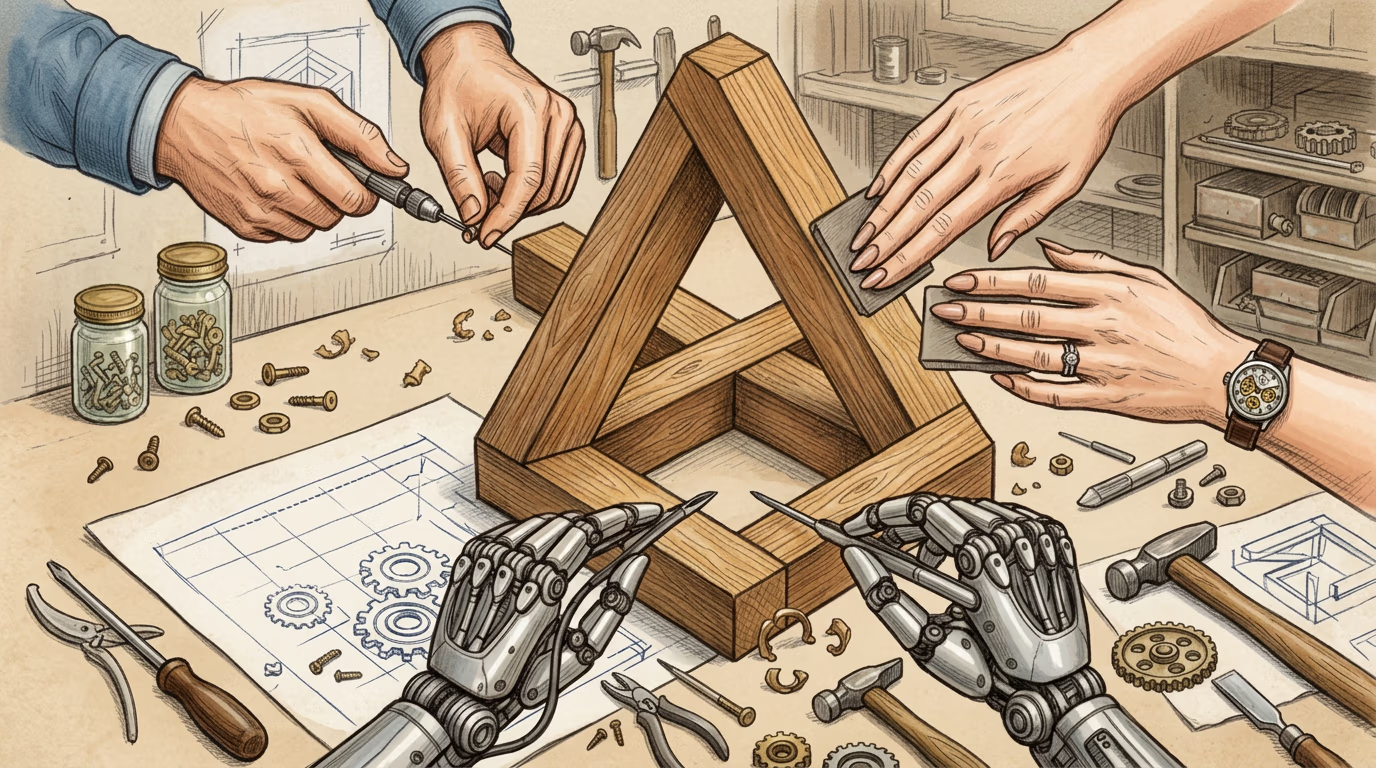

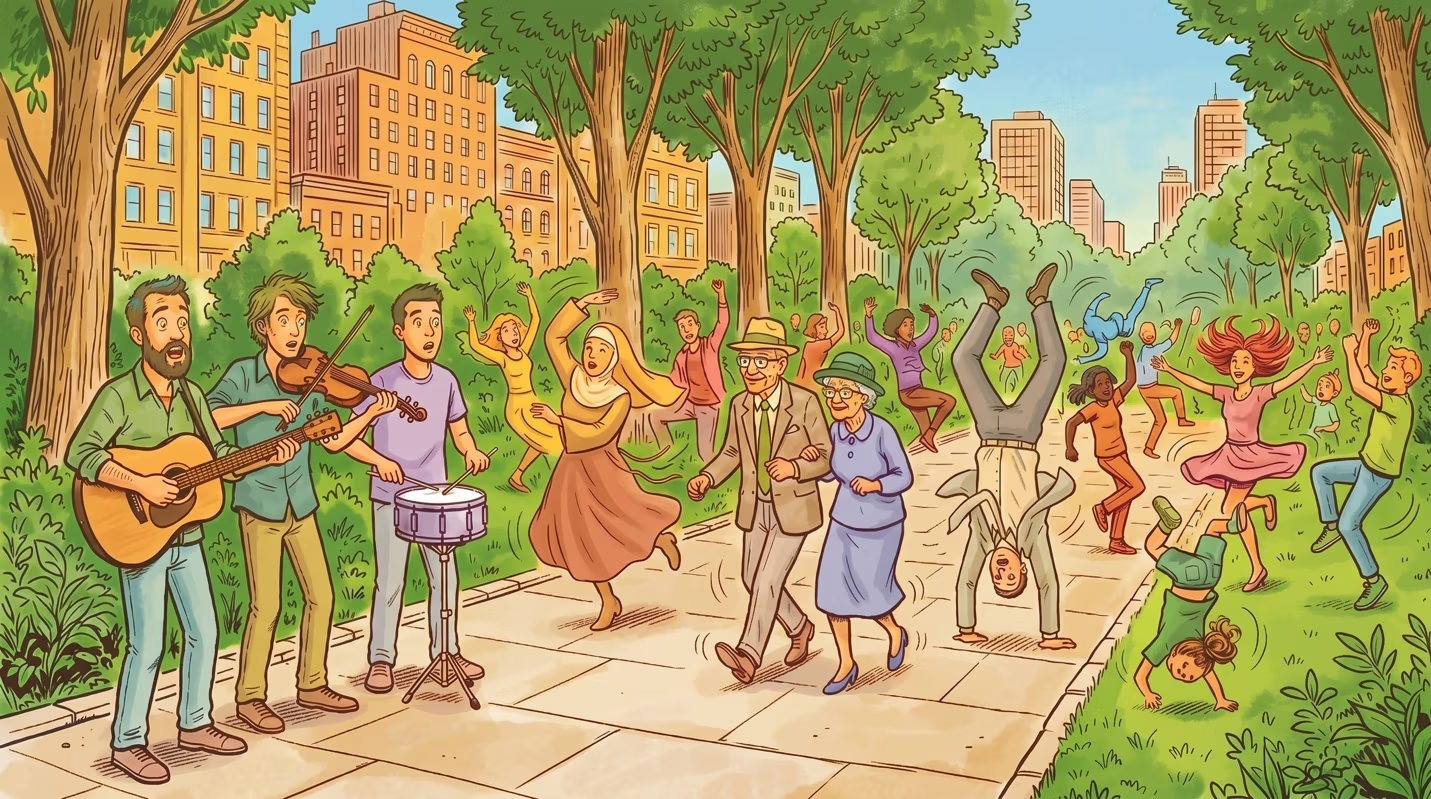


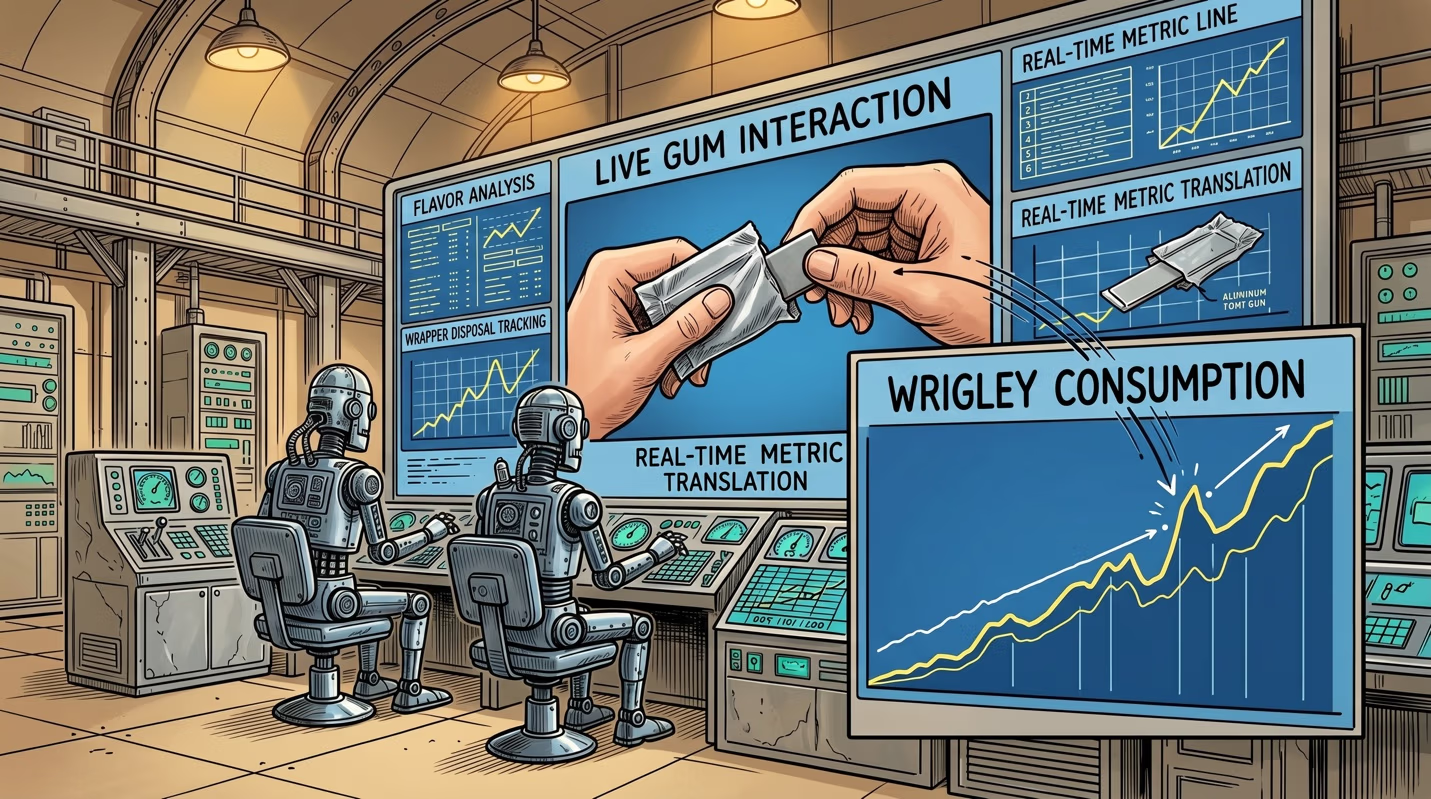
Each innovation is not only commercially disruptive, but socially and psychologically corroding, as well.
Understanding Media (1964), MIT/Routledge edition, p 250
Year: 1964
Closely associated with these cultural dynamics is the deep nostalgia of an industrial society, a nostalgia bred by rapid change. Obsolescence is a major reality in this kind of world of business turnover. Competitive machine processes are often out of date before they can be widely applied. Books are discarded before a fraction of the potential readers have heard of them. Hair, clothes, educational, and hit-parade patterns are switched faster than the young can grow into them. And record albums of the songs of 1930 or 1935 do a roaring trade as quaintly sentimental revivals of forgotten eras. A twenty-five-year-old can get wistful about reminiscences of ten years ago. In such a world the lasting qualities of horse opera with the fringe on top have great appeal.
The Mechanical Bride, (1951), p 156
Year: 1951
How often do you change your mind, your politics, your clothes?
The Mechanical Bride, 1951, p 73
Year: 1951
Chapter:
Questions He Asks
[James] Joyce was probably the only man ever to discover that all social changes are the effect of new technologies (self-amputations of our own being) on the order of our sensory lives. It is the shift in this order, altering the images that we make of ourselves and our world, that guarantees that every major technical innovation will so disturb our inner lives that wars necessarily result as misbegotten efforts to recover the old images.
War and Peace in the Global Village with Quentin Fiore (1968), p 5
Year: 1968
The plain fact is that the only way to keep up with enemies or rivals is to be ahead of them – by sheer design.
Take Today with Barrington Nevitt (1972), p 156
Year: 1972
Chapters:
Anticipating Change | Management
Once we realize [the scope and speed and enormity of change], we appoint a committee to slow us down. Or a commission.
Quoted in “The McLuhan Galaxy” by Kay Kritzwiser, Globe and Mail, January 4, 1964, p 9
Year: 1964
…because of the continuous rapid changes in a technological society, the day-to-day striving of ordinary mortals to communicate with one another has grown ever more puzzling and difficult.
“Communication Needs Human Scale”, in Nursing Management, Vol 1, No. 2, 1971, p 1
Year: 1971
It is a very confusing kind of world in which, as I say, you have no time to get adjusted to anything or acquainted with anybody. You know, we live in a world where you meet many, many people per day for the once and only time in your life or their lives.
“The Education of Mike McManus”, TVO interview, 1977, transcript 18:16
Year: 1977
Constant change, for its own sake, threatens everybody. (One of the interesting things about continuously mutating technology is that it is one of the prime sources of inflation.)
The Global Village with Bruce Powers (1989), p 98
Year: 1989
The day you enter Grade One, you know more than your grandfather did when he graduated.
Undated Monday Night Seminar, (circa 1972), from a surviving audio recording; transcript, p 1
Year: 1972
The seven-year-old today has had a heavy dose of adult experience and global imagery via TV. He enters grade school as an adult.
Culture Is Our Business, 1970, p 78
Year: 1970
Chapter:
Youth
That small aluminum ball called forth a view of the earth as something to be programmed. Like the pilot of the space shuttle, man is now captain of spaceship earth, engendering a concept of ecology—of earth, air, fire, and water as an integrated whole. There are no more passengers, only crew. Such a grasp of totality suggests the possibility of control not only of the planet but of change itself.
The Global Village with Bruce Powers (1989), p 98
Year: 1989
Today, the satellite environment has scrapped the entire nature process of the planet. This was not the result of an inadvertent blooper but of a relentless pressure for more speed of information. The resulting increase of environmental information has in effect scrapped everything known as human organizations while at the same time retrieving innumerable forgotten forms of human organizations from the remote and prehistoric past. The things we assumed as the ground for human existence have simply been cancelled.
Take Today: the executive as dropout with Barrington Nevitt (1972), p 224
Year: 1972
It is the framework that changes with new technology, and not the picture within the frame.
Understanding Media (1962), MIT/Routledge, p 219
Year: 1962
Chapter:
Technology
Globes make my head spin. By the time I locate the place, they’ve changed the boundaries.
War and Peace in the Global Village with Quentin Fiore (1968), cover flyleaf
Year: 1968
I’ve been asked to answer a series of questions, one of which is this: “In your opinion will the television school broadcasts ever replace the teacher in the classroom?” Suppose in 1500 AD we have been asked whether we thought that the new portable teaching machine, the printed book, would ever replace oral scholastic debate in the training of the human mind.
Letter to Claude Bissell, December 14, 1960, in Letters of Marshall McLuhan (1987), p 275
Year: 1960
At electric speeds patterns become so clear that even bureaucrats begin to get the message. This is new, though: things used to change gradually enough to be imperceptible, but today the patterns of change are declaring themselves very vividly because of the speed at which they occur. This is what pollution comes from: pollution is merely the revelation of a changing situation at very high speeds.
“Electric Consciousness and the Church” (1970), pp 7-8; reprinted in The Medium and the Light (1999), p 158
Year: 1970
As new media continue to proliferate, the nature of "news" will naturally change too, along with the perpetually renewed revolution in information speeds and patterns.
“At the Moment of Sputnik the Planet became a Global Theater in which there are no Spectators but only Actors” (1974), pp 10-11
Year: 1974
Chapter:
History
The quantum mechanics of our age regard matter itself as constituted by discontinuous entries and modules in a perpetual state of “interface” and resonant transformation. Thus, it is change itself that is the constant, the only stable element in all planning and programming.
“The Man Who Came to Listen” (1970), reprinted in On the Nature of Media (2016), p 181
Year: 1970
A young doctor is obsolete on the day he graduates as is any engineer.
DewLine Newsletter, 1.5
It was A.N. Whitehead who pointed out that one of the great sources of confusion in our time is the illusion that the environment is stable and that all change from an innovation occurs within this unchanging environment. This illusion is a legacy of the Newtonian system. This system has no more place for change than it had for people.
“Alarums in a Brave New World.” Winnipeg Free Press, 11 Dec. 1965, p. 73
Year: 1965
Chapter:
Technology
The fall or scrapping of a culture world puts us all into the same archetypal cesspool, engendering nostalgia for earlier conditions.
Laws of Media: The New Science with Eric McLuhan, (1988), p 103
Year: 1988
…for example, nobody ever knew what the effect of the wheel would be on the arrangement of human life.”
“First Lecture, Fordham University”, 1967, in Understanding Me (2003), p 144
Year: 1967
“Here I am fifty-eight, and I still don’t know what I am going to do when I grow up.” (Peter F. Drucker)
Culture Is Our Business (1970), p 78
Year: 1970
Nobody in the twentieth century has ever come up with any meaningful definition or discussion of "value." It doesn't work any longer in economics, let alone humanist affairs.”
“The Hot and Cool Interview”, 1967, in Media Research (1997), p 63
Year: 1967
At electric speed communication tends to bypass the organization chart. The big decisions are no longer made at the top, they are made by many subordinates, all over the place. The amount of power at the top is changing very fast. This is not the result of democratic theory. It is the result of speeded up communication. So the kids now make the decision on the future of clothing, of consumer goods education. They have become a big consumer element so they can determine policy even in education.
“Interview with J.P.M. van Santen”, Toronto, October 25, 1972, Transcript, p 3
Year: 1972
We can say confidently that change is the only stable form we possess. At high speeds, it becomes like a self-regulating gyrostabilizer – a steadying form. And the faster we move, the more surely we’re moving toward an absolutely static society.
“Understanding Canada and Sundry other matters: Marshall McLuhan “interview in Mademoiselle Magazine, January (1967), p 114
Year: 1967
I want to mention, by way of explaining my own approach to these matters, that my kind of study in communication is a study of transformation, whereas information theory and all the existing theories of communication that I know of are theories of transportation.”
“Living at the Speed of Light” (1974), in Understanding Me (2003), p 230
Year: 1974
The environments now succeed each other so rapidly that our sense of history is becoming strange.
“Meaning of TV to Children” (1965), p 37
Year: 1965
45 years ago things were like this, but less so.
Letter to Ezra Pound, June 22, 1951, in Letters of Marshall McLuhan (1987), p 227
Year: 1951
In the May, 1968 issue of the Scientific American, the article on Leibnitz presents the opposing positions that have for centuries divided our approaches to understanding media. Leibnitz is with the group that thinks that change as the collision of events within a fixed framework. The other group, Newtonian, sees change as an ESP pull between events that are quite unconnected. My own position, of course, is the latter. Visually oriented people think of time and space as a fixed framework “containing” events. These two groups represent the difference between the machine age and the electric age, between Gutenberg and Einstein.
“And the Dish Ran Away with the Spoon”, in Gazette of the Grolier’s Club (1968), p 2
Year: 1968
Nobody can see how new technologies metamorphose earlier ones into art forms. There is certainly no connection between these events. If there were any connection there could be no change. The action is where the gap is. It has always been thus. Change requires the resonant and abrasive interval, whether in the tragic flaw of character in the tragic hero of Aristotle, or in the chemical bond of Linus Pauling. The gap created by the complementary forms of white and colored, of affluence and poverty, of war and peace, of ignorance and knowledge, all engender the processes of change.
Letter to Editor of New Society, March 10, 1970
Year: 1970
Chapters:
Interval | Media Study
Another approach to cliché is to point out that the more deeply people participate in a culture, the less the motive for innovation.
From Cliché to Archetype with Wilfred Watson (1970), p 58
Year: 1970
By default rather than design, most futurists assume that “human nature” will hold firm. They ignore the fact that technological change has always struck human life right at the heart, changing people just as it changes things.
“The Future of Sex” (1967), typescript p 2
Year: 1967
If adjustment (economic, social, or personal) to information movement at electronic speeds is quite impossible, we can always change our models and metaphors of organization, and escape into sheer understanding.
“Effects of Improvements of Communication Media”, 1960, p 575
Year: 1960
Chapter:
Advice
As we approach “instant” speeds of information, we have no choice but to anticipate the pattern of change itself.
Take Today with Barrington Nevitt, 1972, p 216
Year: 1972
Chapter:
Advice
One of the celebrated things about the radio generation was Gertrude Stein’s phrase, which Hemingway used as an epigraph for Farewell to Arms, “You’re the lost generation.” … Today people over twenty-one can’t adjust. We’re all in a “lost generation.” That is, in our sensory lives we will never make the switchover. Only those coming up through the nursery will.”
The Museum as Large-Room Pinball Machine, Marshall McLuhan, Harley Parker, and Museum Professionals, 1967, full transcript of a seminar at the City Museum of New York, October, 1967, edited by William Buxton, published by U. of Alberta Press, 2026, p 89
Year: 1967
Chapters:
Between Two Ages | Today’s Transition