Viewing chapter Chiasmus, Flips, Reversals (58 quotes)
“The magic of joining opposites delighted him. Every cliche became a reversed cliche, borrowed or coined: life imitates art (Wilde); invention is the mother of necessity (Veblen); an idea that outlives its uselessness (McLuhan); in the land of the blind a one-eyed man is a hunted criminal (McLuhan). Scientific laws, he argued, worked equally well in reverse.”
Edmund Carpenter
“That Not So Silent Sea” Carpenter’s memoir of his long friendship and partnership with McLuhan (1993), reprinted in Donald Theall’s The Virtual McLuhan (2002), pp 245-246
Year: 1993
Chapter:
Chiasmus, Flips, Reversals
“By the law of change, whatever has reached its extreme must turn back.”
I Ching
Quoted in Take Today with Barrington Nevitt (1972), p 22
Year: 1972
Chapter:
Chiasmus, Flips, Reversals
[The “flip” effect] It is known in rhetorical theory as the figure of chiasmus, as when we say time wounds all heels.
General Introductions to Charts, in NAEB Report on Understanding New Media, June (1960), p 23
Year: 1960
As technology advances, it reverses the characteristics of every situation again and again. The age of automation is going to be the age of “do it yourself."
“Conspicuous Coexistence” (1957), p 2
Year: 1957
Any artifact, whether hardware (compass, cash, chairs, computer) or software (art styles, poetry, philosophy, scientific theories) when subjected to intense speedup will eventually reach a state of information overload in which the process pattern of the artifact as an aspect of eternity becomes clear.
The Global Village with Bruce Powers (1988), p 19
Year: 1988
Chapters:
Information Overload | Information Warfare
At electric speeds every type of human enterprise is pushed to its limit. At this point the return becomes a transformation or metamorphosis…
Take Today with Barrington Nevitt (1972), p 176
Year: 1972
One of the many flips of our time is that the electric information environment returns man to the condition of the most primitive prober and hunter. Privacy invasion is now one of our biggest knowledge industries.
Culture Is Our Business, (1970) p 24
Year: 1970
TV will produce a reversion to civilized book values by sheer reversal of itself.
Culture Is Our Business (1970), p 332
Year: 1970
The role of popular culture -- its aesthetic base-- is mild catharsis. Nostalgia plays a large part. "Pastimes are past times." This phrase of James Joyce puts it in a chiasmus or complementarity.
“AESTHETICS”, in the unpublished “Popular Culture Mosaic” (1972), p 9
Year: 1972
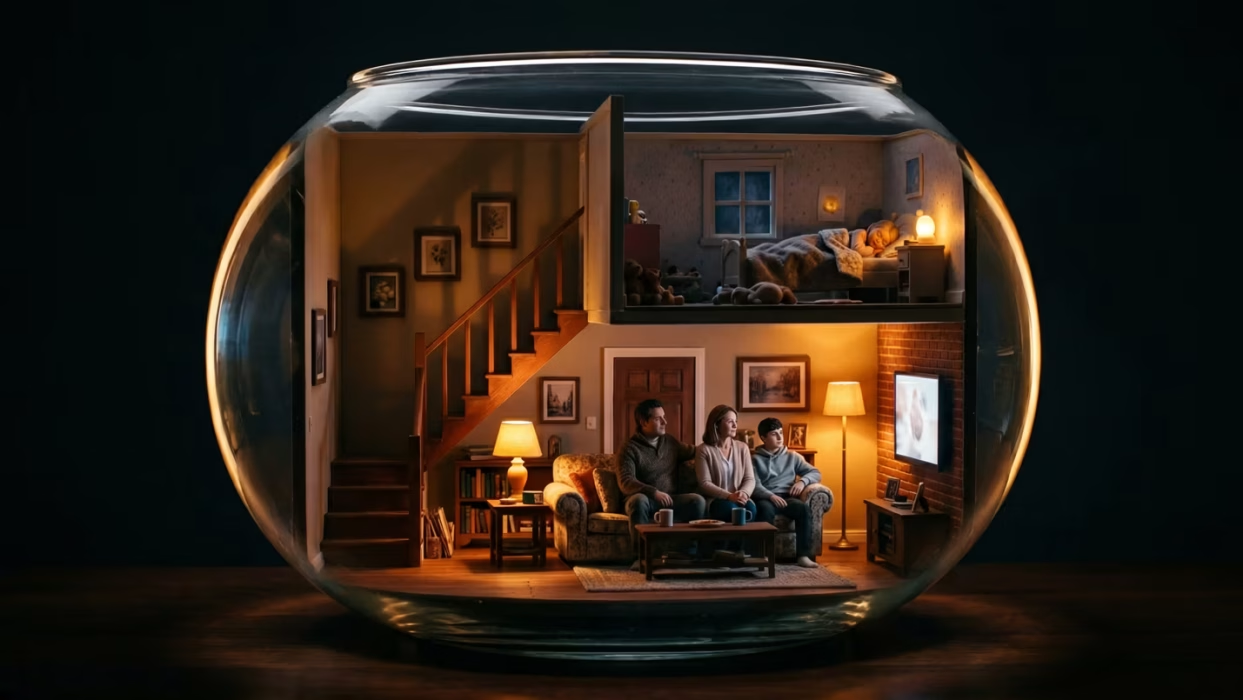
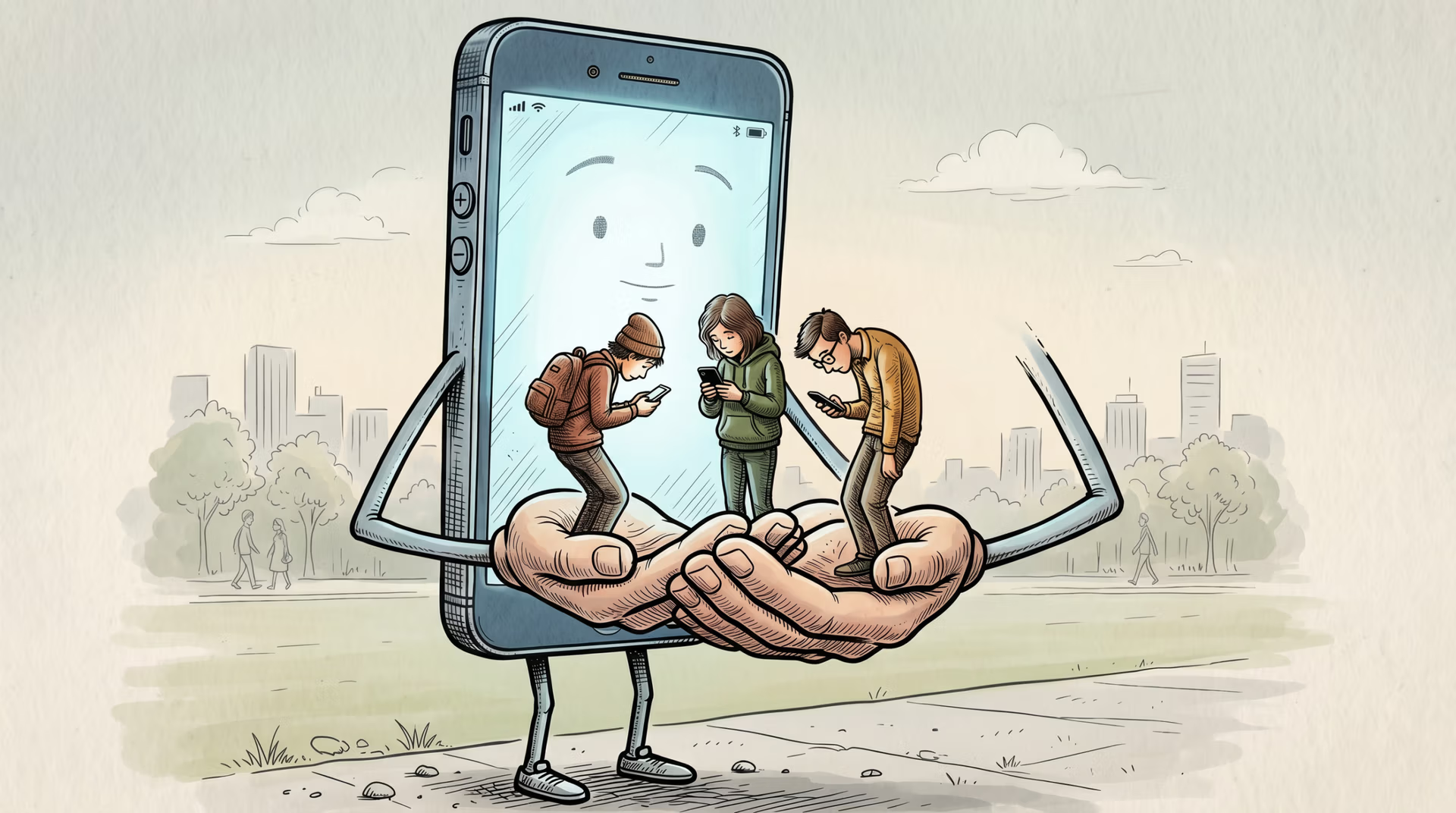
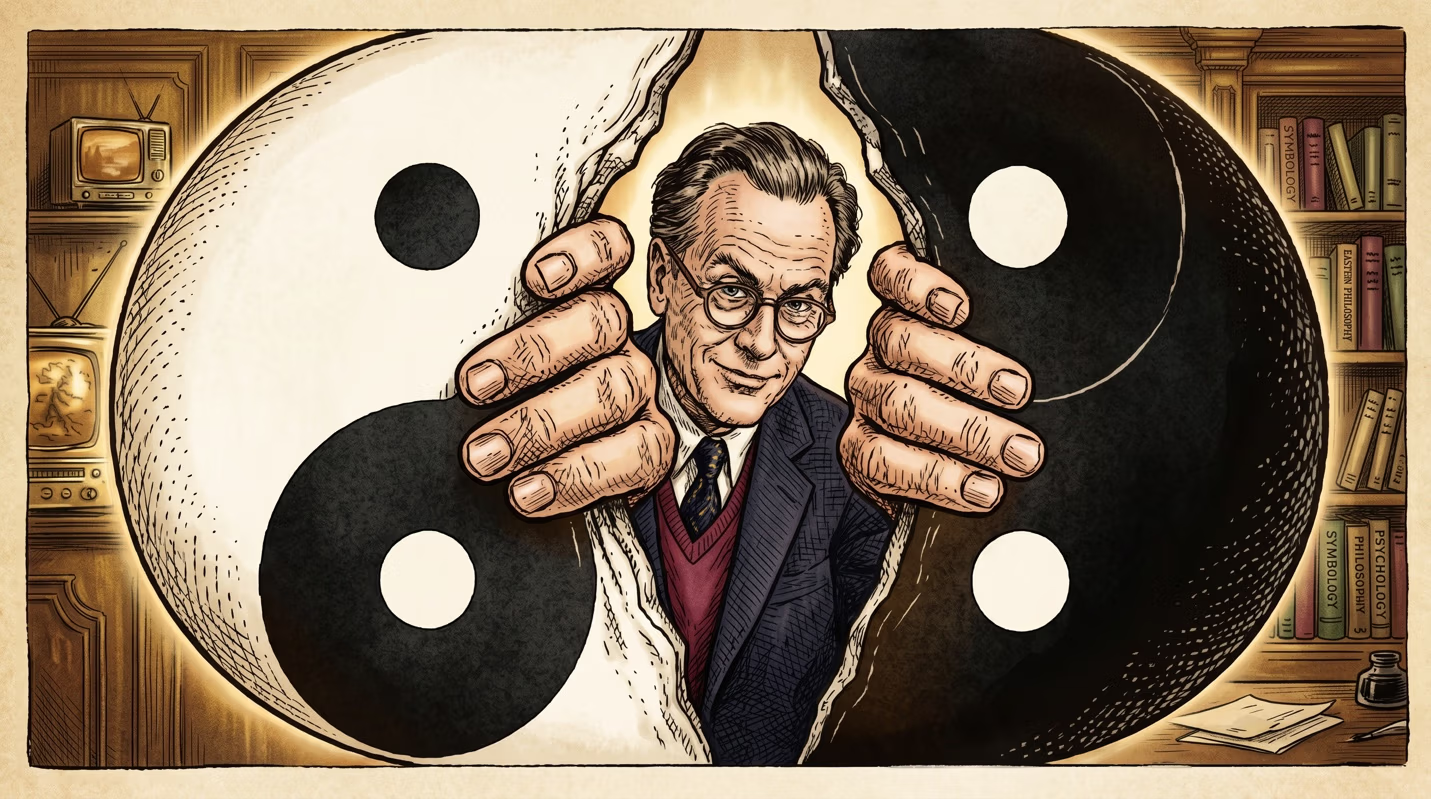
It is another instance of reversal when a situation or process is pushed to its limits: where, when jobs were once “too many cooks” now, with roles, all are cooks, and all are in the soup.
“The Social Impact of the Computer,” 1979 speech given in Monte Carlo, from typescript draft, p 19
Year: 1979
The more that is publicly recorded about the actual existence of any person, the more he is diminished in his private existence. Like any public entertainer, he becomes his admirers or his recordings. By a commodious vicus of recirculation, this flips us back to the Electric Circus, in which music is no longer for listening to but merging with.
“Reversal of the Overheated Image”, Playboy, December 1968, p 245
Year: 1968
Chapters:
Celebrity and Fame | McLuhanisms & Zingers
As we push our electric technology it will flip/open in the form of corporate consciousness. The present interim is baffling because it has a closed character, with which we know not how to deal. An electric system is very much like a small tribal society—that is, ecological and homeostatic.
Letter to John I. Snyder, Jr., August 4, 1963, in Letters of Marshall McLuhan (1987) p 291
Year: 1963
Chapters:
Between Two Ages | Corporate Consciousness | Ecology | Extending Consciousness | Present [The]
A viewpoint is one degree of vision. When visual viewpoint yields to any other sense there comes 360-degree involvement.
Culture Is Our Business (1970), p 264
Year: 1970
Chapter:
Perspective, Point of View
The principle of reversal of image and structure that accompanies every amplification of power applies everywhere, from trivial matters such as dance bands, reduced from 40 instruments to five by electric amplifiers, to the very pattern of human identity, reduced by data banks and computer memories to insignificance.
“The Reversal of the Overheated Image,” Playboy, December (1968), p 245
Year: 1968
If the book can be sent anywhere, as a gift or as a service environment, the paradoxical electric reversal is that it is the sender who is sent. This flip, or chiasmus of form and function occurs at the level of instant speed, and is characteristic of telephone and radio and video alike.
“Do Books Matter?” (1973), in On the Nature of Media (2016), p 209
Year: 1973
Today, metamorphosis by chiasmus—the reversal-of-process caused by increasing its speed, scope, or size — is visible everywhere for anyone to see. The chiasmus of speed up is slowdown. Perhaps first noted by ancient Chinese sages in I Ching or The Book of Changes, the history of chiastic patterns is traced through classical Greek and Hebrew literature by Nils W. Lund in Chiasmus in the New Testament.
“The Argument: Causality in the Electric World”, in Technology and Culture, Vol.14, No. 1, January (1973), p 1, reprinted in McLuhan Unbound # 3, (2005), p 6
Year: 1973
The chiasmus of speedup is slowdown.
“The Argument: Causality in the Electric World”, in Technology and Culture, Vol.14, No. 1, January (1973),p 2, reprinted in McLuhan Unbound # 3, (2005), p 6
Year: 1973
The art of the speaker consists in compressing all his aims into slogans.
“The Medium Is the Massage” LP, 1967, Side A, Spoken part, transcript: 18:34
Year: 1967
If one looks at romantic landscape art as the use of the landscape to snapshot or arrest a state of mind, it is possible to say that the Symbolists deliberately fragmented these large pictorial structures in order to turn them into probes. It was a sort of chiasmus or reversal whereby what had become a wrap-around aesthetic became instead a means of exploration "to lose beauty and terror [,] and terror in inquisition"
Letter to Wilfred Watson, October 6, 1965, in Letters of Marshall McLuhan (1987), p 325
Year: 1965
The interface therefore, is resonant and not static. That pressure creates a condition of continual, potential transformation called chiasmus. Resonance is the mode of acoustic space; tactility is the space of the significant bounding line and of interval.
The Global Village with Bruce Powers (1989), p 6
Year: 1989
It is the extinction of the left-hemisphere detached and objective self. If the result resembles detachment, it is from pushing the right hemisphere to a state of total enlargement or enhancement, to the point of reversal (chiasmus) of apparent characteristics.
The Global Village with Bruce Powers (1989), p 67
Year: 1989
I must repeat once again that the chiasmus pattern is really a play of metaphors (tetrad), that the intensification of any human process, artifact, or creation will have four simultaneous consequences: it will enhance something, it will cause something to become obsolescent, bring something back, and pushed to the limit flip into an opposite effect.
The Global Village with Bruce Powers (1989), p 139
Year: 1989
What we are talking about once again is a chiasmus pattern. Bell/AT&T extended its acoustic character so intensively that there was a flip to its opposite side.
The Global Village with Bruce Powers (1989), p 142
Year: 1989
Every process pushed far enough tends to reverse or flip suddenly. This is the chiasmus pattern, perhaps first noted by ancient Chinese sages in I Ching: The Book of Changes.
Take Today with Barrington Nevitt, 1972, p 6
Year: 1972
In the Spring, 1965, issue of the Varsity Graduate of the University of Toronto, Glenn Gould discussed the effects of recorded music on performance and composition. This is a reversal or chiasmus of form that occurs in any situation where an environment is pushed up into high intensity or high definition by technological change.
Through the vanish point with Harley Parker, 1968, p 246-247
Year: 1968
When the Gutenberg technology hit the human sensibility silent reading at high speed became possible for the first time. Semantic uniformity set in as well as "correct" spelling. The reader had the illusion of separate and private individuality and of "inner light" resulting from his exposure to seas of ink. The chiasmus of the process is given epic treatment in Alexander Pope's The Dunciad, whose closing lines sum up the liquidation of trivium and the quadrivium: "Art after art goes out and all is night."
"The Logos Reaching Across Barriers: letters to Ong, Mole, Maritain, and Culkin”, in The Medium and the Light (1999), p 71
Year: 1999
In any process there comes a reversal point, and whereas early programs may have been created as capsules or packages for a consumer public, we seem to have reached the flip point of chiasmus, or reversal, where the mass public produces rather than consumes the show. May it not be at this point that we have for the first time the possibility of appealing directly to the mass audience to participate in problem- solving at the highest level? Is there any kind of problem facing experts in any field which a mass audience could not solve?
“Organized Ignorance”, in Speech Video 74, transcript, p 12
But you see any form when pushed to its limit always reverses its characteristics, and information overload is a nice example.”
Video discussion, “Marshall McLuhan in Conversation with Norman Mailer,CBC, 1968, “McLuhan Speaks” transcript, p. 6
Year: 1968
Chapters:
Information Overload | Information Warfare
In his Study of History, Toynbee notes a great many reversals of form and dynamic, as when, in the middle of the fourth century A.D. , the Germans in the Roman service began abruptly to be proud of their tribal names and to retain them. Such a moment marked new confidence born of saturation with Roman values, and it was a moment marked by the complementary Roman swing toward primitive values. (As Americans saturate with European values, especially since TV, they begin to insist upon American coach lamps, hitching posts, and colonial kitchenware as cultural objects.)
Understanding Media, 1964, MIT/Routledge edition, p 37
Year: 1964
The story of modern America that began with the discovery of the white man by the Indians, as a wag has truly said, quickly passed from exploration by canoe to development by railway.
Understanding Media, 1964, MIT/Routledge edition, pages 101-102.
Year: 1964
Chapters:
Management | McLuhanisms & Zingers
With electric circuitry, all the mechanical enterprises of mankind tend to acquire reverse characteristics. Just as the educational establishment tends to shift its stress from instruction to discovery with the audience directly involved in the learning processes, so all mechanical industry tends to abandon packaging in favor of the tailor-made or custom-built service for the individual.
“The Emperor´s Old Clothes” (1966). In McLuhan Unbound (2017), pp 11-12
Year: 1966
Chapters:
He’s Hopeful | Today’s Transition
Every process, pushed to its limit, reverses all of its initial characteristics:
The mini-skirt is non-erotic
The high-rise apartment, lacking in all “human” qualities whatsoever, takes on the monolithic dignity of a prehistoric pyramid.
The paradox of the apartment as a non-human pyramid was matched earlier by the grain elevators of the Western prairies. These primitive, monolithic sculptures rose at the behest of advancing railway lines. The railway is antithetic to this: a perfect example of visual, linear, civilized space – created the “wild west”, and the non-visual world of oral values, where the ballad reigned supreme once more:
Bury me not on the lone prarie!
Thus, the civilized continuum, when pushed to an extreme by rows of cast steel, returned us, as Joyce punned, to the barbaric values of the folk and the Rose of Castille:
“The punman
and the penman
Meet, in pure
oppugnancy.”
“Through the Vanishing Point: Reversal Through Speed-Up,” Dew-line Newsletter, Volume 1, Number 5, November 1968, p 10
Year: 1968
Today the great principle of classical physics and economics and political science, namely that of the divisibility of each process, has reversed itself by sheer extension into the unified field theory; and automation in industry replaces the divisibility of process with the organic interlacing of all functions in the complex. The electric tape succeeds the assembly line.
“Reversal of the Overheated Medium,” in The Essential McLuhan (1995), p 169
Year: 1995
From one point of view the scanning finger of the TV screen is at once the transcending of mechanism and a throwback to the world of scrive. Any history of technology is filled with such unexpected reversals of form resulting from new advances.
“Printing and Social Change,” Printing Progress: A Mid-Century Report. Cincinnati, Ohio, 1959, p 91
Year: 1959
Chapter:
Television
At electric speed, everything becomes X-ray. Watergate is a nice parable or example of how secrecy was flipped into show business.
“Living in an Acoustic World,” Public Lecture at the University of South Florida, 1970. “McLuhan Speaks” Transcript, p 9
Year: 1970
Perhaps trends cannot always be trusted. The trend toward increasing enlightenment by electric media has flipped us back into the world of the occult, that is, the world of horoscopes and hidden forces.
Letter to the Editor the Toronto Star July 24, 1974, in Letters of Marshall McLuhan (1987) p 503
Year: 1974
With TV, Shakespeare’s “All the world’s a stage” flips into “all the stage is a world”, in which there is no audience and everybody has become an actor, or participant.
“All the Stage Is a World In Which There Is No Audience,” Innis Herald, April, 1978
Year: 1978
Chapter:
Participation
But in terms of the reversal of procedures and values in the electric age, the past mechanical time was hot and we of the TV age are cool.
Understanding Media, 1964, MIT/Routledge edition, p 22
Year: 1964
Chapter:
Hot & Cool
If education is undergoing the flip from instruction to discovery, or tending that way, there are other extraordinary flips resulting from technological advance. And the general tendency is to use the audience as a work force instead of as a target or consumer.
“Information Hunt Looms Big” College and University Journal, Vol 6, No. 2, Spring, 1967, p 5
Year: 1967
Chapters:
Audience, Public, Mass | McLuhanisms & Zingers
As human skill perfects and develops the possibilities in any given process or organization it guarantees the emergence of a new situation with opposite characteristics. Thus the age of automation is going to be the age of Do-It-Yourself.
Quoted by W.T. Gordon in MM: Escape into Understanding (1997), p 396, quoting a 1955 promotional letter for MM’s “Idea Consultants”
Year: 1997
The corresponding flip from objective to immersion techniques in politics presents itself in the form of a political shift from parties and policies to images and services. That is, political parties and their explicit policies have simply been obsolesced by the images presented by the party leaders on the one hand, and the services taken for granted by the community, regardless of the party that happens to be in power, on the other hand.
"The End of the Work Ethic" (1972) in Media Research (1997), p _
Year: 1972
Chapters:
LOM 2 - Obsolesce | Politics and Government
One of the big flips that’s taking place in our time is the changeover from the eye to the ear. Most of us, having grown up in the visual world, are now suddenly confronted with the problems of living in an acoustic world which is, in effect, a world of simultaneous information.
“Living in an Acoustic World,” Speech at the University of South Florida, 1970, in McLuhan Speaks, transcript
Year: 1970
Chapter:
Eye vs Ear
You take a statement and turn it around, using it as probe into the environment instead of using it descriptively—as a means of packaging information, already picked up—the idea of using language and statement as probe in this sense just baffles [my critics].
“The Hot And Cool Interview” (1967), in Media Research (1997), p 50
Year: 1967
Chapter:
Probe
Top secrecy is translated into public participation and responsibility by the magic flexibility of the controlled news leak.
Understanding Media (1964), MIT/Routledge edition, p 213
Year: 1964
Electric information has carried enlightenment to the flip point: the world of bugging and X-ray has brought back the occult and the exterior world has yielded to the inner trip.
“My Last 3 Books,” undated, unpublished typescript circa 1973, typescript, p 2
Year: 1973
Chapter:
Oft-Cited Quotes
When one passes through the sound barrier, supersonic speed reverses the pattern of controls of an aircraft. The new combination hardware-software economy is now moving at supersonic speeds, and the men at the controls are quite unaware that the manipulation of the controls in the customary patterns can only lead to disaster.
“The Man Who Came to Listen” (1970), republished in On the Nature of Media (2016), p 184
Year: 1970
Chapters:
Wake Them Up! | Warnings
But you see any form when pushed to its limit always reverses its characteristics, and information overload is a nice example.
Video discussion, “Marshall McLuhan in Conversation with Norman Mailer, CBC, 1968, “McLuhan Speaks” transcript, p 6
Year: 1968
Chapters:
Information Overload | Information Warfare
The new information environment is, in the highest degree, the scene of the hunter. It is the scene of perpetual warfare and it now surrounds every man. Both the need for military and commercial information has led in the last decade to innovations of electric service that have crossed all private and national boundaries alike.
“Mr. Nixon and the Dropout Strategy” (1973), typescript, p 1
Year: 1973
CB is a fascinating flip in which you use the condition of the car as an intercom system for socializing. The Citizen’s Band. You get in your car and then you can talk to anybody socially on a party line. It’s a party line… It’s a complete flip using the car for social life instead of for solitude.
Scharfe interview (1976), transcript, p 3
Year: 1976
The reversal of major roles in organized social action can occur almost anywhere. In the educational sphere, after centuries of stress on instruction as the business of the teacher, the entire educational process is readying itself for a flip-over from instruction to discovery.
From cliché to Archetype with Wilfred Watson (1970), p 201
Year: 1970
The old organization chart that belonged to the old hardware world of the 19th century has simply flipped upside down with the speed of electric information and so the little slots that the execs used to fit into in the business world no longer hold them.
“The Planet as Art Form”, appearance on The David Frost Show (1972), ”McLuhan Speaks” transcript, p 1
Year: 1972
Just how quickly the public participation flips from audience to actor has recently been noticed in Watergate, and earlier in the trial of Lieutenant Calley.
“The End of the Work Ethic” (1973), in Essays Media Research Technology, Art, Communication (1997), p 99
Year: 1973
When audience participation becomes too extensive, the villains on trial flip into public heroes because the audience quickly identifies with them, especially when they are men who are carrying out robot-like activities which necessarily resemble those of the average audience.
“The End of the Work Ethic” (1973), in Essays Media Research Technology, Art, Communication (1997), p 99
Year: 1973
It is now possible to include all the assembly line programs of an entire enterprise on a few little "solid state" chips. Along with the flip from hardware sequence speeds, comes the flip from hardware scale to software programming.
“The End of the Work Ethic” (1973), in Essays Media Research Technology, Art, Communication (1997), p 104
Year: 1973
Many people would rather die than defend themselves against these effects. The corresponding flip from "objective" to "immersion" techniques in politics presents itself in the form of a political shift from parties and policies to images and services.
“The End of the Work Ethic” (1973), in Essays Media Research Technology, Art, Communication (1997), p 107
Year: 1973
Chapter:
Politics and Government
The drastic flip from "objective" to "immersion" reporting has spawned a new genre of jokes which contrast to good news and bad news in a style represented by such stories as that of the doctor who reports to the patient: "I have some bad news for you. We cut off the wrong leg. But there is some good news. The withered limb is beginning to show some signs of life!"
“The End of the Work Ethic” (1973) in “Essays Media Research Technology, Art, Communication (1997), p. 107
Year: 1973
Newton discovered levity, not gravity. He discovered the ex-fluence of the moon. So far as NASA is concerned, the attractions of the moon still over-ride all the traditional thoughts of dignity and gravity.
“Kahn-frontation”, unpublished essay written for Newsweek, June (1969), LAC: MG 31, D 156, Vol. 134, File 5, p 1
Crossed out text represents lines visible through the typescript in the archives.
Chapters:
Mechanization | Sculpture, Sculptural
The psychic and social impact of new technologies and their resulting environment will reverse all the characteristic psychic and social consequences of the old technology and its environments.
War and Peace in the Global Village, 1968, p 82
Year: 1968
The stepping-up of speed from the mechanical to the instant electric form reverses explosion into implosion.
Understanding Media, 1964, MIT/Routledge edition, p 57
Year: 1964
Chapter:
Electric, Electronic
It was Aristotle who pointed out, way back in that period when they were just discovering visual space and values, that any form, any kind of organized form, when pushed to its limits, instantly assumes the opposite characteristics. We have seen this happen in our own time. Culture has become our business. Ours used to be a business civilization with a little culture added. Now, in the age when the knowledge industries have become overwhelmingly dominant, culture has become the primary mark of our age.
The Museum as Large-Room Pinball Machine, Marshall McLuhan, Harley Parker, and Museum Professionals, 1967, full transcript of a seminar at the City Museum of New York, October, 1967, edited by William Buxton, published by U. of Alberta Press, 2026, p 81
Year: 1967
Chapters:
Aristotle | Management