Viewing chapter Classification (9 quotes)
Classification isn’t the beginning of a subject. It is the end.
Marshall McLuhan
The Hot and Cool Interview (1967) in Media Research (1997), p 62
Year: 1967
Classification, for the literary man, is the be-all and end-all of observations. That's why [Dwight] MacDonald attempts to classify me. In the medical world, classification is a form of dismissal. If the doctor says it's measles, that's it, it's over with. The rest is just routine. But classification is not the beginning of the study of a problem—it's the end. For me any of these little gestures I make are all tentative probes. That's why I feel free to make them sound as outrageous or extreme as possible. Until you make it extreme, the probe is not very efficient. Probes, to be effective, must have this edge, strength, pressure. Of course they sound very dogmatic. That doesn't mean you are committed to them. You may toss them away.
“The Hot and Cool Interview” (1967), in Media Research (1997), p 62
Year: 1967
“A place for everything and everything in its place" is a feature not only of the compositor's arrangement of his type fonts, but of the entire range of human organization of knowledge and action from the sixteenth century onward.
Understanding Media, 1964, MIT/Routledge edition, p 201
Year: 1964
Chapter:
Goodbye Linearity
The Western world has built up a vast apparatus of classifications as means of controlling and harmonizing existence. These have tended to be colossal systems of concepts which prevent us from direct encounter with ourselves and our world: they constitute the “rear-view mirror.”
“The Argument: Causality in the Electric World”, in Technology and Culture, Vol.14, No. 1, January (1973), p 16, reprinted in McLuhan Unbound # 3, (2005), p 16
Year: 1973
In terms of the Renaissance, Don Quixote was as unemployable as Willie Loman is in our time. The “unemployment” of our time is only an illusion of retrospective classification in the new global community of learning.
“Two Aspects of the Communications Revolution”, 1961, Canadian Communications, Vol. 2, No. 2, p 8.
Year: 1961
Every technology has its own ground rules, as it were. It decides all sorts of arrangements in other spheres. The effect of script and the ability to make inventories and collect and store data changed many social habits and processes back as early as 3000 B.C. However, that’s about as early as scripts began. The effect of rearranging one’s experience, organizing one’s experience by these new extensions of our powers, are quite unexpected. I think we needn’t plunge in at this time, but I think one of the very definite effects of scripting was the rise of what we call architecture. It made possible, instead of just scooped out dave space or wraparound wigwams and igloos, enclosed space…. The effect of writing as a way of organizing experience stepped up the visual factor until things like architecture became possible.
“The Future of Man in the Electric Age” (interview with Frank Kermode, 1965), reprinted in Understanding Me (2003), p 58
Year: 1965
The visual world is one of matching, of fragmentation, and of classification. The new multi-sensuous world is one of making in which space is not a cavity to be filled but a possibility to be shaped.
“Environment as Programmed Happening”, 1967, p 18
Year: 1967
Chapters:
From Tribal to Literate | Space
The entire obsession of our age with existentialism has been based on the awareness that concept is not percept. One can have numerous classifications that do not correspond to one’s actual experience. We are often smothered in images of ourselves and of others that do not correspond to “presences.”
“The Argument: Causality in the Electric World”, in Technology and Culture, Vol.14, No. 1, January (1973), p 16, reprinted in McLuhan Unbound # 3, (2005), p 16
Year: 1973




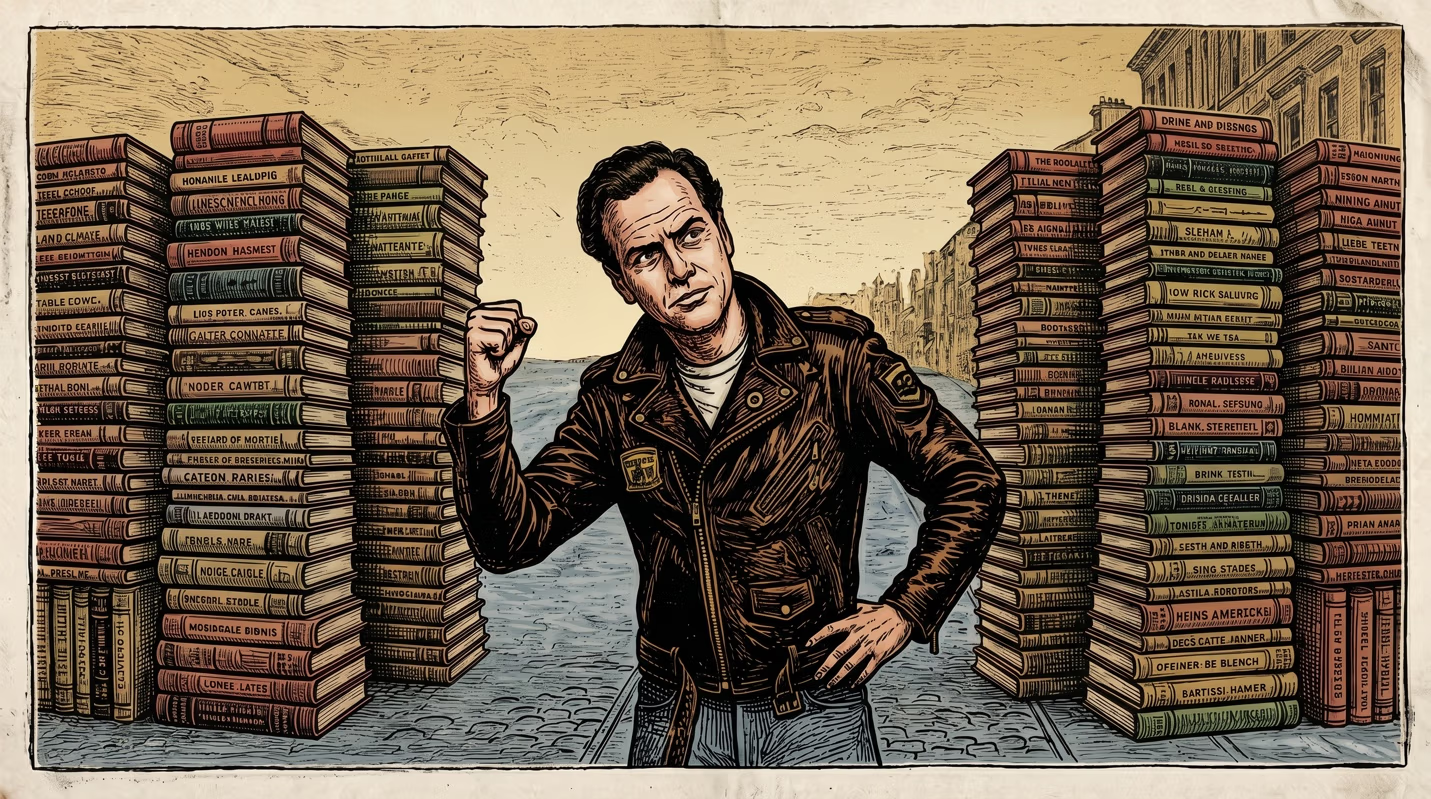
Nature is an invention of the Greeks. It consists in classifying data, and when they have classified a lot of data they call it nature. But that is a study that I am doing with Bob Logan on the effects of the alphabet on Greek science.
Carl Scharfe interview (1976), transcript p 1
Year: 1976
To translate the multi-leveled world of the pun into the sequential and logical world of classification requires enormous verbiage and redundancy such as accompanies the performance of modern phenomenologists.
“Comments on the PhD thesis of a candidate (William Ackerley)”, 1976
Year: 1976