Viewing chapter Cognition and Recognition (25 quotes)
Whether with the instant of individual cognition or the phases of collective consciousness, the retracing of the stages of apprehension provides the exact artistic form which is the formula for that experience. The same technique in the sciences enables the investigator to begin with what he wishes to invent or discover, and then to establish the causes which can conduce to such effects. It is important that the metaphysical and cognitive character of this procedure would be kept free from sectarian warfare.
“Review of Paul Klee, by Carola Giedion-Welcker”, in Shenandoah, Vol. 4, No. 1, Spring, (1953), p 82
Year: 1953
For it is in the drama of cognition, the stages of apprehension, that [James] Joyce found the archetype of poetic imitation. He seems to have been the first to see that the dance of being, the nature imitated by the arts, has its primary analogue in the activity of the exterior and interior senses. Joyce was aware that this doctrine (that sensation is imitation because the exterior forms are already in a new matter) is implicit in Aquinas. He made it explicit in Stephen Hero and the Portrait, and founded his entire poetic activity on these analogical proportions of the senses.
“James Joyce: Trivial and Quadrivial” Thought: Fordham University Quarterly, Vol. 28, No 1, (1953), in The Interior Landscape (1969), p 32
Year: 1953
Necessarily, therefore, all artistic imitation first arose from the pagan liturgies or mysteries. If Daedalus was the first to note this relation, Joyce was the first to see in these ancient rituals of descent and return the perfect externalization, in drama and gesture, of the stages of human apprehension. The retracing of any moment of cognition will thus provide the unique artistic form of that moment. And its art form coincides with its quiddity, except that the artist arrests what is otherwise fleeting.
“James Joyce: Trivial and Quadrivial” Thought: Fordham University Quarterly, Vol. 28, No 1, (1953), in The Interior Landscape (1969), p 34
Year: 1953
For "testing the truth" is not merely matching by congruence or classification; it is making sense out of the totality of experience — a process of pattern re-cognition that requires not only concepts but active perception by all the senses. Today, as "hardware" is transmuted into pure information by the process of " etherealization," the "inner" and the "outer" merge — thinking becomes doing.
“The Argument: Causality in the Electric World”, in Technology and Culture, Vol.14, No. 1, January (1973), p 8-9, reprinted in McLuhan Unbound # 3, (2005), p 15
Year: 1973
They avoid value judgments, and serve as guides to insight and to comprehension through re-cognition of the dynamic structures that occur in all processes. In replaying such patterns, we are not taking any side but many sides, also the inside.
“The Argument: Causality in the Electric World”, in Technology and Culture, Vol.14, No. 1, January (1973), p 18, reprinted in McLuhan Unbound # 3, (2005), p 30
Year: 1973
Put simply, inputs are never matched by outputs in cognition, whether private or corporate, and experience is not a repeat of sensation.
“Roles, Masks, and Performances” (1971), p 523
Year: 1971
It is recognition, not cognition.
Letter to Andrew. E. Manatos, April 28, 1970, p 1 (LAC))
Year: 1970
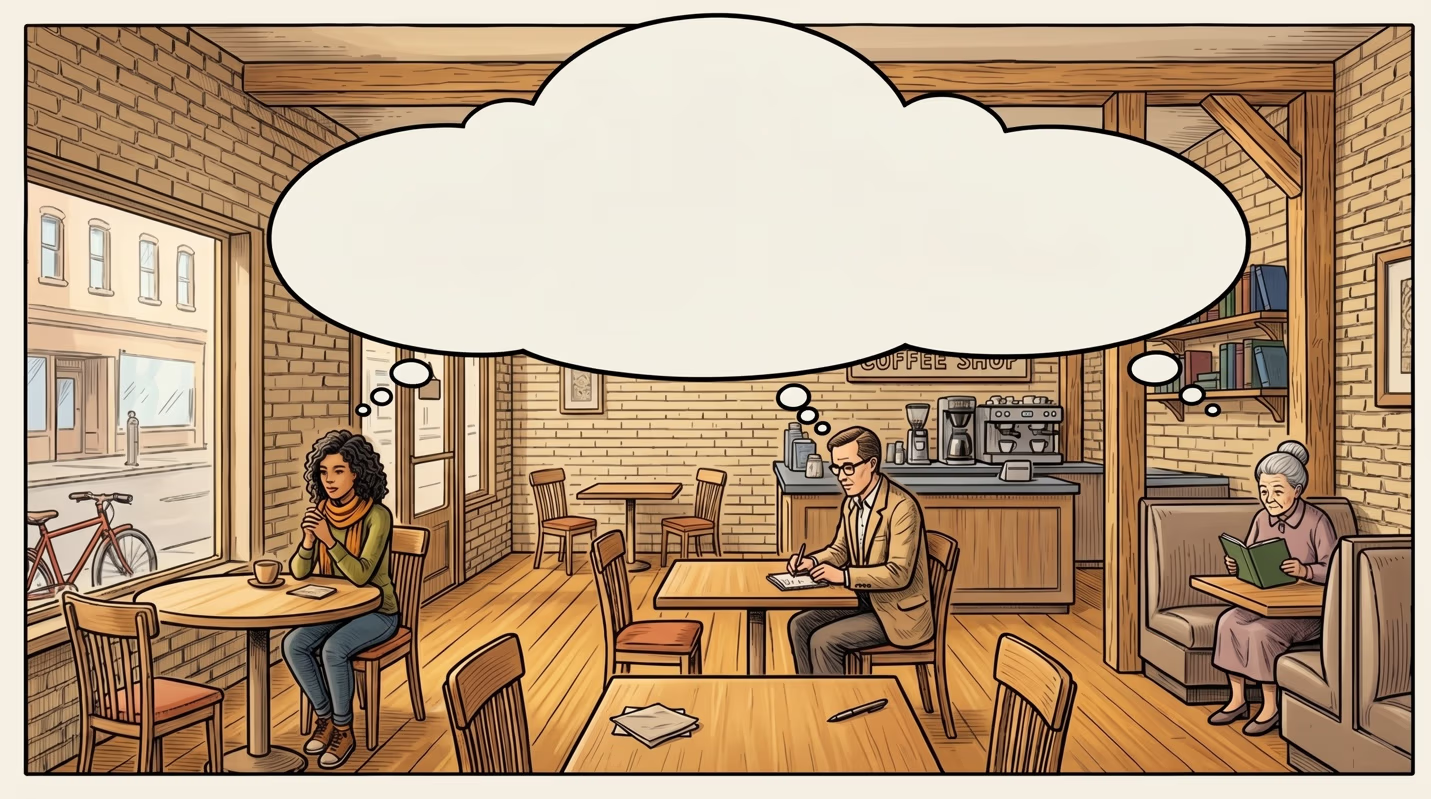

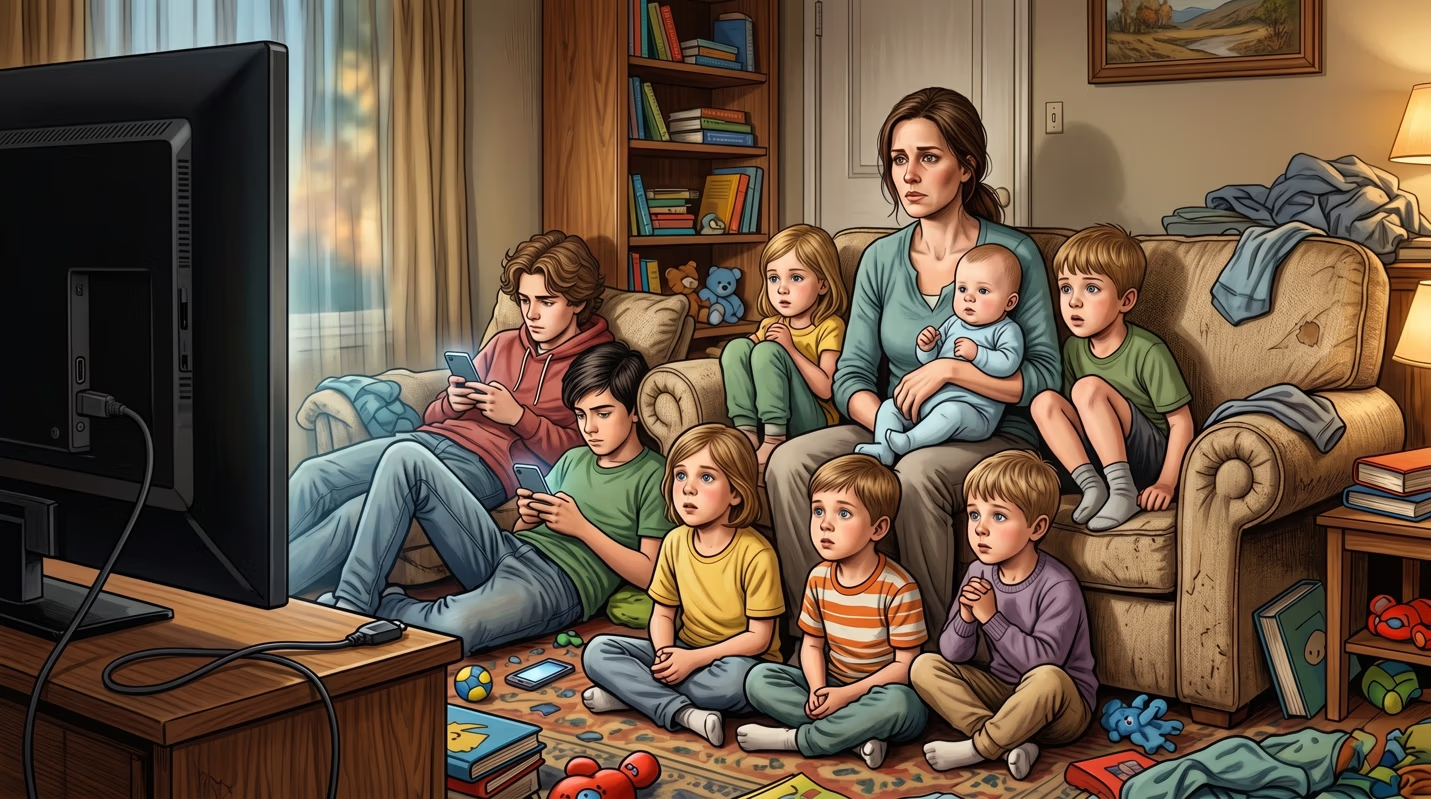

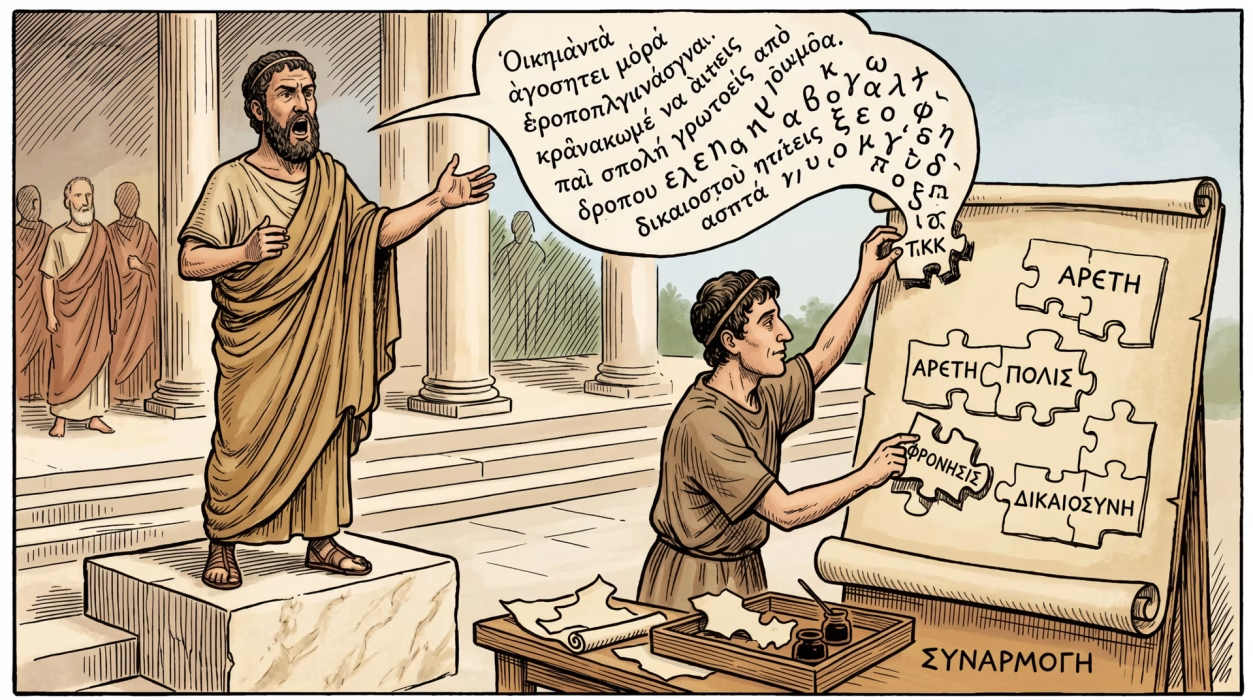

The quality of the instantaneous in the replay of experience is somewhat like the difference between cognition and recognition. Recognition may come somewhat after the event and is a form of awareness in which we say: "Oh, I didn't realize it was you" or "Oh, now I see what it's all about." Recognition is an altogether higher order of awareness from cognition, and yet it is now taken for granted as a normal feature of daily life in the electric age.
“At the Moment of Sputnik” (1974), in Marshall McLuhan: The Man and His Message (1989), p 80
Year: 1974
That the poetic process, is a mysterious externalization, by reversal, of the inner drama of cognition and recognition is what is implied in these remarks of [Roy] Campbell.
“Light on a Dark Horse: An Autobiography” by Roy Campbell, in Renascence, Spring (1953), p 158
Year: 1953
One of the etymologies of "matching" is "making" (mac-ian). This polarity is inherent in consciousness as such. Certainly in the cliché-to-archetype process, if cognition is matching our sensory experience with the outer world, re-cognition is a repeat of that process.
From Cliché to Archetype with Wilfred Watson (1970), p 148
Year: 1970
Slow motion replay is an even newer electric dimension; it really is a form of re-cognition which lets us "read" reality whenever ordinary cognition is too slow or too fragmentary
“Tomorrow's Church: Fourth Conversation with Pierre Babin”, in The Medium and the Light (1999), p 206
Year: 1999
Words that came to mind as you were saying, these last bits, is that we live in the world of the instant replay. Around the planet all the events are not only being recorded but replayed and the amazing thing about the replay is that it offers the means of recognition. The first time is cognition, the second time is recognition and the recognition is even deeper. I think that perhaps what you are interested in with regard to the Rosary has a lot to do with the replay
“A Matter of Faith - Father Peyton's Family Theatre - Part 1” (1972), transcript: 03:07 ff
Year: 1972
[George] Steiner is also acutely aware of the enhancement (cognition) and retrieval (re-cognition, re-making) aspects of language and suggests that it was the discovery of the retrieval function that enabled speakers to flip language out of content and into technology…
Laws of Media: The New Science with Eric McLuhan, (1988), p 119
Year: 1988
Experience is play, and meaning is replay and re-cognition.
“The Quantum Leap from Science to Art”, in Take today: the executive as dropout, p 142
Chapters:
Playfulness | Replay
Courtney suggests that dramatic play begins with impersonation when a child is nearly a year old. It is an act of externalization of the internalized perceptions, that is, a kind of re-cognition, a re-play. Re-play may be a form of cognition; it is also a form of interpretation, a dramatic performance involving actors and audience.
“Roles, Masks and Performances” (1971), reprinted in McLuhan Unbound (2017), p 15
Year: 1971
Chapters:
Playfulness | Replay
The instant replay, indeed, offers not just cognition but re-cognition, and leads the mind to the world of pattern recognition, to aftersight and foresight.
“The Implications of Cultural Uniformity”, in Superculture (1975), p 44
Year: 1975
For the replay would seem to offer both cognition and re-cognition, the same pattern of reversal in the transition from the industrial to the electric age, appears in the role of Sputnik (1957) in placing the planet inside a man-made environment.
“The Implications of Cultural Uniformity” (1975), typescript, p 14
Year: 1975
Chapter:
Replay
Everybody experiences more than he understands. Yet it is experience, rather than understanding, that influences behavior, especially in collective matters of media and technology, where the individual is almost inevitably unaware of their effect upon him.
Understanding Media (1964), MIT/Routledge edition, p 318
Year: 1964
This kind of plan seems to have inspired Frank Lloyd Wright in designing the Guggenheim Art Gallery on a spiral, concentric basis. It is a redundant form inevitable to the electric age, in which the concentric pattern is imposed by the instant quality, and overlay in depth, of electric speed. But the concentric with its endless intersection of planes is necessary for insight. In fact, it is the technique of insight, and as such is necessary for media study, since no medium has its meaning or existence alone, but only in constant interplay with other media.
Understanding Media (1964), MIT/Routledge edition, p 26
Year: 1964
The first items in the press to which all men turn are the ones about which they already know.
Understanding Media (1964), MIT/Routledge edition, p 211
Year: 1964
As language itself is an infinitely greater work of art than the Iliad or the Aenaid, so is the creative act of ordinary human perception, a greater thing and a more intricate process than any devised by philosophers or scientists. The poetic process is a reversal, a retracing of the stages of human cognition.
“Catholic Humanism and Modern Letters” The McAuley Lectures: Christian Humanism in Letters, Saint Joseph College, West Hartford Connecticut,(1954),p 53 , reprinted in The Medium and the Light (1999), p 157
Year: 1954
And the more extensive the mass medium the closer it must approximate to the character of our cognitive faculties.
“Catholic Humanism and Modern Letters” The McAuley Lectures: Christian Humanism in Letters, Saint Joseph College, West Hartford Connecticut,(1954),p 56, reprinted in The Medium and the Light (1999), p 161
Year: 1954
But the artist differs from most people in his power to arrest and then reverse the stages of human apprehension. He learns how to embody the stages of cognition.
“Sight, Sound and the Fury”, in The Commonweal, 1954, p 493
Year: 1954
Circuitry means that every situation must fold back into itself much in the pattern of cognition and its playback, that is “recognition” in the action of human perceiving and knowing. The new technology mimes the prime procedure of human learning and knowing.
“Guaranteed Income in the Electronic Age” (1968), p 77
Year: 1968
The act of cognition was total involvement and it has no literary meaning whatever. It has no story line because by definition story line is visual continuity. We really ought to make the point. You can’t have the story line without continuity and connectedness. A story line menas continuity.
The Museum as Large-Room Pinball Machine, Marshall McLuhan, Harley Parker, and Museum Professionals, 1967, full transcript of a seminar at the City Museum of New York, October, 1967, edited by William Buxton, published by U. of Alberta Press, 2026, p 144
Year: 1967
Chapters:
Involvement | Linear and Nonlinear