Viewing chapter Consciousness (39 quotes)
It is human consciousness itself that is the great artifact of man. The making and shaping of consciousness from moment to moment is the supreme artistic task of all individuals. To qualify and to perfect this process on a world environmental scale is the inherent potential of each new technology.
Marshall McLuhan
“The Emperor’s Old Clothes” , (1966), reprinted in McLuhan Unbound #20 (2017), p 14
Year: 1966
As a sort of capsule observation, it could be said that the computer is the LSD of the business world, transforming its outlook and objectives. None of the existing goals of twentieth-century business enterprise can survive the impact of the computer for even ten years. The drop-out is not a phenomenon limited to the high school or the campus, for the higher the executive the more he feels cut off from the real developments of the operation he directs.
War and Peace in the Global Village, 1968, p 83
Year: 1968
Evolution [in the electric age] became not an involuntary response of organisms to new conditions but a part of the consensus of human consciousness.
Counterblast (1969), p 143
Year: 1969
Chapters:
Corporate Consciousness | Evolution
However, our fascination with all phases of the unconscious, personal and collective, as with all modes of primitive awareness, began in the eighteenth century with the first violent revulsion against print culture and mechanical industry. What began as a "Romantic reaction" towards organic wholeness may or may not have hastened the discovery of electromagnetic waves. But certainly the electro-magnetic discoveries have recreated the simultaneous "field" in all human affairs so that the human family now exists under conditions of a "global village." We live in a single constricted space resonant with tribal drums. So that concern with the "primitive" today is as banal as nineteenth-century concern with "progress," and as irrelevant to our problems.
The Gutenberg Galaxy: The Making of Typographic Man , (1962), p 31
Year: 1962
Chapter:
Unconscious
I’m suggesting that the very components that make for a divided consciousness also can, with a certain encouragement, become the means of an inclusive consciousness such as Bacon took for granted in his own case.
“The Marfleet Lectures” , March 16-17 (1967), reprinted in Understanding Me (2003), p 125
Year: 1967
Chapter:
Acoustic Space
…electricity is sheer information that, in actual practice, illuminates all it touches. Any process that approaches instant interrelation of a total field tends to raise itself to the level of conscious awareness, so that computers seem to " think." I n fact, they are highly specialized at present, and quite lacking in the full process of interrelation that makes for consciousness. Obviously, they can be made to simulate the process of consciousness, just as our electric global networks now begin to simulate the condition of our central nervous system. But a conscious computer would still be one that was an extension of our consciousness, as a telescope is an extension of our eyes, or as a ventriloquist's dummy is an extension of the ventriloquist.
Understanding Media (1964), MIT/Routledge edition, p 351
Year: 1964
But as I said, the Negro arouses hostility in whites precisely because they subliminally recognize that he is closest to that tribal depth involvement and simultaneity and harmony that is the richest and most highly developed expression of human consciousness.
“Playboy Interview: Marshall McLuhan: A Candid Conversation with the High Priest of Popcult and Metaphysician of Media”. By Eric Norden. Playboy Magazine, March (1969), p 68, reprinted in Essential McLuhan, (1995), pp 256-257
Year: 1969
Chapters:
America, North America | Eye vs Ear
Consciousness is not a verbal process.
Understanding Media (1964), MIT/Routledge edition, p 85
Year: 1964
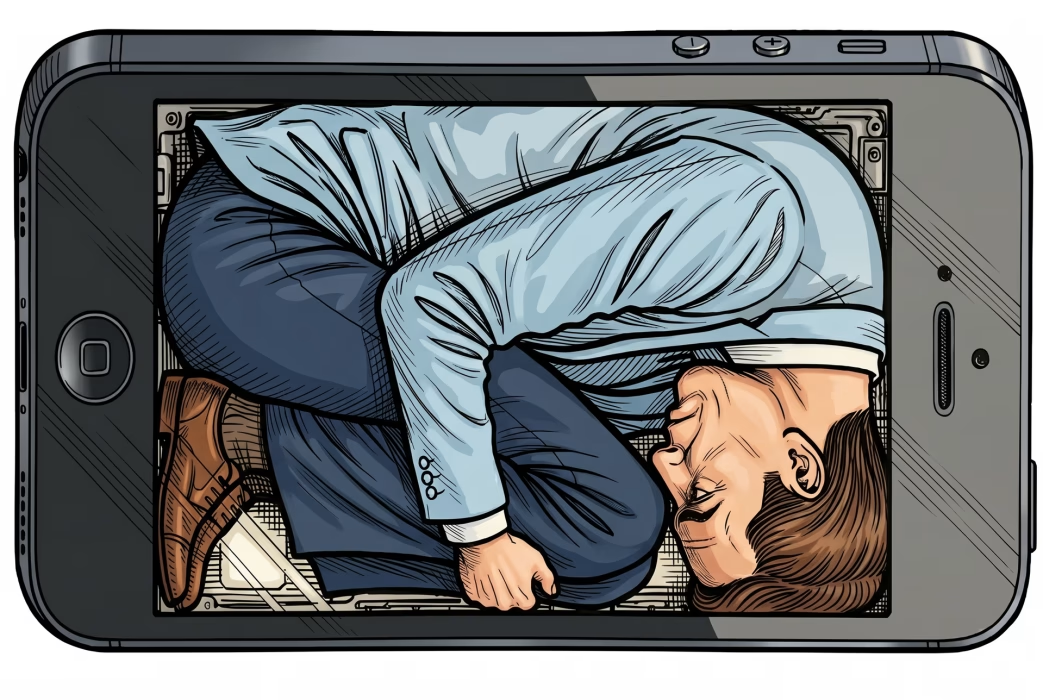
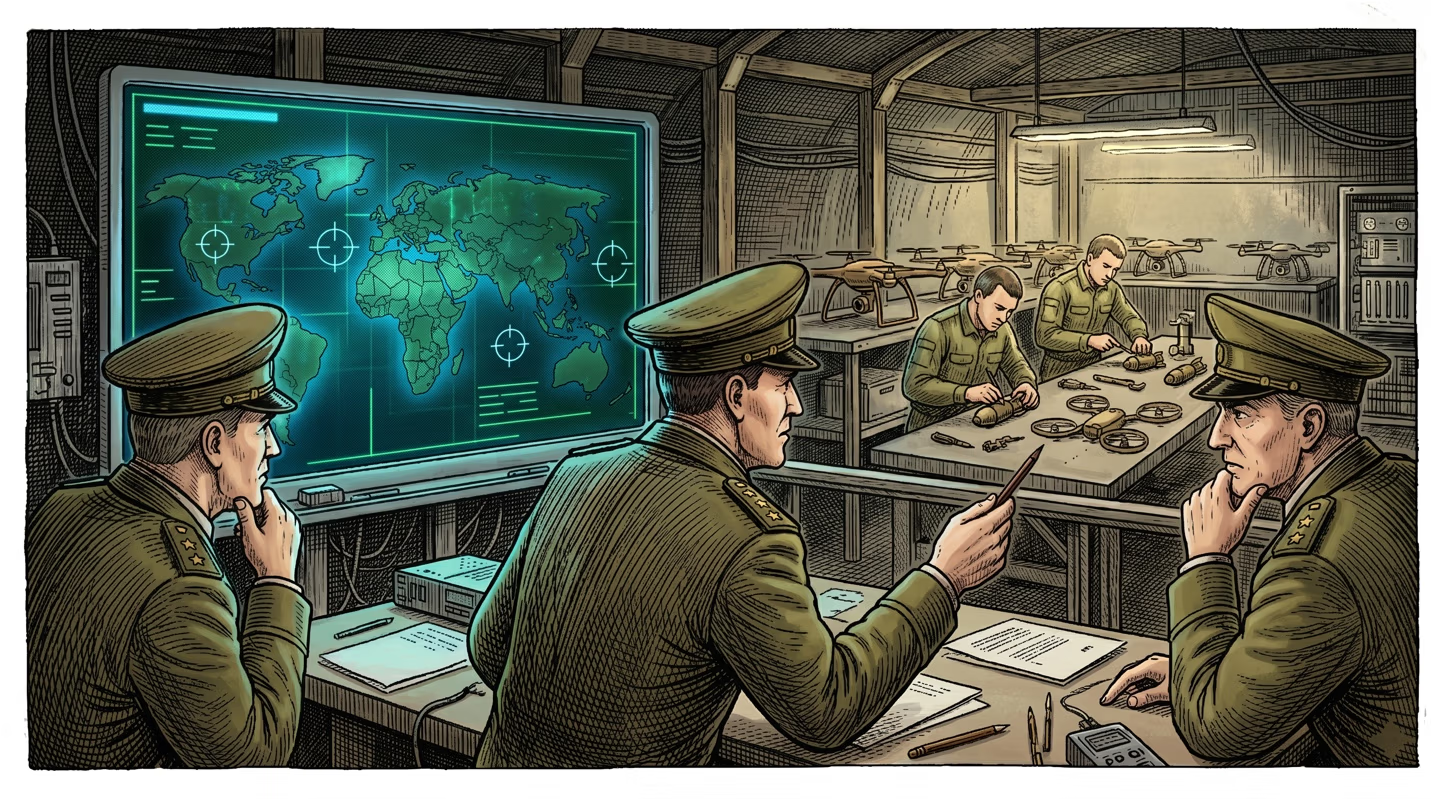
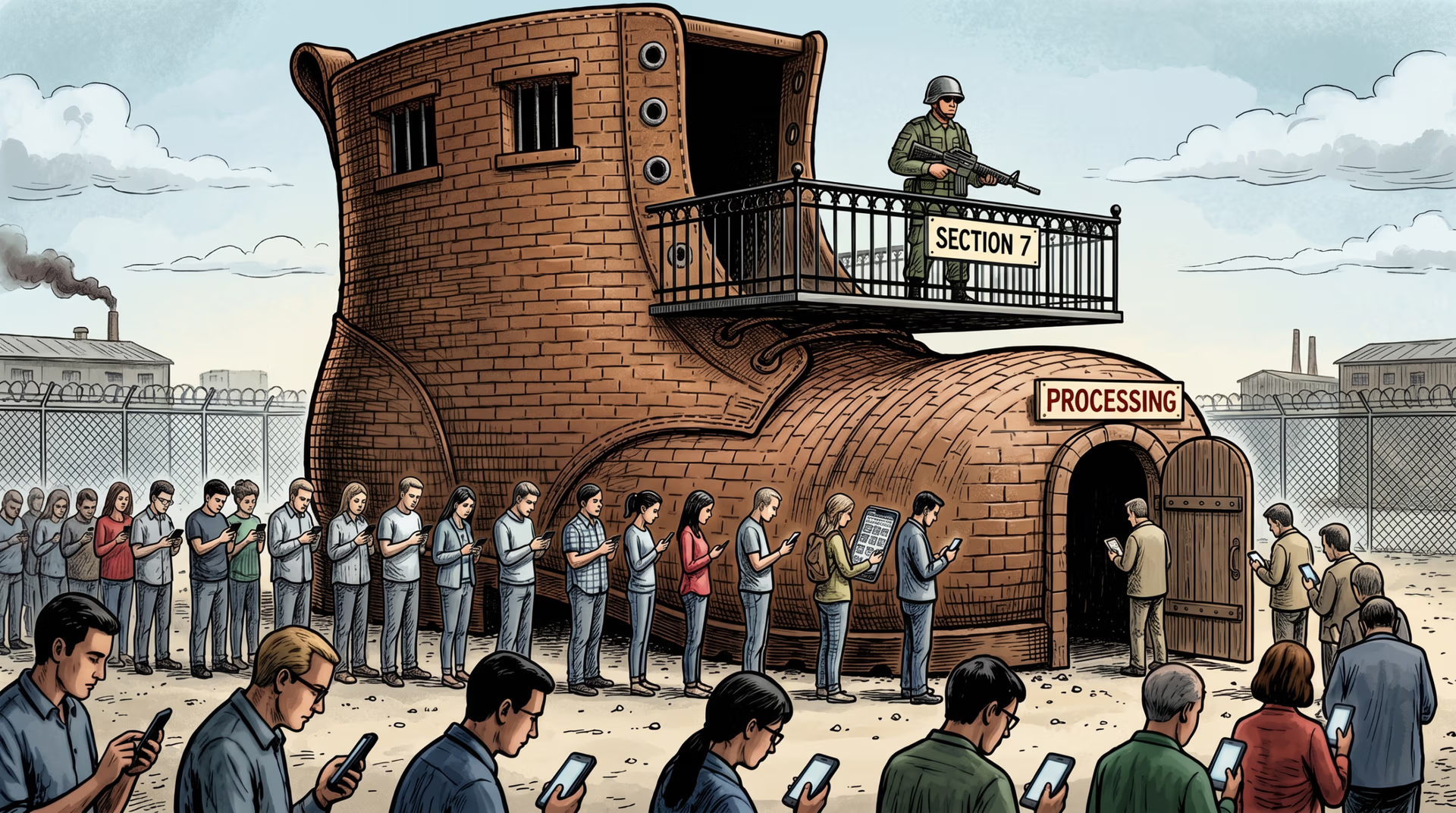


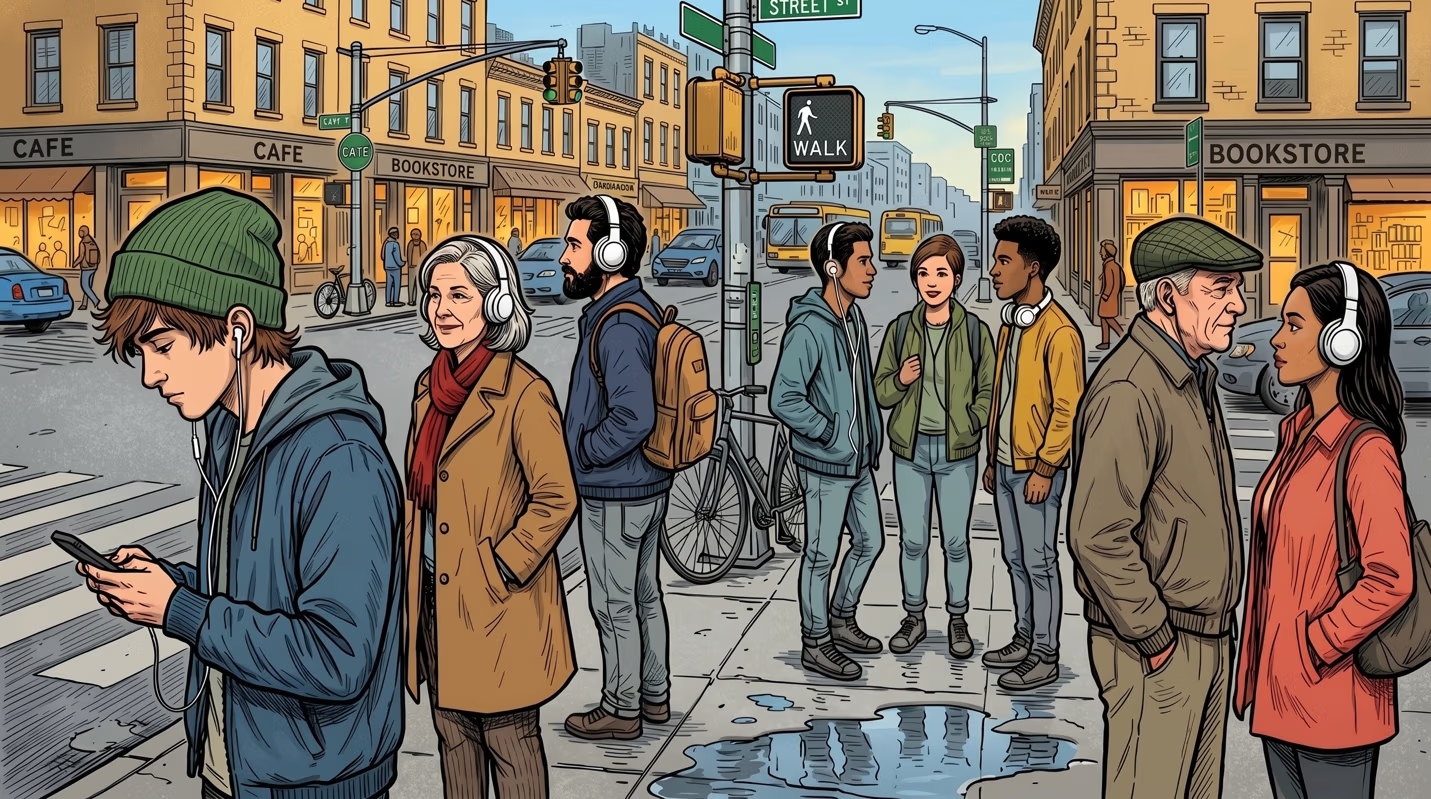

Just as our forefathers stripped forests and top soils, recent generations have been engaged in on the frontiers of consciousness, stripping away the ancient growths of the collective unconscious.
“The Future of the Unconscious” part of an unpublished series on the futures of varied themes, titled Mosaic, 1974, p 1 of typescript
Year: 1974
Chapter:
Unconscious
We actually live in a world environment that now has the structure of our own subconscious lives.
"The Future of Morality: The Inner vs. the Outer Quest", in Dunphy, ed., The New Morality” (1967), p 176
Year: 1967
Jung developed his essay on the unconscious on the theory that the people of this world are asleep.
“Genius or Whimsy? Some McLuhanisms”, in Saturday Post of Canada, May 13, 1979, p 13
Year: 1979
In this century we have reached awareness of the unconscious itself as a major hidden resource available for the commercial and political manipulation of consciousness.
“Media and the inflation Crowd” (1973), in Marshal McLuhan: The Man and the Message (1989), p 62
Year: 1973
Chapter:
Unconscious
The Expressionists had discovered that the creative process is a kind of repetition of the stages of apprehension, somewhat along the lines that relate Coleridge's Primary and Secondary imagination. In the same way there would seem to be an echo of the formative process of consciousness in the entire content of the unconscious. This, in turn, implies a close liaison between private and corporate awareness, though which exerts the most effect on the other may depend entirely on the degree of awareness achieved.
From Cliché to Archetype with Wilfred Watson (1970), p 200
Year: 1970
The familiar idea of “making the news” now yields to making the world itself. For the best part of a century we have been programming human consciousness with retrievals and replays of the tribal unconscious. The complementary of this process would seem to be the “natural” program for the period ahead: programming the unconscious with the recently achieved forms of consciousness. This procedure would evoke a new form of consciousness radically different from former consciousness. Everybody becomes a voluntary participant in creating diversity without loss of identity. Man is the content of the environment he creates, whether of “hardware” or software,” whether of consciousness of unconsciousness. There is therefore no technical alternative to “humanism” even though for many this would include the divine grace of the superhuman. INNOVATION IS OBSOLETE, SO IS OBSOLESCENCE, AS INFORMATION SPEED-UP TRANSFORMS MAN AND HIS WORLD INTO ART FORM. AFINN-AGAIN-ARRAY-SURRECTION!
Take Today with Barrington Nevitt (1972), p 297. [Italics and capitalizations appeared this way in the original)
Year: 1972
Rationality or consciousness is itself a ratio or proportion among the sensuous components of experience, and is not something added to such sense experience. Subrational beings have no means of achieving such a ratio or proportion in their sense lives but are wired for fixed wave lengths, as it were, having infallibility in their own area of experience. Consciousness, complex and subtle, can be impaired or ended by a mere stepping-up or dimming-down of any one sense intensity, which is the procedure in hypnosis. And the intensification of one sense by a new medium can hypnotize an entire community.
Understanding Media (1964), MIT/Routledge edition, p 112
Year: 1964
To be conscious or unconscious is to make a certain order of experience. I possess no theory of consciousness. But that says nothing. Throughout my work, however, I am saying that awareness is being pushed more and more out into the environment.
“The Hot and Cool interview (1967)”, in Media Research (1997), p 58
Year: 1967
More and more it has occurred to people that the sense of touch is necessary to integral existence. The weightless occupant of the space capsule has to fight to retain the integrating sense of touch. Our mechanical technologies for extending and separating the functions of our physical beings have brought us near to a state of disintegration by putting us out of touch with ourselves. It may very well be that in our conscious inner lives the interplay among our senses is what constitutes the sense of touch. Perhaps touch is not just skin contact with things, but the very life of things in the mind? The Greeks had the notion of a consensus or a faculty of "common sense" that translated each sense into each other sense, and conferred consciousness on man.
Understanding Media, 1964, MIT/Routledge edition, p 108
Year: 1964
Chapter:
Tactile, Touch
The arts both as storehouse of achieved values and as the antennae of new awareness and discovery make possible both a unified and an inclusive human consciousness in which there is easy commerce between old and new, between assured success and tentative inquiry and experiment.
The Mechanical Bride, (1951) p 87
Year: 1951
Chapter:
Art, Artists
The multi-leveled consciousness fostered by modern physics and anthropology is matched in the contemporary arts of music, poetry, and painting.
Auden: An Introductory Essay (Book Review), Renascence, 1952, p 220
Year: 1952
The extremely mobile individual consciousness of the print-oriented man now reverses into the tribal inertia of multi-consciousness.
From Cliché to Archetype, with Wilfred Watson, 1970, p 6
Year: 1970
Chapter:
Retribalizing
This drive towards "spontaneity of consciousness" fostered the child cult, as well as primitivism of many varieties. But it represented a rebellion against merely visual culture, a rebellion that had begun in the eighteenth century with Rousseau and others.”
“Inside the Five Sense Sensorium” (1961), in On the Nature of Media (2016), p 57
Year: 1961
Chapter:
Retribalizing
Our environments are made of the highest levels of human consciousness.
The Hot and Cool Interview (1967), in Media Research (1999), p 58
Year: 1967
Chapter:
Environment
The basic criterion for any kind of human excellence is simply how heavy a demand it makes on the intelligence. How inclusive a consciousness does it focus?
The Mechanical Bride, (1951), p 152
Year: 1951
Chapter:
Art, Artists
[We] shall resemble pre-literate and pre-historic societies in the inclusivity of their awareness.
“The Post-Literate Man”, 1973, Cycle 7: Essays, Short Stories, Poems for Freshman English, ed. by James Burl Hogins and Robert Earl Yaber, p 230
Year: 1973
Chapters:
Postliteracy | Retribalizing
Perhaps there are better approaches along quite different lines; for example, consciousness is regarded as the mark of a rational being, yet there is nothing lineal or sequential about the total field of awareness that exists in any moment of consciousness.
Understanding Media (1964), MIT/Routledge edition, p 85
Year: 1964
Jung never tires of telling us that the environment of consciousness is the unconscious. The job of consciousness is to understand the environment and so to end environment [as subliminal action]…to subject it to total rational control.
“The Meaning of TV to Children” (1965), p 36
Year: 1965
Chapter:
Jung, Carl G
Consciousness is not a concept. Consciousness is the making sense of percepts. The percept inevitably replaces the concept in the swiftly changing areas created by our electric access to knowledge.
“Education and the New Media”, March 25, (1970), Televised in France, Le Monde Diplomatique, April 29, (1970), p 3
Year: 1970
Why must Western man push into his ever-increasing unconscious all the effects of all his own artefacts and technologies? Speed-up of information as the new form of transactions has stretched the unconscious all the way into present consciousness… Conscious and unconscious reverse roles. We are now conscious and are compelled to use the unconscious as a new kind of consciousness. We call this new form by various names: “breakthrough,” “intuition,” “insight,” “pattern recognition.”
“Medium Meaning Message” (1974), p 29
Year: 1974
The unconscious could be called the “scrubbing” of the present, just as printing and other technologies are means for retrieving the past.
From Cliché to Archetype with Wilfred Watson (1970), p 63
Year: 1970
Consciousness itself is an inclusive process not at all dependent on content. Consciousness does not postulate consciousness of anything in particular.
Understanding Media (1964), MIT/Routledge edition, p 283
Year: 1964
Chapter:
Medium is the Message
Individual consciousness is achieved by strategic ignorance and suppression.
From Cliché to Archetype with Wilfred Watson, 1970, p 63
Year: 1970
Even if we should wish to recover that older world we can do so only by an intensive study of the ways in which the media have swallowed it. And no matter how many walls have fallen, the citadel of individual consciousness has not fallen nor is it likely to fall. For it is not accessible to the mass media.
“Educational Effects of the Mass Media of Communication”, in Teachers College Record 1956, Vol. 57, No. 6, p 403
Year: 1956
Everything we call rationality is visual. The irrational is the unconscious, where there are no connections. In the electric world everything is the unconscious.
“Education in the Electronic Age” (1970), p 7
Year: 1970
Technology would seem to be the pushing of the archetypal forms of the unconscious out into social consciousness.
Letter to George Gerbner, September 21, 1964, in Letters of Marshall McLuhan (1987), p 310
Year: 1964
Chapter:
Unconscious
One could write a kind of science fiction story of the future of consciousness, the future of the unconscious, “the future of an erosion.” The future of consciousness is already assuming a very different pattern, a very different character.
“Our Dawning Electric Age” (1965), p 18
Year: 1965
Consciousness’ duty is to take over the unconscious.
Page of one-liners sent to Gerald Feigen, circa 1970
Year: 1970
You see the human unconscious is the total experience of mankind stored without any story line, just jumbled and assembled in the human unconscious. Now with instant dispersal and instant retrieval systems, we have – by the mere fact of the instantaneous, the all-at-once – put outside us the unconscious which is part of that return to the age of the hunter, the most primitive form of human society. With the latest technology we encounter the most primitive forms of human association, part of our own unconscious life.
“Information Hunt Looms Big”, in College and University Journal, Vol 6, No. 2, Spring, 1967, p 6
Year: 1967
The “tragic flaw” is not a detail of characterization, a mere “fly in the ointment”, but a structural feature of ordinary consciousness.
From Cliché to Archetype with Wilfred Watson, 1970, p 45
Year: 1970
Advertising, with its appeal to collective emotion, has set up national brands and totems for communal participation.
“The Age of Advertising”, in Commonweal, September 11, (1953), Vol. 58, No. 23, p 555
Year: 1953
Two centuries later, Mark Twain was engaged in relating the corporate life of the English language to the telegraph age and the telegraph press, an operation in which he was assisted by Charles Dickens and Mr. Jingle. Huckleberry Finn carries us into a world of semiliterate idiom and dialect, of oral slang and twang, suited to a corporate stream of consciousness, and inseparable from life on the Mississippi.
“Liturgy and the Microphone”, (1974), in The Medium and the Light (1999), p 108
Year: 1974