Viewing chapter Cubism (16 quotes)
CUBISM AT A GLANCE [in diamond pattern:] OUTER INNER UPPER UNDER
Card from the Dewline Newsletter deck (1969): 8 of Diamonds
Year: 1969
Chapter:
McLuhanisms & Zingers
In other words, cubism, by giving the inside and outside, the top, bottom, back, and front and the rest, in two dimensions, drops the illusion of perspective in favor of instant sensory awareness of the whole.
Understanding Media (1964), MIT/Routledge edition, p 13
Year: 1964
Chapters:
Medium is the Message | Perspective, Point of View
[Chesteron] was a cubist, you see? A paradox is a form of cubism in which you look at the same situation simultaneously from different directions.
“Mike McManus”, TVO interview (1977), transcript 21:18
Year: 1977
Chapter:
Chesterton, Gilbert Keith
Imagine people in 1910 being baffled by visual cubism, when they wallowed in it in their newspapers every day! The difficulty is not to explain cubism but to account for the mental process of those who found it obscure.
“Electronics as E.S.P.” in Explorations 8, 1957, reprinted as Verbi-Voco-Visual in 1967, both unpaginated
Year: 1957
Chapter:
Narcissus, Denial of Media Effects
And it is here that the person trained in modern art can be of help to the sociologist, for the principles of ad construction are exactly those of symbolist poetry and cubist painting. So that the scientist today whose studies divorce him from the rest of the culture of his age is no less crippled than the artist who is unaware of the techniques of modern science. Far from being strange, therefore, that the ads use many of the most advanced techniques of symbolist art construction would be hard to explain if the situation were otherwise.
“Advertising as a Magical Institution”, 1952, reprinted in On the Nature of Media (2016), p 22
Year: 1952
Standing on a Paris street in 1914, watching a parade of military vehicles using a new camouflage, Picasso said, “Braque and I invented that.”
Cubism tetrad in the widely distributed first-draft Laws of the Media, 1975, with Eric McLuhan, p 256
Year: 1975
Chapter:
Fake
In other words, cubism, by giving the inside and outside, the top, bottom, back, and front and the rest, in two dimensions, drops the illusion of perspective in favor of instant sensory awareness of the whole… Cubism, by seizing on instant total awareness, suddenly announced that the medium is the message
Understanding Media (1964), MIT/Routledge edition, p 13
Year: 1964
Chapters:
Medium is the Message | Perspective, Point of View

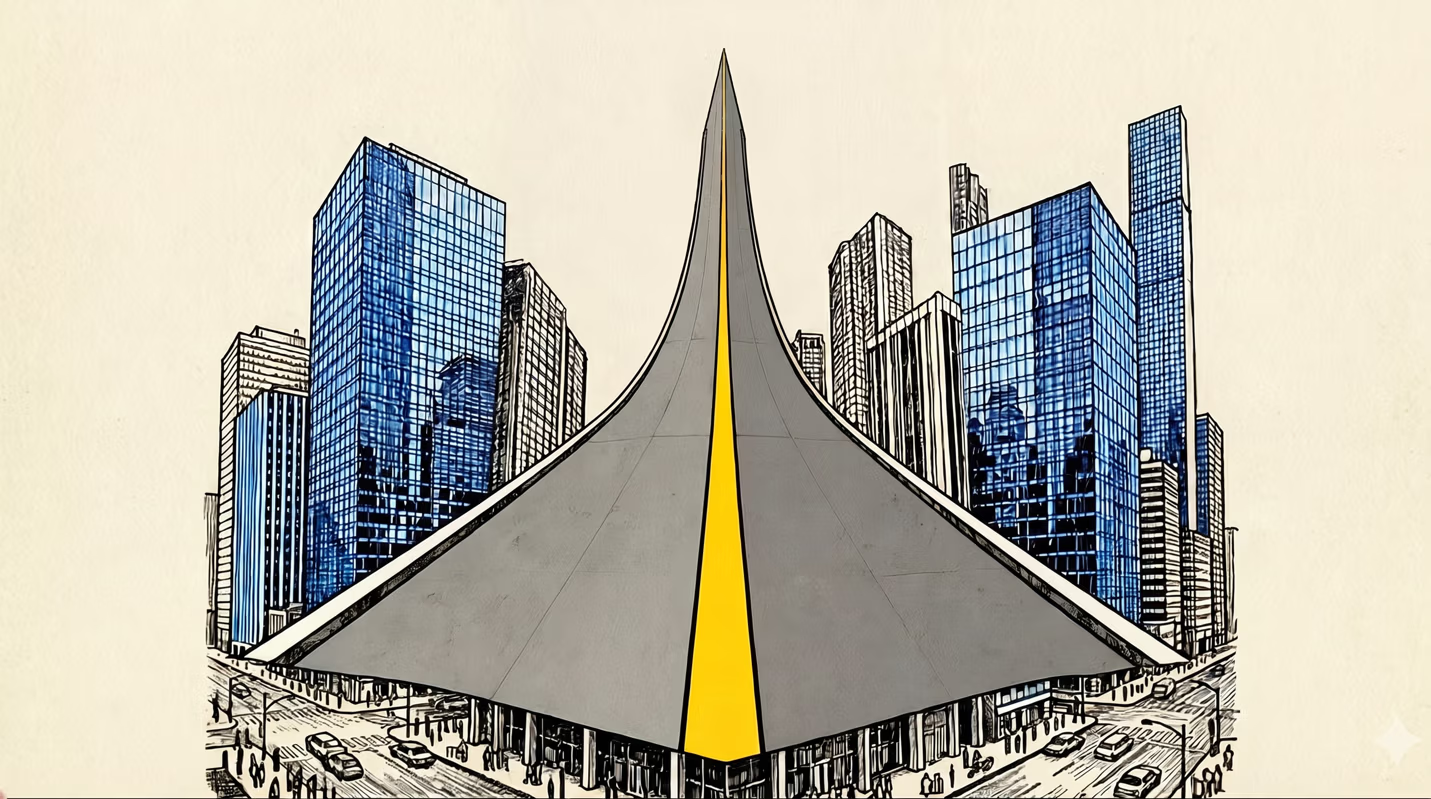


The futurists, the cubists, the Vorticists and others accepted the mechanical as an art form. Today, Pop Art, derived from the old environment of advertising technology, appears as an art form.
“New Media and the Arts”, 1966, p 239
Year: 1966
Chapters:
Art, Artists | Extension Theory
“History is now,” as Eliot sees it in Four Quartets. This “cubist” sense of the past as a dimension of the present is natural in four-level scriptural exegesis and ancient grammar. It is necessary to enjoyment of Ulysses or the Wake with its theme that “pastimes are past times” that the popular press, popular games, and ordinary speech are charged with the full historic weight of the collective human past.
“James Joyce: Trivial and Quadrivial” Thought: Fordham University Quarterly Vol. 28, No 1, (1953), in The Interior Landscape (1969), p 45
Year: 1953
Chapter:
History
Chronology is not enough. Structural study [of patterns running through multiple areas] is needed. For example, in the year 1900 Max Planck’s quantum mechanics appealed to the same structural paradigm as Sigmund Freud’s Interpretation of Dreams in the same year. Both Planck and Freud proclaimed the same doctrine of discontinuity, the one in the physical world and the other in the psychological world. Overlapping Planck and Freud had been the development of “multi-locational” painting and sculpture, later to be called “cubism.” The advantage of structural analysis (developed by Ferdinand de Saussure in linguistics and Sigfried Giedion in art, and by Claude Lévi-Strauss in anthropology) is that the structural approach makes it possible to “read” whole cultures as “texts”. It is to the reading of the texts of arts and sciences since 1900 that our Centre project is directed. [Included in a letter requesting a grant to pursue his study of fresh modes of perception in science first discerned by poets and artists, a project he called the “20th Century Baedeker”]
Letter to Dr. T.C. Clark, administrator at the University of Toronto, July 26, 1974
Year: 1974
Chapter:
Living Unity
The interior landscape, however, moves naturally towards the principle of multiple perspectives as in the first two lines of The Waste Land, where the Christian Chaucer, Sir James Frazer, and Jessie Weston are simultaneously present. This is “cubist perspective” which renders, at once, a diversity of views with the spectator always in the center of the picture, whereas in picturesque art the spectator is always outside. The cubist perspective of interior landscape typically permits an immediacy, a variety and solidity of experience denied in the picturesque and to Tennyson.
“Tennyson and Picturesque Poetry” (1955), in Essays in Criticism, Vol 1, No 3, July (1951), p 281-282, reprinted in The Interior Landscape The Literary Criticism of Marshall McLuhan, (1969), p 155
Year: 1955
Chapters:
Participation | Perspective, Point of View
Finally the cubist approach works by montage, by juxtaposition and compression of disparate items, from multiple planes of action and various frames of reference. It eschews the established essays and tractarian development of a single line of reason or a single level of discussion. For the expansion of argument by indirection in single perspective it substitutes agility, in creating a shifting viewpoint. The object remains fixed but the spectator has to be constantly active like a cameraman. So that the multiple views of the same object or theme serve in place of the usual development of “explanation” from a static position. It is in this way, also, that a montage of exhibits from various fields of popular culture result in an inconclusive image of a kind more than popular.
From a 1947 draft of “Typhon,” a hand written manuscript that preceded, and grew into The Mechanical Bride, p 6
Year: 1947
…the technique of Toynbee makes all civilizations contemporary with our own. The past is made immediately available as a working model for present political experiment. Margaret Mead’s Male and Female illustrates a similar method. The cultural patterns of several societies, quite unrelated to one another or to my own, are abruptly overlayered in cubist or Picasso style to provide a greatly enriched image of human potentialities. By this method the greatest possible detachment from our own immediate problems is achieved. The voice of reason is audible only to the detached observer.
The Mechanical Bride (1951), p 3
Year: 1951
Chapter:
Pattern Recognition
In 1900 Max Planck produced this new quantum physics in which he pulled out all the connections, said there’s no connection in matter. The same year Picasso pulled out all the connections in space between art forms. The same year Freud, that’s 1900, pulled out the connection between the conscious and the unconscious and began his dream analysis. In that year all the connections were pulled out between all the things that had been joined before. And at the same time when Picasso pulled out the connections in space – cubism means all spaces simultaneously – when he pulled out those connections he plunged back into the utmost form of primitive consciousness. That is where modern man started, in 1900. Back into the most primitive kind of awareness. And this is where it’s at.
“The Medium Brings His Message to the Governor,” Los Angeles Times, March 12, 1978, p F1
Year: 1978
Chapter:
Living Unity
Chronology is not enough. Structural study [of patterns running through multiple areas] is needed. For example, in the year 1900 Max Planck’s quantum mechanics appealed to the same structural paradigm as Sigmund Freud’s Interpretation of Dreams in the same year. Both Planck and Freud proclaimed the same doctrine of discontinuity, the one in the physical world and the other in the psychological world. Overlapping Planck and Freud had been the development of “multi-locational” painting and sculpture, later to be called “cubism.” The advantage of structural analysis (developed by Ferdinand de Saussure in linguistics and Sigfried Giedion in art, and by Claude Lévi-Strauss in anthropology) is that the structural approach makes it possible to “read” whole cultures as “texts”. It is to the reading of the texts of arts and sciences since 1900 that our Centre project is directed. [Included in a letter requesting a grant to pursue his study of fresh modes of perception in science first discerned by poets and artists, a project he called the “20th Century Baedeker”]
Letter to Dr. T.C. Clark, administrator at the University of Toronto, July 26, 1974
Year: 1974
Chapter:
Living Unity
The dyslexic: Everyman as cubist
Laws of Media with Eric McLuhan, 1988, p 76
Year: 1988
Chapter:
McLuhanisms & Zingers