Viewing chapter Ecology (13 quotes)
As soon as the planet went inside a man-made environment [Sputnik in orbit], the occupants of the planet began to hum and sing the ecological theme song without any further prompting.
“The End of the Work Ethic”, 1972, pages 196-197
Year: 1972
MCMANUS: What now briefly is this thing called media ecology?
MCLUHAN: It means arranging various media to help each other so they won’t cancel each other out, to buttress one medium with another. You might say, for example, that radio is a bigger help to literacy than television, but television might be a very wonderful aid to teaching languages. So, you can do some things on some media that you cannot do on others. Therefore, if you watch the whole field, you can prevent this waste that comes by one cancelling out the other.
MCMANUS: But do you think that perhaps at the end of your studies of media ecology, you're going to advise a cut-down on watching television? $500 for anyone who will give it up for a day?
MCLUHAN: Europeans have cut back on that almost down to nothing long ago because they realized that it threatened literate values very much. An hour a week is about what the French child gets for television.
Mike McManus TVO interview, 1977, transcript 17:57. Also in Understanding Me (2003), p 275
Year: 1977
Chapter:
Media Study
Media are always and necessarily corporate or group activities, whether they are the mother tongues or the father images of big corporations. With the proliferation of multi-media in our time, there is a new consensus that some manner of media ecology, a control be put into action; but against proposal there is a negative and factor in the Western world.
“The Violence of the Media”, 1976, Canadian Forum, p 9; reprinted in MM: The Man and His Message (1989)
Year: 1976
Chapter:
Media Study
We now have to confront the need for an ecology of media themselves. It’s not just raw materials but the manmade materials too that now have to be harmonized and resolved in their interaction. Tony Schwartz, in his book “The Responsive Chord”, explains this very tricky problem about television as a new environmental medium, by saying that the TV image uses the eye as an ear.
LIVING IN AN ACOUSTIC WORLD, SPEECH AT UNIVERSITY OF SOUTH FLORIDA. 1974, transcript, 50.01 and forward
Year: 1974
Chapters:
Harmony | Media Study
As we push our electric technology it will flip/open in the form of corporate consciousness. The present interim is baffling because it has a closed character, with which we know not how to deal. An electric system is very much like a small tribal society—that is, ecological and homeostatic.
Letter to John I. Snyder, Jr., August 4, 1963, in Letters of Marshall McLuhan (1987), p 291
Year: 1963
The electric age is the age of ecology. It is the study and projection of the total environments or organisms and people, because of the instant coherence of all factors, made possible by moving information at electric speeds.
Counterblast (1970), p 36
Year: 1970
Chapter:
Environment
The future of government lies in the area of psychic ecology and can no longer be considered on a merely national or international basis.
Take Today with Barrington Nevitt, 1972, p 227
Year: 1972
Chapters:
Future | Politics and Government
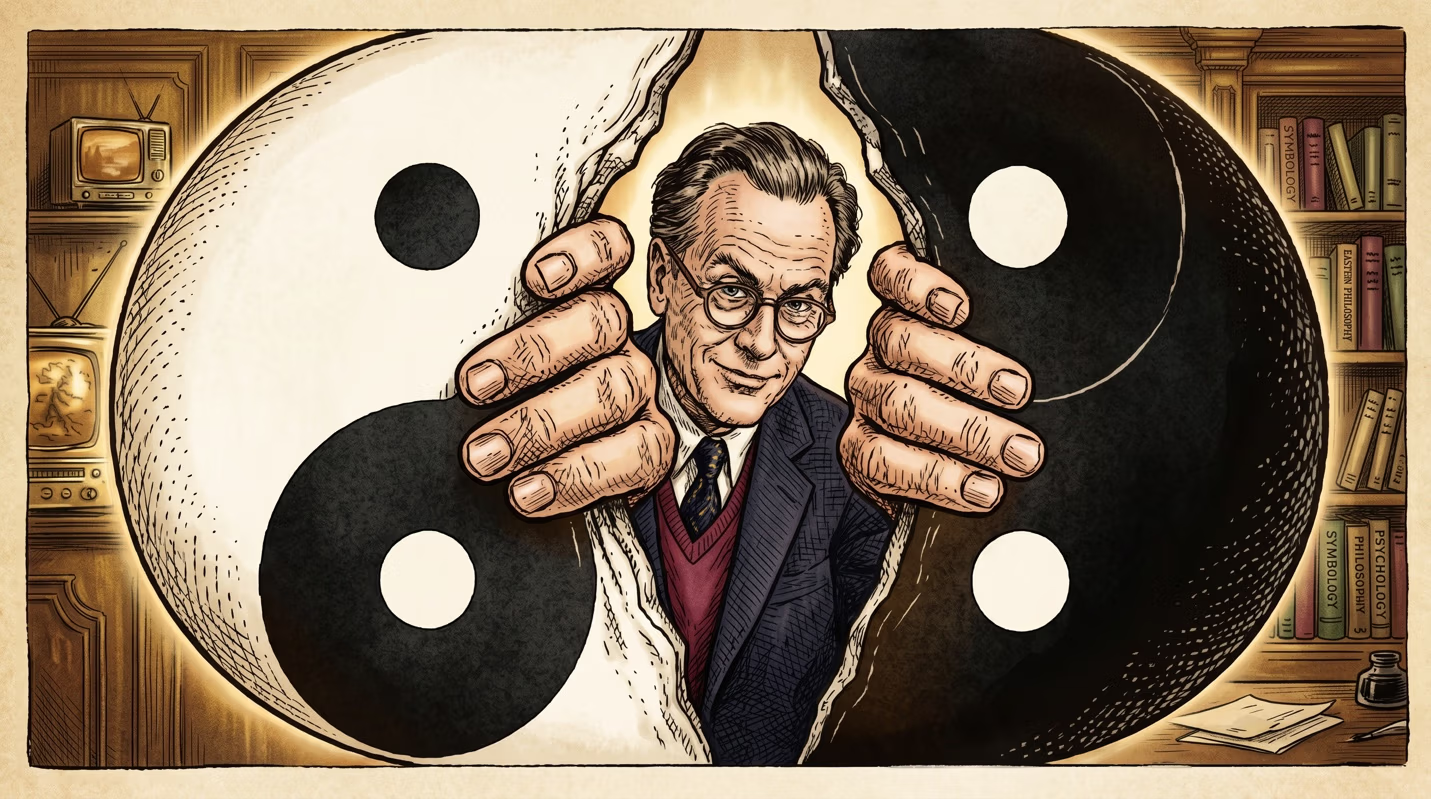
With the proliferation of multimedia in our time, there is a new consensus that some manner of media ecology and control be put into action; but against this proposal there is a negative and hidden factor in the stem world. Edward Hall, the anthropologist, has drawn attention to this negative attitude in the Western world in a recent study, the Fourth Dimension in Architecture: The Impact of Building on Man´s Behavior.
“Violence of the Media” (1976), in The Man and His Message (1989), p 92
Year: 1976
Chapter:
Media Study
When Sputnik went up on October 4, 1957, it put the planet inside a manmade environment for the first time. Spaceship Earth has no passengers, only crew. Sputnik transformed the planet into Spaceship Earth with a programmed problem. Ecology became the name of the game from that moment on. Nature ended. The planet became an art form inside a manned capsule, and life will never be the same on this planet again. Nature ended and art took over. Ecology is art.
“Living in an Acoustic World,” Public Lecture at the University of South Florida, 1970. “Marshall McLuhan Speaks” Transcript, p 11
Year: 1970
Chapter:
Planet, Nature
The Greeks and their successors regarded Nature (pliusis or physics) as an artefact. Having entelechized this massive product of their own literate technology, they never turned to the subsidiary technologies that were the extensions of man. However, they would have admitted at once, if asked, that any actuation of human potential generates an entelechy or pattern of energy that is new. It was not until Poe and Baudelaire that these patterns began to be studied. This was after industrialism had already abolished most of the Greek and Roman Natura. With the coming of electric technology whatever remained of Greek Nature was scrapped so that today we are back where they started with primitive Existence. They had reared the figure of Nature on the ground of Existence. They had done it by classification. The new ecology will use other means.
Letter to John Wain, April 2, 1971, in Letters of Marshall McLuhan (1987) p 431
Year: 1971
Chapter:
User as Content
On the phone "we are there" and "they are here", and so with radio and TV. Angelism and the occult alike are the by-products of electronics. Ecology is incidental to that.
Letter to Edward T. Hall (January 21, 1971), in Letters of Marshall McLuhan (1987), p 422
Year: 1971
Chapter:
Oft-Cited Quotes
The universal fact of pollution and the universal acceptance of ecology are complementary creations of service environments that stepped up their effects to the level of extreme disservices.
“Innovation is obsolete”, in Evergreen, Vol. 15, # 90 (1971), p 49
Year: 1971
Chapter:
Planet, Nature
Ecology is the simultaneous awareness of the interplay of the total field of processes.
Take Today with Barrington Nevitt, 1972, p 223
Year: 1972