Viewing chapter Effect (24 quotes)
Written backward, in order that the effect of the story may always be the exact reconstruction of a crime, the [detective story] form is based on the same method as that employed in laboratory experiments in in modern historiography, archaeology, and mechanical production. But the detective story preceded these sciences in the discovery of this method. It is only one striking instance of popular expression which has its taproot in the deepest intuitions of our culture.
“Technology and Political Change,” International Journal, Vol 7, No. 3, Summer, (1952), p 192
Year: 1952
Chapter:
Living Unity
Philip Marchand:
"if words were ambiguous and best studied not in terms of their 'content' but in terms of their effects in a given context and if the effects were often subliminal, the same might be true of other human artifacts, the wheel, the printing press, the telegraph and the TV.”
In Marshall McLuhan The Medium and The Messenger : A Biography, (1989), p 34 [McLuhan’s biographer, describing how MM applied the lessons of the New Criticism, which he learned at Cambridge, to technologies at large]
Year: 1989
Chapter:
New Criticism
As an example, the popular detective story depends on a technique of analysis and reconstruction which depends on the discontinuity of newspaper reportage. This discontinuity in turn is related to the technique of cinematic montage and also to the most successful contemporary methods of scientific analysis and to advanced technique in historiography, archaeology, and anthropology.
“Advertising as a Magical Institution” from The Commerce Journal, Toronto, (1952), reprinted in On the Nature of Media (2016), p 21
Year: 1952
Chapters:
From Tribal to Literate | Hardware / Software | Living Unity | Symbolists | Time | Today’s Transition
[T]he designing of new products... requires a knowledge on the part of the designer of all the effects that that particular design or image is going to have on the whole public who are subjected to it.
“The Password Is Involvement”, 1967, p 20
Year: 1967
Chapter:
Advice
We have reversed the flow of information which was once invested entirely in the production end of activity. We now have comparably exact information about the market side of the picture. So that we can now, like the writer of detective stories, work backwards in order to reconstruct the exact order of events.
“Conspicuous Co-Existence” (1957),p 6
Year: 1957
Chapter:
Management
Edgar Allan Poe, a press man and, like Shelley, a science-fictioneer, correctly analyzed the poetic process. Conditions of newspaper serial publication led both him and Dickens to the process of writing backward. This means simultaneity of all parts of a composition. Simultaneity compels sharp focus on effect of a thing made. Simultaneity is the form of the press in dealing with Earth City. Simultaneity is the formula for the writing of both the detective story and symbolist poem. These are derivatives (one “low” and one “high”) of the new technological culture. Simultaneity is related to the telegraph, as the telegraph to math and physics.
“Media Log”, In Explorations 4 (1955), p 52
Year: 1955
Chapter:
Simultaneity
The electronic man starts with the effects desired and then looks around for the means to those effects, whereas the old visual culture had accepted all the available means as a kind of destiny or irreversible fate which drove him toward ever-changing patterns, regardless of the cost.
“Liturgy and the Microphone”, (1974), p 27
Year: 1974







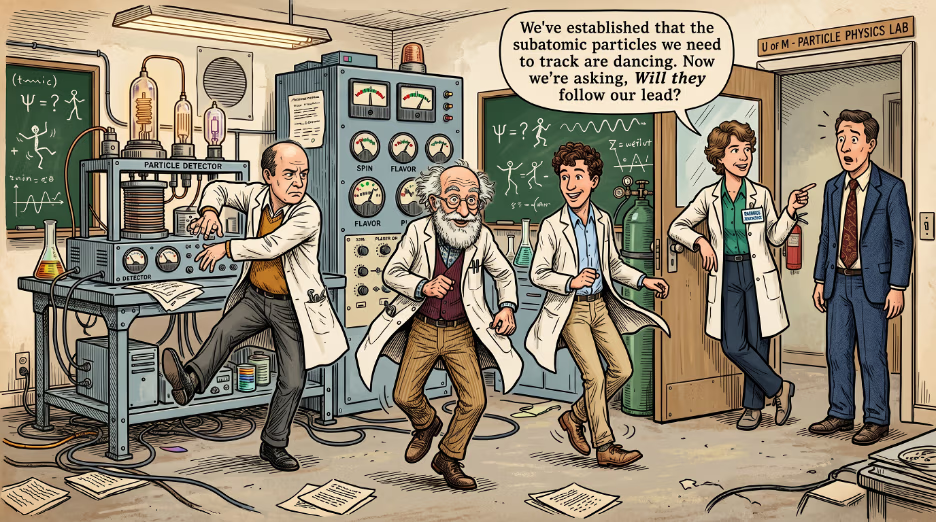

The best way to study the nature of any medium is to study its effects on other media because you can see them spelled out there. So when you study the effect of TV on sports, then you begin to understand the nature of TV. And when you see its effects on politics, in advertising and in movies, then you begin to understand it.
Conversation with MM, 1977, p 62
Year: 1977
Chapter:
Media Study
The “right” word is not the one that names the thing but the word that gives the effect of the thing.
Take Today with Barrington Nevitt (1972), p 142
Year: 1972
Whitehead does not elaborate on the great nineteenth century discovery of the method of invention. But it is, quite simply, the technique of beginning at the end of any operation whatever, and of working backwards from that point to the beginning. It is the method inherent in the Gutenberg technique of homogeneous segmentation, but not until the nineteenth century was the method extended from production to consumption. Planned production means that the total process must be worked out in exact stages, backwards, like a detective story. In the first great age of mass production of commodities, and of literature as a commodity for the market, it became necessary to study the consumer's experience. In a word it became necessary to examine the effect of art and literature before producing anything at all. This is the literal entrance to the world of myth.
The Gutenberg Galaxy: The Making of Typographic Man, (1962), p 276
Year: 1962
Chapter:
Myth, Mythic
A work of art has no existence or function apart from its effects on human observers. And art, like games or popular arts, and like media of communication, has the power to impose its own assumptions by setting the human community into new relationships and postures.
Understanding Media (1964), MIT/Routledge edition, p 242
Year: 1964
That for every cause there are many effects just as every effect has many causes – this becomes apparent to those existing in an electric environment of information.
“Putting on the Media” (1971), p 5
Year: 1971
Today in education also, training begins with the effect to be achieved. For it is only by involvement in the process itself that awareness and mastery occur. We learn to walk and talk by making as if we could walk and talk.
“The Body Alphabet” [find the rest]
Concern with effect rather than meaning is a basic change of our electric time, for effect involves the whole situation, and not a single level of information movement.
Understanding Media (1964), MI?T?, p 26
Year: 1964
Waiting for Godot simply pulls the effect of waiting away from all the reasons for waiting, in literary symbolic style. The poetic fun is to restructure all the reasons from the mere effects.
“Roles, Masks, Performances.” New Literary History, Vol. II, No. 3, Spring, 1971, p 520
Year: 1971
The technique is to work backward from effect or result to cause, not from cause to effect. This situation resulting from instantaneous information movement was referred to by A. N. Whitehead in Science and the Modern World, when he pointed out that the great discovery of the later nineteenth century was not the invention of this or that, but the discovery of the technique of discovery. We can discover anything we decide to discover.
“Is It Natural That One Medium Should Appropriate and Exploit Another?” (1967); The Essential McLuhan, 1995, p 187
Year: 1967
The study of media begins, not with their uses or their programs, but with their effects.
Letter to Martin Essslin, September 23, 1971, in Letters, (1987), p 440
Year: 1971
Let him consider instead that the poetic process as it appears in the work of Poe, Baudelaire, and Eliot, and in writers of detective fiction, is also the manifest principle of historical reconstruction as used by Gilson.
Catholic Humanism and Modern Letters” The McAuley Lectures: Christian Humanism in Letters, Saint Joseph College, West Hartford Connecticut, (1954),p 53 , reprinted in The Medium and the Light (1999), p 157.
Year: 1954
…it was Poe who invented the detective story and the symbolist poem as his response to the electric challenge… Poe saw that the principle [of working backward for serialization] extended all the way to the daily news report. For, if news came in so fast that no single editorial eye could process the entire contents of the paper, then it was necessary to package the news in a style that made the reader the editor.
"Media Alchemy in Art and Society." The Journal of Communication, Vol. 8, No. 2, Summer, 1958, p 65
Year: 1958
[E]lectronic man starts with the effects desired and then looks around for the means to those effects, whereas the old visual culture had accepted all the available means as a kind of destiny...
“Liturgy and the Microphone”, (1974), p 17
Year: 1974
Chapter:
Between Two Ages
The study of effects is entirely in the right hemisphere. The left hemisphere people feel that if you put on good programs, you’re going to get good results. That is not true. Absolutely no relation between inputs and effects, because their user is the content. It’s the person using it that is the real content of any show. And so unless you can clarify his awareness, or his percepts, it doesn’t matter what you put on, it will be corrected.
J. Kirsch interview (1976), transcript, p 15
Year: 1976
Chapter:
User as Content
T.S. Eliot remarked apropos of Dante that he does not tell us what people believed in the 13th century, but rather how it felt to have such beliefs. In other words, the artist provides not the action, but the reaction to the new situations.
U.S. Catholic, March, 1966, p 29
Year: 1966
The new effects through new uses of any innovation are realized only after it becomes obsolescent through fresh innovation.
“Symposium” (1973), p 10
Year: 1973
Chapter:
Environment
More and more we turn from the content of messages to study total effect. Kenneth Boulding put this matter in The Image by saying, "The meaning of a message is the change which it produces in the image." Concern with effect rather than meaning is a basic change of our electric time, for effect involves the total situation, and not a single level of information movement. Strangely, there is recognition of this matter of effect rather than information in the British idea of libel : "The greater the truth , the greater the libel.”
Understanding Media (1964), MIT/Routledge edition, p 26
Year: 1964