Viewing chapter Environment (103 quotes)
Fish don’t know water exists till beached.
Marshall McLuhan
Culture Is Our Business, (1970), p 191
Year: 1970
Chapter:
Environment
Fish know nothing of water. A New Yorker cartoon shows two fish getting ashore: “This is where the action is!”
Culture Is Our Business, (1970), p 70
Year: 1970
Increasingly these forms [typewriters, cars, airplanes, highways, etc.] have evolved by their own logic toward organic life, as in forms begun as clumsy adaptations of primary experience in the handicrafts. The scientist propelled them abstractly toward the freedom of art and the inner coherence of organisms. Working from the opposite end, the artists of our time have moved from primary impressionism toward abstract art.
“Review of Paul Klee, by Carola Giedion-Welcker”, in Shenandoah, Vol. 4, No. 1, Spring, (1953), p 80
Year: 1953
Chapter:
Evolution
Most people… still cling to what I call the rearview-mirror view of their world. By this I mean to say that because of the invisibility of any environment during the period of its innovation, man is only consciously aware of the environment that has preceded it; in other words, an environment becomes fully visible only when it has been superseded by a new environment; thus we are always one step behind in our view of the world. Because we are benumbed by any new technology — which in turn creates a totally new environment — we tend to make the old environment more visible; we do so by turning it into an art form and by attaching ourselves to the objects and atmosphere that characterized it.
Playboy Interview (1969), in Essential McLuhan (1995), p. 238
Year: 1969
Chapter:
Rear View Mirror
But in the case of environments that are created by new technologies, while they are quite invisible in themselves, they do tend to make visible the old environments. We can always see the Emperor's old clothes, but not his new ones.
“The Medium Is the Message”, (1960), p 163
Year: 1960
Chapter:
Media Reprocess Media
Anything that raises the environment to high intensity, whether it be a storm in nature or violent change resulting from a new technology, such high intensity turns the environment into an object of attention.
“The Relation of Environment to Anti-Environment,” The University of Windsor Review, Vol. 11, No. 1, (1966), p 5, reprinted in Through the Vanishing Point with Harley Parker (1968),p 247, and McLuhan Unbound #4, (2017), p 11
Year: 1966
Was it not Bertrand Russell who said that if the bath water got only half a degree warmer every hour we wouldn't know when to scream? New environments [media] reset our sensory thresholds. These in turn, alter our outlook and expectations. The need of our time is for the means of measuring sensory thresholds and of discovering exactly what changes occur in these thresholds as a result of the advent of any particular technology. ... We have no reason to be grateful to those who juggle the thresholds in the name of haphazard innovation.
“The Relation of Environment to Anti-Environment,” The University of Windsor Review, Vol. 11, No. 1, (1966), p 10, reprinted in Through the Vanishing Point with Harley Parker (1968), p 253, and McLuhan Unbound #4, (2017), p 19
Year: 1966
Chapter:
Mastering Technology

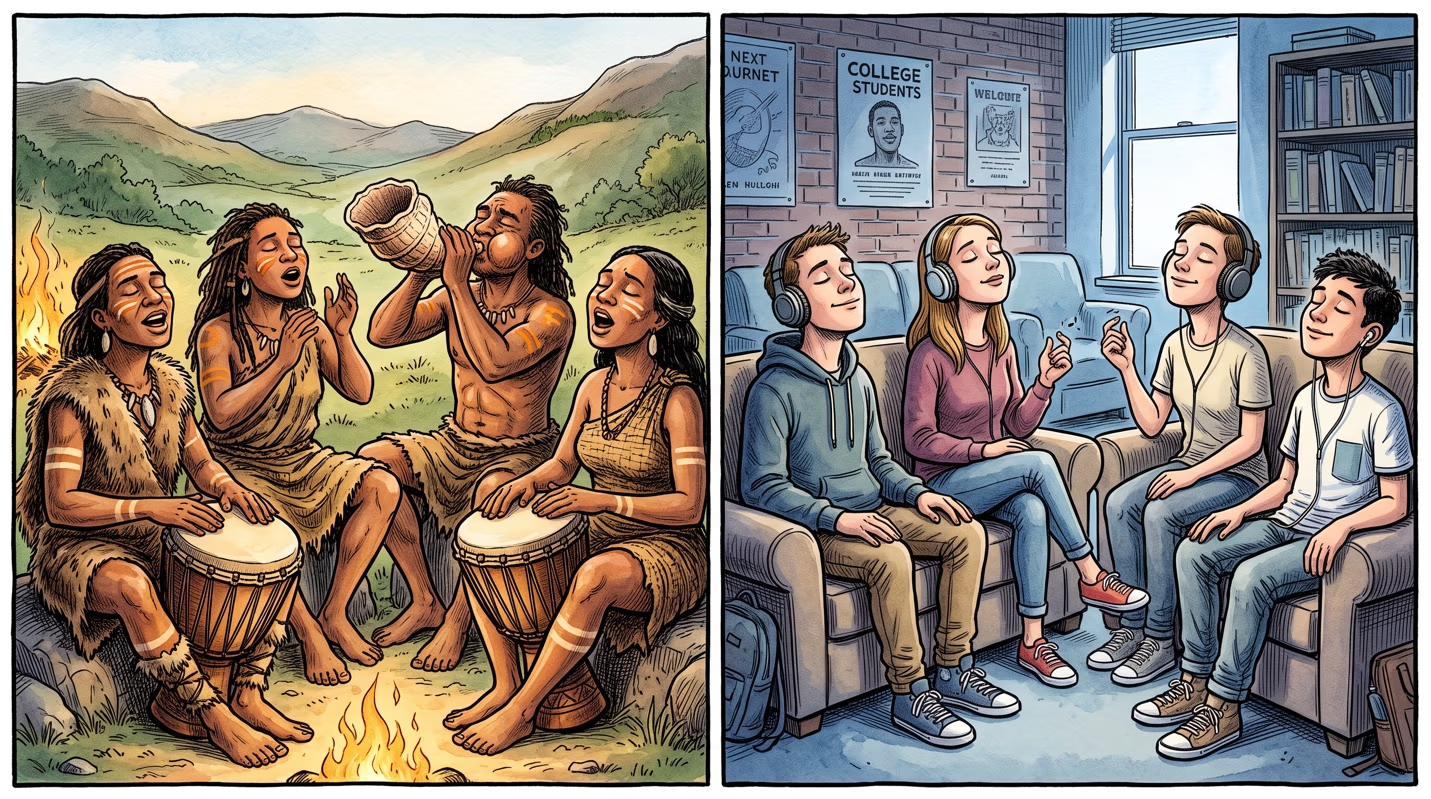
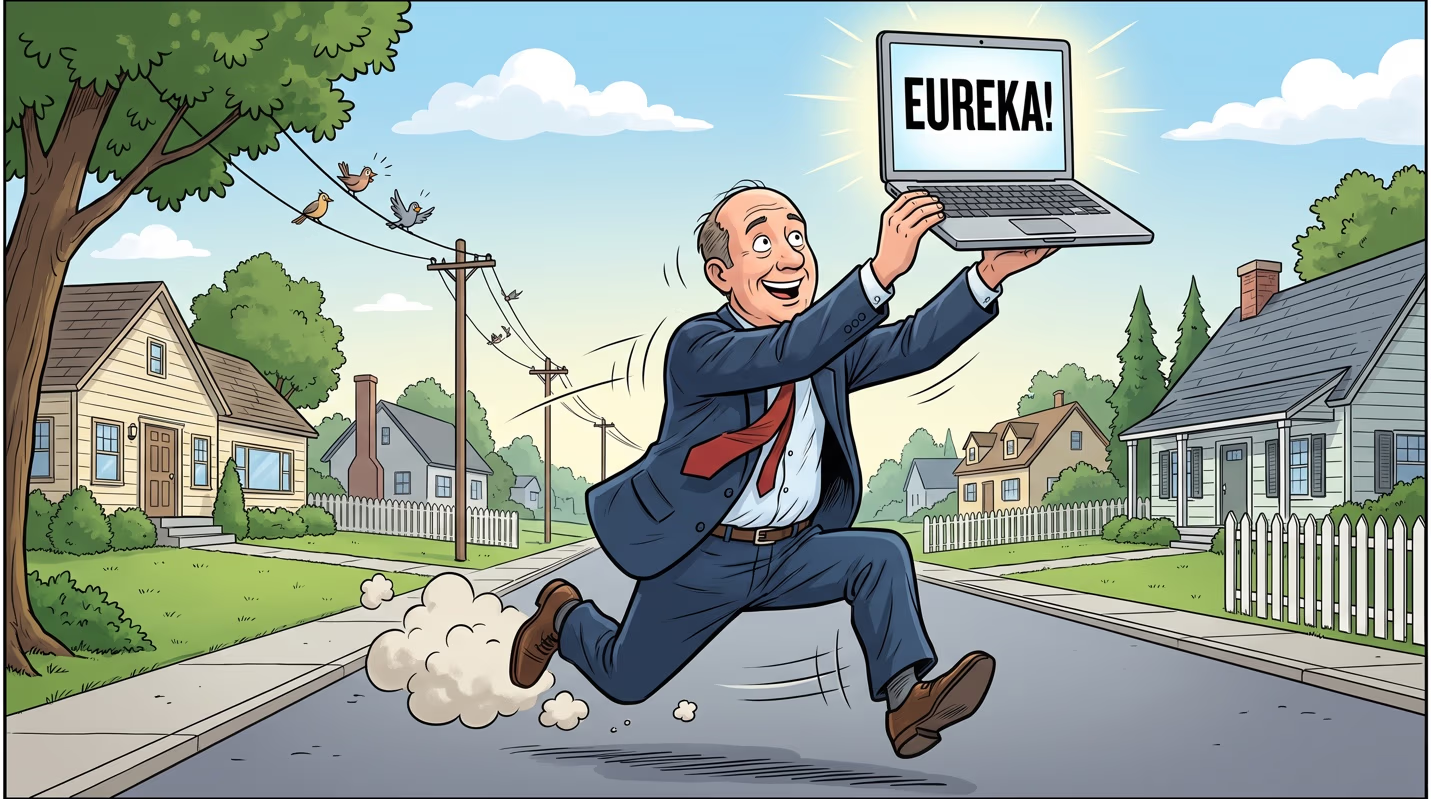
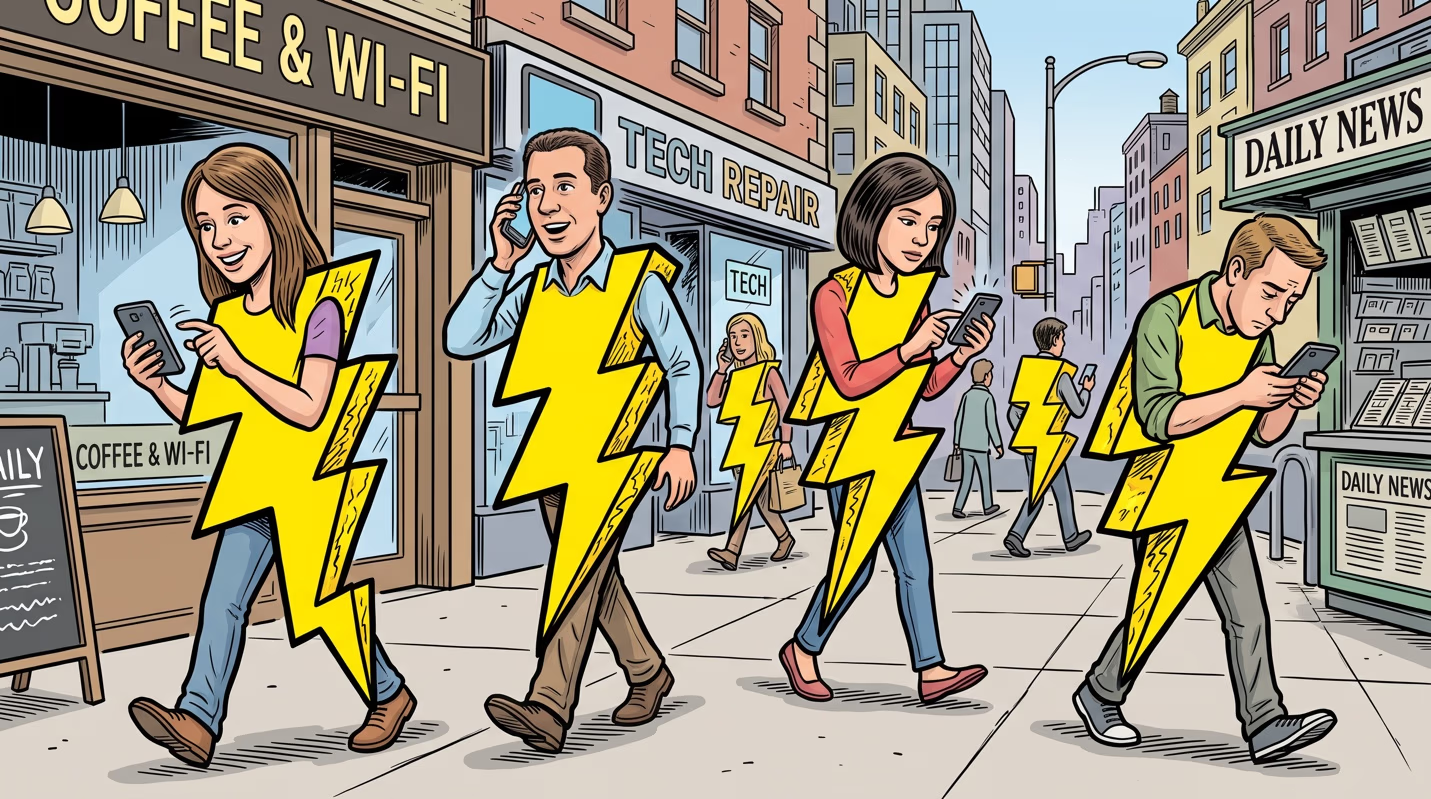

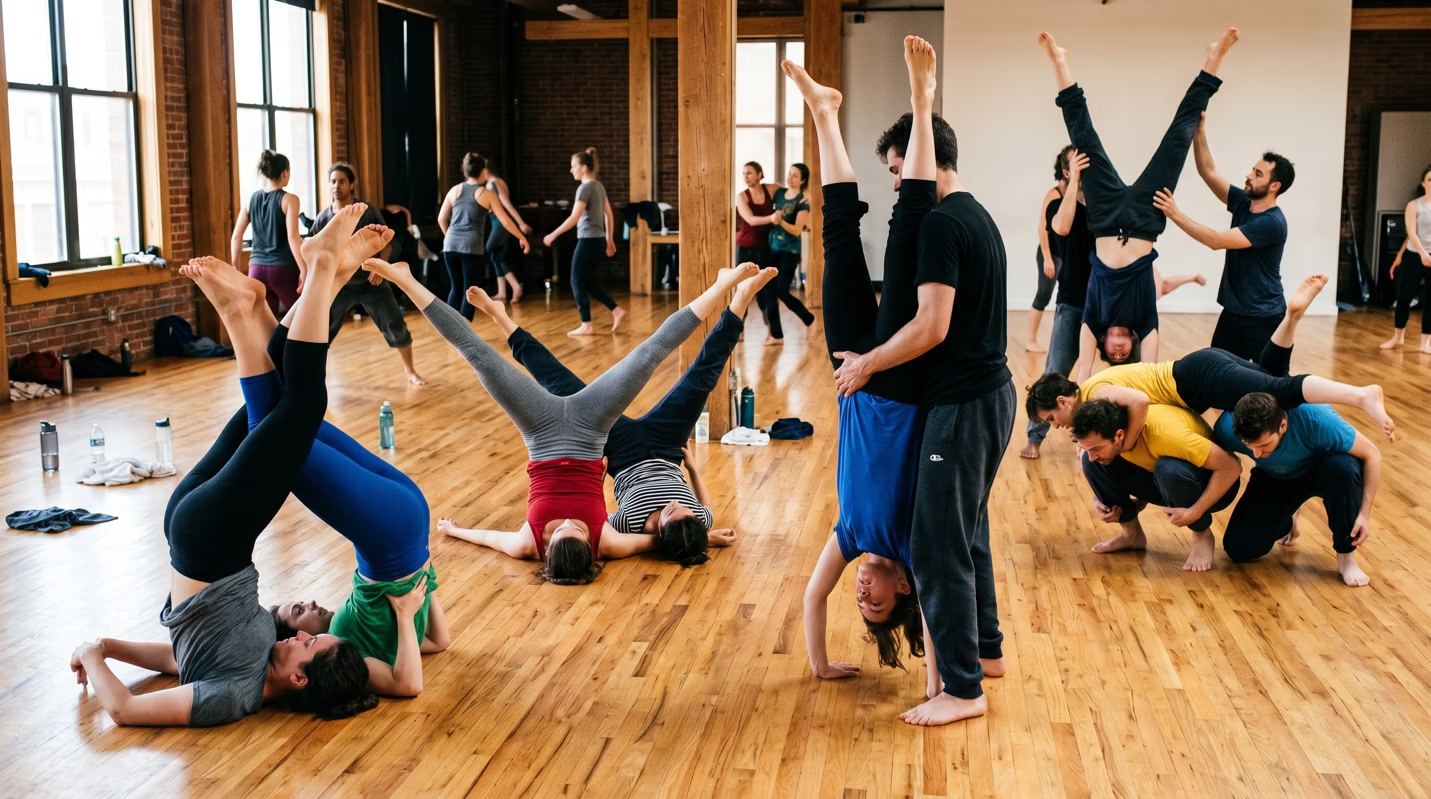
The huge vortices of energy created by our media present us with similar possibilities of evasion of consequences of destruction. By studying the pattern of the effects of this huge vortex of energy in which we are involved, it may be possible to program a strategy of evasion and survival.
Man and Media,” lecture delivered at York University, Toronto, (1979), in Understanding Me (2003), p 285
Year: 1979
There is available the lyrical testimony of a very Romantic biologist, Pierre Teilhard de Chardin, in his Phenomenon of Man:
“…thanks to the prodigious biological event represented by the discovery of electro-magnetic waves, each individual finds himself henceforth (actively and passively) simultaneously present, over land and sea, in every corner of the earth.” [p 240]
The Gutenberg Galaxy: The Making of Typographic Man, (1962), p 32
Year: 1962
Chapters:
Corporate Consciousness | Mastering Technology
Earlier, in presenting Pope's prophetic vision of the return of tribal or collective consciousness, the relation to Joyce's Finnegan´s Wake had been indicated. Joyce had devised for Western man individual pass-keys to the collective consciousness, as he declared on the last page of the Wake.”
The Gutenberg Galaxy: The Making of Typographic Man, (1962), p 268
Year: 1962
Chapter:
Instantaneous
One thing about which fish know exactly nothing is water, since they have no anti-environment which would enable them to perceive the element they live in. It appears that they can hear pretty well but have scarcely any power of directional location for the origin of the sounds they hear. In some species they discharge electric shocks as a means of spatial orientation, much as bats use their high-pitched squeaks as the equivalent of flashlights.
“War and peace in the Global Village”, p 175
You cannot tell what it is until you have seen it do things to the old one.
“The Invisible Environment: The Future of an Erosion”, Perspecta, Vol.11, (1967), p 166, reprinted in On the Nature of Media, (2016), p 119
Year: 1967
Chapters:
McLuhanisms & Zingers | Rear View Mirror
The principle of new technologies as an archetypal environment that moulds new art forms out of the antecedent technologies is a principle that applies to all the arts and sciences, to architecture, as much as to music, or mathematics.
“The New Media and the Arts” (1964), p 242
Year: 1964
The history of the arts and sciences could be written in terms of the continuing process by which new technologies create new environments for old technologies.
“New Media and the Arts” (1964), p 239
Year: 1964
The natural effect of any new technology is to create a new environment for itself. In effect, an environment is a special organization of available energies. As an energy system, an environment is a process. It reprocesses the earlier environments. Old environments are the nutriment of new ones. As they are assimilated by the new energy system, the older systems are transformed into art forms. From the cliché environment to the archetypal content, the new environmental system turns the old environments into anti-environments. That is one way of perceiving what a work of art is. Art as an anti-environment is an indispensable means of perception. For environments, as such, are imperceptible. Their power to impose their ground rules on our perceptual life is so complete that there is no scope for dialogue or interface. Hence the need for art or anti-environments.
"The Emperor's Old Clothes," (1966), reprinted in McLuhan´s Unbound Nº 20, 2005, p 3
Year: 1966
We can never see the Emperor’s new clothes, but we are staunch admirers of his old garb. Only small children and artists … perceive the new environment. Small children and artists are anti-social beings who are … little impressed by the established mores.
The Emperor’s Old Clothes” (1966), reprinted in McLuhan Unbound #20 (2017), p 4
Year: 1966
New man-made environments are, as it were, formal causes that operate simultaneously on all levels. We respond to such causes infallibly and unconsciously. Consciousness, on the contrary, is a specialist and fragmentary operation which works by exclusion rather than inclusion. The subconscious by contrast is inclusive rather than exclusive. It accepts all things and all times and all places, and accents this all-at-once.
“The New Morality” (1967), p 177
Year: 1967
But in the case of environments that are created by new technologies, while they are quite invisible in themselves, they do tend to make visible the old environments. We can always see the Emperor's old clothes, but not his new ones.
The M Is the M (1967), p 163
Year: 1967
Chapter:
Media Reprocess Media
Under electric conditions the content [of any medium] tends, however, toward becoming environmental itself.
Through the Vanishing Point with Harley Parker (1968), p 248
Year: 1968
Invention is the mother of necessities, old and new.
“The Argument: Causality in the Electric World”, in Technology and Culture, Vol.14, No. 1, January (1973), p 2, reprinted in McLuhan Unbound # 3, (2005),p 7
Year: 1973
Chapter:
McLuhanisms & Zingers
All you can look at in the rear-view mirror is literally the foreseeable future. Now, at the speed of light, there is no foreseeable future. You are there literally. It does not matter what situation you choose to consider. There is literally no possible future. You are already there the moment you name the situation. That is why in our age there are no goals. That is the reason for the streakers' antics: they are protesting the disappearance of goals. Where are we going? We are all dressed up with no place to go. We think we have taken all the right school courses, studied the right subjects, but now it all seems pointless. Where do we go from here?
“Man and Media,” lecture delivered at York University, Toronto, (1979), in Understanding Me (2003), p 293
Year: 1979
Chapter:
Speedups
The Greek word for environment is perivello, meaning to strike from all sides at once.
“The Hardware-Software Mergers: How Successful Have They Been? Transcript of a Speech at the Conference, Reappraisal of the Educational Technology Industry, November 16-18, 1969, Transcript, p 4
Year: 1969
[W]e cannot know the present or the new except by creating the most ingenious devices. When Perseus wanted to confront the Gorgon he used a mirror. The mirror of art has been for Western man the prime means for confronting the present.
Speech at the U Texas-Stanford Symposium, 1966, taken from typescript, later printed essay in, The Meaning of Commercial Television, ed., Stanley Donner (1966)
Year: 1966
Chapter:
Present [The]
Our environments are made of the highest levels of human consciousness.
The Hot and Cool Interview (1967), in Media Research (1999), p 58
Year: 1967
Chapter:
Consciousness
Robert Ardrey has developed the concept of territoriality to account for the environments that envelop different cultures. My own concept of technologies as the physical extensions of man is somewhat akin to Ardrey’s concept. However, it is easier to demonstrate the physical times and spaces created by radio or motor car than it is to explain why bird songs or physical odor should constitute a space boundary that might be regarded as impenetrable by other creatures.
“Environment as Programmed Happening” (1967), p 120
Year: 1967
Environments are not just containers, but are processes that change the content totally.
“Address at Vision 65,” American Scholar, Volume 35, 1965, p. 200
Year: 1965
No environment is perceptible, simply because it saturates the whole field of attention.
“Understanding Canada and Sundry other matters: Marshall McLuhan “interview in Mademoiselle Magazine, January (1967), p 114
Year: 1967
Chapters:
Living Unity | Dropout
People don’t read newspapers anymore. They’re wrap-arounds. People get into them every morning like a hot bath.
“Alone in the Global Village,” Peterborough Examiner, March 22, 1967
Year: 1967
The sudden discovery of nature was made possible by the railway and the factories that were so very different from nature.
“Technology and Environment” (1967), p 5
Year: 1967
Chapter:
Extension Theory
As Humpty Dumpty said, “I sent a message to the fish and told them this is what I wish.”
The message to the fish is quite simply that the thing of which they have the least knowledge is water. Man, when saturated with his own environments, loses all powers of perceiving them. That is why they become invincible in their powers over him. They alter his image of himself an of others, creating within a panic that resorts to violence as a means of recovering the earlier image and identity. Every new technology, i.e. every new environment, creates a new war or a violent quest for identity.
Dedication for Magnovia II, February, 1968
Year: 1968
You have to perceive the consequences of the new environment on the old environment before you know what the new environment is. You cannot tell what it is until you have seen it do things to the old one. The need, however, to understand the processes and changes brought about by the new technology gets stronger as the technology does.
“The Invisible Environment: The Future of an Erosion”, Perspecta, Vol.11, (1967), p 166, reprinted in On the Nature of Media, (2016), p 119
Year: 1967
The central theme of [William Burroughs’] Naked Lunch is the strategy of by-passing the new electric environment by becoming an environment oneself. The moment one achieves this environmental state all things and people are submitted to you to be processed. Whether a man takes the road of junk or the road of art, the entire world must submit to his processing. The world becomes his 'content'. He programs the sensory order.
“Notes on Burroughs”, in Nation Magazine, December 28, 1964, p 517
Year: 1964
During the past century art has revealed that the changing environment is not perceptible to unaided human attention. Throughout all human time, men have been engaged in conscious awareness of the preceding environment, which presents itself as a nostalgic art form. The current environment creates an overload of sensation that obliterates pattern and form. My study of literature became an aid to the perception that led me to undertake the task of understanding the relation between culture and technology.
“Autobiography,” undated 3-page typescript, from the early 1970s, p 2
Year: 1970
The restraints [of media] are always directed to the “content,” which is always another medium. The content of the press is literary statement, the content of the book is speech, and the content of the movie is the novel.
Understanding Media (1964) MIT/ROUTLEDGE, p 305
Year: 1964
All human technology begins as an immediate service or aid to some existing function and this aid quickly develops its own field of associated services and activities, which, in turn, create new services and satisfactions.
Where the World Is Headed, 1973, typescript, p 1
Year: 1973
Environments are invisible. Their groundrule, pervasive structures, and overall patterns elude easy perception.
The Medium Is the Massage, 1967
Year: 1967
Chapters:
Living Unity | Dropout
There is a built-in invisibility in all environments as such, and this is something I would like to know more about.
Taped Talk with Eli Bornstein, The Structurist No 6, January 1966, p 62
Year: 1966
Environments work us over and remake us. It is man who is the content of and the message of the media, which are extensions of himself. Electronic man must know the effects of the world he has made above all things.
Take Today with Barrington Nevitt, 1972, p 90
Year: 1972
Chapters:
Living Unity | Dropout
The Scientific Systems of the Technical Age have become Art Forms.
Take Today with Barrington Nevitt, 1972, p 216
Year: 1972
The sudden discovery of nature was made possible by the railway and the factories that were so different from nature.
“Technology and Environment”, 1967, p 5
Year: 1967
Chapter:
Extension Theory
We live invested in an electric information environment that is quite as imperceptible to us as water is to fish.
Laws of Media: The New Science with Eric McLuhan, (1988), p 5
Year: 1988
Chapters:
Information Overload | McLuhanisms & Zingers
Environment is process, not container.
Laws of Media: The New Science with Eric McLuhan, (1988), p 530
Year: 1988
Without an anti-environment, all environments are invisible.
Culture is our Business, 1970, p. 192
Year: 1970
One thing about which fish know absolutely nothing is water, since they have no anti-environment which would enable them to perceive the environment they live in.
War and Peace in the Global Village, 1968.
Year: 1968
It is quite impossible to know the effects of writing and printing in the Western world which developed these forms. In their very growth they assumed a cloak of invisibility, just as television is doing right now.
“The Care and Feeding of Communication Media” (1961), p 2
Year: 1961
Chapter:
Media Study
The man-made environment has a principle of evolutionary change.
Tom Cooper interview with MM,1976, transcript
Year: 1976
Chapters:
Evolution | Extension Theory
Is it natural that one medium should appropriate and exploit another?
McLuhan: Hot and Cool, edited by Gerald Emanuel Stearn, 1967 p. 151, 156. (Note: this is the title of the essay, but the phrase is also used within the essay, hence two page numbers).
Year: 1967
Today, when the entire environment is directly created by man himself, the bond between man and things takes on a much greater scope and intensity of resonance.
Take Today with Barrington Nevitt, 1972, p 97
Year: 1972
Chapter:
Extension Theory
The unconscious is the world in which everything happens at once; in our unconsciousness, there’s no time structure. Everything is simultaneous; everything that ever happened to our race is simultaneous. Now, in our electronic environment – information environment – everything that ever happened is out there now, and is tertrievable now. All the events, all the happening are out in our electronic world simultaneously; this gives them an archetypal, unconscious character…
attribute?
FLAG. Attributed. Can anyone identify a source?
FLAG. Attributed. Can anyone identify a source?
[T]ake the date-line off a newspaper, and then look at it. You’ll see it’s a surrealist poem. So long as there’s a date-line on, that’s environmental and hides the form.
Q&A with MM in TAKE ONE, 1966, p 10
Year: 1966
Chapters:
Extension Theory | News
The theme of From Cliché to Archetype: “what happens when a new environment ‘goes around’ an old one.”
Newsweek, Feb 28, 1966
Year: 1966
Chapter:
Extension Theory
It is the [hidden service] environment that changes people, not the technology.
Living at the Speed of Light, 1975
Year: 1975
Since every innovation creates a new environment that scraps the preceding one, consists of the fragments o smashed cultures but provide an environment which packages them for the consumer use of 19th century mind.
Letter to Marshall Fishwick, Nov 10, 1969 [not ion Letters]
Year: 1969
Chapters:
Extension Theory | History
You can never perceive the impact of any new technology directly, but it can be done in the manner of Perseus looking in the mirror at Medusa. It has to be done indirectly.
“Address at Vision '65, The American Scholar”, in Spring 1966, p 202
Year: 1966
Chapters:
Media Study | Rear View Mirror
…nothing has meaning except in relation to the environment, medium, or context that contains it.
The Global Village with Bruce Powers, 1989, p 71
Year: 1989
Karl Marx never studied or understood causality. He paid no attention to the railway or steamboat.
The Global Village with Bruce Powers (1989), p 96
Year: 1989
Chapter:
Marx, Karl
In short, taking an intelligent interest in everyday things at once enlarges the area of attention and reveals the meaning for us all.
“Baseball Culture” (1952), p 4
Year: 1952
Professor Morse's telegraph is not only an era in the transmission of intelligence, but it has originated in the mind an entirely new class of ideas, a new species of consciousness.
New York magazine, Aug. 18, (1968), in Culture Is Our Business (1970), p 198 & 326
Year: 1968
Chapter:
Telegraph
The human family now exists under conditions of a global village. We live in a single constricted space resonant with tribal drums.
The Gutenberg Galaxy : The Making of Typographic Man , (1962), p 31
Year: 1962
The humanly contrived environment of electric information and power has begun to take precedence over the old environment of nature." Nature, as it were, begins to be the content of our technology.
A New Journey of the Magi, 1965, p 1
Year: 1965
Chapter:
Information Overload
the new medium as an environment creates new occupations. As an environment it is imperceptible except in terms of its content.
Env/Anti-Env, p 42
We can always see the Emperor's old clothes, but not the new ones.
“Our Dawning Electric Age”, 1965, p 12
Year: 1965
Chapter:
Rear View Mirror
The Greek word for environment is perivallo -- to hit from all sides at once.
“The Reversal of the Overheated Image,” Playboy, Dec. 1968, p. 131.
Year: 1968
[The new environment] bears a close resemblance to flood-lighting... [and] anybody trying to perpetrate a private message is like a man waving a flash-light in the midst of intense illumination.
Electronic Man and the End of the Neolithic Age, 1965, p 3
Year: 1965
The important thing is to realize that electric information systems are live environments in the full organic sense. They alter our feelings and sensibilities, especially when they are not attended to.
War & Peace in the Global Village (1968), p 36
Year: 1968
Chapters:
Electric, Electronic | Organic
Electric technology offers, perhaps for the first time, a means of dealing with the environment itself as a direct instrument of vision and known.
New media and the Arts, 1964, p 240
Year: 1964
Chapter:
He’s Hopeful
Wyndham Lewis wrote a book once called The Art of Being Ruled, and the moral of the book is quite simple: all you have to do in order to be completely enslaved is to pay no attention to the environment you, yourself, have created.
“The Password Is Involvement” (1967), p 21
Year: 1967
Chapters:
Wake Them Up! | Warnings
[If] we were in a bath whose temperature rose half a degree an hour, how would we know when to scream?
“Technology and Environment” (1967), p 2 of typescript
Year: 1967
Phonetically literate man, from the Greeks to the present, has been consistently aggressive and at war with his environment. His need to translate his environment into phonetic, literate terms, turns him into a conqueror and a cultural bulldozer, or leveller.
Contribution to William Oltmans’ On Growth (1974), p 77
Year: 1974
Chapter:
Literacy
The new effects through new uses of any innovation are realized only after it becomes obsolescent through fresh innovation.
“Symposium,” (1973), p 10
Year: 1973
Chapter:
Effect
Each new technology creates an environment that is itself regarded as corrupt and degrading yet the new one turns its predecessor into an art form.
“Introduction to the Second Edition”, in Understanding Media Second Edition (1966), p ix
Year: 1966
Chapter:
Media as Form
Merely to introduce any portion of the environment into an enclosed space, or a non environment, is to become conscious of it, and, in effect, is to archtypalize it.
CTA 199
Each new stage of growth becomes the environment for all preceding stages. But we are aware only of the preceding stages, or, as it were, the content of the environment.
“Note on Automation”, 1964, p 3
Year: 1964
When you move into a new area, a new territory and learn a new language, the language is not a new subject; it is an environment, it is total. This is the pattern of learning in the future.
“The New Education”, in The Basilian Teacher, Vol 7, No. 2, February, (1967), p 67-68
Year: 1967
[T]echnologies have for thousands of years simulated not the body, but fragments thereof. It was the city alone that the image of the human body as a unity became manifest.
“Cybernation and Culture” (1964), reprinted in Understanding Me (2003), p I01 [confirm]
Year: 1964
You see, the camera extends your feet and your eyes; a movie camera carries your eyes out on your feet into the world -- it's mobile. And TV doesn't do that; it doesn't extend your eyes and your feet, it extends your eyes and your hands: it feels, it handles, it scans the environment, by scanning, by handling.
Q and A with M McL, Take One, Nov-Dec, 1966, p 9
Year: 1966
Chapter:
Movies
The electric age is the age of ecology. It is the study and projection of the total environments or organisms and people, because of the instant coherence of all factors, made possible by moving information at electric speeds.
Counterblast (1970) , p 36
Year: 1970
Chapter:
Ecology
Professionalism is environmental. Amateurism is anti-environmental. Professionalism merges the individual into patterns of total environment. Amateurism seeks the development of the total awareness of the individual and the critical awareness of the ground rules of society. The amateur can afford to lose. The professional tends to classify and specialize, to accept uncritically the ground rules of the environment. The ground rules provided by the mass response of his colleagues serve as a pervasive environment of which he is contentedly unaware.
The Medium Is the Massage (1967), 93
Year: 1967
Chapter:
Specialism
Environments are not just containers, but are processes that change the content totally.
“Environment: The Future of an Erosion” (1967) in On the Nature of Media (2016), p 115
Year: 1967
Since Sputnik and the satellites, the planet is enclosed in a man made environment that ends "Nature" and turns the globe into a repertory theater to be programmed. Shakespeare at the Globe mentioning "All the world's a stage, and all the men and women merely players" (As You Like It, Act II, Scene 7) has been justified by recent events in ways that would have struck him as entirely paradoxical. The results of living inside a proscenium arch of satellites is that the young now accept the public spaces of the earth as role-playing areas. Sensing this, they adopt costumes and roles and are ready to "do their thing" everywhere.
Cliché to Archetype p.9-10
Media are means of extending and enlarging our organic sense lives into our environment.
"The Care and Feeding of Communication Innovation", Dinner Address to Conference on 8 mm Sound Film and Education, Teachers College, Columbia University, 8 November 1961
Year: 1961
Today men’s nerves surround us; they have gone outside as electrical environment.
"Notes on Burroughs," 1964, republished in Media Research (1997)
Year: 1964
War has become the environment of our time if only because it is an accelerated form of innovation and education.
Letter to Robert J. Leuver, July 30, 1969. Letters of Marshall McLuhan (1987), p. 387.
Year: 1969
Electronic man wears his brain outside his skull and his nervous system on top of his skin. He is like an exposed spider squatting in a thrumming web. But he is not flesh and blood; he is an item in a data bank, ephemeral, easily forgotten, and resentful of that fact.
The Global Village with Bruce Powers, 1989, p 94
Year: 1989
New technological environments are commonly cast in the molds of the preceding technology out of the sheer unawareness of their designers.
Take Today with Barrington Nevitt, 1972, p 47
Year: 1972
[New Yorker cartoon:] You see, Dad, Professor McLuhan says that the environment that man creates becomes his medium for defining his role in it. The invention of type created linear, or sequential thought, separating thought from action. Now, with TV and folk singing, thought and action are closer and social involvement is greater. We again live in a village. Get it?
The Medium is the Massage (1967), p 138
Year: 1967
Any new technology, any extension or amplification of human faculties given material embodiment, tends to create a new environment… It is in the interplay between the old and new environments that there is generated an innumerable series of problems and confusions… It is useful to view all the arts and sciences as acting in the role of anti-environments that enable us to perceive the environment.
The Medium is the Massage, 1967
Year: 1967
To create an antienvironment for such electric technology would seem to require a technological extension of both private and corporate consciousness. The awareness and opposition of the individual are in these circumstances as irrelevant as they are futile.
Through The Vanishing Point with Harley Parker, (1968), p 244
Year: 1968
Disease has an anti-environmental strategy as a work of art. One of the things that Freud revealed was that neurosis and the dreams that go with this has an amazing artistic ingenuity and perfection.
“The Meaning of TV to Children,” 1965, in The Meaning of Commercial Television, edited by Stanley Donner, p 36
Year: 1965
When a new environment forms, we see the old one as if we lived in a world of the déjà vu. This was, of course, Plato’s theory of knowledge, that it was a form of recognition of that which we had known in another existence.
“The New Morality”, 1967, p 17
Year: 1967
“[T]he possibility of programming of factory presentations of the forest world is tremendous.”
McLuhan quoted by Richard Shapard in a New York Times, October, 1967 review of the museum seminar headlined by McLuhan and Harley Parker, in The Museum as Large-Room Pinball Machine, Marshall McLuhan, Harley Parker, and Museum Professionals, 1967, full transcript, edited by William Buxton, published 2026, p 12
Year: 1967
Chapter:
Museum
…the audience is, after all, the environment that the artifact and the museum have to cope with. An audience is the surround. It is the new environment for the artifact.
The Museum as Large-Room Pinball Machine, Marshall McLuhan, Harley Parker, and Museum Professionals, 1967, full transcript of a seminar at the City Museum of New York, October, 1967, edited by William Buxton, published by U. of Alberta Press, 2026, p 66
Year: 1967
Chapters:
Audience, Public, Mass | Museum
The possibility of programming evolution by deliberate means is wide open in the age of the computer, but it also involves a much greater responsibility than any previous age dreamt of.
The Museum as Large-Room Pinball Machine, Marshall McLuhan, Harley Parker, and Museum Professionals, 1967, full transcript of a seminar at the City Museum of New York, October 9-10, 1967, edited by William Buxton, published by U. of Alberta Press, 2026, p 80
Year: 1967
Manhattan is an island and is a museum. It probably should be preserved. Like people on other islands, the Manhattan population has taken to living in discontinuous, tribal space. Unlike any other space I know of except England, the space of Manhattan is discontinuous, nuclear, and pocketlike. “You can’t get there from here.” That is true not only outside, but inside most homes. It’s completely unconscious on the part of the dwellers in that area.
The Museum as Large-Room Pinball Machine, Marshall McLuhan, Harley Parker, and Museum Professionals, 1967, full transcript of a seminar at the City Museum of New York, October 9-10, 1967, edited by William Buxton, published by U. of Alberta Press, 2026, p 98
Year: 1967
When one environment goes around another, the old one becomes art. When you put any object inside another environment, it becomes a work of art. When it goes intoa. Museum, it becomes a work of art. After all, there are objects of everyday use that are now in the museum, and when they’re in the museum they become works of art.
The Museum as Large-Room Pinball Machine, Marshall McLuhan, Harley Parker, and Museum Professionals, 1967, full transcript of a seminar at the City Museum of New York, October 9-10, 1967, edited by William Buxton, published by U. of Alberta Press, 2026, p 149
Year: 1967
Chapter:
Art, Artists
And the environment has become a teaching machine. The schoolroom is not that turned on nor that thrilling; this is a simple matter of observation. You don’t have to guess about this, but it should be possible, and it is the sort of thing I work at: to try to find out the reasons why this happens. I know it is happening. I feel it happening. I see it happening, I want to find out why. Instead of telling people that it is happening, it’s more desirable to find out why.
The Museum as Large-Room Pinball Machine, Marshall McLuhan, Harley Parker, and Museum Professionals, 1967, full transcript of a seminar at the City Museum of New York, October 9-10 1967, edited by William Buxton, published by U. of Alberta Press, 2026, p 153
Year: 1967
Chapter:
Education
I think many of you have read [Edward] Hall’s Hidden Dimension, which simply refers to the fact that much of what is completely hidden is that which ordinarily surrounds us, with which we live day by day. We deliberately refuse to perceive this, in order to feel more comfortable. …., He has fascinating illustrations of this principle. One that first comes to mind is the Arab world, where he discovered that good taste in personal relations is at a distance of eight inches. Unless you can smell the other person every moment you see him and speak to him, he considers you hostile. Good taste there means smelling the person you speak with at all times, not just looking at him and not just handling him, but smelling. Hall calls [the ideal proximate distance for relations] “the hidden dimension” and I think there is a distance which is ideal for every artifact and view. There is a distance that will reveal it, that will turn you on and make you feel that this is an exciting breakthrough. This distance is not the same for any two people or any two artifacts. But it is possible to discover it by experiment. What you’re really saying is: How can we arrange a museum or an art gallery so it gives people that sensation of power, of tremendous new discovery, of insight and perception? I think it is possible. That’s what Harley [Parker] was trying to do with his juxtaposition, trying to rub one thing against the other to release the sense of discovery.
The Museum as Large-Room Pinball Machine, Marshall McLuhan, Harley Parker, and Museum Professionals, 1967, full transcript of a seminar at the City Museum of New York, October, 1967, edited by William Buxton, published by U. of Alberta Press, 2026, p 156
Year: 1967
This reminded me of Sigfried Giedion, whose work I have followed since 1939. He was in St. Louis then, giving the lectures that were published as Space, Time and Architecture. I became acquainted with him and have known him ever since. … Giedion’s whole approach to art and technology is environmental. He called the environment non-museum history, because people are always unaware of it. Now the study of environments as a new perception and new teleology is his theme; so the secret of Giedion is indispensable in the context of here and now. His whole approach to the study of changing styles in art and architecture is something I have taken for granted since ’39, when I first met him. It was all new to me then. … So perhaps I have taken too much for granted. This Giedion approach (like Hall’s educational approach, which we mentioned earlier, to the hidden dimensions of experience) is one which seems to me indicated for our time.
The Museum as Large-Room Pinball Machine, Marshall McLuhan, Harley Parker, and Museum Professionals, 1967, full transcript of a seminar at the City Museum of New York, October 9-10, 1967, edited by William Buxton, published by U. of Alberta Press, 2026, p 161
Year: 1967
MCLUHAN: What about the possibility of designing for artifacts in museum environments that are also responsive, in which the audience could experience this participation? So that when they had recognized the nature of the artifacts, why the bells and buzzers would ring from all over the place! HARLEY PARKER: Pinball machine? MCLUHAN: Yeah. PARKER: Large-room pinball machine.
The Museum as Large-Room Pinball Machine, Marshall McLuhan, Harley Parker, and Museum Professionals, 1967, full transcript of MOVIES a seminar at the City Museum of New York, October, 1967, edited by William Buxton, U. of Alberta Press, 2026, pages 70-71
Year: 1967
Chapter:
Museum
MCLUHAN: The movie theatre is the massage. Being inside is getting their full treatment. MISS FISHER: There seemed to be an indication that there is something coming out differently. MCLUHAN: When you get massaged you do come out quite different.
The Museum as Large-Room Pinball Machine, Marshall McLuhan, Harley Parker, and Museum Professionals, 1967, full transcript of a seminar at the City Museum of New York, October, 1967, edited by William Buxton, U. of Alberta Press, 2026, pages 70-71
Year: 1967
Chapters:
Medium is the Message | Movies
The programming of environments on the moon or elsewhere can be done here. You can have the experience of what the moon travellers will feel like in a few years. You can have it here, now; but I don’t think it’s likely to reveal anything that we don’t already know.
The Museum as Large-Room Pinball Machine, Marshall McLuhan, Harley Parker, and Museum Professionals, 1967, full transcript of a seminar at the City Museum of New York, October 9-10, 1967, edited by William Buxton, U. of Alberta Press, (2026), p 172
Year: 1967