Viewing chapter Future (30 quotes)
Instead of going out and buying a packaged book of which there have been five thousand copies printed, you will go to the telephone, describe your interests, your needs, your problems, and say you're working on a history of Egyptian arithmetic. You know a bit of Sanskrit, you're qualified in German, and you're a good mathematician, and they say it will be right over. And they at once xerox, with the help of computers from the libraries of the world, all the latest material just for you personally, not as something to be put out on a bookshelf. They send you the package as a direct personal service. This is where we're heading under electronic information conditions. Products increasingly are becoming services.
“Predicting Interactive Communication via the Internet”, TV Appearance on This Hour Has Seven Days, CBC-TV with Robert Fulford (1966), in McLuhan Speaks Transcript, p 3, reprinted in Understanding Me (2003), p 101
Year: 1966
The real job of the computer in the future is not going to have anything to do with retrieval. It’s going to have to do with pure discovery, because we use our memories for many purposes, mostly unconscious. When you can recall things at a very high speed they take on a new mythic and structural meaning that is quite alien to ordinary perception. So the computer… has, in spite of itself… revealed the knowledge of the mythic pattern, structures and profiles, all of which are quite excitedly loaded with discovery.
“Diebold Discussion Forum” with McLuhan and Mike Wallace (1966), published version of transcript, pages 8-9
Year: 1966
Let me suggest that it may be possible to write programs for changes, not only in consciousness but in the unconscious in the future.
“Environment: The Future of an Erosion”, 1967, in On the Nature of Media, 2016, p 123
Year: 1967
Chapter:
Propaganda
When you move into a new area, a new territory and learn a new language, the language is not a new subject; it is an environment, it is total. This is the pattern of learning in the future.
“The New Education”, in The Basilian Teacher, Vol 7, No. 2, February, (1967), p 67-68
Year: 1967
Chapters:
Education | Environment
Citizens of the future will find much less need for sameness of function or vision. To the contrary, they will be rewarded for diversity and originality.
“The Future of Education” with George Leonard, Look Magazine, February 21, 1967, p 24
Year: 1967
Chapter:
Predictions
Entertainment used to mean visiting odd spots in the world… [Bridge over River Kwai etc.] … Entertainment in the future may have quite different patterns and functions. You’ll become a yogi, you’ll do all your self-entertainment in yoga style.
“Like Yoga Not Like the Movies”…” Forbes, March 15, 1967, p 40
Year: 1967
Chapter:
Predictions
“Indeed, the frequency of intercourse may decrease in the future because of a real revolution in attitudes toward, feelings about, and uses of sex, especially concerning the roles of male and female. What are those young men with long, flowing hair really saying.”
“The Future of Sex” (1967) in On the Nature of Media (2016), p 133
Year: 1967
Chapter:
Sex and Love

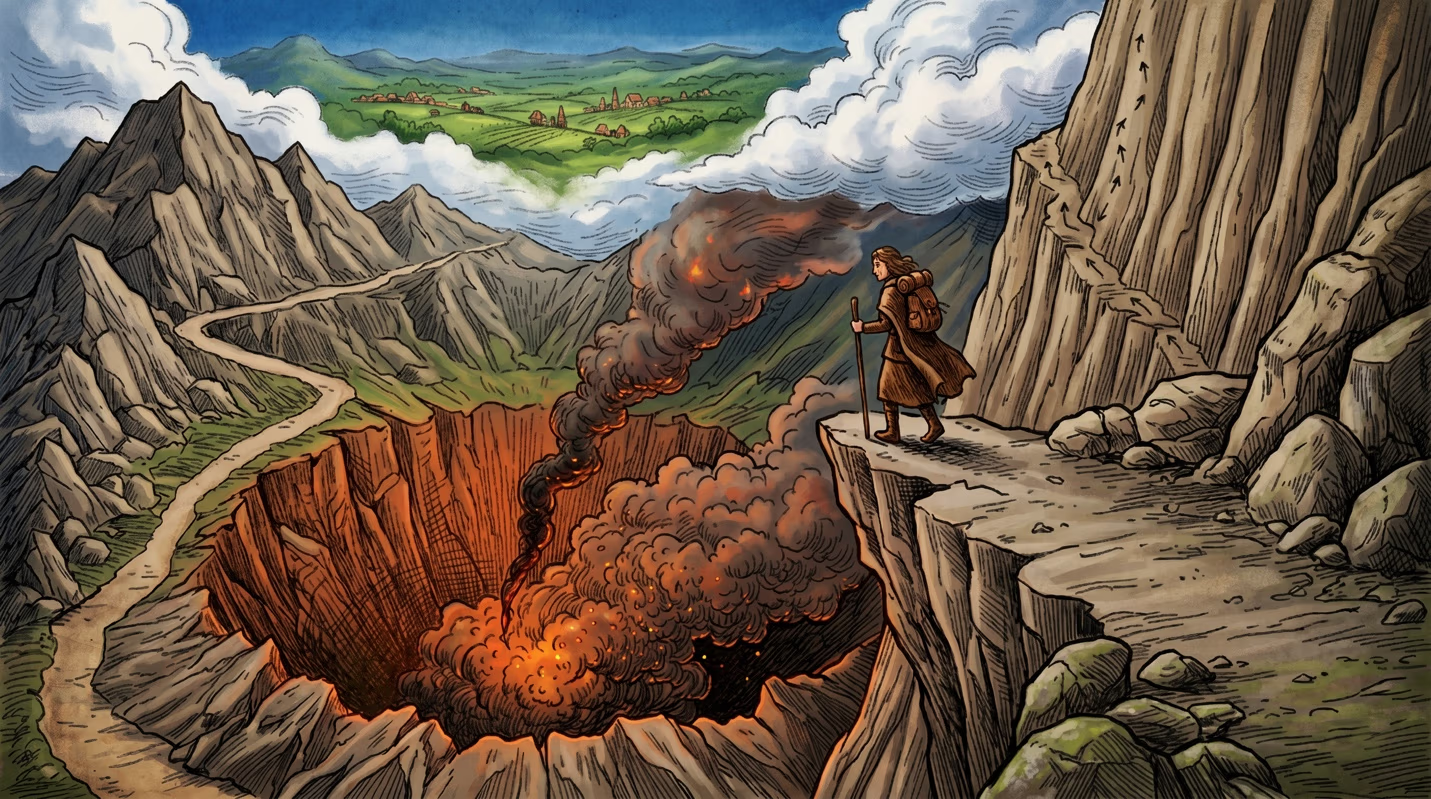
By default rather than design, most futurists assume that “human nature” will hold firm. They ignore the fact that technological change has always struck human life right at the heart, changing people just as it changes things.
“The Future of Sex” (1967), typescript p 2
Year: 1967
The future of the child is changing beneath our gaze.
“Environment: The Future of an Erosion” (1967), in On the Nature of Media (2016), p 123
Year: 1967
The future of city may be very much like a world's fair-- a place to show off new technology--rather than a place of work or residence. It is also fascinating to consider the future of language. We know right now some very important structural things about language that are new. The future of language will not be as a system of classified data or meanings.
“The Invisible Environment: The Future of an Erosion”, Perspecta, Vol.11, (1967), p 166, reprinted in On the Nature of Media, (2016), p 123
Year: 1967
Chapter:
Predictions
The future of language presents the possibility of a world without words, a wordless, intuitive world, like a technological expression of the action of consciousness. E.S.P.
“The Invisible Environment: The Future of an Erosion”, Perspecta, Vol.11, (1967), p 167, reprinted in On the Nature of Media, (2016), p 124
Year: 1967
We study the future the better to understand a present that will not stand still for inspection.
“The Future of Sex” with George Leonard (1967), typescript p 2 in On the Nature of Media (2016), p 69
Year: 1967
Chapter:
McLuhanisms & Zingers
The circuited city of the future will not be the huge hunk of concentrated real estate created by the railway. It will take on a totally new meaning under conditions of very rapid movement. It will be an information megalopolis.
The Medium Is the Massage (1967), p 72
Year: 1967
[The circuited city of the future] will be an information megalopolis. What remains of the configuration of former “cities” will be very much like World’s Fairs—places in which to show off new technology, not places of work or residence. They will be preserved, museum like, as living monuments to the railway era. If we were to dispose of the city now, future societies would reconstruct them, like so-many Williamsburgs.
The Medium Is the Massage (1967), p 72
Year: 1967
Chapter:
Predictions
Can we view this future, the hard and fast of it? Never, for it will always come around a corner we never noticed, take us by surprise. But studying the future helps us toward understanding the present.
“Learning in the Global Village” (1969), p 114
Year: 1969
… a mass society is one in which personal diversity is encouraged while at the same time everybody reacts and interacts simultaneously to every stimulus.
“Playboy Interview: Marshall McLuhan: A Candid Conversation with the High Priest of Popcult and Metaphysician of Media”. By Eric Norden. Playboy Magazine, March (1969), p 72, reprinted in Essential McLuhan, (1995), p 261
Year: 1969
Chapters:
Audience, Public, Mass | Corporate Consciousness | Individual | Retribalizing | Today’s Transition
MCLUHAN: Well, I think that we live in post-history in the sense that all pasts that ever were are now present to our consciousness and that all the futures that will be are here now. In that sense we are post history and timeless. Instant awareness of all the varieties of human expression reconstitutes the mythic type of consciousness, of once- upon-a-time-ness, which means all-time, out of time.
“Electric Consciousness and the Church” (1970), in The Medium and the Light (1999), p 88
Year: 1970
Chapter:
History
The corporate language medium is itself the overwhelming "message". So it is with radio or telephone or TV or any extension of our bodies that will be invented in the future.
Letter to the Globe and Mail , June 17, 1970, in Letters, 1987, p 410
Year: 1970
Chapter:
Language
…the future of the future is the present.
Take Today, with Barrington Nevitt, 1972, p.134
Year: 1972
The future of government lies in the area of psychic ecology and can no longer be considered on a merely national or international basis.
Take Today with Barrington Nevitt, 1972, p 227
Year: 1972
Chapters:
Ecology | Politics and Government
The future of the book raises the question of whether men can ever program their corporate social lives in accordance with any civilized pattern by any other means than that of the printed book.
“The Future of the Book” (1972), in Understanding Me, (2003), p 176
Year: 1972
thus the future of the book is nothing less than to be the means of surpassing Nature itself. The material world, as it were, is to be etherealized and encapsulated in a book whose characters will possess all the formulas for the knowledge and recreation of Being.
“Do Books Matter?” (1973), pp 38-39
Year: 1973
Chapters:
Book | Predictions
Is it not typical of our capacity to deceive ourselves that the rear-view mirror provides a merely passe or hindsight image? That the future should sneak up from behind seems a particularly nasty conceit!
Speech, Conference on Information Management Systems (1974), p 12
Year: 1974
When one looks in the rear-view mirror, what one sees is not the back-seat driver so much as the car or truck coming up behind you. In other words, the rear-view mirror presents a picture of the "foreseeable future."
Conference on Information Management Systems, 1974, p 12
Year: 1974
Chapter:
Religion
Living at the speed of light, all pasts and all futures are simultaneously now.
“Living at the Speed of Light” (1979), typescript, p 20
Year: 1979
Chapters:
History | McLuhanisms & Zingers
Bell’s coming organizational changes will produce social mutations of some consequence? It will, of necessity, produce a new kind of “tribal man” in the original corporate, or group, sense – the kind of person who has survived the excesses of left-hemisphere thinking and who will have retrained his respect for the group awareness of the right hemisphere. He or she will be the psychic precursor of the ethos of the twenty-first century which will e largely lived imaginatively on the planet’s surface and in outer space.
“Ma Bell Minus the Nantucket Gam” with Bruce Powers, 1981, p 5
Year: 1981
Chapters:
Computer | Retribalizing
The future of the book is the blurb.
Quoted by B.W. Powe in “MM The Put-On,” in A Climate Charged, 1985
[add date]
[add date]
Year: 1985
Chapter:
Book
Studying the future helps us toward understanding of the present.
The Future of Education: The Class of 1989. Marshall McLuhan and George Leonard, Look magazine, February 21, 1967
Year: 1989
Chapters:
McLuhanisms & Zingers | Media Study
The computer is the first component of that hybrid of video-related technologies which will move us toward a world consciousness. It steps up the velocity of logical sequential calculations to the speed of light, reducing numbers to body count by touch. When pushed to its limits, the product of the computer reverses into simultaneous pattern recognition (acoustic space), eroding or bypassing mechanical processes in all sequential operations. It brings back the Pythagorean occult embodied in the idea that "numbers are all"; and at the same time it dissolves hierarchy in favor of decentralization. Any business corporation requiring the use of computers for communication and record-keeping will have no other alternative but to decentralize.
“Global Robotism: The Dissatisfactions”, in The Global Village with Bruce Powers (1989), p 103
Year: 1989
It becomes more clear each day that structure and design in all levels of human organization are becoming orchestral. Our new electric age no longer presents any specialized cultural gradient. Ours is the age of the zero-gradient in which all times and cultures are in a continuous dialogue. To be a participant in this dialogue is most satisfying.
“Autobiography,” an undated three-page typescript, from the early 1970s, p 2
Year: 1970