Viewing chapter Hemispheres of the Brain (37 quotes)
Existentialism, which began to irritate human consciousness in the later nineteenth century, sought, in a word, to substitute percept for concept.
““Innovation Is Obsolete”, in Evergreen Review, Vol. 15, No. 90, June (1971), p 47
Year: 1971
For thirty years I have been using the two hemisphere approach under the names of the written and the oral, the hot and the cool, the medium and the message, figure and ground, and so on. Now it turns out that the medicine has been building a great beadch-head for this approach with its new understanding of the two hemispheres of the brain. If you look at the traits of the left hemisphere, you will discover the lineaments of the First World – the literate and industrial world – and, on the other hand, in the right hemisphere you will perceive the characteristics of the Third World – the world without the phonetic alphabet. During the past century, while the knowledge of the two hemispheres has been growing, there has been a new electronic milieu or environment which automatically pushes the right hemisphere into a more dominant position than it has held in the Western world since the invention of the phonetic alphabet. The two hemispheres naturally respond to the milieu or total surround in which people live and work. My work has been a dialogue between the two hemispheres in which the characteristics of the right hemisphere are given so much recognition that I have been unintelligible to the left-hemisphere people. It happens that the left-hemisphere people are completely out of touch with the results and the formal characteristics of their own new electric technologies.
Letter to Jacqueline Tyrwhitt December 17, 1968, in Letters of Marshall McLuhan (1987) pp 359-360
Year: 1968
In our culture the parallel is the caricature of inner or right-hemisphere awareness experienced by the drug culture of hallucinogenics that provide an artificial mimesis of the electronic information environment. The literate Westerner approaches the study of media in terms of linear motion or sequential transportation of images as detached figures (content), while the right-hemisphere approach is via the ground of environmental media effects instead.
The Global Village with Bruce Powers (1989), p 75
Year: 1989
The paradox today is that the ground of the latest Western technologies is electronic and simultaneous, and thus structurally right-hemisphere and "Oriental" and oral in its nature and effects. This situation began with the telegraph more than a century ago. Still, the overwhelming pattern of procedures in the Western world remains lineal, sequential, and connected in political and legal institutions, and also in education and commerce, but not in entertainment or art. A formula for complete chaos!
Laws of Media with Eric McLuhan (1988), p 80
Year: 1988
Electronic or discarnate man is automatically committed to the primacy of the right hemisphere.
“A Last Look at the Tube” (1978), reprinted in MM: The Man and His Message (1989), p 198
Year: 1978
Chapter:
Discarnate
It might be well to point out that the two hemispheres are strangely and consistently lineal on the left, and simultaneous acoustic on the right. The left hemisphere is a visual hemisphere in the sense that space is a visual space, and the right hemisphere is acoustic because it deals with the simultaneous, patterns and overall holistic field, arrangements, and so on.
Carl Scharafe Interview for the Innis Herald (1976), typescript, p 2
Year: 1976
The dominance of either the left or the right hemisphere is largely dependent upon environmental factors. Thus the lineality of the left hemisphere is reinforced by a service environment of roads and transportation, and logical or legal activities in legal administration. The dominance of the right hemisphere, on the other hand, depends upon an environment of a simultaneously resonating character, as is normal in oral socieites.
“The Brain and the Media: the Two Hemispheres” (1978), typescript, p 2
Year: 1978
Chapter:
Goodbye Linearity

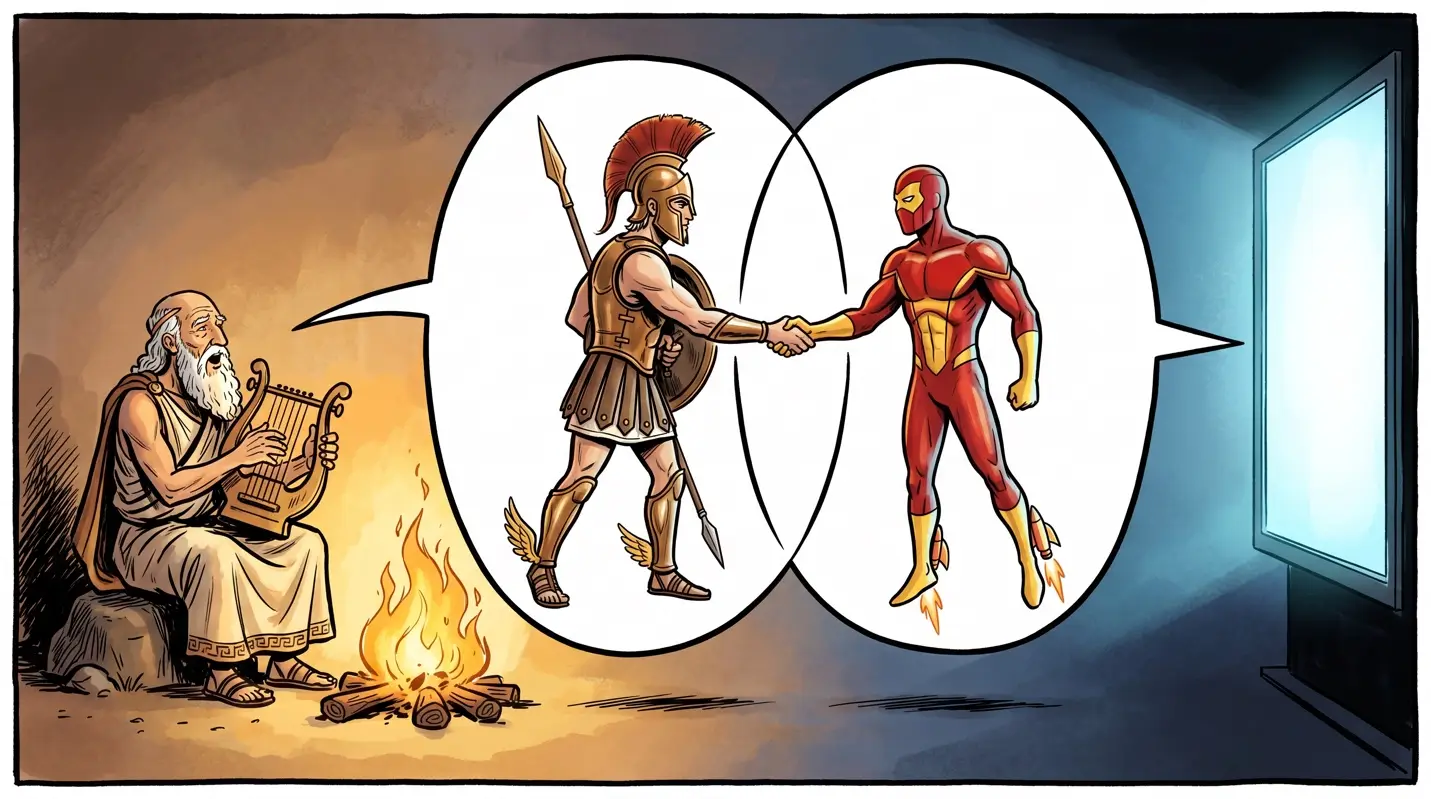


The right hemisphere is concerned with the ground, the situation in which things happen. And the left hemisphere is concerned with the figures or the input, or the program.
Carl Scharfe interview for the Innis Herald (1976), transcript, p 1
Year: 1976
The right and left hemisphere actually pursue two different thinking and analytic processes; that is, two different ways of processing information.
The Global Village with Bruce Powers (1989), p 53
Year: 1989
Chapters:
Living Unity | Dropout
The present electronic age, in its inescapable confrontation with simultaneity, may present the first serious threat to the dominance of the left hemisphere since that time [the 5th century B.C.].
"The Brain and the Media: The `Western' Hemisphere." Journal of Communication, Vol. 28, No. 4; reprinted in On the Nature of Media (2017), p 228.
Year: 1978
The right hemisphere is concerned with social intelligence which cannot be logically formulated, e.g., the spatial, the musical, the artistic, the symbolic.
“Ma Bell Minus the Nantucket Gam: Or the Impact of High-Speed Data Transmission,” with Bruce Powers (1981), p 192
Year: 1981
The right hemisphere is simultaneous. It's musical, artistic and group-oriented.
Attribute?
…it’s all being outmoded. Skyscrapers, cars, factories, are much in the position of horse and buggy. There are more horses and good horses in the world right now than there were 100 years ago, but they’re all elitist. They belong to important people and so on. But the horse and buggy-left hemisphere people will always hang around as a kind of elite.
J Kirsch interview (1976), typescript, p 7
Year: 1976
Left-hemisphere thinking, as a dominant mode, is linear and tends to place emphasis only on the connected; it is steeped in a priori notions of order, masking the complementarity of both right and left brain modes.
The Global Village with Bruce Powers, 1989, pp 4-5
Year: 1989
What the brain surgeons discovered about the two hemispheres of the brain tells us that the First World is left hemisphere, and the Third World is right hemisphere. For decades I have been trying to expound the difference in terms of the eye and the ear orientation of cultures. The Greeks and the Romans gave special salience to the eye via the phonetic alphabet and the invention of Euclidean space. With the alphabet, the lineal and connected character of space became apparent to literate man alone. The “barbarians” went on living in acoustic space, in a world dominated by oral culture. Logic belongs to the left hemisphere alone, but the simultaneous world of the right hemisphere is given new dominance be the electric information environment. This fact is not known to the hemisphere analysts.
Letter to Mike Gravel, January 17, 1977, in Letters of Marshall McLuhan (1987) p 526
Year: 1977
From the beginning, the trivium was beset by rivalry between the brain hemispheres, later known in Swift's time as the wars of the Ancients and the Moderns, with grammar and rhetoric usually holding control of the trivium against the rival claims of the dialecticians. Cicero, following the rhetorician Isocrates (a contemporary of Plato) and Quintilian, established the basic pattern for civilized education in the West, whether of prince or poet (reaffirmed by St. Augustine four centuries later), as the alignment of encyclopedic wisdom and eloquence. [A succinct summation of his Cambridge PhD dissertation, Thomas Nashe and the Learning of His Time, 1943]
The Global Village with Bruce Powers (1989), p 33
Year: 1989
The right hemisphere is not lineal, it is simultaneous, it’s a world where you can recognize faces. The left hemisphere, the logical one, cannot recognize a human face. Only the right hemisphere can see a face or a pattern, a complex character. So art, all artistic form, is in the right hemisphere, and all acoustic form and music is in the right hemisphere because it’s simultaneous.
“The Medium Brings His Message to the Governor,” Los Angeles Times, March 12, 1978, p F1
Year: 1978
Non-literate cultures are mainly oral/aural, even when they cultivate some nonphonetic
form of writing such as Sanskrit. On the other hand, literate cultures tend to be
visual and dependent on left hemisphere reasoning. The dominance of either the left or
the right hemisphere is largely dependent upon environmental factors.
“The Brain and the Media: The ‘Western Hemisphere’ ((1978) in On the Nature of Media (2016), p 226
Year: 1978
Now simultaneity just automatically gives preference to the right hemisphere. This has nothing to do with value judgments. We’re not saying which is good, which is bad. This is just the way we are, happened to be put together.
“The Medium Brings His Message to the Governor,” Los Angeles Times, March 12, 1978, p F1
Year: 1978
Existence is opaque to the rationalist. He seeks essences, definitions, formulas. He lives in the concept and the conceptualizable. Ideally, in a world of essences, actually, in a state of complete inanition. Cut off from the nutriment of existence, his very postulates discourage him from that loving and disciplined contemplation of existence, of particulars.
“T.S. Eliot’s Historical Decorum” (1949), Renascence, (Fall) Vol. 2, No. 1, pp. 9-15. Rpt., Renascence, (25th Anniversary Issue, Summer 1973, p 147
Year: 1949
While the Western world remains dominated by the logic of the left brain hemisphere, its art and entertainment are moving right— a formula for complete chaos.
“The Brain and the Media: The Western Hemisphere” (1978), in MM: the Man and His Message (1989), p 179
Year: 1978
From the beginning, the trivium was beset by rivalry between the brain hemispheres, later known in Swift's time as the wars of the Ancients and the Moderns, with grammar and rhetoric usually holding control of the trivium against the rival claims of the dialecticians. Cicero, following the rhetorician Isocrates (a contemporary of Plato) and Quintilian, established the basic pattern for civilized education in the West, whether of prince or poet (reaffirmed by St. Augustine four centuries later), as the alignment of encyclopedic wisdom and eloquence.
The Global Village with Bruce Powers, 1989, p 33
Year: 1989
So the right hemisphere, by pushing up into dominance, is making the old left-hemisphere world, which is our educational establishment, our political establishment, make it look very foolish. It's just a flip that is taking place.
What TV Does Best, 1976, in Understanding Me, 2003, p 247
Year: 1976
Chapter:
Between Two Ages
The logical, rational world is visual, continuous, and connected, but when pushed to its limits, flips into the acoustic form, as with Hume and Kant.
Letter to John W Mole, O.M.I., January 29, 1974, in Letters of Marshall McLuhan (1987) p 489
Year: 1974
The right side of the group is fragmentary or left-brain in structure: synecdoche is part-whole quantifiable, irony 'splits' in another way. Irony splits figure from ground and splits the consciousness of the knowers.
Laws of Media: The New Science with Eric McLuhan, (1988), pp 232-233
Year: 1988
One way of looking at it would be to say that life in the nineteenth century was permeated by the mechanical, the left hemisphere, but that life in the twentieth century, since the advent of electricity, has gradually taken on the coloration of the right. And most people do not know it. In fact, most corporate executives do not know it except, perhaps (and that is a big "perhaps"), those in the business of manipulating electronic technologies.
The Global Village with Bruce Powers (1989), p 121
Year: 1989
The groundrule of that universe [logic and the sequential, or the ruling left-hemisphere], upon which so much of our Western world is built, has dissolved.
The Medium Is the Massage with Quentin Fiore (1967), p 146
Year: 1967
Chapter:
Today’s Transition
Right-hemisphere culture has no place for the private individual, just as the left-hemisphere society regards tribal groups as sinister and threatening (remember the 'Yellow Peril')…
Laws of Media, 1988, p 77
Year: 1988
“Rationality” and logic came to depend on the presentation of connected and sequential facts or concepts. For many people rationality still has the connotation of uniformity and connectiveness. “I don’t follow you” means “I don’t think what you’re saying is rational.”
The Medium Is the Massage with Quentin Fiore (1967), p 44-45
Year: 1967
Chapter:
Linear and Nonlinear
Now in the electric age, at the speed of light, we need to process these things through the right hemisphere, that is, holistically, using formal cause. And in formal cause the effects appear before the causes. It is crucial that we use this approach. We need to know in advance what the effects on the users will be before we build the particular medium.
Religion and Youth: Second Conversation with Pierre Babin, 1977, in The Medium and the Light, p 101
Year: 1977
Plato's early struggles were centered on destroying the Oriental bias of Greek tribalism; he emphasized left-brain cognition over right, or angelism.
The Global Village, with Bruce Powers, 1989, p 57
Year: 1989
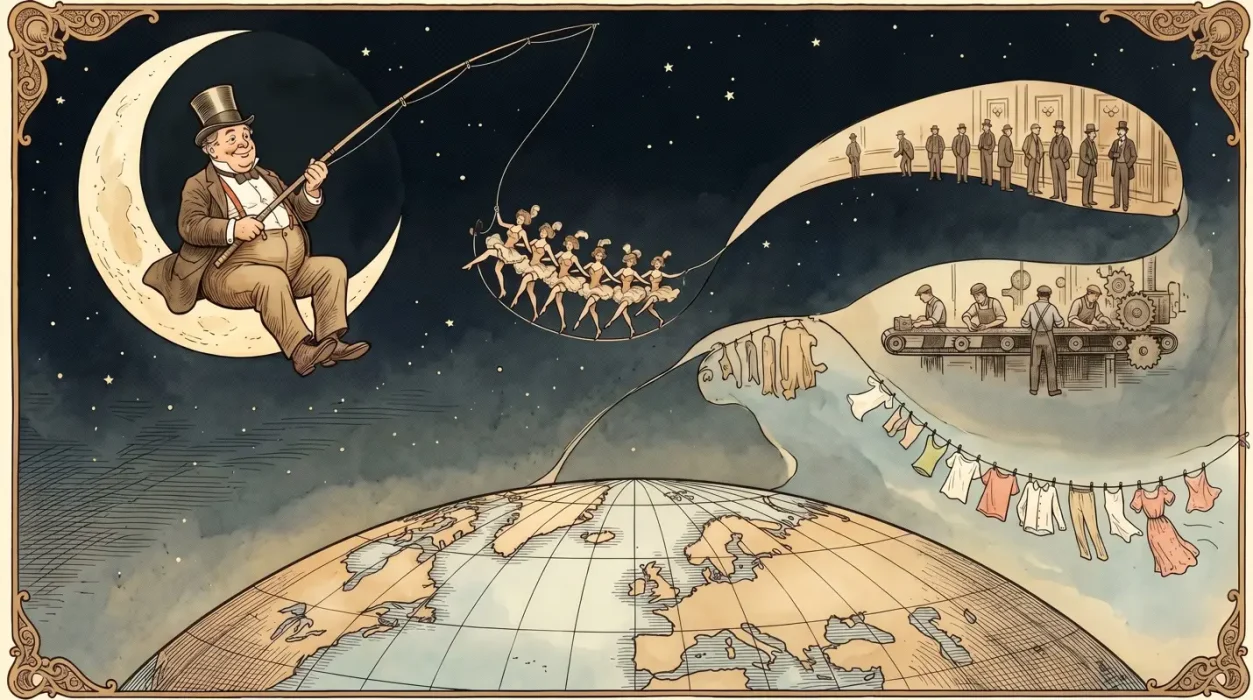
We have all noticed how lineality has faded from the current scene. The chorus line, the stag line, the assembly line, all have gone the way of the clothes line.
“Inside the Five Sense Sensorium” (1961), in On the Nature of Media (2016), p 53
Year: 1961
The social emergence of the individual from the corporate role was a parallel to the rise of realism in psychology and narrative. Realism is specialism and fragmentation.
From Cliché to Archetype, with Wilfred Watson (1970), p 89
Year: 1970
Chapter:
Living Unity
However fascinating such a theory may be, we should focus on the relationship between the cortical hemispheres which in our view is the projection of consciousness, consciousness being the sum interaction between one's self and the outside world.' The hemispheres manifest their very nature by the way in which they perceive and analyze the environment.
The Global Village, with Bruce Powers, 1989, p 52 [confirm]
Year: 1989
Well, the ideal, the visual world as compared to the world of resonance. The visual world offers evidence of a very different kind, that toward which you can feel an inclination of attention you can have, you can focus your attention on it we speak of having, you're conscious of visual life vocalized on concentrate upon an object, this gives you a point of view, now you can have a point of view about anything, you can see, but you cannot have a point of view about something you hear, especially something you overhear. There's a mystery there that we are much more powerfully involved in what we overhear then in what we hear. But in the world of resonance, man somehow, or other, becomes completely involved, he is not involved in the visual world as much, because this offers a means of detachment, you can stand back, you can look at it from different distances and so on. The world of resonance requires a complete involvement and consent on the part of the listener.
“A Matter of Faith”(TV Interview), Father Peyton’s Family Theatre, 1972; Transcript, p 5
Year: 1972
Currently color TV is upgrading the Negro identity image via its iconic power.
Letter to Edward T. Hall, July 23, 1969, in Letters of Marshall McLuhan (1987) p 383
Year: 1969
Chapter:
Television
“The right hemisphere crowd are the only ones LEFT behind.”
Recalled by Tom Cooper from classes and conversations with McLuhan, 1976-1979
Year: 1976
Chapter:
McLuhanisms & Zingers