Viewing chapter Ignorance (13 quotes)
“ln 1955, when the [Ford Foundation-funded] seminar ended (though the journal went on), McLuhan delivered himself of an apercu that, combining as it does both a flash of insight and more than a touch of paranoia, seems to me a wonderful distillation of his thinking: "all ignorance is motivated."
Robert Fulford
“All Ignorance is Motivated: Re-examining the Seedbed of McLuhanism”, in Canadian Notes & Queries, number 45 (1991), p 3
Year: 1991
Chapter:
Ignorance
“The more specialized an academic became, in McLuhan's view, the more desperately he clung to his expertise and the less he wanted to understand others or wanted others to understand him. Eventually McLuhan concluded, for these and other reasons, that ‘all ignorance is motivated.’ Most people simply do not want to expand their awareness.”
Philip Marchand
Marshall McLuhan: the Medium and the Messenger (1989), p 126
Year: 1989
Chapters:
Ignorance | Specialism
Just as the Japanese insist that it is not the tea but the ritual that gives meaning, Dr. Kormos [from a New York Times series on prevalent drug taking] suggested that it is the procedure of group Participation and sharing of the drug that lends "a sense of belonging and Identity that may be more important to the student than the effect of the drug."
War and Peace in the Global Village, 1968, p 82
Year: 1868
Now, in the electric age, the very instantaneous nature of co-existence among our technological instruments has created a crisis quite new in human history. Our extended faculties and senses now constitute a single field of experience which demands that they become collectively conscious. Our technologies, like our private senses, now demand an interplay and ratio that makes rational co-existence possible. As long as our technologies were as slow as the wheel or the alphabet or money, the fact that they were separate, closed systems was socially and psychically supportable. This is not true now when sight and sound and movement are simultaneous and global in extent. A ratio of interplay among these extensions of our human functions is now as necessary collectively as it has always been for our private and personal rationality in terms of our private senses or "wits," as they were once called.
“Prologue”, in The Gutenberg Galaxy: The Making of Typographic Man, (1962), p 5
Year: 1962
Chapter:
Extending Consciousness
When you put on a man’s ignorance, you put him on totally. Such is the power of the news leak. It has all the character of everybody’s ignorance and therefore can be ignored by nobody.
“Representation Without Taxation: Double Take or Double Talk?” (1971) Heavily annotated, unpublished typescript, p 6
Year: 1971
Chapter:
Putting On
One of the effects of living with electric information is that we live habitually in a state of information overload. There´s always more than you can cope with. Now the young have devised a strategy for dealing with this quite apart from just inattention. They have devised a much more potent strategy of myth-making.
“The Marfleet Lectures” March 16-17 (1967); reprinted in Understanding Me (2003), p 135
Year: 1967
It might be possible to solve any problem by organizing our ignorance; there’s always one guy who’s so ignorant he can’t help but see the answer. That’s called discovery.
Quoted from a 1976 McLuhan Seminar by Thomas W. Cooper his dissertation, Pioneers in Communication: The Lives and Thought of Harold Innis and Marshall McLuhan, University of Toronto, 1979, p 207
Year: 1976
Man's right to his own ignorance might be said to be his principal means of private identity.
From Cliché to Archetype with Wilfred Watson (1970), p 63
Year: 1970
Chapter:
Anticipating Change
The later Innis inevitably adopted a discontinuous style, an aphoristic, mental-camera sort of procedure which was indispensable to his needs… The linear development of paragraph perspectives is abandoned almost entirely in favor of the rapid montage of single shots. He juxtaposed one condensed observation with another, mounts one insight on another in quick succession to create a sense of the multiple relationships in process of undergoing rapid development from the impact of specific technological changes.
“The Later Innis" Queen's Quarterly, Vol. 60, No 3, Autumn (1953), p 389, reprinted in On the Nature of Media (2016), p 43
Year: 1953








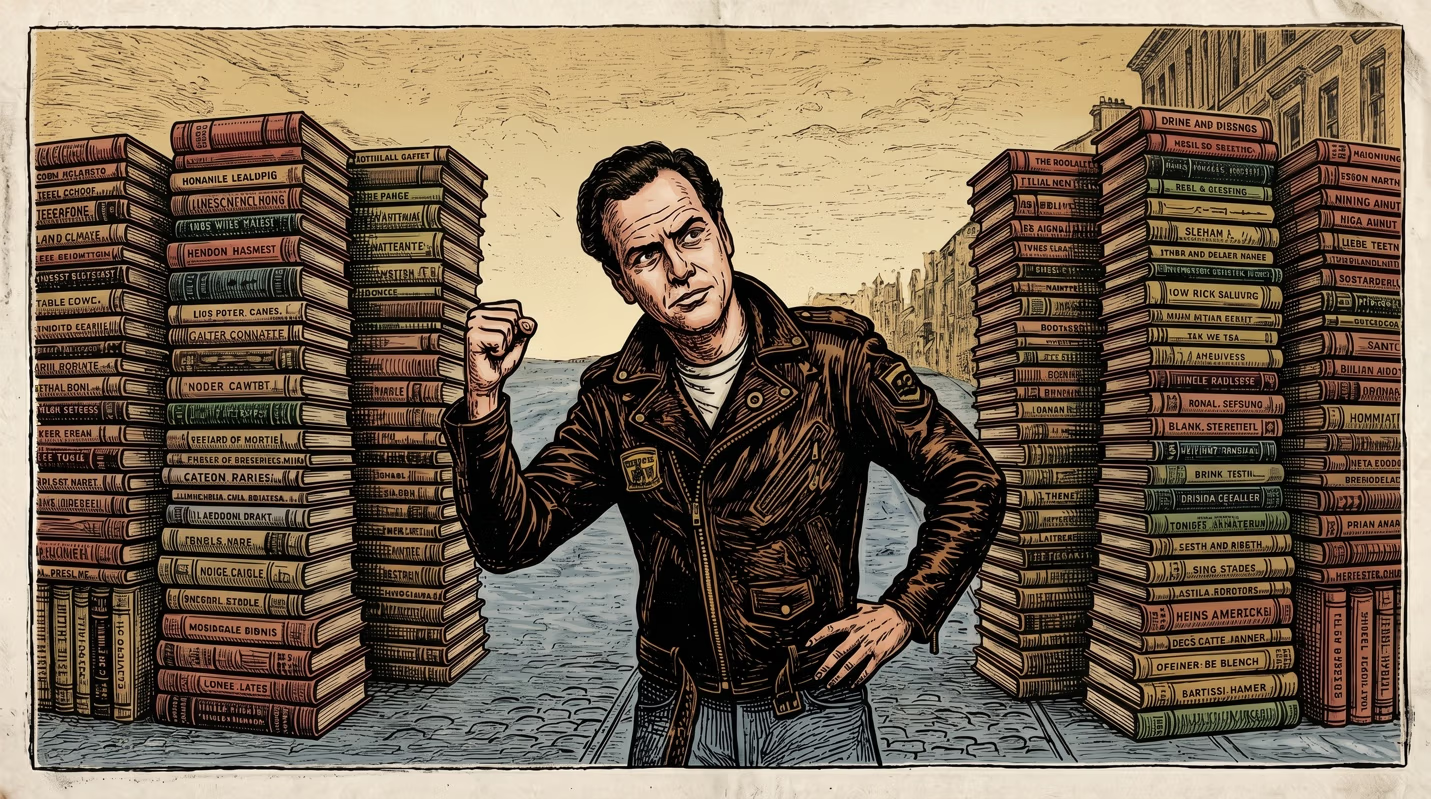
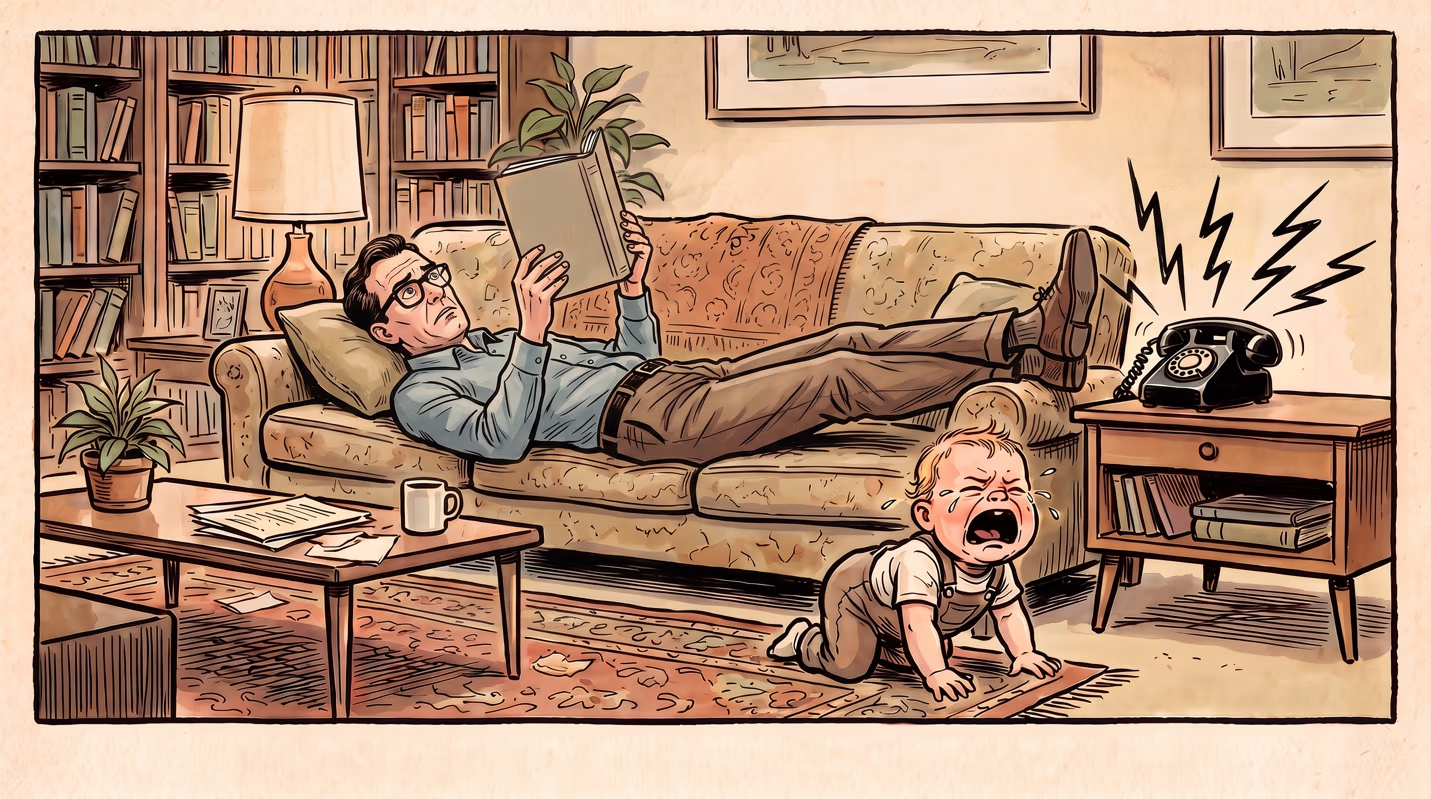
In an involuntarily contradictory way, Innis was fighting for the return of the oral tradition with the weapons of the written tradition.
“The Later Innis" Queen's Quarterly, Vol. 60, No 3, Autumn (1953), p 392, reprinted in On the Nature of Media (2016), p 46
Year: 1953
By extending the technique of reporting the coexistence of events in China and Peru from global space to the dimension of time, Joyce achieved the actualized realism of a continuous present for events past, present, and future.
"Joyce, Mallarmé and the Press", in The Sewanee Review, Vol.62, No.1, Jan-March (1954), p 45-46, reprinted in The Interior Landscape The Literary Criticism of Marshall McLuhan, (1969), p 12.
Year: 1954
Chapter:
History
it is only necessary to remove the dateline from any newspaper to create a similar if less satisfactory model of the universe. That is what R.L. Stevenson meant when he said he could make an epic of a newspaper if he knew what to leave out. Joyce knew what to leave out.
"Joyce, Mallarmé and the Press", in The Sewanee Review, Vol.62, No.1, Jan-March (1954), p 46, reprinted in The Interior Landscape The Literary Criticism of Marshall McLuhan, (1969), p 12.
Year: 1954
In approaching the structure of Ulysses as a newspaper landscape it is well to call to mind a favorite book of Joyce’s, The Purple Island of Phineas Fletcher. The author’s name suggesting Finn the arrow-maker. Fletcher presents the anatomy and labyrinths of the human body in terms of an enchanted Spenserian landscape. Many have pointed out the importance of the human form of the sleeping giant, the collective consciousness, as the structure of the Wake. And Joyce was careful to instruct his readers in the relation between the episode of Ulysses and our bodily organs. (In 1844 the American press greeted the telegraph as “the first definite pulsation of the real nervous system of the world.”)
"Joyce, Mallarmé and the Press", in The Sewanee Review, Vol.62, No.1, Jan-March (1954), p 50, reprinted in The Interior Landscape The Literary Criticism of Marshall McLuhan, (1969), p .16
Year: 1954
Chapter:
Corporate Consciousness
Using Coleridge's principle that the most effective approach to anyone's knowledge is via his ignorance, would you agree that Plato was quite unaware of the imperceptible environment of "visual space" created for the first time in human history by the phonetic alphabet?
Letter to I. A. Richards, July 12, 1968, in Letters of Marshall McLuhan (1987), p 355
Year: 1968
Chapter:
Coleridge
Individual consciousness is achieved by strategic ignorance and suppression.
From Cliché to Archetype with Wilfred Watson, 1970, p 63
Year: 1970