Viewing chapter Information Warfare (33 quotes)
World War I was a railway war of centralism and encirclement. World War II was a radio war of decentralism. World War III is a guerilla information war with no division between military and civilian participation.
Marshall McLuhan
Culture Is Our Business (1970), p 66
Year: 1970
Chapter:
Information Warfare
The real war is an information war. That's a very unhappy phrase. Cold war is a much
more vicious form of war than hot war, because it is total. It involves everybody all the time. It is being fought by electric information.
Goldman interview, 1966-7, p 31
Year: 1966
One characteristic that Telstar, the bomb and the computer have in common is that of enormous power related to puny hardware.
“A New Journey for the Magi” (1965), p 1
Year: 1965
Chapter:
Information
The bomb is not a weapon. The bomb simply wiped out war instantly, and to treat it like a weapon is like using a radio set as a weapon to heave at people...
Madamoiselle interview, 1967, p 126
Year: 1967
From the moment of Hiroshima and the Bomb we had positive proof that information as such had become the new sinews of war.
Take Today with Barrington Nevitt, 1973, 150
Year: 1973
The bomb is information. It's electronic information as environment. It is not basically a gimmick or hardware.
MIT/SSSR speech, 1966, typescript, p 3
Year: 1966
If the Vietnam war were not reported in the press, any press, what do you think would happen? ...[H]ow much of the war actually consists in being processed through the media?
“Kansas City Show” By Ivan Goldman, in Sunday Magazine, January 4, 1970, p 29
Year: 1970
Chapter:
War
Today, when the largest commodity of all is information itself, war is no longer the movement of hardware, but of information. What had previously been ”a peace time” activity within our boundaries now becomes the major “cold-war” across frontiers. Instead of competing for the franchise and dollars of our own citizens, we are now engaged in trying to win the favorable attention of Asian and African millions for the star turn or top show. Our own conceptions of education and of warfare are so completely tied to 3,500 years of literacy that the meaning of the electronic revolution is much less obvious to us in the West than to a Japanese or a Chinese or to an African.
What I Learned on the Project (1959-60), in NAEB Report on Understanding New Media, June (1960), p 2
Year: 1959
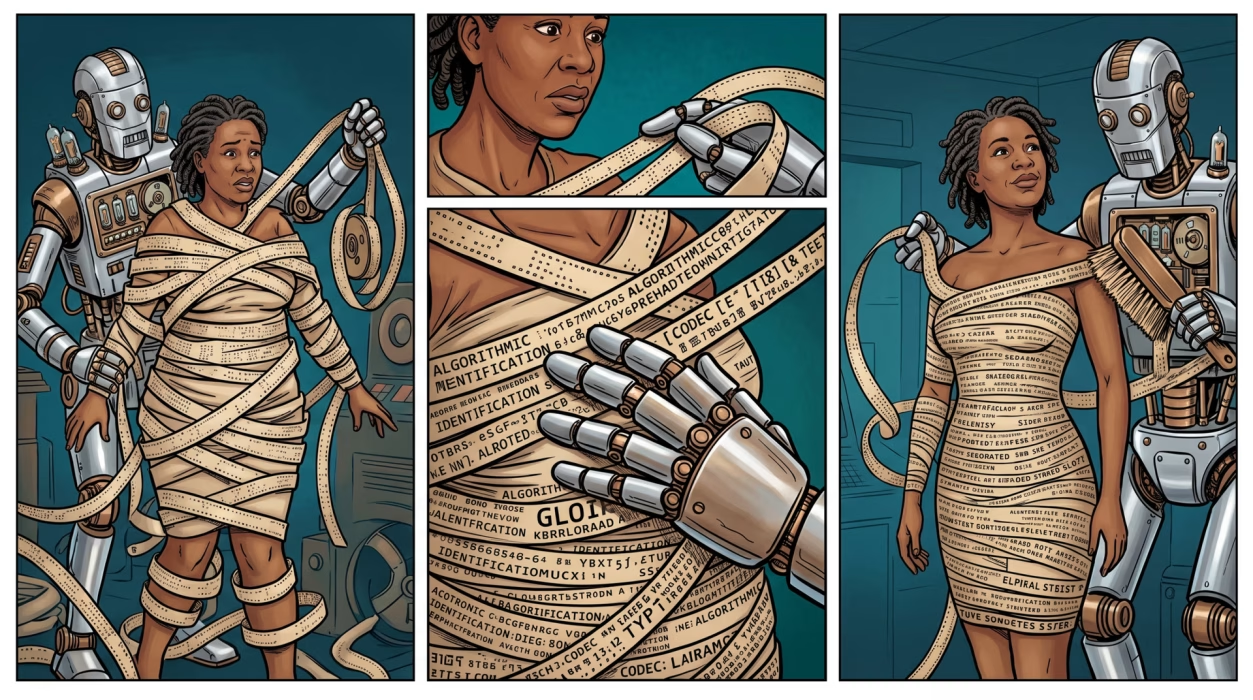

With the rise of information levels and speeds, war may cease to be the exchange of bulk or heavy goods, and may become an information exchange before a global public.
“Effects of Improvements in Communication Media,” (1960), p 575
Year: 1960
[Power] has become more and more a form of information. Information likewise has
become increasingly a means of power.
“A New Journey for the Magi” (1965), p I
Year: 1965
Mythic structuring of situations becomes natural under information overload, you can’t cope with it in classification terms, so you build myths. We now live mythically, we can’t think mythically, but we live mythically.
“The New Education” (1967), p 71
Year: 1967
Chapters:
Information Overload | Myth, Mythic
For the child who lives in an environment constituted by information, such educational assumptions are unrealistic. Today the child, swamped by information overload, desperately needs to be taught the means of pattern-recognition for the sake of psychic survival.
From Cliché to Archetype with Wilfred Watson (1970), p 201
Year: 1970
Chapters:
Living Unity | Dropout
The kind of understanding of social process which Innis achieved is not shared by other historians. Innis is unique in having been the first to apply the possibilities of pattern recognition to a wired planet burdened by information overload.
Foreword to H.A. Innis’s Empire and Communication, 1972 edition, in On the Nature of Media (2016), pp 194-195
Year: 1972
When we live in an information environment, knowing and the processes of learning have to be understood as never before. At IBM the slogan has been for many years, “Information overload requires pattern recognition.” When we live in an information environment, the overload is such that without pattern and structural studies, it becomes quite impossible to cope with the new environment created by the new information technologies.
Dedication for Magnovia II, February, 1968
Year: 1968
Chapters:
Information Overload | Joyce, James
Today the child, swamped by information overload, desperately needs to be taught the means of pattern-recognition for the sake of psychic survival. Pattern-recognition is the role of the researcher and the explorer. Today's young children could recover high motivation in the learning process only if permitted to tackle their environment on a discovery basis.
From Cliché to Archetype with Wilfred Watson (1970), p 201
Year: 1970
Chapter:
Pattern Recognition
General Abrams is, like all old-style specialists, a centralist who depends on a hierarchy below him to keep him informed. It has not occurred to him to switch his perceptual activity to pattern recognition in a world of information overload.
“Media and the Inflation CROWD,“ (1973), in MM: The Man and His Message (1989), p 56
Year: 1973
Chapters:
Information Overload | Pattern Recognition
The new video-related technologies promise to impose a new monopoly of ground over figure. Whatever is left of mechanical age values could be swallowed up by information overload. Media determinism, the imposition willy-nilly of new cultural grounds by the action of new technologies, is only possible when the users are well-adjusted, i.e., sound asleep.
The Global Village with Bruce Powers (1989), p 11
Year: 1989
Chapters:
Living Unity | Dropout
The kind of understanding of social processes which Innis achieved is not shared by other historians. Innis is unique in having been the first to apply the possibilities of pattern recognition to a wired planet burdened by information overload.
Foreword to H.A. Innis, Empire and Communications (1972), in On the Nature of Media (2016), p 195
Year: 1972
The resulting information overload is a world in which all patterns stand out loud and clear for the first time.
The Global Village with Bruce Powers (1988), p 19
Year: 1988
Any artifact, whether hardware (compass, cash, chairs, computer) or software (art styles, poetry, philosophy, scientific theories) when subjected to intense speedup will eventually reach a state of information overload in which the process pattern of the artifact as an aspect of eternity becomes clear.
The Global Village with Bruce Powers (1988), p 19
Year: 1988
Chapters:
Chiasmus, Flips, Reversals | Information Overload
FACED WITH INFORMATION OVERLOAD, WE HAVE NO ALTERNATIVE BUT PATTERN-RECOGNITION.
Counterblast (1969), p 132
Year: 1969
Chapters:
Information Overload | Pattern Recognition
But you see any form when pushed to its limit always reverses its characteristics, and information overload is a nice example.
Marshall McLuhan in Conversation with Norman Mailer (1968), “Marshall McLuhan Speaks” transcript, page 6
Year: 1968
Chapters:
Chiasmus, Flips, Reversals | Information Overload
At the present time, one area in which we daily observe the confusion resulting from sudden change of environmental factors is that of the educational dropout. Today, the ordinary child lives in an electronic environment, he lives in a world of information overload.
“Cybernetics and Human Culture” (1964) in Understanding Me (U2003), p 52
Year: 1964
Chapter:
Information Overload
The only order that the young can create, in a very fast-moving world of information overload, the only order they can create is that of myth.
“Fletcher Markle on Mcluhan Is the Message” (1967) Youtube video, transcript: 18.01
Year: 1967
Chapters:
Information Overload | Myth, Mythic
The amount of information overload in the environment of the child today is fantastic.
“Television in a New Light” (1967) in The Meaning of Commercial Television, ed S. Donner (1966), p 102
Year: 1967
Chapter:
Information Overload
“But when you live in electric all at once environment to create an overload of information in the environment which drives everybody to various strategies for coping with all information overload, the basic strategy for coping with information overload is myth. So that our youngsters today have automatically re discover the meaning of myth, they live mythically.
“From Gutenberg to Batman,” Lecture (1966), Youtube video, transcript: 39:55
Year: 1966
Chapter:
Information Overload
So in our information overload environment young people are living mythically without any warning, nobody's told them and nobody's explained why it should happen to them.
“From Gutenberg to Batman,” Lecture (1966), Youtube video, transcript: 39:55
Year: 1966
Chapter:
Information Overload
“General Abrams is, like all old-style specialists, a centralist who depends on a hierarchy below him to keep him informed. It has not occurred to him to switch his perceptual activity to pattern recognition in a world of information overload”
“Media and the Inflation CROWD” (1973), in MM: The Man and His Message (1989), p 59
Year: 1973
Chapters:
Information Overload | Pattern Recognition
The much greater electric speed-up of today enables us to shift from information overload to pattern recognition, from experience to knowledge, and from reaction to anticipation.
Take Today with Barrington Nevitt (1972), p 64
Year: 1972
Chapter:
Information Overload
We are now in the midst of our first television war. Television began to be experienced in the ordinary home after 1946. Typically, the FBI and the CIA were looking In the rear-view mirror for the revolutionary agents who were threatening the identity of the country. The television environment was total and therefore invisible. Along with the computer, it has altered every phase of the American vision and identity. The television war has meant the end of the dichotomy between civilian and military. The public is now participant in every phase of the war, and the main actions of the war are now being fought in the American home itself
War and Peace in the Global Village (1968), p 134
Year: 1968
From the moment of Hiroshima and The Bomb we had positive proof that information as such had become the new sinews of war.
Take Today with Barrington Nevitt (1972), p 150
Year: 1972
The real war is an information war. That’s a very unhappy phrase. Cold war is a much more vicious form of war than hot war, because it is total. It involves everybody all the time. It is being fought by electric information. That’s where the real warfront is.
Goldman TV interview, 1966. Transcript, p 31
Year: 1966
With the rise of information levels and speeds, war may cease to be the exchange of bulk or heavy goods, and may become and information exchange before a global public.
“Effects of Improvement sin Communication Media,” (1960), p 575
Year: 1960
On the other hand, the old-fashioned kind of "war" becomes as impracticable as playing hopscotch with bulldozers.
Understanding Media, (1964), MIT/Routledge edition, p 353
Year: 1964