Viewing chapter Inner/Outer (6 quotes)
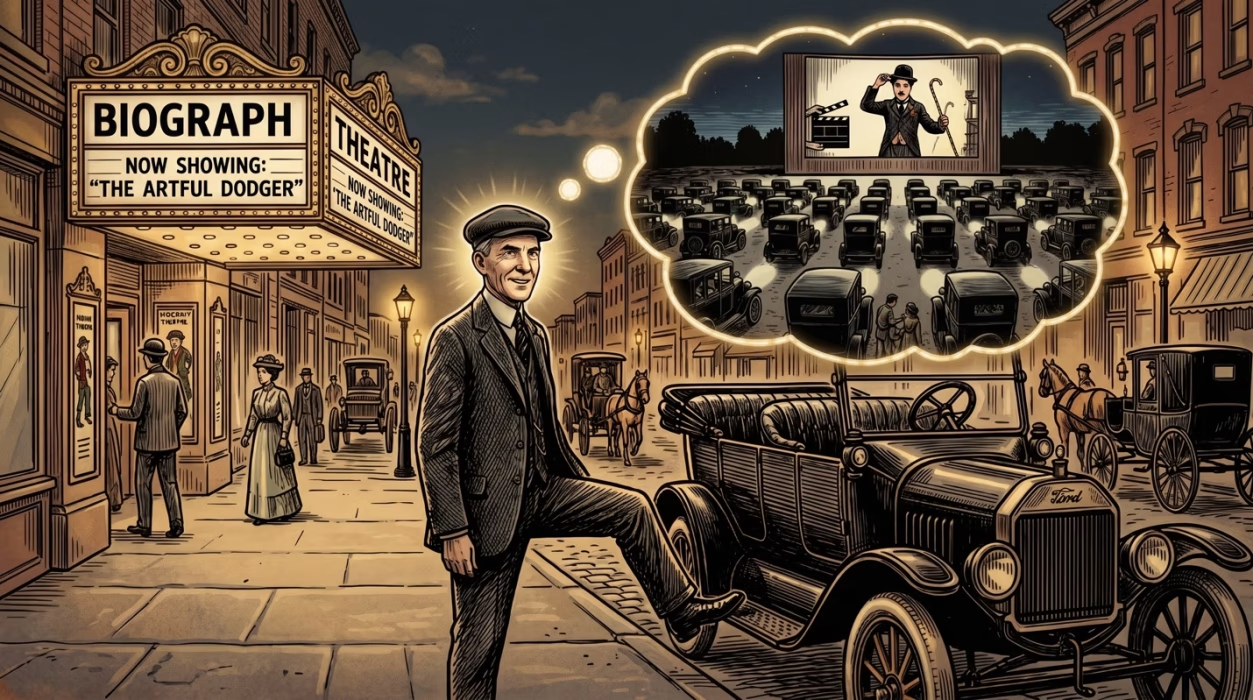
Not many ages ago, glass windows were unknown luxuries. With light control by glass came also a means of controlling the regularity of domestic routine, and steady application to crafts and trade without regard to cold or rain. The world was put in a frame. With electric light not only can we carry out the most precise operations with no regard for time or place or climate, but we can photograph the submicroscopic as easily as we can enter the subterranean world of the mine and of the cave-painters… Lighting as an extension of our powers affords the clearest-cut example of how such extensions alter our perceptions. If people are inclined to doubt whether the wheel or typography or the plane could change our habits of sense perception, their doubts end with electric lighting.
Understanding Media, MIT/Routledge edition, pages 128-129.
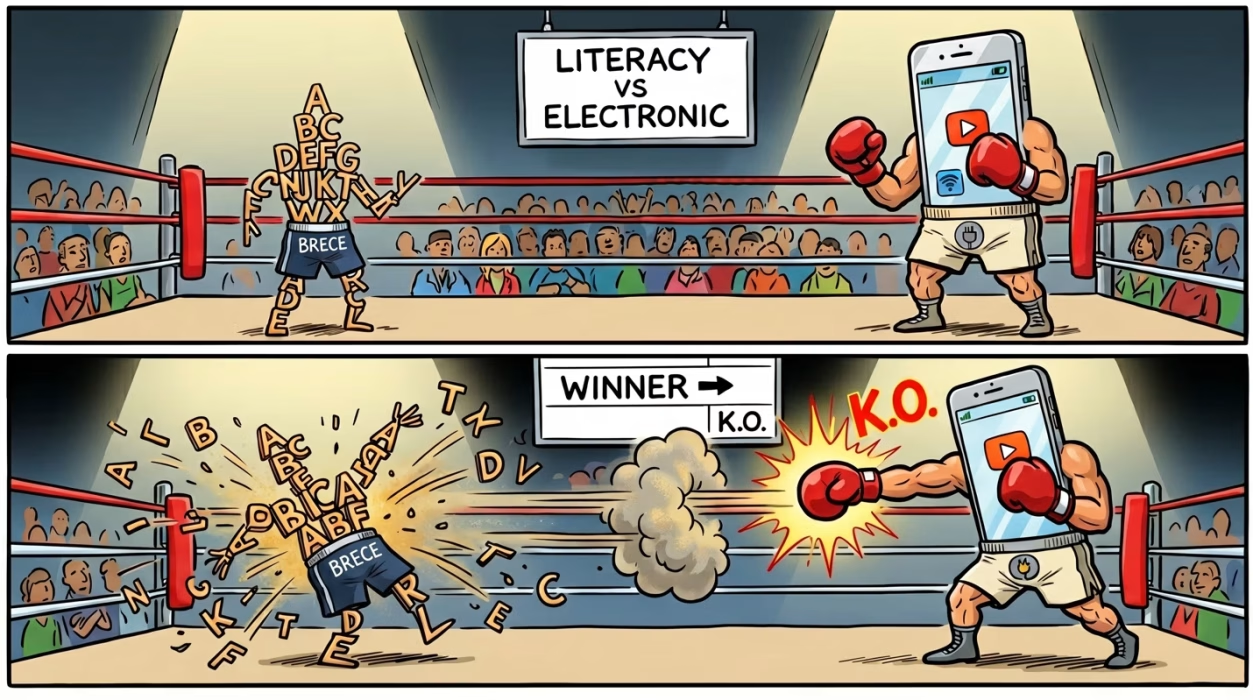
Whereas visual man had dreamed of distant goals and vast encyclopedic programs of learning, electronic man prefers dialogue and immediate involvement. Since nothing on earth can be distant at the speed of light, electronic man prefers the inner to the outer trip and the inner to the outer landscape.
“At the Moment of Sputnik” (1972), in MM: The Man and His Message (1989), p 72
Year: 1972
Chapter:
Speedups
Living at the speed of light, all pasts and all futures are simultaneously now; there is no past time for pastimes to replay or ritualize, no “outside” (or “inside”) our own time or world. Games, sports and entertainment alike will all become a form of fantasy life of “now” and “me.”
“Living at the Speed of Light” (1979), typescript, p 20
Year: 1979
Chapters:
History | Today’s Transition
Inner, rather than outer, causes interest the nonliterate and nonvisual cultures. And that is why the literate West sees the rest of the world as caught in the seamless web of superstition.
Understanding Media (1964), MIT/Routledge edition, p 287
Year: 1964
For "testing the truth" is not merely matching by congruence or classification; it is making sense out of the totality of experience — a process of pattern re-cognition that requires not only concepts but active perception by all the senses. Today, as "hardware" is transmuted into pure information by the process of " etherealization," the "inner" and the "outer" merge — thinking becomes doing.
“The Argument: Causality in the Electric World”, in Technology and Culture, Vol.14, No. 1, January (1973), p 8-9, reprinted in McLuhan Unbound # 3, (2005), p 15
Year: 1973
The world communications net, the all-involving linkage of electric circuitry, will grow and become more sensitive. It will also develop new modes of feedback so that communication can become dialogue instead of monologue. It will breach the wall between "in" and "out" of school. It will join all people everywhere. When this has happened, we may at last realize that our place of learning is the world itself, the entire planet we live on. The little red schoolhouse is already well on its way toward becoming the little round schoolhouse.
“The Future of Education” with George Leonard, Look Magazine. Feb. 21, 1967, pp. 23-25.
Year: 1967