Viewing chapter LOM 1 - Enhance or Amplify (12 quotes)
By coordinating and accelerating human meetings and goings-on, clocks increase the sheer quantity of human exchange.
Understanding Media, 1964, MIT/Routledge, p 155
Year: 1964
Enhancement and obsolescence are obviously complementary actions.
Laws of Media, with Eric McLuhan, 1988, p 99
Year: 1988
Typing reduces expression from art to craft, from personal to impersonal.
“A Discussion about Typewriters”, 1974, p 47
Year: 1974
Print provided a vast new memory for past writings that made a personal memory inadequate.
Understanding Media, 1964, MIT/Routledge, p 174
Year: 1964
Chapter:
Memory
Radio provides a speed-up of information that also causes acceleration in other media. It certain contracts the world to village size, and creates insatiable village tastes for gossip, rumor, and personal malice.
Understanding Media, 1964, MIT/Routledge, p 306
Year: 1964
Chapter:
Global Village
The subliminal depths of radio are charged with the resonating echoes of tribal horns and antique drums. This is inherent in the very nature of this medium, with its power to turn the psyche and society into a single echo chamber.
Understanding Media, 1964, MIT/Routledge, p 299
Year: 1964
Chapter:
Retribalizing
Whenever any new medium or human extension occurs, it creates a new myth for itself, usually associated with a major figure: Aretino, the Scourge of Princes and the Puppet of Printing; Napoleon and the trauma of industrial change; Chaplin, the public conscience of the movie; Hitler, the tribal totem of radio; the Florence Nightengale, the first singer of human use by telegraph wire.
Understanding Media (1964), MIT/Routledge, p 252
Year: 1964
Chapter:
Extending Consciousness
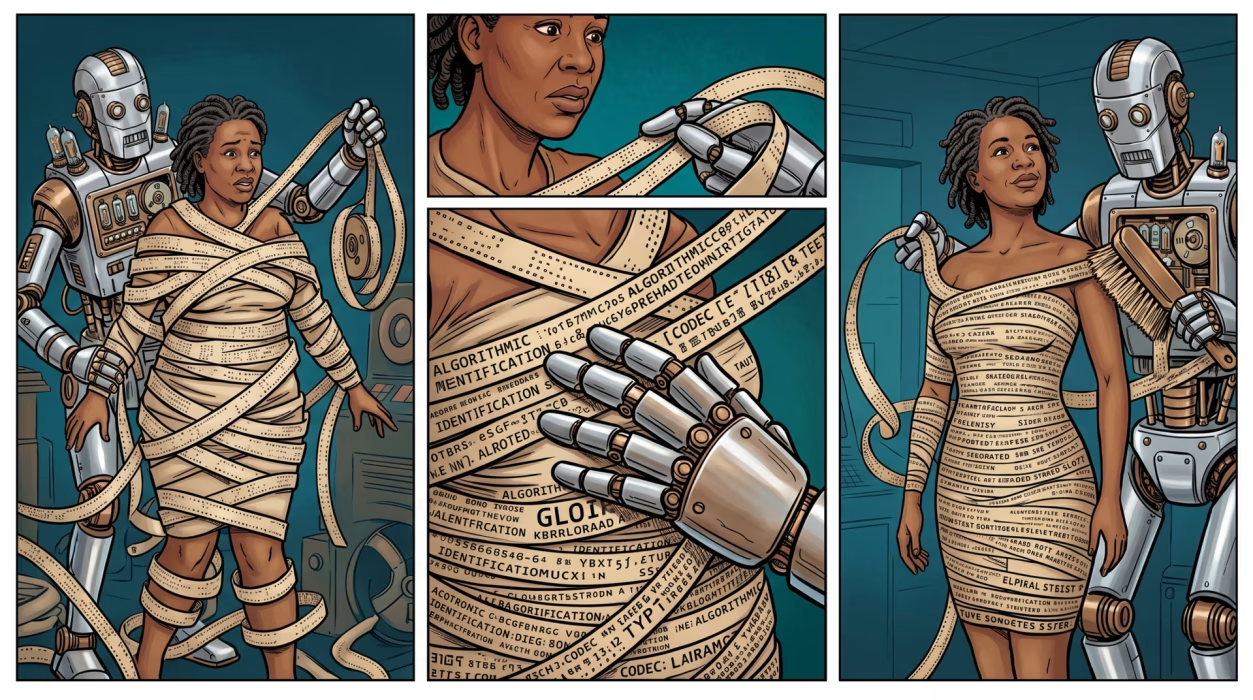



When a technology is new it yields utopias. Such is Plato's Republic in the 5th century B.C., when phonetic writing was being established. Similarly, More's Utopia is written in the 16th century when the printed book had just become established.
“Notes on Burroughs,” The Nation, 1964, p 517
Year: 1964
[Money] gives great spatial extension and control to political organizations, just as writing does, or the calendar. It is action at a distance, both in space and in time.
Understanding Media (1964), MIT/Routledge, p 136
Year: 1964
[T]he dominant technologies of one age become the games and pastimes of a later age. In the twentieth century the number of past times that are simultaneously available is so vast as to create cultural anarchy.
From Cliche to Archetype with Wilfred Watson (1970), p 99
Year: 1970
An archetype is a retrieved awareness of consciousness ... a quoted extension, medium, technology or environment.
From Cliche to Archetype with Wilfred Watson (1970), p 21
Year: 1970
New styles are really responses to new environments, and fashion is always looking into a rear-view mirror to find something nostalgic to revive.
“Understanding Canada and Sundry other matters: Marshall McLuhan”, interview in Mademoiselle Magazine, January (1967), p 115
“McLuhan Probes”, in The Man and His Message (1989), p 219
Year: 1989
Chapter:
LOM 3 – Retrieve