Viewing chapter LOM 3 – Retrieve (27 quotes)
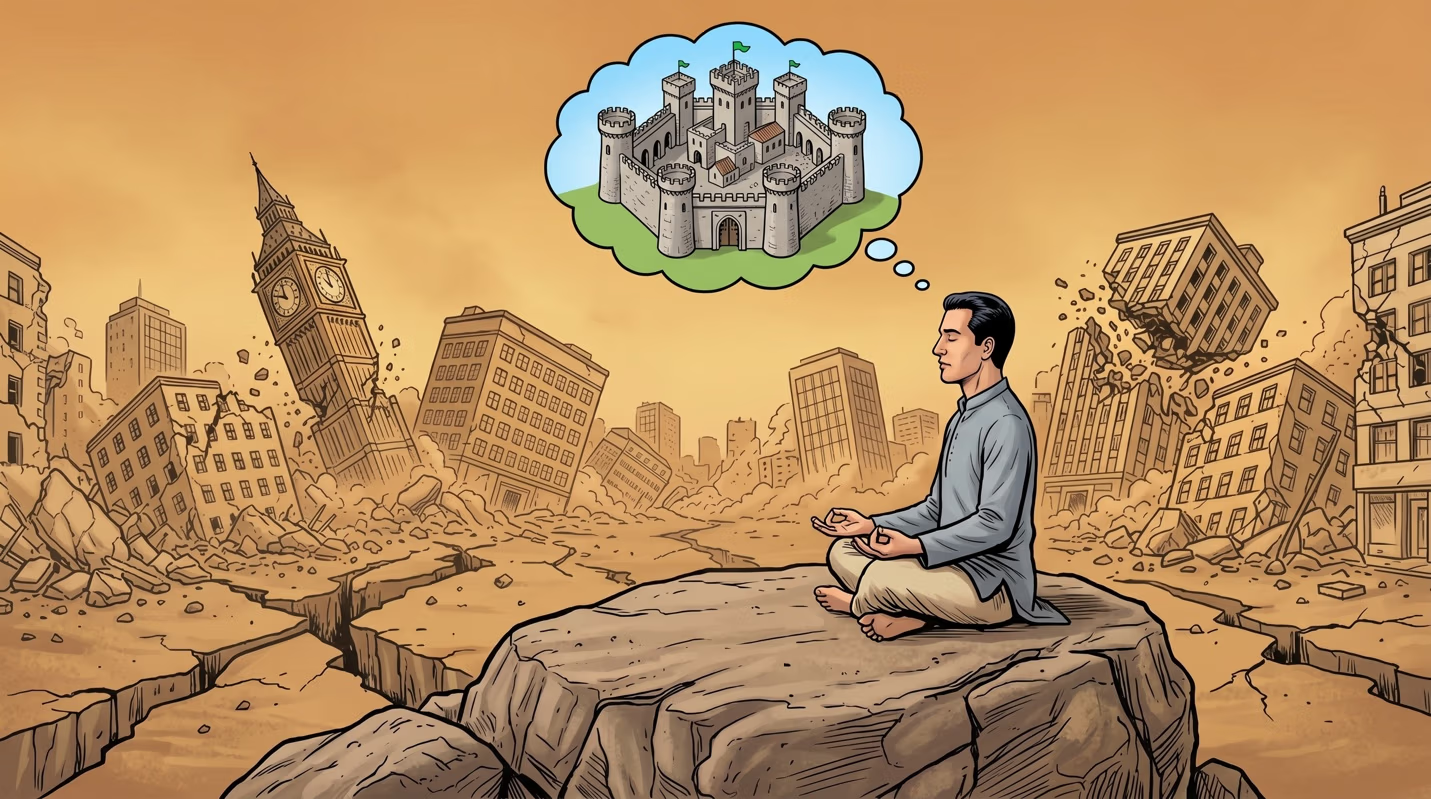
The fall or scrapping of our old visually oriented culture, so beloved of nineteenth-century oligarchs, puts us all into the same archetypal cesspool, engendering a nostalgia for earlier, more secure (because fixed in memory) conditions.
Through the Vanishing Point with Harley Parker (1968), p15
Year: 1968
[Nineteenth century poetry and arts] resound with plangent memories of earlier ages, and the murder of time in the name of power and money produced modem archeology and anthropology, and an historical consciousness of the unity of the human family possessed by no other age.
“The Later Innis" Queen's Quarterly, Vol. 60, No 3, Autumn (1953), p 391, reprinted in On the Nature of Media (2016), p 45
Year: 1953
The mystery of retrieval of ancient forms amidst innovation has been universally manifested in the recovery of the Middle Ages in many of its forms by the young TV generation. More potent still, there is the drive back to the "cottage economy" under the impulse of computer technology.
Take Today with Barrington Nevitt, 1972, p 167
Year: 1972
And constant use creates a new hidden environment while simultaneously pushing the old invisible ground into prominence, as a new figure, clearly visible for the first time. Every innovation scraps its immediate predecessor and retrieves still older figures; it causes floods of antiques or nostalgic art forms and stimulates the search for "museum pieces." In such cliche-archetype patterns, the new continually recreates the old as novelty regenerates antiquity.
“The Argument: Causality in the Electric World”, in Technology and Culture, Vol.14, No. 1, January (1973), p 2, reprinted in McLuhan Unbound # 3, (2005), p 7
Year: 1973
The electronic world changes our sensory lives, and makes us much more sensitive [sic] to touch, textures, and the quality of the much-used, and antiques in general. Even antique clothes are popular. Denims are more popular as long as they look old, and much used.
“Jean Pare interview”, in Forces magazine a Hydro Quebec publication, No.22, (1973), p 32
Year: 1973
The radio tube principle, pushed far enough, led to television.
The Medium Is the Message, (1960), p 24
Year: 1960
The coverage is the war. If there were no coverage… and there are far more people covering the war than there are fighting… there’d be no war. Yes, the newsmen and the mediamen around the world are actually the fighters, not the soldiers anymore. There is a flip. There is a reverse.
Jean Pare Interview, in Forces magazine a Hydro Quebec publication, No.22, (1973), p 10 of typescript
Year: 1973
Chapter:
War
Just before an airplane breaks the sound barrier, sound waves become visible on the wings of the plane.
Understanding Media, 1964, MIT/Routledge, p 12
Year: 1964
Fashion repeats what was going on thirty years ago. Just as the work of past times—hunting, fishing, sailing—are today's pastimes, so fashion repeats tribal history. Fashion revives the recent past so that it may be purged of impurities. Finnegans Wake makes much of the Washers at the Ford, whose gossip parallels their endeavors to wash the dirty linen of the tribe. Gossip is a re-membering of the tribe: it serves to purify the dialect. The purging of "dear dirty Dublin" involves a good deal of doubling back on the recent past.
“Marshall McLuhan on Fashion” (1968), reprinted in On the Nature of Media (2016), p 153
Year: 1968
But the possibility of retrieval as a form of discovery is something we all know from our own memories.
“The Medium is the massage”, 1966, in Understanding Me, 2003, p 80
Year: 1966
Retrieval is not simply a matter of hauling the old thing back onto stage, holus-bolus. Some translation or metamorphosis is necessary to place it into relation to the new ground - as anyone can testify who has experienced 'revivals' in our culture, whether in fashion or music or any other form.
Laws of Media: The New Science with Eric McLuhan, (1988), p 101
Year: 1988
One of the strange hidden capacities of all innovations, all technologies, is that they always bring back things that have been pushed out of sight for a very long time. The motor car brought back knights in shining armor – that’s why it is a status symbol of considerable importance.
“Car’s Lost Its Role: McLuhan,” in The Toronto Star, March 26, 1975, p A11
Year: 1975
A more characteristic form of identity quest under electric conditions is the universal theme of nostalgia. When our world exists only in fantasy and memory, the natural strategy for identity is nostalgia, so that today revivals occur so frequently that they are now called "recurrences" (in the recording industry).
“A Last Look at the Tube” (1978), in The Man and His Message (1989), p 19
Year: 1978
In one era and out the other. You have to work fast. You flip in with a single gag in one ear and out the other.
Lecture given in the Gerstein Series Man and Media, March 1975, transcript, p 3
Year: 1975
The archetype is a retrieved awareness or consciousness. It is consequently a retrieved cliche—an old cliche retrieved by a new cliché. Since a cliché is a unit extension of man, an archetype is a quoted extension, medium, technology, or environment.
Counterblast, 1969, p 21; also Laws of Media, 1988, pp 103-104
Year: 1969
Chapter:
Figure/Ground
“Camp" is not a form of retrieval but rather simply rear-view-mirror nostalgia. It is not a new service environment or cliche, but a means of escaping into the gingerbread world of Mom and nursery.
Laws of Media, with Eric McLuhan (1988), p 189
Year: 1988
Chapter:
Religion
In contrast to private awareness, social consciousness is a process of scrapping, retrieving, and probing. The emphasis for the most part is upon retrieval and the accumulation of vast residues.
From Cliché to Archetype, with Wilfred Watson (1970), p 152
Year: 1970
Batman is a nostalgia for the world of fifteen-year-old experience, a nostalgia produced by color television. Color television is a new environment producing nostalgia for an old one. The old one is comic books. The year of the first comic book in North America was 1935. So we are due for a little nostalgic revival thanks to color television. Color television is also a new technology going around the old black-white.
“Television in a New Light” in The Meaning of Commercial Television. Edited by Stanley Donner (U of Texas Press, 1966), p 99
Year: 1966
Every time somebody thinks up an innovation, the innovation retrieves or brings back something very, very old. Electricity brought back the occult.
Van Santen Interview, 1972, p 5
New styles are really responses to new environments, and fashion is always looking into a rear-view mirror to find something nostalgic to revive.
“Understanding Canada and Sundry other matters: Marshall McLuhan”, interview in Mademoiselle Magazine, January (1967), p 115
Year: 1967
Chapter:
LOM 1 - Enhance or Amplify
Another theme of the Wake that helps in the understanding of the paradoxical shift from cliche to archetype is "pastimes are past times." The dominant technologies of one age become the games and pastimes of a later age. In the twentieth century the number of past times that are simultaneously available is so vast as to create cultural anarchy.
From Cliché to Archetype with Wilfred Watson (1970), p 99
Year: 1970
Chapters:
Dropout | LOM 1 - Enhance or Amplify | Living Unity | McLuhanisms & Zingers | Replay | Twentieth Century
The whole success of "Star Wars" is based on the nostalgia. "Flash Gordon," and "Alice In Wonderland," and "Wizard of Oz" - all those great pictures were brought back into "Star Wars."
Interview in Videography, 1977, p 63
Year: 1977
That is one reason why the average person enjoys Capra. There is also an insistence on our common humanity indicated by the nostalgia of the rich for the simple ways of the poor.
“Apes and Angels”, in Fleur de Lis, Vol. 40, No. 2, pp. 7-9. St. Louis University, December, 1940, p 7
Year: 1940
In this province aerial photography recently showed there are 250,000 lakes without a name... We have a new Dept. of Toponomy, "name-calling." Experts try to find names for these lakes. They are going around to talk to the Indians. "What do you call this lake?" This is one of the amazing things of our new technology. Every time anything new happens, it brings back something that is very old.
Van Santen interview (1972), p 5
Year: 1972
People can't wait for their overshoes to wear out -- they've got to revive them as camp right away.
An Informal Interview with Marshall McLuhan, Miss Chatelaine, Fall Issue, 1974, p 90
Year: 1974
Xerox has paradoxically revived a great popular interest in all printed books and
manuscripts. Ian Willison of the Rare Book Department of the British Museum has noted how the reproduction of rare books has become a considerable commercial business since Xerox.
“The Changing Structure of Printing in the Electronic Age” (1974), p 2
Year: 1974
Chapter:
Xerography
Gutenberg scrapped medieval and manuscript culture alike and retrieved antiquity. Electricity scraps Gutenberg culture and retrieves the most primitive modes of awareness.
Letter to Jacques Maritain, May 28, 1969 [LAC]
Year: 1969