Viewing chapter Literacy (25 quotes)
Schizophrenia may be a necessary consequence of literacy.
The Gutenberg Galaxy: The Making of Typographic Man, (1962), p 22
Year: 1962
Chapter:
Print
Literacy affects the physiology as well as the psychic life of the African.
The Gutenberg Galaxy: The Making of Typographic Man, (1962), p 33
Year: 1962
May not the upshot of our technology be the awakening from the historically conditioned nightmare of the past into a timeless present? Historic man may turn out to have been literate man.
“Culture Without Literacy,” 1953, reprinted in McLuhan Unbound (2002), p 7
Year: 1953
Literacy had made of the enlightened individual a closed system, and set up a gap between appearance and reality which ended with such discoveries as the stream of consciousness.
The Gutenberg Galaxy: The Making of Typographic Man, (1962), p 278
Year: 1962
Literacy, the visual technology, dissolved the tribal magic by means of its stress on fragmentation and specialization, and created the individual.
“The Agenbite of Outwit”, In Location Magazine, Vol. 1, No. 1, (1963), reprinted in Marshall McLuhan Essays Media Research : Technology Art Communication, (1997), p 124
Year: 1963
Chapter:
Individual
,.. you get a certain immunity from booze by literacy. The literate man can carry his liquor; the tribal man cannot. That's why in the Muslim world, or in the Native world, booze is impossible; it's the demon rum.
Mike McManus TVO interview, 1977, transcript 12:52
Year: 1977
With mechanization of speech and gesture and swamping with visual-auditory matter after print-created drought we come to age of semi-literacy, at best.
Letter to Ezra Pound, July 16, 1952, in Letters of Marshall McLuhan (1987) p 232
Year: 1952

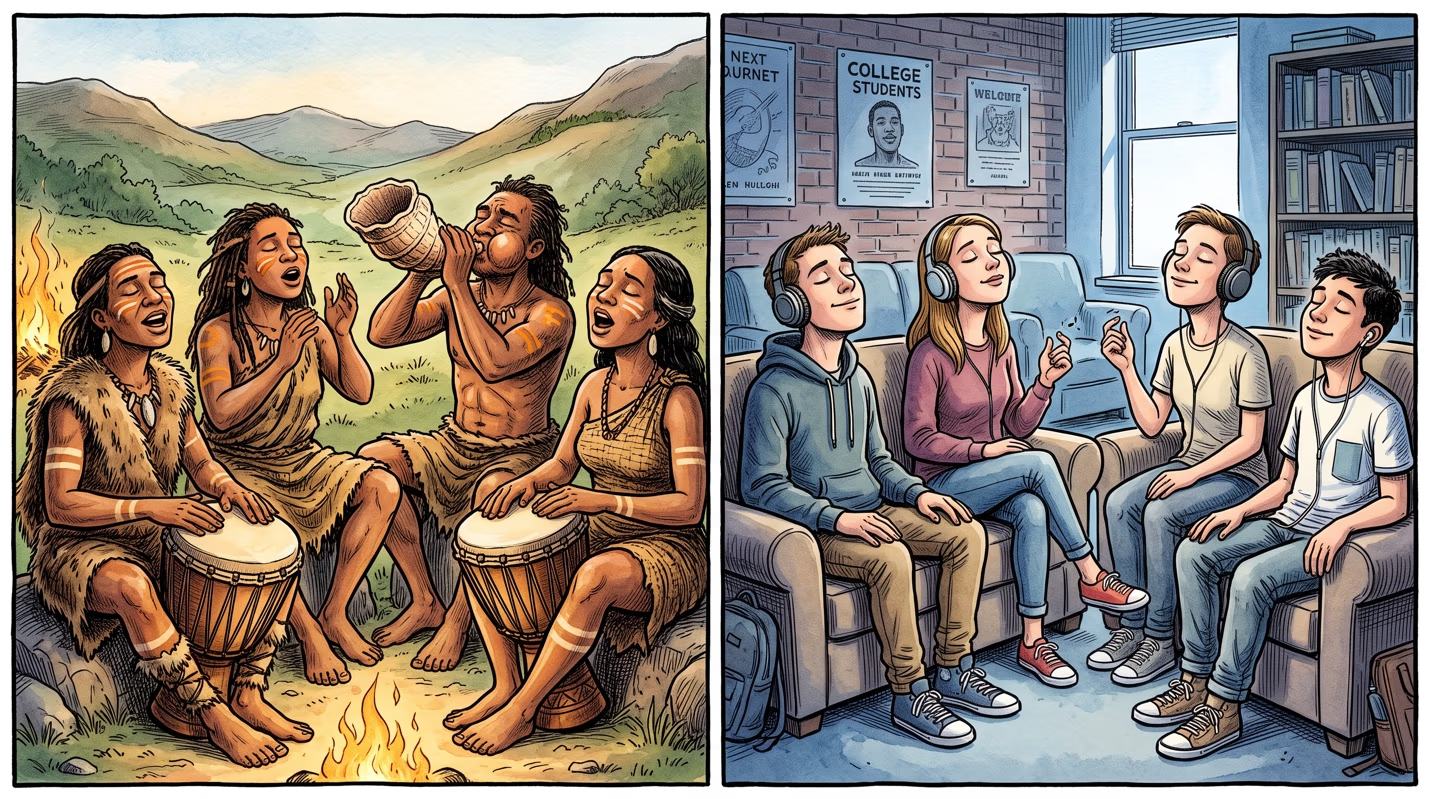


For it has never been fully recognized that the role of literacy in shaping an industrial economy is basic and archetypal.
Understanding Media (1964), MIT/Routledge edition, p 323
Year: 1964
The literate man or society develops the tremendous power of acting in any matter with considerable detachment from the feelings or emotional involvement that a nonliterate man or society would experience.
Understanding Media (1964), MIT/Routledge edition, p 79
Year: 1964
Of course, it’s very difficult to teach a naked man to read.
Opening line of a speech at a Brandeis University Conference in 1963; quoted by John Culkin, in “Marshall’s New York Adventure,” in MM: The Man and His Message (1989), p 99
Year: 1963
Chapter:
Reading
[The young student] must roll his eyes in lineal, sequential fashion. We have only to proceed to engraft the old right-handedness on his new left-handedness in order to win our point.
“What Fundamental Changes are Foreshadowed in the Prevailing patterns of Educational organization and Methods of Instruction by the Revolution in Electronics?” 1959, p 2
Year: 1959
If our new media constitute so complete a range of expressiveness as both to enhance and almost to supplant speech itself, then we have moved into the period of post-literacy. If our present means of exploring and presenting the human past are such as to make simultaneously present all kinds of human pasts, then we have moved into the period of post-history.
Counterblast (1969), p 131
Year: 1969
Chapter:
History
Literacy propelled man from the tribe, gave him an eye for an ear and replaced his integral in-depth communal interplay with visual linear values and fragmented consciousness.
“Playboy Interview: Marshall McLuhan: A Candid Conversation with the High Priest of Popcult and Metaphysician of Media”. By Eric Norden. Playboy Magazine, March (1969), p 59, reprinted in Essential McLuhan (1995), p 240
Year: 1969
[After literacy] the whole man became fragmented man; the alphabet shattered the charmed circle and resonating magic of the tribal world, exploding man into an agglomeration of specialized and psychically impoverished “individuals," or units, functioning in a world of linear time and Euclidean space.
“Playboy Interview: Marshall McLuhan: A Candid Conversation with the High Priest of Popcult and Metaphysician of Media”. By Eric Norden. Playboy Magazine, March (1969), p 59 reprinted in Essential McLuhan (1995), p 241
Year: 1969
When tribal man becomes phonetically literate, he may have an improved abstract intellectual grasp of the world, but most of the deeply emotional corporate family feeling is excised from his relationship with his social milieu.
“Playboy Interview: Marshall McLuhan: A Candid Conversation with the High Priest of Popcult and Metaphysician of Media”. By Eric Norden. Playboy Magazine, March (1969), p 59 reprinted in Essential McLuhan (1995), p 241
Year: 1969
From that point [the printing press] on, Western man was Gutenberg man.
“Playboy Interview: Marshall McLuhan: A Candid Conversation with the High Priest of Popcult and Metaphysician of Media”. By Eric Norden. Playboy Magazine, March (1969), p 60, reprinted in Essential McLuhan (1995), p 243
Year: 1969
In creating the detribalized individual, phonetic literacy created the need for a new educational program. Plato, says [Eric] Havelock, as the first to tackle the problem directly. Plato came up with a spectacular strategy. Instead of the tribal encyclopedia, he advocated classified data. Instead of corporate wisdom, he taught analytic procedures. Instead of the resonating tribal wisdom and energy, Plat o proposed a visual order of ideas for learning and organization.
“Cybernetics and Human Culture” (1964), in Understanding Me (2003), p 50
Year: 1964
Literacy remains even now the base and model of all programs of industrial mechanization; but, at the same time, locks the minds and senses of its users in the mechanical and fragmentary matrix that is so necessary to the maintenance of mechanized society.
Understanding Media (1964), MIT/Routledge edition, p 342
Year: 1964
Chapter:
Mechanization
Self-consciousness is an invention of literate man.
Texas-Stanford Television Seminar (May 2, 1966), MIT-SSRS, typescript, p 5
Year: 1966
Phonetically literate man, from the Greeks to the present, has been consistently aggressive and at war with his environment. His need to translate his environment into phonetic, literate terms, turns him into a conqueror and a cultural bulldozer, or leveller.
Contribution to William Oltmans’ On Growth, 1974, p 77
Year: 1974
Chapter:
Environment
Perhaps most potent of all as an expression of literacy is our system of uniform pricing that penetrates distant markets and speeds the turn-over of commodities. Even our ideas of cause and effect in the literate West have long been in the form of things in sequence and succession, an idea that strikes any tribal or auditory culture as quite ridiculous, and one that has lost its prime place in our own new physics and biology.
Understanding Media (1964), MIT/Routledge edition, p 86
Year: 1964
Chapter:
Linear and Nonlinear
Suppose that, instead of displaying the Stars and Stripes, we were to write the words " American flag" across a piece of cloth and to display that. W h i l e the symbols would convey the same meaning, the effect would be quite different. T o translate the rich visual mosaic of the Stars and Stripes into written form would be to deprive i t of most of its qualities of corporate image and of experience, yet the abstract literal bond would remain much the same. Perhaps this illustration w i l l serve to suggest the change the tribal man experiences when he becomes literate. Nearly all the emotional and corporate family feeling is eliminated from his relationship w i t h his social group. He is emotionally free to separate from the tribe and to become a civilized individual, a man of visual organization who has uniform attitudes, habits, and rights with all other civilized individuals.
Understanding Media, 1964, MIT/Routledge edition, p 82
Year: 1964
Chapter:
Iconic
The visual man is always looking for connection. “I don’t follow you.” This is always the autograph of the visual man.
The Museum as Large-Room Pinball Machine, Marshall McLuhan, Harley Parker, and Museum Professionals, 1967, full transcript of a seminar at the City Museum of New York, October, 1967, edited by William Buxton, published by U. of Alberta Press, 2026, p 90
Year: 1967
We never said that the museum was a failure. The museum is a magnificent illustration of our Western bias towards the whole world of artifacts.
The Museum as Large-Room Pinball Machine, Marshall McLuhan, Harley Parker, and Museum Professionals, 1967, full transcript of a seminar at the City Museum of New York, October 9-10, 1967, edited by William Buxton, published by U. of Alberta Press, 2026, p 90
Year: 1967
That’s why Plato urged that anybody coming to his university should study Euclid. Euclid was the Greeks’ first experience of detachment, the man who invented visual space, making detachment possible. This is very exciting, and the very idea of detachment is emotional. We also think of it as the antithesis of emotion. But now detachment is absolutely verboten, and only involvement is possible in our electronic age.
The Museum as Large-Room Pinball Machine, Marshall McLuhan, Harley Parker, and Museum Professionals, 1967, full transcript of a seminar at the City Museum of New York, October 9-10, 1967, edited by William Buxton, published by U. of Alberta Press, 2026, p 148
Year: 1967
Chapter:
Linear and Nonlinear