Viewing chapter Mastering Technology (74 quotes)
There are means of sustaining civilization by the very same media
which have dissolved the older media and technologies.
Marshall McLuhan
NAEB Report on Understanding New Media, 1960, p 8
Year: 1960
If we knew what we were doing, we wouldn’t do it
Marshall McLuhan
“Technology Kills Democracy, McLuhan Warns Exchangers,” University of Toronto Varsity (student newspaper), Vol LXXXII, No. 26, November 19, 1962, p 1
Year: 1962
Harnessing the Tennessee, Missouri or Mississippi is kid stuff compared to curbing the movie, press, or television to human ends. The wild broncos of technological culture have yet to find their busters or masters. They have only found their P.T. Barnums.
“Media Log”, 1954, in the manifesto he published with Ted Carpenter, Counterblast; reprinted in Explorations 4 (February 1955), p 54
Year: 1954
Chapters:
Anticipating Change | He’s Doubtful
...we must learn how far we can safely proceed in applying new media to older educational purposes without destruction of older goals and achievements.
Speech to the NAEB, Sept. 23, 1959
Year: 1959
Has technology adopted as its province the entire human psyche and the earth which it inhabits?
Space, Time and Poetry,” Explorations 4, 2955, p 59
Chapter:
Technology
It seems to me that the great advantage in understanding the operational dynamics of various media is to quiet them down, not exploit them.
The Hot and Cool Interview (1967), in Media Research (1997), p 77
Year: 1967
Chapter:
Advice
The encounter between alphabetic and electronic forces of confers on the printed word a crucial role in staying the return to “the Africa within.”
The Gutenberg Galaxy, 1962, p 51
Year: 1962
This strange gap between the specialist, visual world and the integral, auditory world needs to be better understood today above all, for it contains the key to an understanding of what automation and cybernetics imply.
“Cybernation and Culture” (1966), pp 97-98
Year: 1966
We must maximize rather than minimize the various features of our new media. It’s easy now to see that they are not mere vehicles for already achieved experience and insight. We have move far beyond mechanization. Let us not lose ourselves by supposing that we have merely to contend with new forms of mechanization. Ratio and TV aren’t new ways of handling manuscript and book culture. The motor-car wasn’t a substitute for the horse. It did what the horse could never do. Radio and TV aren’t audio-visual aids to enhance or to popularize previous forms of experience. They are new languages. We must first master and then teach these new languages in all their minute particularity and riches.
“The Post-Literate Man”, 1973, Cycles 7, p 231
Year: 1973
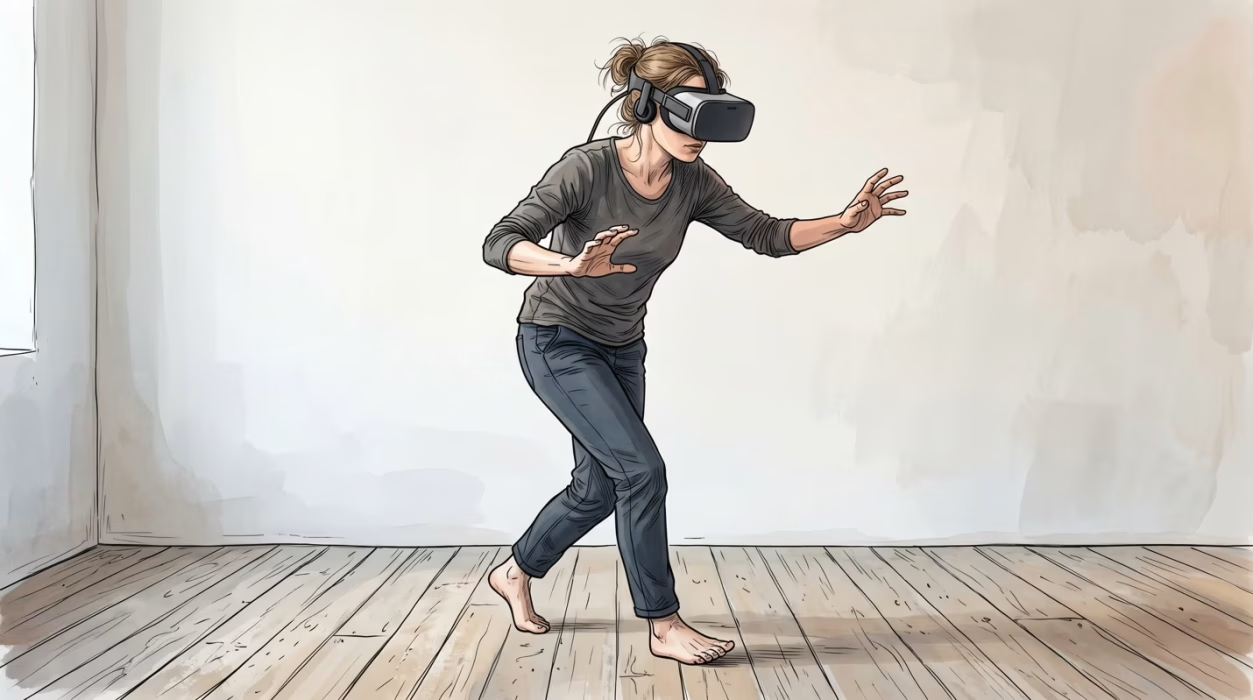

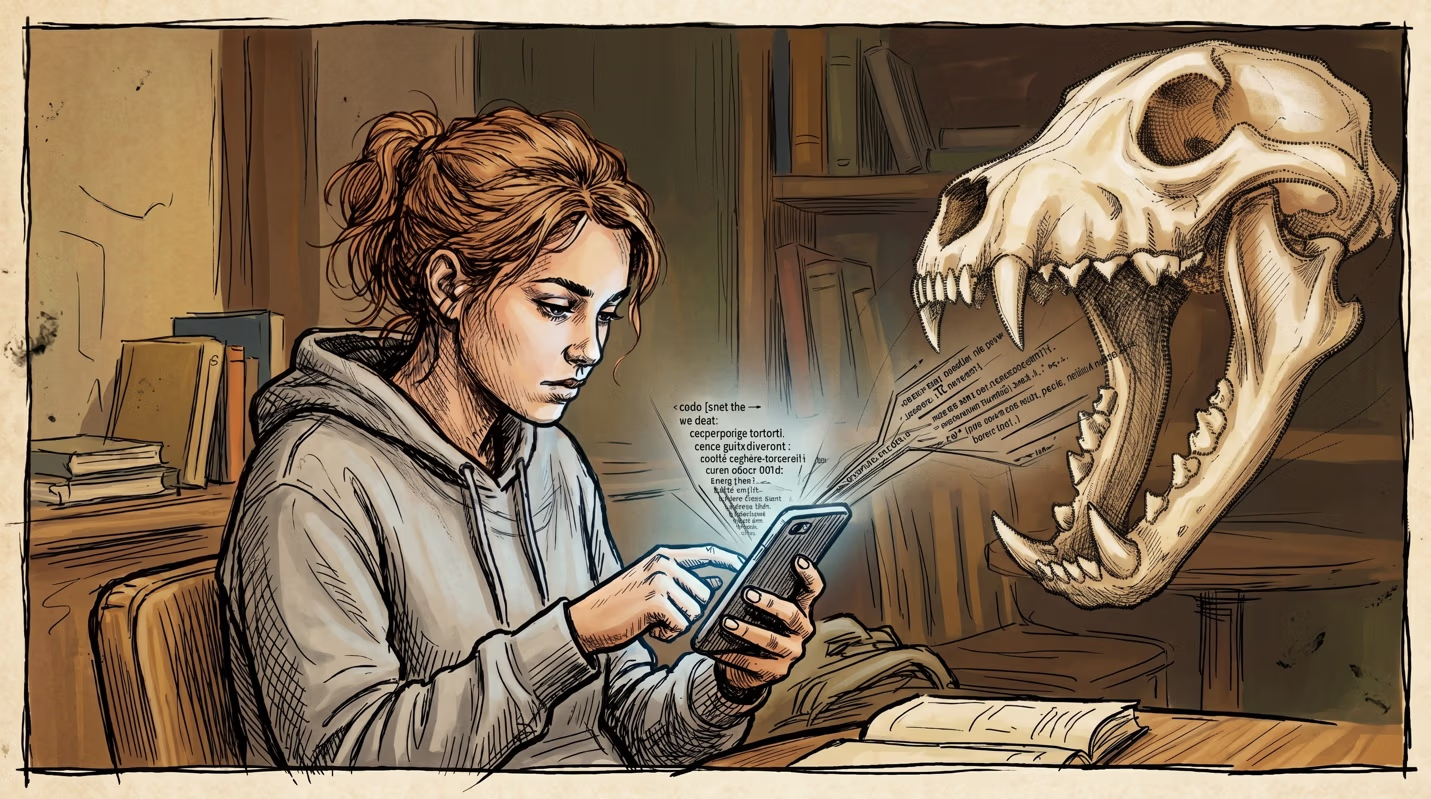

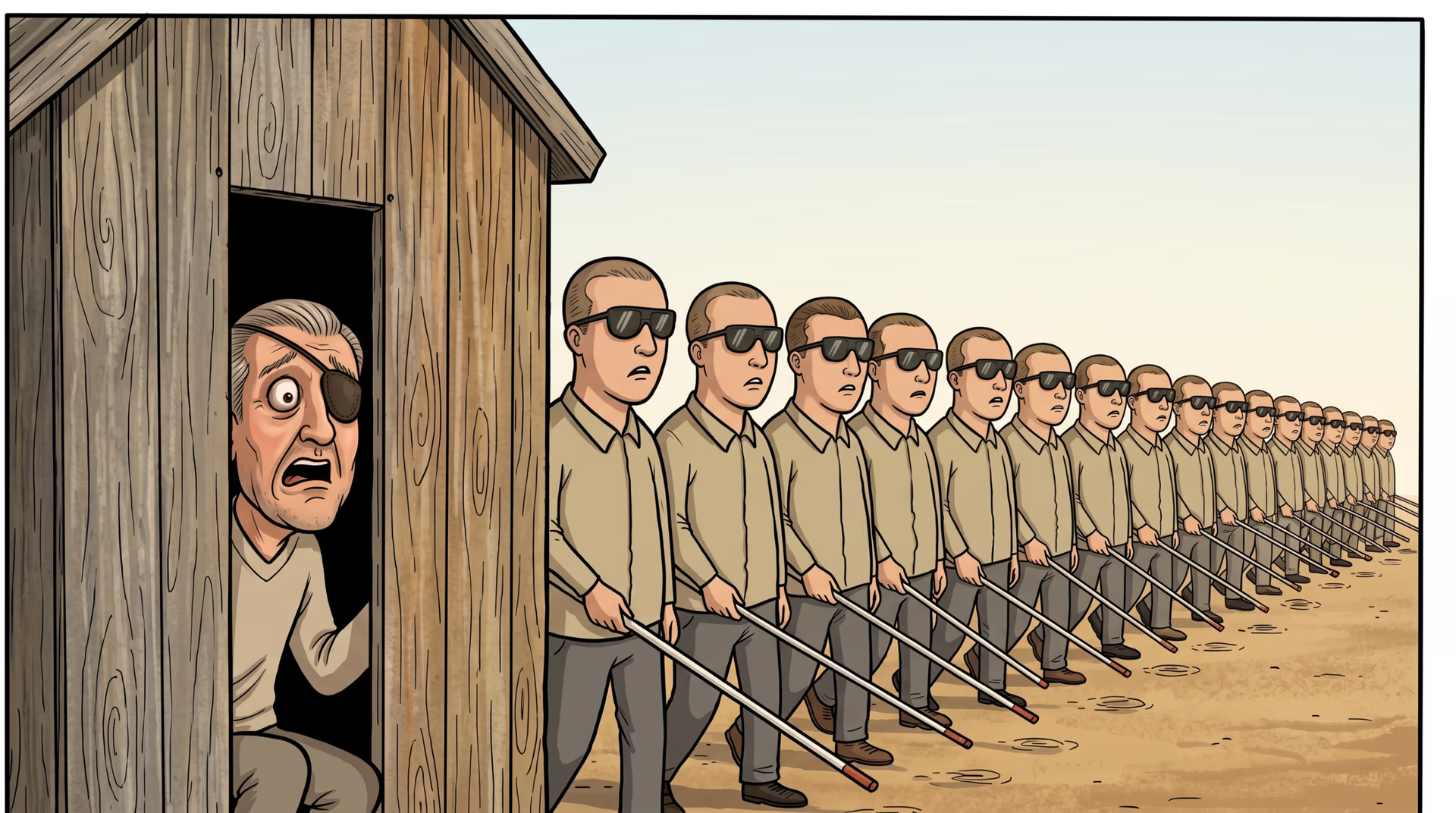

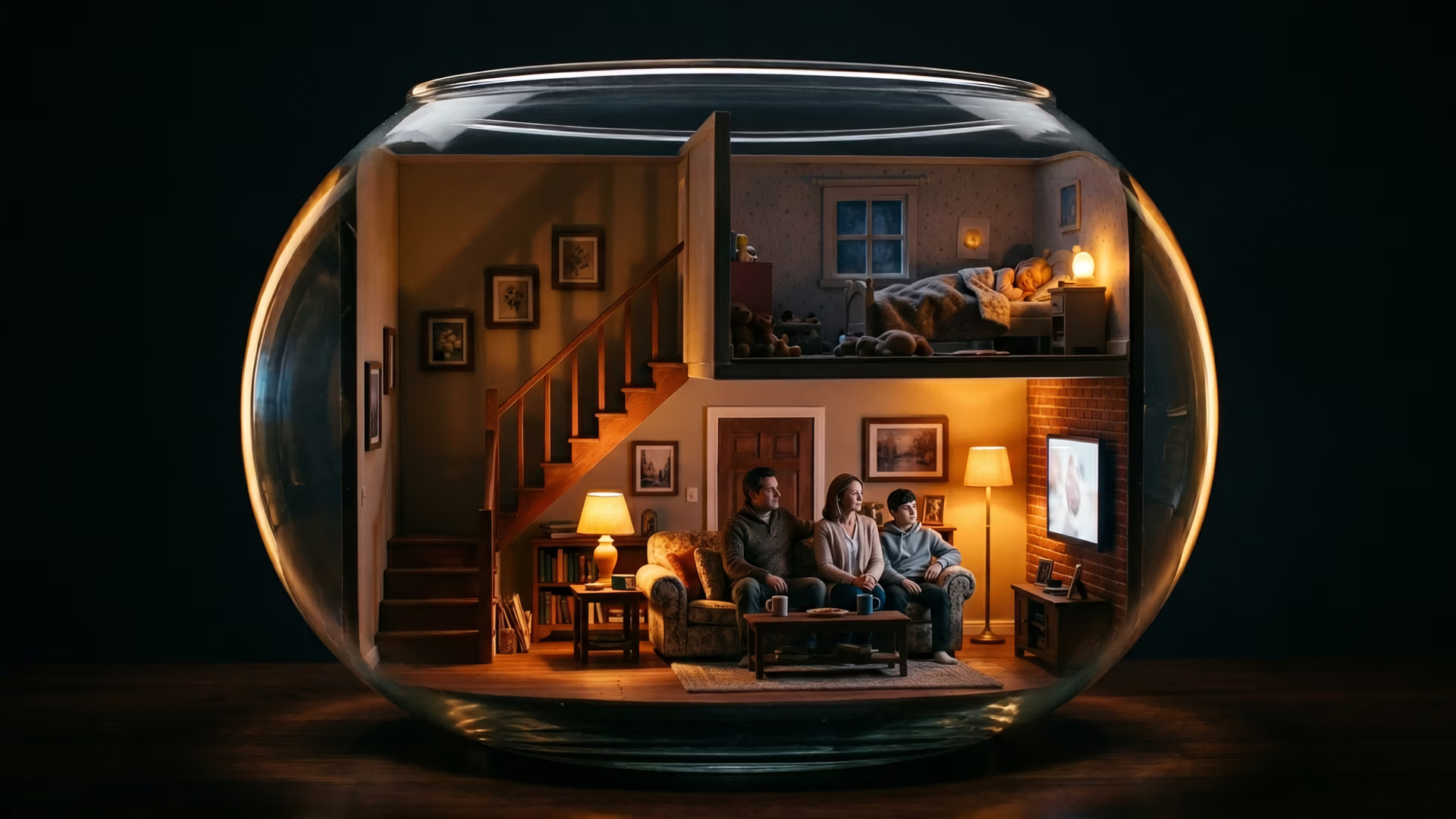

Leasing our eyes and ears and nerves to commercial interests is like handing over the common speech to a private corporation, or like giving the earth's atmosphere to a company as a monopoly. Something like this has already happened with outer space, for the same reasons that we have leased our central nervous systems to various corporations. As long as we adopt the Narcissus attitude of regarding the extensions of our own bodies as really out there and really independent of us, we will meet all technological challenges with the same sort of banana-skin pirouette and collapse.
Understanding Media (1964), MIT/Routledge edition, p 68
Year: 1964
…electricity is sheer information that, in actual practice, illuminates all it touches. Any process that approaches instant interrelation of a total field tends to raise itself to the level of conscious awareness, so that computers seem to " think." In fact, they are highly specialized at present, and quite lacking in the full process of interrelation that makes for consciousness. Obviously, they can be made to simulate the process of consciousness, just as our electric global networks now begin to simulate the condition of our central nervous system. But a conscious computer would still be one that was an extension of our consciousness, as a telescope is an extension of our eyes, or as a ventriloquist's dummy is an extension of the ventriloquist.
Understanding Media (1964), MIT/Routledge edition, p 351
Year: 1964
Education is ideally civil defense against media fall-out. Yet Western man has had, so far, no education or equipment for meeting any of the new media on their own terms.
Understanding Media (1984), MIT/Routledge, p 195
Year: 1984
Chapters:
Advice | Media Education
Are there sufficient signs that technological man is prepared to manipulate, as his matter, both earth and spirit?
“Space, Time and Poetry,” Explorations 4, 1955, p 59
Year: 1955
Chapter:
Technology
But the ability to perceive media-induced extensions of man, once the province of the artist, is now being expanded as the new environment of electric information makes possible a new degree of perception and critical awareness by nonartists.
Playboy interview (1969), in Essential McLuhan (UK edition, 1997), p 227
Year: 1969
Chapters:
Anticipating Change | He’s Hopeful
It is too late to be frightened or disgusted, to greet the unseen with a sneer. Ordinary life-work demands that we harness and subordinate the media to human ends.
“Media Log” (1954), in the original self-publised manifesto, Counterblast (unpaginated)
Year: 1954
Chapter:
Advice
We are already experiencing the discomfort and challenge of classrooms without walls. Just as the modern painter had to justify his techniques in accordance with art reproduction and museums without walls. We can decide either to move into the new wall-less classroom in order to act upon our total environment, or to look on it as the last dike holding back the media flood.
“The Post-Literate Man,” 1973, Cycles 7, p 230
Year: 1973
Chapter:
Education
There is available the lyrical testimony of a very Romantic biologist, Pierre Teilhard de Chardin, in his Phenomenon of Man:
“…thanks to the prodigious biological event represented by the discovery of electro-magnetic waves, each individual finds himself henceforth (actively and passively) simultaneously present, over land and sea, in every corner of the earth.” [p 240]
The Gutenberg Galaxy: The Making of Typographic Man, (1962), p 32
Year: 1962
Chapters:
Corporate Consciousness | Environment
It had not occurred to Innis that electricity is in effect an extension of the nervous system as a kind of global membrane.
Introduction to H.A. Innis’s The Bias of Communication (1962), p 15, also in “Media and Cultural Change,” in The Essential McLuhan (1995), p 94
Year: 1962
Chapters:
Corporate Consciousness | Global Village
There is no privacy and no private parts. In a world in which we are all ingesting and digesting one another there can be no obscenity or pornography or decency. Such is the law of electric media which stretch the nerves to form a global membrane of enclosure.
“Notes on Burroughs” (1964) in Media Research (1997), p 89
(####)
Was it not Bertrand Russell who said that if the bath water got only half a degree warmer every hour we wouldn't know when to scream? New environments [media] reset our sensory thresholds. These in turn, alter our outlook and expectations.
The need of our time is for the means of measuring sensory thresholds and of discovering exactly what changes occur in these thresholds as a result of the advent of any particular technology. ... We have no reason to be grateful to those who juggle the thresholds in the name of haphazard innovation.
“The Relation of Environment to Anti-Environment,” The University of Windsor Review, Vol. 11, No. 1, (1966), p 10, reprinted in Through the Vanishing Point with Harley Parker (1968), p 253, and McLuhan Unbound #4, (2017), p 19
(####)
Such a universality of conscious being for mankind was dreamt of by Dante, who believed that men would remain mere broken fragments until they should be united in an inclusive consciousness. What we have today, instead of a social consciousness electrically ordered, however, is a private subconsciousness or individual "point of view" rigorously imposed by older mechanical technology. This is a perfectly natural result of "culture lag" or conflict, in a world suspended between two technologies.
Understanding Media (1964), MIT/Routledge edition, p 108
Year: 1964
The computer is the first component of that hybrid of video-related technologies which will move us toward a world consciousness. It steps up the velocity of logical sequential calculations to the speed of light, reducing numbers to body count by touch. When pushed to its limits, the product of the computer reverses into simultaneous pattern recognition (acoustic space), eroding or bypassing mechanical processes in all sequential operations. It brings back the Pythagorean occult embodied in the idea that "numbers are all"; and at the same time it dissolves hierarchy in favor of decentralization. Any business corporation requiring the use of computers for communication and record-keeping will have no other alternative but to decentralize.
“Global Robotism: The Dissatisfactions”, in The Global Village with Bruce Powers (1989), p 103
Year: 1989
Chapters:
Centralized / Decentralized | Computer | Corporate Consciousness | Extending Consciousness | Future | Predictions
At what point is man going to recognize that this power of innovation may have to be restrained and that just as economically it may not be desirable to grow indefinitely, so that technologically it may not be necessary or desirable to innovate indefinitely?
Marshall McLuhan with A. F. Knowles, York University Instructional Services Video, 1971; quoted in Forward Through the Rear View Mirror (1997), p 190
Year: 1971
We're the first culture in the history of the world that ever regarded innovation as a friendly act.
Marshall McLuhan with A. F. Knowles, York University Instructional Services Video, 1971; quoted in Forward Through the Rear View Mirror (1997), p 190
Year: 1971
[We must] develop an awareness about print and the newest technologies of communication so that we can orchestrate them, minimize their mutual frustrations, and get the best out of each in the educational process.
“Alone in the Global Village,” Peterborough Examiner, March 22, 1967
Year: 1967
Chapters:
Advice | Media Study
Today, in the electronic age of instantaneous communication, I believe that our survival, and at the very least our comfort and happiness, is predicated on understanding the nature of our new environment because unlike previous environmental changes, the electric media constitute a total and near-instantaneous transformation of culture, values and attitudes. This upheaval generates great pain and identity loss, which can be ameliorated only through a conscious awareness of its dynamics. If we understand the revolutionary transformations caused by new media, we can anticipate and control them; but if we continue in our self-induced subliminal trance, we will be their slaves.
Playboy Interview: Marshall McLuhan: A Candid Conversation with the High Priest of Popcult and Metaphysician of Media.” By Eric Norden. Playboy Magazine, March (1969), p 56, reprinted in Essential McLuhan (1995), p 238-239
Year: 1969
Chapter:
Warnings
Whatever may prove to be the weaknesses of Teilhard de Chardin's work, he will always have the credit of having correctly defined the major change of our age.
“The Humanities in the Electronic Age” (1961), in McLuhan Unbound (2017), p 12
Year: 1961
That electro-magnetism as such is an extension of the central nervous system is a persistent theme of Teilhard de Chardin in his Phenomenon of Man. It is a concept familiar to biologists and psychologists alike.
Letter to John I. Snyder, August 4, 1963, in Letters of Marshall McLuhan (1987) p 292
Year: 1963
Chapters:
Corporate Consciousness | Global Village
In the same way as the entire globe becomes a single computer or what de Chardin calls a noosphere, the advent of satellite broadcasting makes every one of the more than two hundred and fifty cultures of the globe as immediately present to each other as are the telephone subscribers of a single town.
“The Electronic Age – The Age of Implosion” (1962) in Media Research (1997), p 35
Year: 1962
Chapters:
Corporate Consciousness | Extending Consciousness | Giedion, Sigfried | Global Village | Predictions
Incidentally, I am not a fan of De Chardin’s. I find the evolutionary stuff very tiresome. The idea that anything is better because it comes later, is surely borrowed from pre-electric technologies. By the way, there is one thing that is enormously faster than light or electricity, and that is thought. That is why pattern recognition is only possible to the human mind.
(Letter to Easterbrook, 1972)
Year: 1972
Chapters:
Corporate Consciousness | Giedion, Sigfried
The tendency of electric media is to create a kind of organic interdependence among all the institutions of society, emphasizing de Chardin's view that the discovery of electromagnetism is to be regarded as "a prodigious biological event.
Understanding Media (1964), MIT/Routledge edition, p 247
Year: 1964
At what point is man going to recognize that this power of innovation may have to be restrained and that just as economically it may not be desirable to grow indefinitely, so technologically it may not be necessary or desirable to innovate indefinitely? We’re the first culture in the history of the world that ever regarded innovation as a friendly act.
Marshall McLuhan with A. F. Knowles, York University Instructional Services Video, 1971; quoted in Forward Through the Rear View Mirror (1997), p 190
Year: 1971
What I am asking is that he [the user] set up a dialogue with these media, that he fight back, that you should not sit there watching TV, that you should have a real dialogue with it and explain to it what it is, and that you are not going to be taken in by it one little bit….This has nothing to do with programming. This has to do with this coming at you [in] “Lord of the Flies” [manner].
TV Interview with Eric F. Goldman, “The Open Mind, WNBC TV, 1966. Transcript, p 19
Year: 1966
If you understand these dynamics, you can control media, eliminate their effects from the environment.
The Hot and Cool Interview (1967), in Media Research (1997), p 77
Year: 1967
If we want to keep our civilization, we have to freeze technology. After all, why shouldn’t the world pull back some of the technology it has pushed out. Irritation has created technology and at the same time created more problems than it solved.
“Technology Kills Democracy, McLuhan Tells Exchangers” The Varsity (U of Toronto student newspaper), vol LXXXII, No. 26, November 19, 1962, p 7
Year: 1962
Chapters:
Wake Them Up! | Warnings
The technology of the photo is an extension of our own being and can be withdrawn from circulation like another technology if we decide it is virulent.
Understanding Media (1964), MIT/Routledge edition, p 193
Year: 1964
Ours is the first age in which many thousands of the best-trained individual minds have made it a full-time business to get inside the collective public mind. To get inside in order to manipulate, exploit, control is the object now. And to generate heat not light is the intention. To keep everybody in the helpless state engendered by prolonged mental rutting is the effect of many ads and much entertainment alike. Since so many minds are engaged in bringing about this condition of public helplessness, and since these programs of commercial education are so much more expensive and influential than the relatively puny offerings sponsored by schools and colleges, it seemed fitting to devise a method for reversing the process. Why not use the new commercial education as a means to enlightening its intended prey? Why not assist the public to observe consciously the drama which is intended to operate upon it unconsciously?As this method was followed, "A Descent Into The Maelstrom" by Edgar Poe kept coming to mind. Poe's sailor saved himself by studying the action of the whirlpool and by co-operating with it. The present book likewise makes few attempts to attack the very considerable currents and pressures set up around us today by the mechanical agencies of the press, radio, movies, and advertising. It does attempt to set the reader at the center of the revolving picture created by these affairs where he may observe the action that is in progress and in which everybody is involved. From the analysis of that action, it is hoped, many individual strategies may suggest themselves.
suggest themselves.
The Mechanical Bride (1951), Preface
Year: 1951
Ours is the first age in which many thousands of the best-trained individual minds have made it a full-time business to get inside the collective public mind. To get inside in order to manipulate, exploit, control is the object now. And to generate heat not light is the intention. To keep everybody in the helpless state engendered by prolonged mental rutting is the effect of many ads and much entertainment alike.
Since so many minds are engaged in bringing about this condition of public helplessness, and since these programs of commercial education are so much more expensive and influential than the relatively puny offerings sponsored by schools and colleges, it seemed fitting to devise a method for reversing the process. Why not use the new commercial education as a means to enlightening its intended prey? Why not assist the public to observe consciously the drama which is intended to operate upon it unconsciously?
As this method was followed, "A Descent Into The Maelstrom" by Edgar Poe kept coming to mind. Poe's sailor saved himself by studying the action of the whirlpool and by co-operating with it. The present book likewise makes few attempts to attack the very considerable currents and pressures set up around us today by the mechanical agencies of the press, radio, movies, and advertising. It does attempt to set the reader at the center of the revolving picture created by these affairs where he may observe the action that is in progress and in which everybody is involved. From the analysis of that action, it is hoped, many individual strategies may suggest themselves.
The Mechanical Bride (1951), Preface
Year: 1951
I think if there is a logic and a hopeful one that appears in this, it is the dispelling of all unconscious aspects of our lives altogether. That, in order to live with ourselves in such depth, in such instant feedback situations, we have to understand everything – so that our easygoing lolling about in the lap of the the unconscious cannot endure, that we will have to take over the total human environment as an artifact. But it seems to be forced upon us, the need to become completely autonomous and aware of all the consequences of everything we’re doing before the consequences occur is where we’re heading.
“The Future of Man in the Electronic Age” (Interview with Frank Kermode), 1965, in “Marshall McLuhan Speaks,” transcript, 15:30
Year: 1965
Chapters:
Advice | He’s Hopeful
Liturgy on television affords every opportunity for full participation. It is possible to join one's intention to participate in the fullest extent, just as fully as in any church... Electric man has no ego and depends totally on close involvement with others. Similarly, electric liturgy would have no ego but a collective personality instead... The trouble with Christianity is that it has never had a theory of communication and a confrontation is fast developing between... the mystical body of the church and the electric environment.
"RC Church Should Accept Televised Liturgy as Valid Fulfilment of Sunday Mass: McLuhan," in The St. Catherine's Standard, Saturday, June 2, 1973
Year: 1973
I think if there is a logic and a hopeful one that appears in this, it is the dispelling of all unconscious aspects of our lives altogether. That, in order to live with ourselves in such depth, in such instant feedback situations, we have to understand everything – so that our easygoing lolling about in the lap of the unconscious cannot endure, that we will have to take over the total human environment as an artifact. But it seems to be forced upon us, the need to become completely autonomous and aware of all the consequences of everything we’re doing before the consequences occur is where we’re heading.
“The Future of Man in the Electronic Age” (Interview with Frank Kermode), 1965, in “Marshall McLuhan Speaks,” transcript, 15:30
Year: 1965
Chapters:
Advice | He’s Hopeful
If we maintain lively dialogue with, and among, the technologies, we can enlist them on the side of traditional values instead of watching those values disappear while we play the helpless bystanders.
Letter to the Editor of Life Magazine (1966 in Letters of Marshall McLuhan (1987) p 334
Year: 1966
“Determinism is the result of the behavior of those who are determined to ignore what is happening around them. Recognition of the psychic and social consequences of technological change makes it possible to neutralize the effects of innovation.
Letter to the Editor of Life, March 1,1966 in Letters of Marshall McLuhan (1987) p 334
Year: 1966
Chapter:
Anticipating Change
The first and most vital step of all, as I said at the outset,
is simply to understand media and their revolutionary effects on all
psychic and social values and institutions. Understanding is half the
battle. The central purpose of all my work is to convey this
message, that by understanding media as they extend man, we gain
a measure of control over them. And this is a vital task, because the
immediate interface between audile-tactile and visual perception is
taking place everywhere around us. No civilian can escape this
environmental blitzkrieg, for there is, quite literally, no place to
hide. But if we diagnose what is happening to us, we can reduce the
ferocity of the winds of change and bring the best elements of the
old visual culture, during this transitional period, into peaceful
coexistence with the new retribalized society.
Playboy Interview (1969), in Essential McLuhan (1995), p 256
Year: 1969
Chapter:
McLuhan on McLuhan
To resist TV, therefore, one must acquire the antidote of related media like print.
Understanding Media (1964), MIT/Routledge edition, p 329
Year: 1964
All of my recommendations, therefore, can be reduced to this one: study the modes of the media, in order to hoick all assumptions out of the subliminal, non-verbal realm for scrutiny and for prediction and control of human purposes. Such a program can most readily be instituted today at the level of secondary education.
Recommendations, in NAEB Report on Understanding New Media, June (1960) p 3
Year: 1960
The artist, says W. Lewis, is always writing a history of the future because he alone is aware of the nature of the present. Knowledge of this fact is now needed for human survival. The ability of the artist to sidestep the bully blow of new technology of any age, and to parry such violence with full awareness, is age-old.
Understanding Media, 1964, MIT/Routledge edition, p 65
Year: 1964
Chapter:
Art, Artists
There are means of sustaining civilization by the very same media which have dissolved the older media and technologies.
NAEB Report on Understanding New Media, 1960, p 8
Year: 1960
Chapter:
Advice
In the electronic age, when time and space factors are very much reduced in information flow, it is once more natural for us, as for men in small oral communities, to think mythically. For today it is easy to perceive consequences embedded in any kind of innovation. If we don’t see them, they clobber us very quickly.
Popular/Mass Culture, Speech, 1960, in Understanding Me, pp 17-18
Year: 1960
Chapters:
Electric, Electronic | Myth, Mythic
…our natural responses to media and to technology are irrelevant… we cannot trust our instincts or our natural physical responses to new things. They will destroy us. How are we to bypass, or offset, the merely physical response to new technology and new environments created by new technology?
This problem has not been raised by anybody, except that we have to live with it every day.
Edgar Allan Poe’s story “A Descent into the Maelström” had tremendous influence on the nineteenth-century poets and symbolists like Baudelaire, Flaubert, and others. In this story, Poe imagines the situation in which a sailor, who has gone out on a fishing expedition, finds himself caught in a huge maelstrom or whirlpool. He sees that his boat will be sucked down into this thing. He begins to study the action of the ström, and observes that some things disappear and some things reappear. By studying those things that reappear and attaching himself to one of them, he saves himself. Pattern recognition in the midst of a huge, overwhelming, destructive force is the way out of the maelstrom. The huge vortices of energy created by our media present us with similar possibilities of evasion of consequences of destruction. By studying the patterns of the effects of this huge vortex of energy in which we are involved, it may be possible to program a strategy of evasion and survival.
Survival cannot be trusted to natural response or natural instinct, since the brain stem is not provided with any means of responding to man-made environments.
“Man and Media,“ lecture at York University (1979), in Understanding Me (2003), pp 284-285
Year: 1979
If technology is to minister to free men, men must struggle to acquire the practical disciplines related to speech as they have never struggled before. For in acquiring excellent speech men acquire the heritage of our entire civilization. They acquire the ability to act freely and critically and to recreate daily the social freedoms which reflect their rational natures. Yes, despite the fact that democracy more than any other political form, requires intense cultivation of language, or the techniques of human association, it is literally true that never in the history of Western education has instruction in the art of understanding and employing human speech been so inadequate. Today people take refuge in music and in musical instrument. Men rise up to speak of the thoughts and duties of freedom to free men, and their phrases, stale and fuzzy with inertia and imprecision, convey no conviction. Legislators try to frame laws in this instrument in the use of which they have no skill, and their laws prove abortive. The bankruptcy of speech is proclaimed by the multiplication of letters: N.R.A.s, W.P.A., O.C.D., etc.
“Education of Free Men in Democracy: the Liberal Arts,” St. Louis University Studies in honor of St. Thomas Aquinas, Vol. 1, 1947, p 48
Year: 1947
As this method was followed, "A Descent Into The Maelstrom" by Edgar Poe kept coming to mind. Poe's sailor saved himself by studying the action of the whirlpool and by co-operating with it. The present book likewise makes few attempts to attack the very considerable currents and pressures set up around us today by the mechanical agencies of the press, radio, movies, and advertising. It does attempt to set the reader at the center of the revolving picture created by these affairs where he may observe the action that is in progress and in which everybody is involved. From the analysis of that action, it is hoped, many individual strategies may suggest themselves. But it is seldom the business of this book to take account of such strategies. Poe's sailor says that when locked in by the whirling walls and the numerous objects which floated in that environment :
[Quoting E.A. Poe] "I must have been delirious, for I even sought amusement in speculating upon the relative velocities of their several descents toward the foam below."
It was this amusement born of his rational detachment as a spectator of his own situation that gave [Poe’s mariner] the thread which led him out of the Labyrinth. And it is in the same spirit that this book [The Mechanical Bride] is offered as an amusement. Many who are accustomed to the note of moral indignation will mistake this amusement for mere indifference. But the time for anger and protest is in the early stages of a new process. The present stage is extremely advanced. Moreover, it is full, not only of destructiveness but also of promises of rich new developments to which moral indignation is a very poor guide.
The Mechanical Bride (1951), Preface, p v.
Year: 1951
Chapter:
Dropout
Survival indicates that we grasp by anticipation the inherent causes and not the effects of the electronic media in all their cultural configurations and make a fully conscious choice of strategy in education accordingly.
“Electronic Revolution: Revolutionary Effects of New Media” (1959), in Understanding Me (2003), p 5
Year: 1959
To the extent we maintain the values of literacy we will keep alive in our society the fruits of the 18th century Enlightenment.
“Technology Kills Democracy, McLuhan Tells Exchangers” The Varsity (U of Toronto student newspaper), vol LXXXII, No. 26, November 19, 1962, p 7
Year: 1962
Chapter:
Dropout
The utmost purity of mind is no defense against bacteria, though the confreres of Louis Pasteur tossed him out of the medical profession for his base allegations about the invisible operation of bacteria. To resist TV, therefore, one must acquire the antidote of related media like print.
It is an especially touchy area that presents itself with the question: "What has been the effect of TV on our political life?" Here, at least, great traditions of critical awareness and vigilance testify to the safeguards we have posted against the dastardly uses of power.
Understanding Media (1964), MIT/Routledge edition, p 329
Year: 1964
Determinism is the result of the behaviour of those who are determined to ignore what is happening around them. Recognition of the psychic and social consequences of technological change makes it possible to neutralize the effects of innovation.
Letter to the Editor of Life, March 1,1966 in Letters of Marshall McLuhan (1987), p 334
Year: 1966
Chapter:
Anticipating Change
In his amusement born of rational detachment of his own situation, Poe’s mariner in “The Descent into the Maelstrom” staved off disaster by understanding the action of the whirlpool. His insight offers a possible stratagem for understanding our predicament, our electrically-configured whirl.
The Medium is the Massage (1967), p 150
Year: 1967
Radio created Hitler as a delinquent Peter Pan, charged with cosmic emanation. Would not a high degree of awareness of these media effects (e.g. radio in Nigeria or in any tribal territory) enable us to set up social therapies and immunizing programs exactly comparable to medical action in the face of an endemic disease?
Letter to Pierre Elliott Trudeau, June 3, 1968, in Letters of Marshall McLuhan (1987), p 353
Year: 1968
These kinds of psychic oscillation resulting from large environmental change are no longer necessary, any more than the plague. Psychic diseases can now be treated for what they are, namely manifestations of the response to man-made technologies.
Letter to John W. Mole, O.M.I., January 29, 1974, in Letters of Marshall McLuhan (1987), p 490
Year: 1974
These media are violent in the sense they invade us, like pornography. The defense is not to pass a law or to say this shouldn’t happen… The defense is to understand the thing and to, well to pull the plug out if necessary.
“What Television Is Doing to Us and Why,” in Washington Post, May 15, 1977, p H1
Year: 1977
The ultimate things are at stake today. It’s not just a point of view, but existence, survival. We are living right on the edge of the apocalypse. More so than at any time in human history. All the prophecies of the end appear very strongly, but the end is not supposed to be grim, it’s supposed to be happy.
“Genius Or Whimsy?” (1979), in Sunday post of Canada, may 13, 1979, page number not indicated in the LAC copy
Year: 1979
Chapter:
Dropout
[In their book 1967 book The Year 2000] Kahn and Wiener express all the warm human understanding and perception of most science fiction. Such merely quantitative projections have no human content whatever. Even as probes they are manifestations of human ignorance and insensibility. It says much for the desperate state of human values that quantifiers and planners of this ilk should be taken seriously. Until humanists have translated their projections into creative social dialogue, this kind of two-bit language can only eviscerate what remains of an embombers' world—awaiting its turn in the crematorium.
Take Today with Barrington Nevitt, 1972, p 134
Year: 1972
Chapter:
Dropout
Unfortunately, no society in history has ever known enough about the forces that shape and transform it to take action to control and direct new technologies as they extend and transform man. But today, change proceeds so instantaneously through the new media that it may be possible to institute a global education program that will enable us to seize the reins of our destiny—but to do this we must first recognize the kind of therapy that’s needed for the effects of the new media. In such an effort, indignation against those who perceive the nature of those effects is no substitute for awareness and insight.
“Playboy interview” (1969), reprinted in Essential McLuhan (1997, UK edition), p 257-258
Year: 1969
Chapters:
Change | McLuhan on McLuhan
Was it not Bertrand Russell who said that if the bath water got only half a degree warmer every hour we wouldn't know when to scream? New environments [media] reset our sensory thresholds. These in turn, alter our outlook and expectations.
The need of our time is for the means of measuring sensory thresholds and of discovering exactly what changes occur in these thresholds as a result of the advent of any particular technology. ... We have no reason to be grateful to those who juggle the thresholds in the name of haphazard innovation.
“The Relation of Environment to Anti-Environment,” The University of Windsor Review, Vol. 11, No. 1, (1966), p 10, reprinted in Through the Vanishing Point with Harley Parker (1968), p 253, and McLuhan Unbound #4, (2017), p 19
Year: 1966
Chapter:
Environment
The utmost purity of mind is no defense against bacteria, though the confreres of Louis Pasteur tossed him out of the medical profession for his base allegations about the invisible operation of bacteria. To resist TV, therefore, one must acquire the antidote of related media like print.
It is an especially touchy area that presents itself with the question: "What has been the effect of TV on our political life?" Here, at least, great traditions of critical awareness and vigilance testify to the safeguards we have posted against the dastardly uses of power.
Understanding Media (1964), MIT/Routledge edition, p 329
Year: 1964
We have now become aware of the possibility of arranging the entire human environment as a work of art, as a teaching machine designed to maximize perception and to make everyday learning a process of discovery.
The Medium Is the Massage (1967), p 68
Year: 1967
Chapter:
Programming the Environment
Today we experience that kind of bewilderment that ensues when an individual and private culture begins to resume an involvement in the corporate and collective modes of awareness with all the depth and comMIT/Routledgement that implies.
“The Marfleet Lectures”, March 16-17 1967, reprinted in Understanding Me (2003), p103
Year: 1967
We must maximize rather than minimize the various features of our new media. It's easy now to see that they are not mere vehicles for already achieved experience and insight. We have moved far beyond mechanization. Let us not lose ourselves by supposing that we have merely to contend with new forms of mechanization. Radio and TV aren't new ways of handling manuscript and book culture. The motor-car wasn't a substitute for the horse. It did what the horse could never do.
Counterblast, (1969), p 133
Year: 1969
New means create new goals and erase old ones. During speed-up means and goals merge in process.
Take Today with Barrington Nevitt (1972), p 194
Year: 1972
Chapters:
Causality | McLuhanisms & Zingers
The car, in a word, has quite refashioned all of the spaces that unite and separate men, and it will continue to do so for a decade more, by which time the electronic successors to the car will be manifest.
Understanding Media (1964), MIT/Routledge edition, p 225
Year: 1964
Chapter:
Giedion, Sigfried
It seems to me that the great advantage in understanding the operational dynamics of various media is to quiet them down, not exploit them.”
The Hot and Cool Interview (1967), in Media Research (1997), p 77
Year: 1967
Chapter:
Advice
Ours is the first age in which many thousands of the best-trained individual minds have made it a full-time business to get inside the collective public mind. To get inside in order to manipulate, exploit, control is the object now. And to generate heat not light is the intention. To keep everybody in the helpless state engendered by prolonged mental rutting is the effect of many ads and much entertainment alike.t
Since so many minds are engaged in bringing about this condition of public helplessness, and since these programs of commercial education are so much more expensive and influential than the relatively puny offerings sponsored by schools and colleges, it seemed fitting to devise a method for reversing the process. Why not use the new commercial education as a means to enlightening its intended prey? Why not assist the public to observe consciously the drama which is intended to operate upon it unconsciously?
As this method was followed, "A Descent Into The Maelstrom" by Edgar Poe kept coming to mind. Poe's sailor saved himself by studying the action of the whirlpool and by co-operating with it. The present book likewise makes few attempts to attack the very considerable currents and pressures set up around us today by the mechanical agencies of the press, radio, movies, and advertising. It does attempt to set the reader at the center of the revolving picture created by these affairs where he may observe the action that is in progress and in which everybody is involved. From the analysis of that action, it is hoped, many individual strategies may suggest themselves.
The Mechanical Bride (1951), Preface
Year: 1951
[P]eople have never, in any age���known what they were doing, that is, what the effects would be of what they were doing…
First Fordham Lecture, 1967, reprinted in Understanding Me (2002), p 144
Year: 1967
No society has ever known enough about its actions to have developed immunity to its new extensions or technologies. Today we have begun to sense that art may be able to provide such immunity.
Understanding Media, MIT/Routledge edition, (1964), p 64
Year: 1964
Chapter:
Art, Artists
In his amusement born of rational detachment of his own situation, Poe’s mariner in “The Descent into the Maelstrom” staved off disaster by understanding the action of the whirlpool. His insight offers a possible stratagem for understanding our predicament, our electrically-configured whirl
The Medium is the Massage (1967), p 150
Year: 1967
These media are violent in the sense they invade us, like pornography. The defense is not to pass a law or to say this shouldn’t happen… The defense is to understand the thing and to, well to pull the plug out if necessary
“What Television Is Doing to Us and Why,” in Washington Post, May 15, 1977, p H1
Year: 1977
Today we experience that kind of bewilderment that ensues when an individual and private culture begins to resume an involvement in the corporate and collective modes of awareness with all the depth and commitment that implies.
“The Marfleet Lectures”, March 16-17 1967, reprinted in Understanding Me (2003), p103
Year: 1967
For "testing the truth" is not merely matching by congruence or classification; it is making sense out of the totality of experience — a process of pattern re-cognition that requires not only concepts but active perception by all the senses. Today, as "hardware" is transmuted into pure information by the process of " etherealization," the "inner" and the "outer" merge — thinking becomes doing.
“The Argument: Causality in the Electric World”, in Technology and Culture, Vol.14, No. 1, January (1973), p 8-9, reprinted in McLuhan Unbound # 3, (2005), p 15
Year: 1973