Viewing chapter McLuhanisms & Zingers (378 quotes)
…new technology breeds new man.
“Playboy Interview: Marshall McLuhan: A Candid Conversation with the High Priest of Popcult and Metaphysician of Media”. By Eric Norden. Playboy Magazine, March (1969), p 74 (1969), in The Essential McLuhan, p 264-265
Year: 1969
Chapters:
Tools We Shape, Reshape Us | Transform
If we knew what we were doing, we wouldn’t do it
“Technology Kills Democracy, McLuhan Warns Exchangers,” University of Toronto Varsity (student newspaper), Vol LXXXII, No. 26, November 19, 1962, p 1
Year: 1962
The day of political democracy as we know it today is finished.
“Playboy Interview: Marshall McLuhan: A Candid Conversation with the High Priest of Popcult and Metaphysician of Media”. By Eric Norden. Playboy Magazine, March (1969), p 70, reprinted in The Essential McLuhan (1995), pp 260-261
Year: 1969
…we have confused reason with literacy, and rationalism with a single technology.
Understanding Media (1964), MIT/Routledge edition, p 15
Year: 1964
Chapter:
Goodbye Linearity
It is a characteristic of all social processes that they become manifest and conspicuous at the moment of their demise.
“The Popular Hero and Anti-Hero,” in Heroes of Popular Culture, Eds., Ray B. Browne, Marshall Fishwick, and Michael T. Marsden (Bowling Green University Popular Press), 1971, p 135
Year: 1971
Education is war declared on the young.
“The New Majority,” Interview with Ed Fitzgerald, CBC-TV, (1970), transcript p 19
Year: 1970
Chapter:
Education

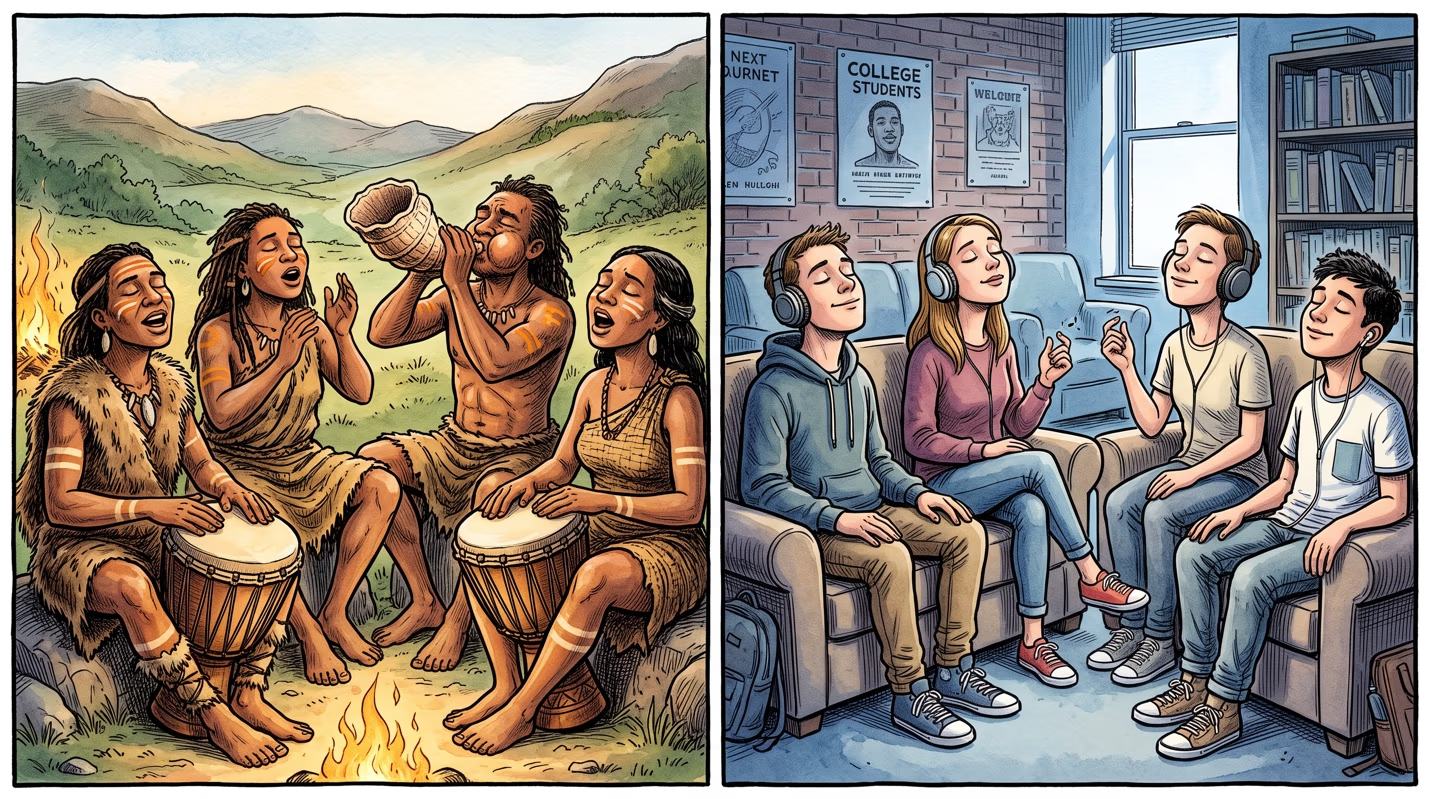



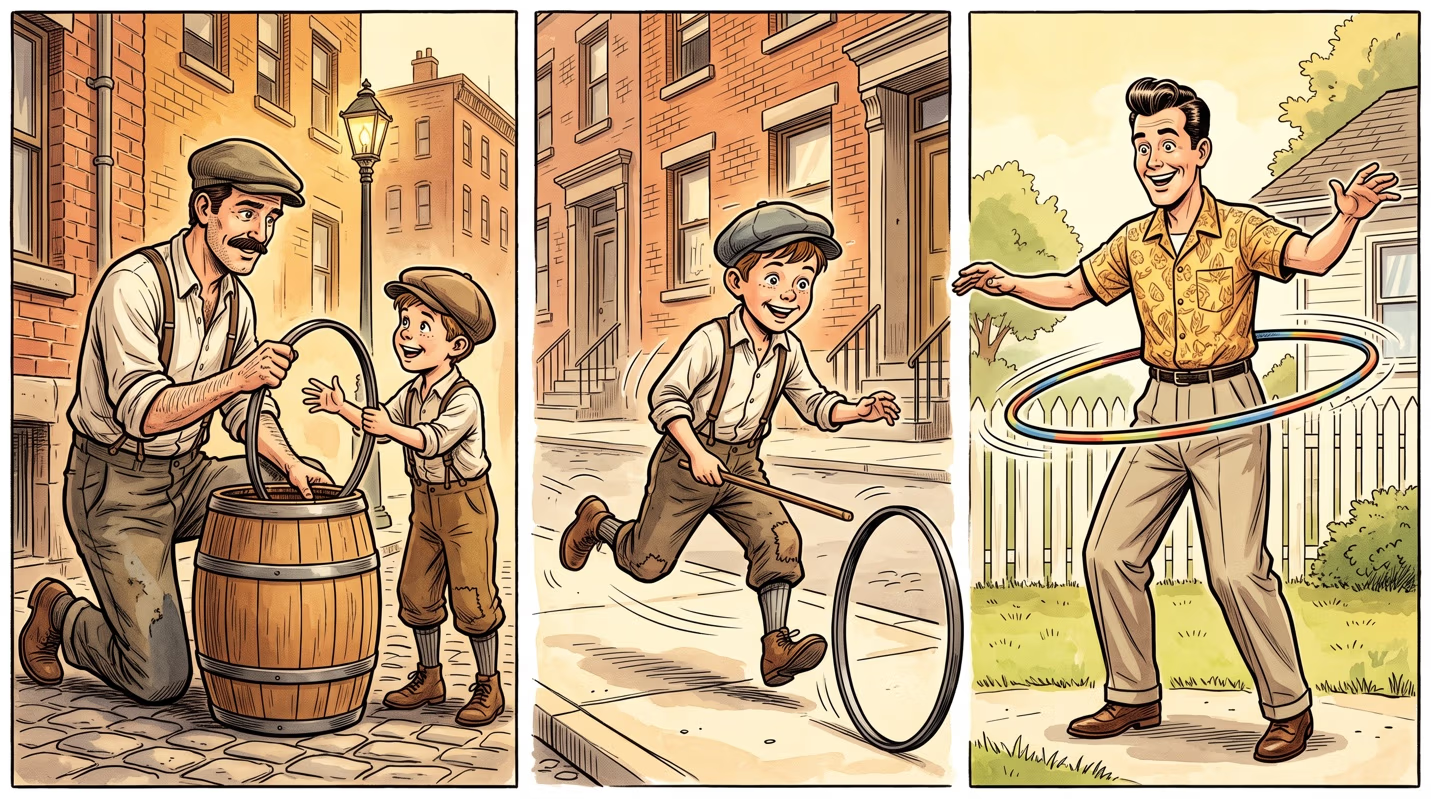
There is no difference that does not make a difference.
Laws of Media: The New Science with Eric McLuhan, (1988), p 183
Year: 1988
Chapters:
Tools We Shape, Reshape Us | Transform
..the media themselves, and the whole cultural ground, are forms of language.
The Global Village with Bruce Powers, 1988
Year: 1988
Technology is something we did to ourselves. Why become indignant or enthusiastic about a wheel or a telegraph?
First Lecture at Fordham University (1967) in Understanding Me (2003) pp 142-143
Year: 1967
Chapter:
Values & Value Judgments
We make our tools and thereafter our tools remake us.
LP, The Medium Is the Massage, 1967, side B
Year: 1967
Chapter:
Dropout
Let’s start with an “A” and see what we can do about it.
MM’s opening words to his first Monday Night Seminar in 1968, upon returning to Toronto from his year at Fordham, as reported by George Thompson, in MM: The Man and His Message (1989), p 131
Year: 1968
The past went that-a-way.
“The Medium Is the Message,” TV interview with Edward Binns (1960). Transcript: 49:51
Year: 1960
Chapter:
History
The gap created by the "missing link" has sparked more exploration and discovery than the established links in "connected" science.
“Symposium” (1973), p 11
Year: 1973
Chapters:
Interval | Untapped Potentials
New means create new goals and erase old ones.
Take Today with Barrington Nevitt (1972), p 194
Year: 1972
Historic man may turn out to have been literate man.
“Culture Without Literacy,” 1953, reprinted in McLuhan Unbound (2002), p 7
Year: 1953
During speed-up means and goals merge in process.
Take Today with Barrington Nevitt (1972), p 194
Year: 1972
New media can be entrusted only to new artists.
“The Agenbite of Outwit” (1963), Location magazine, Vol. 1, no. 1, in Media Research (1997), p 125
Year: 1963
Chapter:
Art, Artists
Message to deep-sea diver: “Surface immediately. Ship is sinking.”
Culture Is Our Business (1970), p 316
Year: 1970
The corporate icon is the most involving of effects because it is made up of public attitudes.
“Guaranteed Income in the Electric Age”, 1966
Year: 1966
The ancient seer was typically figured as blind. He lived by insight.
Culture Is Our Business (1970), p 112
Year: 1970
Chapter:
Visual Space
Harold Stahmer has written Speak, That I May See Thee.
Culture Is Our Business, (1970), p 276
Year: 1970
The more that is publicly recorded about the actual existence of any person, the more he is diminished in his private existence. Like any public entertainer, he becomes his admirers or his recordings. By a commodious vicus of recirculation, this flips us back to the Electric Circus, in which music is no longer for listening to but merging with.
“Reversal of the Overheated Image”, Playboy, December 1968, p 245
Year: 1968
Chapters:
Celebrity and Fame | Chiasmus, Flips, Reversals
Humpty Dumpty has gone back together again in a kind of rush. Here we are, inside the egg.
TV interview with Fletcher Markel, in “McLuhan Is the Message” (1970), transcript 7:25
Year: 1970
Napoleon said an army marched on its stomach. The cowboys marched on their cans.
Culture Is Our Business ,(1970), p 106
Year: 1970
The trouble with a cheap, specialized education is that you never stop paying for it.
Culture Is Our Business (1970), p 80
Year: 1970
In the all-at-once world of jets and circuits, the open road has become the inner trip.
Culture Is Our Business, (1970) p 132
Year: 1970
The day an engineer or a medical student graduates, he is obsolete.
Culture Is Our Business, (1970), p 80
Year: 1970
...all such extensions of our bodies, including cities – will be translated into information processes.
Understanding Media (1964), MIT/Routledge edition, p 57
Year: 1964
We put on our technology as evolutionary clothing.
Quoted in W. Terrence Gordon, Marshall McLuhan Escape into Understanding, (1997), p 26
Year: 1997
Determinism is the result of the behaviour of those who are determined to ignore what is happening around them.
Letter to the Editor of Life magazine, March 1, 1966, in Letters of Marshall McLuhan (1987), p 334
Year: 1966
Chapters:
Media Effects | Sleepwalkers
Next door [to a magazine underwear ad] was a plug for the Lure of the Limerick:
The limerick’s an art form complex
Whose contents run chiefly to sex,
It’s famous for virgins
And masculine urgin’s
And vulgar erotic effects
Culture Is Our Business, (1970), p 278
Year: 1970
The diehard, paradoxically, can be read as an epitath on his own tombstone.
Take Today with Barrington Nevitt (1972), p 5
Year: 1972
Electric circuitry does not create a Public. It creates the Mass. The Mass does not consist of separate individuals, but of individuals profoundly involved in one another.
“The Relation of Environment to Anti-Environment” In The University of Windsor Review, Vol 11, No 1, Fall (1966) p
8-9, reprinted in Through the Vanishing Point with Harley Parker (1968), p 251 and McLuhan Unbound #4, (2017)
Year: 1968
Let me stress again that individual freedom itself will not be submerged in the new tribal society, but it will certainly assume different and more complex dimensions.
“Playboy Interview: Marshall McLuhan: A Candid Conversation with the High Priest of Popcult and Metaphysician of Media”. By Eric Norden. Playboy Magazine, March (1969), p 70, reprinted in The Essential McLuhan (1995), pp 260-261
Year: 1969
Chapters:
Democracy | Individual
[Announced to a graduating class] “We have broken down. The breakthrough is all yours. Good luck.”
“Adopt a college”, in This Magazine Is About Schools, Autumn, 1968, p 55
Year: 1968
We study the future to better understand a present that will not stand sill for inspection.
“The Future of Sex” with George Leonard (1967), in On the Nature of Media (2016), p 69
Year: 1967
Chapter:
Future
Individual consciousness is achieved by strategic ignorance and suppression.
From Cliché to Archetype with Wilfred Watson, 1970, p 63
Year: 1970
How are you to argue with people who insist on sticking their heads in the invisible teeth of technology, calling the whole thing freedom?
Quoted by Arthur Kroker in Hacking the Future, 1996, p 8
Year: 1996
Chapter:
Wake Them Up!
The private psyche may be an artificial monster of the most precious discovery. It is demonstrable that it had a historical origin and that this "artifact" may have a contemporary demise in this electronic age of discarnate togetherness.
Liturgy And Media" in The Critic, Vol.31, No. 3, January-February (1973), p 21, reprinted in The Medium and the Light: Reflections on Religion (1999), p 128
Year: 1973
Omnipresence has become an ordinary human dimension.
“Jean Pare interview”, in Forces magazine a Hydro Quebec publication, No.22, (1973), p 8
Year: 1973
The more you know about the public, the more they take over the show.
“The lost Marshall McLuhan tapes” interview with Peter C.Newman, 1972, published in Macleans, July, 2013, p 51
Year: 1972
Chapters:
Audience, Public, Mass | Participation
…all art and all language are techniques for looking at one situation through another one.
“Culture without Literacy”, in Explorations #1, December (1953), p 121 reprinted in Essential McLuhan, (1995), p 307, additional reprint in Media Research Technology, Art and Communication (1997), p 131, and McLuhan Unbound #6, (2017)
Year: 1953
Today the tyrant rules not by club or fist, but disguised as a market researcher, he shepherds his flocks in the ways of utility and comfort.
“Preface”, in The Mechanical Bride, (1951), p unnumbered between v & vii
Year: 1951
Chapter:
Advertising
At electric speed, everything becomes X-ray. Watergate is a nice parable or example of how secrecy was flipped into show business.
“Living in an Acoustic World,” Public Lecture at the University of South Florida, 1970; “McLuhan Speaks” Transcript, p 9
Year: 1970
We are losing our civilization even faster than we stripped off the institutions of the Indians and the Africans.
Man and Media,” lecture delivered at York University, Toronto, (1979), in Understanding Me (2003), p 296
Year: 1979
So, at the speed of light, which is now the normal speed of most
information, on TV, radio, telephone and so on—at that speed the need to forget
has become a form of nostalgia.
Interview with Jerry Brown in The CoEvolution Quarterly, Winter 1977-1978,
Year: 1977
IMITATION: THE SINCEREST FORM OF BATTERY.
Take Today with Barrington Nevitt, 1972, p 51. The original is all caps.
Year: 1972
…people still are trying to find goals in a world that is moving so fast that no possible goal could remain in focus for ten seconds.
CBC TV show, Fletcher Markle, “Telescope 67” (1967); Transcript
Year: 1967
Chapter:
Speedups
At electric speeds of information, mankind now moves through a century of growth and experience every decade.
Commencement Address, U. of Western Ontario, 1972, typescript, p 1
Year: 1972
Technology is an abstract tyrant that carries its ravages into deeper recesses of the psyche than did the sabre-toothed tiger or the grizzly bear.
The Mechanical Bride, 1951, p 45
Year: 1951
[News events today act as a] literal realization of the physics formula that a particle moved at the speed of light acquires infinite mass. Today the most trivial facts can envelop and involve the whole world.
“The Hardware-Software Mergers: How Successful Have They Been?” Speech at the conference, Reappraisal of the Educational Technology Industry, University of Chicago, November 16-18, 1969. Transcript, p 10
Year: 1969
Chapters:
Living Unity | News
In an unspecialized world of computers and all-enveloping communications, sensitive intuition and openness will win more prizes, if you will, than unfeeling simplistic logic.
“The Future of Sex” with George B. Leonard (1967) in On the Nature Of Media (2016), p 136
###
Now all the world’s a sage.
The Medium Is the Massage (1967), p 14
Year: 1967
The great and abiding mass medium is not literature but speech.
“The Newspaper,” undated unpublished typescript, p 5
The little red schoolhouse is already well on its way toward becoming the little round schoolhouse.
“The Future of Education” with George Leonard, Look Magazine. Feb. 21, 1967, pp. 23-25.
Year: 1967
Antidotes are what kill dotes.
From a page of one-liners kept by B. Nevitt, titled “A Bundle of Boo-Boos”
…it could be argued that Superman is the comic-strip brother of the medieval angels.
The Mechanical Bride, 1951, p 103
Year: 1951
Chapter:
Myth, Mythic
The irrational has become the major dimension of experience in our world.
“Culture without Literacy”, in Explorations #1, December (1953), p 126 reprinted in Essential McLuhan, (1995), p 311, additional reprint in Media Research Technology, Art and Communication (1997), p 136, and McLuhan Unbound #6, (2003)
Year: 1953
You cannot see the writing on the wall till your back is up against it.
“Man and Media,” lecture delivered at York University, Toronto, (1979), in Understanding Me (2003), p 279
Year: 1979
Good news is simply not news.
The Emperor's Old Clothes. In G. Kepes (Ed.), The Man-Made Object, 1966, pp. 90-95. New York: George Brazillier Inc.
Reprinted in Marshall McLuhan Unbound (2017), p 20
Year: 2017
I know the King’s English, and so is the Queen.
From a page of one-liners kept by B. Nevitt, titled “A Bundle of Boo-Boos”
A print-oriented world is a consumer world.
“Popular/Mass Culture”, Speech (1960), in Understanding Me (2003) p 15
Year: 1960
The idea department of a big firm is a sort of lab for isolating dangerous viruses.
Understanding Media (1964), MIT edition, p 251
Year: 1964
Chapter:
Satirist
If Big Brother is watching, it is because we insist that he do so.
Brave New World of MM, Glamour, July, 1966, p 101
Year: 1966
Chapter:
Surveillance
Knowledge removes all obstacles. Experience creates them.
"Media and the Making of the Midwest," Chicago Land magazine, 1969, p 16
Year: 1969
Change is the only stable form we possess.
“Understanding Canada and Sundry other matters: Marshall McLuhan”, in interview in Mademoiselle Magazine, January (1967), p 114
Year: 1967
The criminal, like the artist, is a social explorer.
Quoted by Richard Kostelanetz in “Understanding McLuhan (In Part”, New York Times, January 29, 1967, p 47
Year: 1967
A twelve-year-old child today is older than Methuseleh.
Jean Pare 1973Interview for Hydro-Quebec's Forces magazine, p 7 of the typescript
Year: 1973
Chapter:
Rear View Mirror
The prophets of change are always a rear-view oriented people.
MIT-SSSR speech, 1966, p 7
Year: 1966
Chapter:
Rear View Mirror
A parody is a new vision.
From Cliche to Archetype with Wilfred Watson, 1970, p 168
Year: 1970
Chapter:
Rear View Mirror
We live by the revival, it tells us who we are or where.
Video TVO appearance with Mike McManus, “Violence as a Quest for Identity” (1977), transcript, 04:39
Year: 1977
…as technology improves, privacy disappears.
“Jean Pare interview”, in Forces magazine a Hydro Quebec publication, No.22, (1973), p 17
Year: 1973
…it has taken me a long time to take stupidity and indifference for granted as a universal and irremediable human condition.
Letter to Felix Giovanelli, September 5, 1948, in Letters of Marshall McLuhan (1987) p 203
Year: 1948
Chapter:
Wake Them Up!
We study the future to better understand a present that will not stand still for inspection.
“The Future of Sex” with George Leonard, 1967, in On the Nature of Media (2016), p 12d.
Year: 1967
Chapter:
Future
Bad news reveals the character of change; good news does not.
Quoted by Richard Kostelanetz in “Understanding McLuhan (In Part”, New York Times, January 29, 1967, p 47
Year: 1967
Most people are alive in an earlier time, but you must be alive in our own time.
Quoted by Richard Kostelanetz in Understanding McLuhan (In Part), New York Times, January 29, 1967, p 50
Year: 1967
But studying the future helps us toward understanding of the present.
“The Future of Education: The Class of 1989” with George Leonard, in Look, February 21, 1967, p 3
Year: 1989
Chapters:
Future | Media Study
WHAT? You think my fallacy is all wrong?
MM’s standard riposte to hecklers when speaking; also used in his cameo scene in Woody Allen’s 1976 film Annie Hall
Year: 1976
The story of modern America that began with the discovery of the white man by the Indians, as a wag has truly said, quickly passed from exploration by canoe to development by railway.
Understanding Media, 1964, MIT/Routledge edition, pages 101-102.
Year: 1964
Chapters:
Chiasmus, Flips, Reversals | Management
“A lot of people my age are dead at the present time.” (Professor Casey Stengel)
From a page of one-liners kept by B. Nevitt, titled “A Bundle of Boo-Boos”
Only puny secrets need protection. Big discoveries are protected by public incredulity.
Take Today with Barrington Nevitt (1972), p 92
Year: 1972
Chapter:
Management
Give a man enough rope and he’ll hang you.
From a page of one-liners kept by B. Nevitt, titled “A Bundle of Boo-Boos”
Washington’s farewell address was Mount Vernon.
From a page of one-liners kept by B. Nevitt, titled “A Bundle of Boo-Boos”
“Every time he opens his mouth his shoelaces fall out.”
From a page of one-liners kept by B. Nevitt, titled “A Bundle of Boo-Boos”
“That question is so stupid that it deserves an answer.”
From a page of one-liners kept by B. Nevitt, titled “A Bundle of Boo-Boos”
You cannot tell what [any innovation] is until you have seen it do things to the old one.
“Address at Vision 65”, in The American Scholar Vol. 35, No. 2 (Spring, 1966), p 228; also “The Invisible Environment: The Future of an Erosion”, Perspecta, Vol.11, (1967), p 166, reprinted in On the Nature of Media, (2016), p 119
Year: 1966
“I like the way he nods. He really communicates.”
From a page of one-liners kept by B. Nevitt, titled “A Bundle of Boo-Boos”
“People who live in glass houses should not get stoned.”
From a page of one-liners kept by B. Nevitt, titled “A Bundle of Boo-Boos”
He put the tedium back into redundancy.
From. a list of McLuhan’s one-liners sent to William Kuhns by Gerald Feigen
[In the name of “progress”] our official culture is striving to force the new media to do the work of the old.
The original self-published manifesto Counterblast (1954)
Year: 1954
Mysticism is just tomorrow’s science dreamed today.
Playboy interview, in Essential McLuhan (1995), p 262
Year: 1995
Chapter:
Science
The assembly line is liquidated by the computer. The prayer mat will succeed the Cadillac.
Counterblast (1969), p 76
Year: 1969
Chapter:
Today’s Transition
In the electronic age we stand as the primitives of an undeveloped and unknown culture.
Speech to the Learned Societies Canada conference in Montreal, June, 1961.
Year: 1961
The Puritans said in effect: life is very short and therefore our faces must be long. We are the new Puritans of technology.
“The Age of Advertising”, 1953, p 556
Year: 1953
There are no passengers on spaceship earth. We are all crew.
“Living in an Acoustic World,” Public Lecture at the University of South Florida, 1970. “Marshall McLuhan Speaks” Transcript, p 11
Year: 1970
The only way to live with bureaucracy is to bypass it and to increasingly undermine it.
“The Medium Brings His Message to the Governor,” in Los Angeles Times, March 12, 1978, p F1
Year: 1978
“McLuhan reports that one of Understanding Media's editors, in dismay, told him, ‘Seventy-five per cent of your material is new. A successful book cannot afford to be more than ten per cent new.’”
Richard Kostelanetz, Master Minds (1969), p 84-85
Year: 1969
I may be wrong, but I’m never in doubt.
MM’s “Joke Journal,” 1973
Year: 1973
Chapter:
McLuhan on McLuhan
In the world of the blind the one-eyed man is an hallucinated idiot.
Dewline Deck (1969) King of Diamonds
Year: 1969
Diaper backward spells repaid. Think about it.
From a collection of one-liners kept by Marg Stewart and Barrington Nevitt, circa 1973
Year: 1973
Chapter:
Retribalizing
The specialist is one who never makes small mistakes while moving toward the grand fallacy.
Understanding Media (1964), MIT/Routledge edition, p 124
Year: 1964
You want to get rid of your grievances, tell funny stories. You know what the Newfies say? “Do you know why the Newfie jokes are so stupid? It’s so the mainlanders can understand them.”
Undated Monday Night Seminar at University of Toronto, available on YouTube, 1969, 50:24
Year: 1969
On the flight deck of a jet liner the rear-view mirror is not consulted, and the astronaut does not have a point of view.
“The New Morality” (1967), p 177
Year: 1967
Paradox is the technique for seizing the conflicting aspects of any problem.
Take Today with Barrington Nevitt (1972), p 106
Year: 1972
Paradox coalesces or telescopes various facets of a complex process in a single instant.
Take Today with Barrington Nevitt (1972), p 106
Year: 1972
In the age of instant information, A man's reach must exceed his grasp or what's a metaphor?
Understanding Media (1964), MIT/Routledge edition, p 5
Year: 1964
I call this peculiar form of self-hypnosis Narcissus narcosis, a syndrome whereby man remains as unaware of the psychic and social effects of his new technology as fish of the water it swims in.
Playboy interview, in Essential McLuhan (1995), p 237
Year: 1995
The more the data banks record about us the less we exist.
From Cliché to Archetype with Wilfred Watson (1970), p 13
Year: 1970
Chapter:
Computer
One of the nicest things about being big is the luxury of thinking little.
Culture Is Our Business (1970), p 69
Year: 1970
I’ve got a small brain and I intend to use it.
Dewine Deck (1969), King of Spades
Year: 1969
Chapter:
Dropout
Electromagnetic technology requires utter human docility and quiescence of meditation such as befits an organism that now wears its brain outside its skull and its nerves outside its hide.
Understanding Media (1964), MIT/Routledge edition, p 57
Year: 1964
Everywhere now is our own neighborhood.
“The World is a Global Village”, 1960 TV interview, CBC TV
, 1960
, 1960
Year: 1960
The need to forget has become a form of nostalgia.
Interview by Casey Baldwin in Maclean's magazine, Vol. 90 no. 5, March 7, 1977, p 8
Year: 1977
You don’t like those ideas? I’ve got others.
Reportedly said in 1955, after a lecture at Teacher’s College, Columbia University, to the distinguished sociologist Robert K. Merton who voiced his displeasure at the thoughts delivered. In Philip Marchand’s Marshall McLuhan: The Medium and the Messenger (1989), p 132
Year: 1955
The sociologist permits himself to see only what is acceptable to his colleagues.
“Understanding Canada and Sundry other matters: Marshall McLuhan”, interview in Mademoiselle Magazine, January (1967), p 114
Year: 1967
In the world of the blind the one-eyed man is a hallucinated idiot.
Dewline deck of cards (1969): King of Diamonds
Year: 1969
Whereas convictions depend on speed-ups, justice requires delay.
Take Today with Barrington Nevitt (1972), p 94
Year: 1972
Fulton’s steamboat anticipated the miniskirt. We don’t have to wait for the wind anymore.
DEW-line deck of cards (1969): 3 of Spades
Year: 1969
Inflation is money having an identity crisis.
“Living at the Speed of Light”, typescript, 1979, p 10
Year: 1979
…dictionaries have merely driven words out of their senses
“Medium Meaning Message”, 1974, p 32
Year: 1974
…the well-adjusted person, by definition, has been brainwashed.
“Environment: The Future of an Erosion” (1967), in On The Nature of Media (2016), p 117
Year: 1967
Jazz is a survival gimmick for people harassed by cacophony.
Quoted in a Letter from Sister Mary Joan, West Hartford, Conn, repeating a memorable line he used in a speech
There is no time since everything is always now.
Spectrum of Catholic Attitudes, 1969, p 138
Year: 1969
Chapter:
Time
The electric light is pure information. It is a medium without a message, as it were, unless it is used to spell out some verbal ad or name.
Understanding Media (1964), MIT/Routledge edition, p 8
Year: 1964
Chapter:
Electric, Electronic
A man wrapped up in himself makes a small package.
DEW-Line deck of cards (1969): 8 of Hearts
Year: 1969
…instead of broadcasting our learning, let us advertise our problems: instead of giving the answers, let us give the questions.
Undated, unpublished 4-page typescript (apparently from the early 1970s) in praise of ignorance
Year: 1970
Twentieth century man has been called one who runs down the street shouting: I have the answers. Where are the questions?
Undated, unpublished 4-page typescript (apparently from the early 1970s) in praise of ignorance
Year: 1970
We have to know what we are doing in advance. We have to repeat what we were about to say.
“The Be-Spoke Tailor”, Explorations 8, 1957, the full issue later reprinted as Verbi Voco Visual, 1967. Both versions unpaginated
Year: 1957
The Puritans said in effect: life is very short and therefore our faces must be long. We are the new Puritans of technology… and we say in effect: life is very cruel and therefore we must turn our faces away from it.
“The Age of Advertising”, 1953, p 556
Year: 1953
We like roast beef and therefore we have slaughterhouses. But we despise the Spaniards who find meaning and dignity in the death of a bull.
“The Age of Advertising”, 1953, p 556
Year: 1953
Living at the speed of light, all pasts and all futures are simultaneously now.
“Living at the Speed of Light” (1979), typescript, p 20
Year: 1979
Nihilism is not a theory anymore. It’s a condition.
Quoted in B.W. Powe, “MM: The Put-On”, in A Climate Charged (1984), p 13
Year: 1984
…sex as we now think of it may soon be dead.
“The Future of Sex” with George Leonard, published in Look magazine, 1967, typescript, p 1
Year: 1967
People really do think of themselves as specialized machines nowadays. “That’s just my speed” is a most revealing remark.
Letter to Ezra Pound, August 16, 1948
Year: 1948
In the age of the organ transplant, the definition of “death” has become problematic.
Culture Is Our Business, (1970), p 162
Year: 1970
Chapter:
Anticipating Change
…dictionaries have merely driven words out of their senses.
“Medium Meaning Message” (1974), p 32
Year: 1974
Truth is never a label; it is not something we match. Truth is something we make with all our senses in a conscious process of remaking the world as the world remakes us physically, psychically, and socially.
“The Argument: Causality in the Electric World”, in Technology and Culture, Vol.14, No. 1, January (1973), p 17; reprinted in McLuhan Unbound # 3, (2005), p 28
Year: 1973
Chapters:
Matching and Making | Truth
We are not the true parents of our children.
“McLuhan Looks at Fashion” (1968), in On the Nature of Media (2016), p 154
Year: 1968
As our technology begins to tackle the light barrier, our concepts hobble toward the challenge of the archaic oat-barrier.
“The Electronic Age -- the Age of Implosion.” (1962), p 201
Year: 1962
Chapter:
Religion
Invention is the mother of necessities, old and new.
“The Argument: Causality in the Electric World”, in Technology and Culture, Vol.14, No. 1, January (1973), p 2, reprinted in McLuhan Unbound # 3, (2005),p 7
Year: 1973
Chapter:
Environment
The private psyche may be an artificial monster or the most precious discovery.
Liturgy And Media” in The Critic, Vol.31, No. 3, January-February (1973), p 21, reprinted in reprinted in The Medium and the Light: Reflections on Religion (1999), p 128
Year: 1973
Chapter:
Advice
It is more important to know what the right questions are than what the right answers are.
“Jean Pare interview”, in Forces magazine a Hydro Quebec publication, No.22, (1973), p 19
Year: 1973
Chapter:
Questions He Asks
Want to know where you fit in so you can be outstanding?
The Mechanical Bride, 1951, p 46
Year: 1951
Chapter:
Satirist
The bible belt is oral territory and therefore despised by the literari.
“Liturgy and the Microphone”, (1974), p 12
Year: 1974
Good taste is the expression of a colossal incompetence.
Through the Vanishing Point with Harley Parker (1968), p 213
Year: 1968
Chapter:
Satirist
The new electric environment is a collective poem.
Culture is our business (1970), p 326
A story-line is not for everyone. A man with a line is a specialist.
Showcase, 1 July, 1967
Year: 1967
Painting as light source flips viewer into vanishing point.
Through the Vanishing Point, with Harley Parker (1968), p 81
Year: 1968
Chapter:
Light On, Light Through
[Thomas Gray’s “Elegy in a Country Churchyard”] walks backward into the future.
Through the Vanishing Point with Harley Parker (1968), p 131
Year: 1968
The new hero is a corporate rather than a private individual figure.
Through the Vanishing Point with Harley Parker (1968), p 260
Year: 1968
The reason universities are so full of knowledge is that the students come with so much and they leave with so little.
Often cited by MM. Quoted in John Robert Colombo, The Dictionary of Canadian Quotations (Toronto: Stoddart, 1991), p 85
Year: 1991
“TV uses the eye as an ear, not as an eye.”
In a talk to the Ontario Education College, 1977)
Year: 1977
Chapters:
Dropout | Television
However, to live in the present, or to take today now, involves acceptance of the entire past as now, and the entire future as present.
“The End of the Work Ethic” (1972), in Media Research (1997), p 103
Year: 1972
Chapter:
Predictions
Science fiction doesn't really measure up to the everyday reality because the real has become fantastic.
“The End of the Work Ethic” (1972), in Media Research (1997), p 103
Year: 1972
This strange habit of looking backward when moving forward is one that perhaps won't quite bear up, isn't quite consistent with jet speeds and electronic speeds.
“The Medium Is the Massage” (1966), in Understanding Me (2003), p 86
Year: 1966
…the global village is as big as a planet and as small as the village post office.
“A McLuhan Montage,” School Library Journal, April, 1967, p 39
Year: 1967
Joyce… means literally that his puns are crossroads of meaning…
“James Joyce:Trivial and Quadrivial” (1953), reprinted in The Interior Landscape (1969), p 23
Year: 1953
The impossibility of secrecy under electronic conditions makes espionage and man-hunting the principal activity of our time,
“X-Ray Vision.” Reply to a question to a Macleans forum, “What’s in Store for Seventy-Four,” January, 1974, Maclean’s magazine (Toronto), Vol. 87, No. 1, p. 27.
Year: 1974
Chapter:
Hunters of Information
We live mythically; we think 19th century style.
“What the New Communications Will Mean to Public Relations” (1967), p 24
Year: 1967
We actually live in a world environment that has the structure of our own subconscious lives.
“The New Morality” (1967), p 176
Year: 1967
Today, with all our technology, and because of it, we stand once more in the magical acoustical sphere of pre-literate man. Politics have become musical; music has become politics. Government has become entertainment, and vice versa. Commerce has become incantation and magical gesture. Science and magic have married each other. Technology and the arts meet and mingle.
“Space, Time and Poetry” in Explorations 4, (1955) p 59, (2016) reprint, p 54, reprinted as McLuhan Unbound #13, (2017), p 9
Year: 1955
Chapter:
Living Unity
Everybody has become porous. The light and the message go right through us.
TVO interview with Mike McManus, 1977, in “McLuhan Speaks” transcript, p 3
Year: 1977
Chapter:
Privacy
The highway is now a wall of speed which cuts us off from the country entirely.
“Conspicuous Eo-existence and How It Affects Markets,” 1957, p 2
Year: 1957
We have all noticed how lineality has faded from the current scene. The chorus line, the stag line, the assembly line, all have gone the way of the clothes line.
“Inside the Five Sense Sensorium”, 1961, in Canadian Architect, Vol. 6, No. 6
Year: 1961
Stupidity is no excuse for not thinking.
“A Page of Boo Boos,” one-liner joke list, acquired and invented, kept at the Centre by Barrington Nevitt and Margaret Stewart, circa 1973
Year: 1973
Chapter:
Satirist
The reason universities are so full of knowledge is that students come with so much and they leave with so little.
Included in a collection of one-liners kept by Marg Stewart and Barrington Nevitt, circa 1973
Year: 1973
As oral resonance erodes the boundaries of the old economics, turning the planet into a single Echoland, a word now makes the market.
Take Today with Barrington Nevitt (1972), p 82
Year: 1972
Chapter:
Management
It is the environment that changes people, not the technology.
“Living in an Acoustic World,” Public Lecture at the University of South Florida, 1970. In “McLuhan Speaks” transcript, pp 10-11
Year: 1970
It is in the process of committing suicide that you find out whether you exist or not.
Found in a folder of one-liner jokes, both acquired and invented, kept at the Centre by Barrington Nevitt and Margaret Stewart, circa 1973
Year: 1973
Chapter:
Satirist
I am careful to make my statements as annoying as possible.
Recounted by B.W. Powe from a conversation in the Coach House, September, 1979
Year: 1979
Chapter:
McLuhan on McLuhan
The price of eternal vigilance is indifference.
Understanding Media (1964), MIT/Routledge edition, p 30
Year: 1964
Manslaughter and man’s laughter are spelled the same.
Found in a folder of one-liner jokes, both acquired and invented, kept at the Centre by Barrington Nevitt and Margaret Stewart, circa 1973
Year: 1973
Chapter:
Satirist
A double negative is a no-no.
Found in folder of one-liner jokes, both acquired and invented, kept at the Centre by Barrington Nevitt and Margaret Stewart, circa 1973
Year: 1973
Chapter:
Satirist
Technology is also art and creates new environments that have the exact opposite effects of art. These environments saturate and subdue consciousness. See Edward T. Hall’s The Silent Language and The Hidden Dimension.
Letter to Pat O’Neill, August 21, 1969 (LAC)
Year: 1969
Once surrounded by human artefacts, Nature is a mess.
Letter to Jim Coutts, Secretary of Pierre Elliott Trudeau, March 2, 1970, in Been Hoping We Might Meet Again: the Letters of Pierre Elliott Trudeau and Marshall McLuhan, edited by Elaine Kahn (2019), p 81
Year: 1970
Chapter:
Planet, Nature
“Snooping with intent to creep” or “casing everybody else’s joint” has become a major activity.
From Cliché to Archetype with Wilfred Watson (1970), p 12
Year: 1970
Mud sometimes gives the illusion of depth.
From the “Lists of One-Liners and Longer Jokes” kept by Magaret Stewart and George Thompson, 1973 and later
Year: 1973
“Proof" of sanity is available only to those discharged from mental institutions.
Take Today with Barrington Nevitt (1972), p 8
Year: 1972
Just because all the king’s horses and all the King’s men couldn’t put Humpty Dumpty together again, it doesn’t follow that electromagnetic automation couldn’t have put Humpty Dumpty back together. The integral and unified egg had no business sitting on a wall, anyway. Walls are made of uniformly fragmented bricks that arise with specialisms and bureaucracies. They are the deadly enemies of integral beings like eggs. Humpty Dumpty met the challenge of the wall with a spectacular collapse.
“Humpty Dumpty, Automation, and TV” [University of Toronto] Varsity Graduate, Volume 10, Number 4, Summer, 1963, p 25
Year: 1963
Chapters:
Goodbye Linearity | Specialism
Objective journalism meant giving both sides at once. Strangely, everyone assumed there were two sides to every case. It never occurred to anyone that there might be forty sides or a thousand sides. No, just two sides, pro and con.
“Living in an Acoustic World,” public lecture to the University of South Florida, 1970, from “Marshall McLuhan Speaks” transcript p 8
Year: 1970
Now, how much we can survive without any private identity is, I think, a question for religion to consider. "Is there life before death?” somebody once asked. It has become a much more relevant question than the old one about life after death.
"Electric Consciousness and the Church" (1970); reprinted in Marshall McLuhan: The Man and His Message (1989), p 164
Year: 1970
Bureaucrats are all very simple-minded people. They are one-way streets, one-track minds, and they believe only in more-ness or less-ness. They have no other categories.
Speaking of Winnipeg (1974), p 31
Year: 1974
My favorite stomping grounds are areas that very few people have ever stomped.
“The Hot and Cool Interview”, reprinted in Media Research (1997), p 77
Year: 1997
So, at the speed of light, which is not the normal speed of most information, on TV, radio, telephone and so on – at that speed the need to forget has become a form of nostalgia.
Maclean’s, March 7, 1977; quoted in Letters of Marshall McLuhan (1987) p 177
Year: 1977
All dimensions are enigmas to a blindfolded consciousness.
Untitled, unpublished essay prepared for the Los Angeles Times, 1969, typescript p 6
Year: 1969
Chapters:
Sleepwalkers | Wake Them Up!
In the electric age we wear all mankind as our skin.
Understanding Media, (1964), MIT, p 47
Year: 1964
Muskie, what a horrible name for a candidate. Politicians do not understand media effects; none do; yet we've played with it and let it take us over…
“Kandy kolored message”, in International Times (1972), p 35
Year: 1972
Chapter:
Names, Naming
The sewing machine created the straight line in clothes, as much as the linotype flattened the human vocal style.
Understanding Media (1964), MIT/Routledge edition, p 120
Year: 1964
Chapter:
Living Unity
The police state is now a work of art, a bureaucratic ballet of undulated sirens. That is a way of saying that the espionage activities of our multitudinous man hunters and “crediting” agencies are not only archaic, but redundant and irrelevant.
Take Today with Barrington Nevitt, 1972, p 26
Year: 1972
Chapters:
Hunters of Information | Surveillance
Of course it’s very difficult for a naked person to learn how to read.
Opening line at a speech given at Brandeis University Conference, 1963, as reported by John Culkin in “Marshall’s New York Adventure” in Marshall McLuhan: The Man and His Message (1989), p 99
Year: 1963
There are no more great men; there are only great committees.
Interview, The Spectator, November 8, 1975, p 26; also, “Marshall McLuhan is Alive and Well,” The Windsor Star, October 25, 1975
Year: 1975
Chapter:
Dropout
The nature of people demands that most of them be engaged in the most
frivolous possible activities—like making money.
“An Informal Interview with Marshall McLuhan”, in Miss Chatelain (1974), page number not shown in the LAC copy
Year: 1974
For the name of a man is a numbing blow from which he never recovers.
Understanding Media (1964), MIT/Routledge edition, p 32
Year: 1964
Chapter:
Names, Naming
We might ask ourselves what is the consequence of living in one age and thinking in another? Such would seem to be a frequent situation in human history. We can achieve a massive psychic irrelevance that renders us ripe not for challenges but collapse.
Review of The Nerves of Government, 1964, p 3
Year: 1964
Chapters:
Rear View Mirror | Warnings
Whereas convictions depend on speed-ups, justice requires delay.
Take Today with Barrington Nevitt (1972), p 94
Year: 1972
Obsolescence is not extinction, it's superabundance.
“Theatre and the Visual Arts: a panel discussion”, in Yeats Studies: An International Journal, Issue 2 (1972), p 135
Year: 1972
…[An assumption is] an idea that outlives its uselessness…
Quoted by Edmund Carpenter in “That Not So Silent Sea” in The Virtual McLuhan by Donald Theall (2001), p 245
…it could be argued that Superman is the comic-strip brother of the medieval angels.
The Mechanical Bride, 1951, p 103
Year: 1951
What do the other media of our time do to the people who use them? Mine is a transformation theory, how people are changed by the instruments they employ.
“Living at the speed of light” (1974), in Understanding Me (2003), p 230
Year: 1974
Chapter:
Tools We Shape, Reshape Us
…we stand as the primitives of an undeveloped and unknown culture.
Speech to the Learned Societies Canada Conference in Montreal, June, 1961.
Year: 1961
Chapters:
Dropout | Electric, Electronic | He’s Hopeful | Living Unity | Retribalizing | Today’s Transition
[Speaking of the miniskirt] Some people say the end is in sight.
To Dick Cavett on his TV show, 1970, 13.00
Year: 1970
The fact becomes apparent today when there is no more geography in the world as far as verbal intercommunication is concerned.
Take Today with Barrington Nevitt (1972), p 191
Year: 1972
In the land of the blind the one-eyed man is not a king, he’s a hunted criminal.
Quoting MM, a 2011 TV Interview with Edmund Carpenter, transcript 57:52
Year: 2011
Chapter:
Sleepwalkers
Boldness of type created boldness of expression.
Understanding Media (1964), MIT edition, p 178
Year: 1964
When war and market merge, all money transactions begin to drip blood.
Take Today with Barrington Nevitt (1972), p 211
Year: 1972
And the general tendency is to use the audience as a work force instead of as a target or consumer.
“Information Hunt Looms Big” (1967), p 5
Year: 1967
Chapters:
Audience, Public, Mass | Chiasmus, Flips, Reversals
Big committees are formed for the purpose of passing the buck.
“Watergate - Participatory Torture” (1973), p 3
Year: 1973
Chapter:
Satirist
The dominant technologies of one age become the games and past times of a later age. In the twentieth century the number of past times that are simultaneously available is so vast as to create cultural anarchy.
From Cliché to Archetype with Wilfred Watson (1970), p 99
Year: 1970
Food for the mind is like food for the body; the inputs are never the same as the outputs!
Take Today with Barrington Nevitt (1972), p 137
Year: 1972
"Glamour" was a form of armor, designed to insulate, to separate. The new styles, male and female, invite dialogue.
“The Future of Sex” with George Leonard (1967), in On the Nature of Media (2016), p 136
Year: 1967
We insist on using archaic concepts for processing and observing our most urgent problems. Let us recall the two Navajo Indians who were having a leisurely chat by smoke signals when an atom bomb occurred between them. Later, one of them sent up a comment, “Gee, I wish I’d said that.”
“The Subliminal Projection Project” (1957), pp 196-197
Year: 1957
When a thing is current, it creates currency; fashion creates wealth by moving textiles and making them ever more current.
Understanding Media (1964), MIT/Routledge edition, p 154
Year: 1964
Nihilism is not a theory anymore. It’s a condition.
Quoted in B.W. Powe’s “The Put-On,” A Climate Charged (1984), p 13
Year: 1984
The English can never remember and the Irish can never forget;
The adult never remembers but the child never forgets;
The Israelis can never remember and the Arab can never forget;
People never remember but the computer never forgets.
Counterblast (1969), p 69
Year: 1969
Chapter:
Memory
When the total environment is made of information, then it is an absurd waste of time to spend all your time in instruction.
“What the New Communications Will Mean to Public Relations,” Public Relations Journal, January 1967, p 23
Year: 1967
The difference between factitious and fictitious tends to dissolve.
“Information Hunt Looms Big” (1967), p 5
Year: 1967
Most human attention is allocated to the 90 per cent area which is the area of problems. The 10 per cent area is the area of irritation and also of opportunity. It was the genius of Harold Innis that refused to be distracted by the 90 per cent area of problems. He went straight to the 10 per cent core of opportunity and sought insight into the causes that underlay the whole situation.
Explorations number 25 (1969), p 95
Year: 1969
It’s amazing that people never want anything that isn’t available.
Jill Wechsler interview, April 6, 1967, typescript, p 3
Year: 1967
Since there are no visual or quantifiable connections between radio and TV and their effects, Western man humbly and dumbly submits to their magic.
“Violence of the Media” in MM the Man and his Message (1989), p 94
Year: 1989
Chapter:
Narcissus, Denial of Media Effects
If you are moving at the speed of light, you are already there.
“The Undiluted Wisdom of Marshall McLuhan,” The Montreal Gazette, May 16, 1975, p 13
Year: 1975
Chapter:
Speedups
The one-liner joke, which has taken the place of the story line, has no plot at all. It’s instantaneous, “easy glum, easy glow.” That’s the whole point: you’re not supposed to have much attention span anymore. “If Nixon had been the captain of the Titanic, what would he have said to the passengers? ‘Ladies and gentlemen, we’re stopping for ice.’” These jokes are one-liners. “The British Empire is the empire on which the sun never sets because you cannot trust an Englishman in the dark.” One-liners are everywhere, and they have taken the place of the old story line.
“Living in an Acoustic World,” Public Lecture at the University of South Florida (1970), “Marshall McLuhan Speaks” transcript, p 4
Year: 1970
I have nothing but distaste for the process of change.
Playboy interview (1969), in Essential McLuhan (1995), p 267
Year: 1969
[To a student at a seminar]
To categorize is to cagetorize, cage-to-rise, to cage-too-rise.
In Barrington Nevitt and Maurice McLuhan, Who Was Marshall McLuhan? (1994), p 129
Year: 1994
The past went that-a-way. When faced with a totally new situation, we tend always to attach ourselves to the objects, to the flavor of the most recent past. We look at the present through a rearview mirror. We march backwards into the future. Superbia lives imaginatively in Bonanza-land.
The Medium Is the Massage (1967), p 74
Year: 1967
Chapter:
Rear View Mirror
An art that does not disturb and annoy, at first, is meaningless.
“A Victorian Proto-Martyr of the Arts.” Review of A Hopkins Reader, ed., John Pick,. Commonweal, Vol. 58 July 3, 1953, pp. 326-327.
Year: 1953
…the future of the future is the present.
Take Today with Barrington Nevitt (1972), p.134
Year: 1972
Are you in the groove? That is, are you moving in ever-diminishing circles?
The Mechanical Bride (1951), p 73
Year: 1951
Chapter:
Satirist
“Now look, a half-truth is an awful lot of truth! Most people never get that much!”
Quoted in B.W, Powe’s “Marshall McLuhan: The Put-On,” in A Climate Charged (1984), p 22
Year: 1984
Chapter:
Truth
…every day of our lives we can pass through at least a hundred years of historical development…
“First conversation with Pierre Babin” (1977), in The Medium and the Light, p 46
Year: 1977
Even our NASA scientists are 18th century Newtonian minds, geared to the printed word as much as any editorial writer.
Dedication for Magnovia II, February1968
Year: 1968
To be uncritically involved in doing what everyone else is doing is the accepted human use of human beings.
Take Today with Barrington Nevitt (1972), p 235
Year: 1972
“In short, taking an intelligent interest in everyday things at once enlarges the area of attention and reveals the meaning for us all.
“Baseball Culture”, 1952, p 4
Year: 1952
The most human thing about us is our technology.
“Predicting 1983 and the Fourth World,” in Man and the Future of Organizations, 1974, p 19
Year: 1983
Chapters:
Extension Theory | Technology
Is it not very noticeable that the wealth and power figures of our time have tended to become hermits in varying degrees?
“Mr. Nixon’s Dropout Strategy” (1973), p 7 of typescript
Year: 1973
Chapter:
Nobody
I don’t pretend to understand my stuff. After all, my writing is very difficult.
“Understanding McLuhan,” Newsweek, February 28, 1966.
Year: 1966
When a thing is current, it creates currency.
Understanding Media (1964), MIT/Routledge edition, p 154
Year: 1964
Chapter:
Money
The first motor cars had buggy whip holders and that is the stage which your report has achieved.
(When requested to respond to a report on educational technology) AV Communication Review, fall, 1970
Year: 1970
Chapter:
Rear View Mirror
To give both sides tends to ignore the possibility that there may be more sides than two.
“At the Moment of Sputnik—" 1974, p 1 of typescript
Year: 1974
Let us keep in mind that the new reality is in the image and not behind it.
“The Electronic Age – The Age of Implosion”, 1962, p 196
Year: 1962
…data banks know more about individual people than the people do themselves.
From Cliché to Archetype with Wilfred Watson (1970), p 13
Year: 1970
Chapter:
McLuhan on McLuhan
When producers want to know what the public wants, they graph it as curves. When they want to tell the public what to get, they say it in curves.
The Mechanical Bride (1959), p 79
Year: 1959
"Hardware" thinking persists in a "software" world, driving secrecy and security measures to comic lengths:
TOO HOT TO HANDLE
BURN BEFORE READING
TOP SECRET. WHEN YOU GET THIS, DESTROY YOURSELF.
Take Today with Barrington Nevitt (1972), p 91
Year: 1972
In big industry new ideas are invited to rear their heads so they can be clobbered at once. The idea department of a big firm is a sort of lab for isolating dangerous viruses.
Understanding Media (1964), MIT edition, p 251
Year: 1964
Radical changes of identity, happening suddenly and in very brief intervals of time, have proved more deadly and destructive of human values than wars fought with hardware weapons.
Laws of Media: The New Science with Eric McLuhan, (1988), p 97
Year: 1988
Culture is not civilization. Every day we get more cultured and less civilized.
“Media Message from McLuhan,” 1967
Year: 1967
Chapter:
Retribalizing
The sculptural qualities of the image dim down the purely personal identity.
Through the Vanishing Point with Harley Parker (1968)
Year: 1968
Everybody tends to merge his identity with other people at the speed of light. It's called being mass man.
Video, “Violence as a quest for identity (1977)”, 04:3 of Youtube transcription
Year: 1977
Everybody at the speed of light tends to become a nobody.
“Interview by Casey Baldwin”, in Maclean's magazine, Vol. 90 no. 5, March 7, 1977, p 5
Year: 1977
Information as such had become the new sinews of war.
Take Today with Barrington Nevitt (1972), p 150
Year: 1972
Chapter:
War
When we put satellites around the planet, Darwinian Nature ended.
Counterblast (1969), p 143
Year: 1969
…what is printed as news has nothing to do with what is reported in any other medium as news.
“The Hardware-Software Mergers: How Successful Have They Been?” Speech at the conference, Reappraisal of the Educational Technology Industry, University of Chicago, November 16-18, 1969. Transcript, p 10
Year: 1969
Chapter:
News
Let us recall that Newton did not discover gravity, but levity!”
Letter to D. Carlton Williams (1969)
Year: 1969
Experience is useless at electric speeds. Knowledge inevitably takes the place of experience.
“Education and the New Media”, March 25, (1970), Televised in France, Le Monde Diplomatique, April 29, (1970), p 4
Year: 1970
Chapter:
Knowledge
If Homer was wiped out by literacy, literacy can be wiped out by rock.
“Living in an Acoustic World,” Public Lecture at the University of South Florida (1970), “Marshall McLuhan Speaks” Transcript, p 3
Year: 1970
[We will soon inhabit] a satellite environment where the Christmas star that guides us might well be man-made.
“A Glimpse of Christmas Future” McCalls fff December, 1967
Year: 1967
Chapter:
Predictions
We live invested in an electric information environment that is quite as imperceptible to us as water is to fish.
Counterblast (1969), p 5
Year: 1969
Chapters:
Environment | Information Overload
Every business has a huge espionage sector. This is called public relations and audience research, and this...has become the main business of mankind, just watching the other guy.
“Violence as a Quest for Identity” (1977), Interview on The Mike McManus Show (TVO), in Understanding Me (2003), pp 267-268
Year: 1977
A man's reach must exceed his grasp or what's a metaphor?
Understanding Media (1964), MIT/Routledge edition, p.57
Year: 1964
A specialist is a person who has organized his ignorance to a very high degree.
“The Hardware-Software Mergers: How Successful Have They Been?” Speech later published in the Proceedings of the Conference at the Center for Continuing Education, University of Chicago (1969). Transcript, p 4
Year: 1969
In a mindless age every insight takes on the character of a lethal weapon.
Letter to Ezra Pound, June 22, 1951, in Letters of Marshall McLuhan (1987), p 227
Year: 1951
Man uses the press for privacy in public conveyances.
“Marshall McLuhan at the Bottom of the Sea” by Harry Boyle, Toronto Star Weekend Magazine, March 18, 1967, p 4
Year: 1967
It is a characteristic of all social processes that they become manifest and conspicuous at the moment of their demise.
“The Popular Hero and Anti-Hero,” in Heroes of Popular Culture, Eds., Ray B. Browne, Marshall Fishwick, and Michael T. Marsden (Bowling Green University Popular Press), 1971, p 135
Year: 1971
Breakdown becomes breakthrough.
Laws of Media: The New Science with Eric McLuhan, (1988), p 108. Oft-repeated, a pet axiom
Year: 1988
Products are increasingly becoming services.
“Predicting Interactive Communication via the Internet,” TV Appearance on This Hour Has Seven Days, CBC-TV with Robert Fulford (1966), in McLuhan SpeaksTranscript, p 3
Year: 1966
The environment is always the brainwasher, so that the well-adjusted person, by definition, has been brainwashed. He is adjusted.
“Environment: The Future of an Erosion” (1967), in On The Nature of Media, p 117
Year: 1967
People don’t actually read newspapers. They get into them every morning like a hot bath.
Quoted in “Understanding McLuhan (In Part)” by Richard Kostalonetz, in the New York Times Magazine, January 29, 1967, p 37
Year: 1967
Well it’s nice to have the avant-garde behind us, isn’t it?
Reported by Corinne McLuhan, what MM said as they exited a Kubrick-invited screening of 2001: A Space Odyssey, early in 1968
Year: 2001
The scientist rigorously defends his right to be ignorant of almost everything except his specialty. The NASA Mafia are a splendid current example.
Letter to Edward T. Hall (July 23, 1969), in Letters of Marshall McLuhan (1987), p 383
Year: 1969
Classification isn’t the beginning of a subject. It is the end.
The Hot and Cool Interview (1967) in Media Research (1997), p 62
Year: 1967
Chapters:
Classification | Specialism
Our assumptions have outlived their uselessness.
Quoted by Douglas Coupland in Extraordinary Canadians: Marshall McLuhan (2011) ; also quoted by Ted Carpenter in “That Not So Silent Sea,” his 1993 memoir of his years with McLuhan, republished as Appendix B in Donald Theall’s The Virtual McLuhan, 2002
Year: 2011
Chapter:
Rear View Mirror
To keep kids from pop culture? Put the hit parade on the examination and all the comic books and all the movies and all the TV shows… and you will find a total desertion of the whole enterprise. It works for Shakespeare; why shouldn’t it work for Bonanza?
“Education in the Electronic Age” " The text of an address to the Provincial Committee on the Aims and Objectives of Education of the Schools of Ontario, on January 19, 1967. Printed as Chapter 12.3 in The Best of Times /The Worst of Times: Contemporary Issues in Canadian Education, Editors., H. A. Stevenson, R. M. Stamp, and J. D. Wilson (1972)
Year: 1967
Every pun is also a punishment, you know.
Reported by student “JJ” from a class, early 1970s
Year: 1970
The more vivid you make your remarks, the less people will understand. This happens to me all the time.
“Genius or Whimsy?” (1979), p 13
Year: 1979
Frederick Winslow Taylor made himself famous by his time-and-motion studies and scientific management. Like any other avant-gardist, he had one foot firmly planted in the past.
Take Today with Barrington Nevitt (1972), p 257
Year: 1972
Chapter:
Rear View Mirror
We haven’t a clue in our technology as to how to turn it off. We don’t know where it came from.
Newsweek, February 28, 1966
Year: 1966
All that has ever appeared on the retinal screen of mankind over the centuries is old movies.
Newsweek, February 28, 1966
Year: 1966
Chapters:
Radio | Rear View Mirror
Streaking is just a passing fanny.
From a one-page list of jokes maintained by Barrington Nevitt
Had Nixon had a beard, he would still be in the White House.
“Jerry Brown Meets Marshall McLuhan” in The Coevolution Quarterly, Winter 1977/78, p 87
Year: 1977
Government had begun in a modest way as the figure of the helmsman. The ship represented the entire human community. Today the rudder has become much larger than the ship.
Take Today with Barrington Nevitt (1972), p 217
Year: 1972
The ignorance of how to use new knowledge stockpiles exponentially.
Take Today with Barrington Nevitt (1972), p 37
Year: 1972
Chapter:
Rear View Mirror
“The Pill makes a woman a Bomb.
“The Future of Sex” (1967), in On the Nature of Media, (2016), p 136
Year: 1967
Color television is a new environment producing nostalgia for an old one.
Understanding Media (1964), MIT edition, p 99
Year: 1964
TODAY, THE BUSINESS OF BUSINESS IS BECOMING THE CONSTANT INVENTION OF NEW BUSINESS.
Take Today with Barrington Nevitt (1972), p 104
Year: 1972
Chapter:
Management
Everybody in a crowd is a nobody; the crowd is mask.
Laws of Media: The New Science with Eric McLuhan, (1988), p 146
Year: 1988
Chapters:
Audience, Public, Mass | Masks
…today nothing is out because everything is in.
“McLuhan Looks at Fashion” (1968), in On the Nature of Media (2016), p 159
Year: 1968
…breakdown becomes breakthrough…
“Causality: The Argument” (1973), in McLuhan Unbound (2017), p 6
Year: 1973
…change is the only stable form we possess. At high speeds, it becomes like a self-regulating gyostabilizer �� a steadying form. And the faster we move, the more surely we’re moving toward an absolutely stable society. (1967)
“Understanding Canada and Sundry other matters: Marshall McLuhan “interview in Mademoiselle Magazine, January (1967), p 114
Year: 1967
Chapters:
Change | Today’s Transition
High Rise Cemetery: Go halfway to meet your maker [headline, followed by] With high-rise you have Necropolis – ideally a cemetery in the sky – the only answer to which is to put the old housing into costume
“High Rise Inverts Everybody into Nobody,” DEW-Line Newsletter, 1970-1972
Year: 1970
…the only way to live with bureaucracy is to bypass it and increasingly undermine it.
To Gov. Gerald Brown of California, in “Medium Brings His Mission to the Governor,” Los Angeles Times, March 12, 1978, p F1
Year: 1978
The wild broncos of technological culture have yet to find their busters or masters. They have only found their P.T. Barnums.
“Media Log”, 1954
Year: 1954
Learning creates ignorance. / White creates black. / The public creates privacy. Affluence creates poverty.
Card from the DEW-Line Newsletter deck of cards (1969): A of Spades
Year: 1969
Chapters:
Complementarities | Dropout
When all is said and done more will have been said than done.
DEW-Line deck of cards (1969): 4 of Spades [from Samuel Butler]
Year: 1969
Congestion is the indispensable condition for getting your hand in the other guy’s pocket.
Card from the DEW-Lline Newsletter deck of cards (1969): 10 of Clubs
Year: 1969
Every new technique is a service environment that junks the earlier ones.
Card from the DEW-Lline Newsletter deck of cards (1969): 10 of Spades
Year: 1969
Blowing both horns of his dilemma
Card from the DEW-Line Newsletter deck of cards (1969): 2 of Clubs
Year: 1969
The law of averages will clobber you every time
Card from the DEW-Line Newsletter deck of cards (1969): Ace of Clubs
Year: 1969
When you’re flat on your back don’t raise your head or your friends will kick your teeth in.
Card from the DEW-Line Newsletter deck of cards (1969): Jack of Clubs
Year: 1969
Anthropology is the study of man embracing woman (Lexicon 1910)
Card from the DEW-Line Newsletter deck of cards (1969): 3 of Hearts
Year: 1969
I have a small brain and I intend to use it.
Card from the DEW-Line Newsletter deck of cards (1969): King of Spades
Year: 1969
Chapter:
Dropout
Unless we have a certificate of discharge from a mental home we can’t prove we are sane.
Card from the Dewline Newsletter deck of cards (1969): 10 of Hearts
Year: 1969
Is Tiny Tim one of Dr. Spock’s spooks?
Card from the Dewline Newsletter deck of cards (1969): Jack of Spades
Year: 1969
The clown is the emperor’s PR man
Card from the Dewline Newsletter deck of cards (1969): Joker
Year: 1969
Chapter:
Playfulness
HIGH RISE and mini-skirts, the end is in sight; i.e., instant slums
Card from the Dewline Newsletter deck of cards (1969): 9 of Hearts
Year: 1969
“No one is so annoying as the person who goes right on talking when you’re trying to interrupt.”
From a list of McLuhan one-liners assembled by Gertrude Stein performer and interviewer Nancy Cole, 1975
Year: 1975
The eighteenth century had idealized the noble savage and Marx’s rear-view vision saw communism as tribal.
Culture Is Our Business (1970), p 92
Year: 1970
Chapter:
Marx, Karl
In the world of the blind, the one-eyed man is an hallucinated idiot.
Card from the DEW-Line Newsletter deck (1969): King of Diamonds
Year: 1969
We like roast beef and therefore we have slaughter-houses. But we despise the Spaniards who find meaning and dignity in the death of a bull.
“The Age of Advertising,” 1953, p 556
Year: 1953
Since the invention of elastic the space occupied by women has been reduced one third.
Card from the DEW-Line Newsletter deck (1969): 7 of Hearts
Year: 1969
“It is better to have loved and lost than never to have lost at all.” (Sam Butler)
Card from the DEW-Lline Newsletter deck (1969): 2 of Hearts
Year: 1969
Chapter:
Aphorism
A Japanese wife never speaks irritably to her husband – she merely rearranges the flowers.
Card from the Dewlne Newsletter deck (1969): Queen of Diamonds
Year: 1969
“The hand that rocked the cradle just kicked the bucket” (Hindu sage to professor at Cambridge)
Card from the DEW-Line Newsletter deck (1969): 4 of Diamonds
Year: 1969
The stripper puts on the audience by taking them off.
Card from the Dewline Newsletter deck (1969): Queen of Spades
Year: 1969
CUBISM AT A GLANCE [in diamond pattern:] OUTER INNER UPPER UNDER
Card from the DEW-Line Newsletter deck (1969): 8 of Diamonds
Year: 1969
Chapter:
Cubism
Hollywood found that running six people in a figure eight creates a mob scene which equals the population explosion.
Card from the DEW_Line Newsletter deck (1969): 8 of Diamonds
Year: 1969
The silicone bosom symbolizes the thin edge of the trial balloon.
Card from the DEW-Line Newsletter deck (1969): 9 of Spades
Year: 1969
Dictionaries have merely driven words out of their senses.
From Cliché to Archetype with Wilfred Watson (1970), p 30
Year: 1970
To express moral caution and alarm concerning such matters is as efficacious as the screech of a chicken whose neck has been laid on the chopping block. If, for example, our engineers were to add 200 lines to our present TV image, a real step would have been taken towards maintaining some of our visual and cultural values.
“THE CRACK IN THE REAR-VIEW MIRROR”, in McGill Journal of Education (1966), p 33
Year: 1966
If I made a cautious, measured statement someone might mistake me for a stable character.
“The All-At-Once World of Marshall McLuhan”, British Vogue Magazine, April, 1966
Year: 1966
The big committee doesn’t make decisions. It makes recommendations.
Interview with Robert Fulford, from the “Lost McLuhan Tapes,” originally done in 1972 but published in Macleans Magazine July 16, 2013
Year: 1972
The age-old rivalry between the safe maker and the safecracker has resulted in a gradual reduction of the period of immunity from penetration. "Hardware" thinking persists in a "software" world, driving secrecy and security measures to comic lengths:
TOO HOT TO HANDLE
BURN BEFORE READING
TOP SECRET. WHEN YOU GET THIS, DESTROY YOURSELF.
Take Today with Barrington Nevitt (1972), p 91
Year: 1972
With super-highways the road became a wall between man and the country.
Understanding Media (1964), MIT/Routledge edition, p 94
Year: 1964
People really do think of themselves as specialized machines nowadays. ‘That’s just my speed’ is a most revealing remark.
Letter to Ezra Pound August 16 (1948), in Letters of Marshall McLuhan (1987), p 200
Year: 1948
Language, as such, is a record of human perception.
Letter to Henry Overduin, Windsor Star, November 1, 1971 [LAC]
The real job of the computer is not retrieval but discovery. Like the human memory, the process of recall is an act of discovery.
The Hot and Cool Interview with Gerald Stearn, reprinted in Marshall McLuhan: Essays Media Research (1997), p 71
Year: 1997
Chapter:
Memory
The dialogue between cultures will become as pervasive as back-fence gossiping.
“The Electronic Age – the Age of Implosion” (1966), reprinted in Marshall McLuhan: Essays Media Research (1997), p 35
Year: 1966
Chapters:
Global Village | Gossip and Rumors
Control over change would seem to consist in moving not with it but ahead of it.
Understanding Media, 1964, MIT/Routledge edition, p 199
Year: 1964
Chapter:
Anticipating Change
[E]very movie and every issue of Vogue sets out to revamp not only our clothes but our physiology.
“The Post-Literate Man”, 1973, in Cycles 7, p 231
Year: 1973
MEANS BECOME ENDS FOR THE BUREAUCRAT
Take Today with Barrington Nevitt (1972), p 194 [Capitals in the original]
Year: 1972
Playboy: A Columbia coed was recently quoted in Newsweek as equating you with LSD. "LSD doesn't mean anything until you consume it," she said. "Likewise McLuhan." Do you see any similarities?
McLUHAN: I'm flattered to hear my work described as hallucinogenic, but I suspect that some of my academic critics find me a bad trip.
“Playboy Interview: Marshall McLuhan: A Candid Conversation with the High Priest of Popcult and Metaphysician of Media”. By Eric Norden. Playboy Magazine, March (1969), p 66, reprinted in Essential McLuhan (1995), p 254.
Year: 1969
On the other hand, the old-fashioned kind of "war" becomes as impracticable as playing hopscotch with bulldozers.
Understanding Media, (1964), MIT/Routledge edition, p 353
Year: 1964
If you put on a corporate voice the moment you step outside it means that you put on the speech that belongs to your class. And we don’t do that. Therefore we don’t have a class system. Class has more to do with voice than it has to do with economics.
Carl Scharfe interview (1976), transcript p 4
Year: 1976
The police state is now a work of art, a bureaucratic ballet of undulating sirens. [His italics]
Take Today with Barrington Nevitt (1972), p 26
Chapters:
Putting On | Speech
… all of my work is a dialogue between the two hemispheres. My refusal to use value judgments about these hemispheres, and my refusal to give preferential treatment to either one, now appears entirely validated.
Letter to Hans Dronkers, Aug 6, 1976 (LAC)
Year: 1976
The man who stays on welfare longest is the welfare bureaucrat. He is now achieving the least with the most. In welfare, it is the unemployed WHO ARE THE EMPLOYERS, JUST AS IN ENTERTAINMENT, IT IS THE AUDIENCE WHO EMPLOYS THE PRODUCER. [Capitalizations appear in the printed book]
Take Today with Barrington Nevitt (1972), p 213
Year: 1972
The Negro gifts for mime and masks and ritual entertainment are now part of the largest industry in the world – show business. The hippie, by the same token, has become a hunter again. Aritistically and occupationally, he finds new affinities with the aborigines. The industrialist, no longer interested in hiring "hands," goes hunting for talents and as likely as not encounters "heads." TT 214
Take Today with Barrington Nevitt, 1972, p 214
Year: 1972
Chapters:
Hunters of Information | Tribal Societies
The paradox is that as services for everyone become environmental, private services for anyone vanish. We return to do-it-yourself.
Take Today with Barrington Nevitt (1972), p 216
Year: 1972
…the changeover today [is from] matching to making, from acquisition to involvement, and from job holding to role playing.
Take Today with Barrington Nevitt, 1972, p 265
Year: 1972
"... Nevertheless the wide-open use of puns in headlines is one of the effects of the new ascendancy of the right hemisphere. Open FINNEGANS WAKE at random and sample the 'all-night's newsery-reel'. Joyce was doing futuristic journalism in every line. Notice that the puns promote a kind of sneaky editorializing by way of interlacing of themes. Further, this points to a whimsical and fanciful treatment of news, indicating a switch of the real world into science fiction."
Letter of January 8, 1979 to B. Ann Vannatta, a graduate student in journalism at the University of Tennessee, in Letters of Marshall McLuhan (1987), p.541
Year: 1979
Control over change would seem to consist in moving not with it but ahead of it. Anticipation gives the power to deflect and control force.
Understanding Media, MIT/ROUTLEDGE edition, (1964), p 199
Year: 1964
Chapter:
Anticipating Change
Time is still loaded with a thousand decisions and indecisions which terrify a society that has yielded so much of its autonomy to merely automatic processes and routines. The problem, therefore, is to control panic by “killing time” or by shredding it into “ragtime.” To reduce it to an imbecilic bebop point. We seek to hide it in the tight bebop moment, as the tribesman hid in the squat spatial unit.
The Mechanical Bride: Folklore of Industrial Man, (1951), p 85
Year: 1951
" Come into my parlor," said the computer to the specialist. Anybody who wants to be taken over by a computer should just specialize.
“The Medium Is the Massage”, (1966), p, 20; reprinted in Understanding Me (2002), p 80
Year: 1966
Chapters:
Computer | Specialism
“Don’t pay attention to him. Don’t even ignore him.”
From a list of McLuhan one-liners assembled by Gertrude Stein performer and interviewer Nancy Cole, 1975
Year: 1975
Never hunt anything small.
Reported by Eric McLuhan as an oft-quoted personal maxim
Chapters:
McLuhan on McLuhan | Writing
We shape our tools and thereafter our tools reshape us.
LP recording, The Medium Is the Massage, 1967, Side B
Year: 1967
Chapter:
Dropout
“Every style is a new way of knowing.”
Quoted by Eric McLuhan in Who Was Marshall McLuhan? by Barrington Nevitt and Maurice McLuhan, 1994, p 241
Year: 1994
It is critical vision along which can mitigate the unimpeded operation of the automatic.
The Mechanical Bride, 1951, p 87
Year: 1951
Chapter:
Advice
We become what we behold. We shape our tools, and thereafter, our tools shape us.
Anonymous voice on LP, “The Medium Is the Massage,” 1967
Year: 1967
Chapter:
Dropout
We seem to be moving from the age of specialism to the age of comprehensive involvement.
“Cybernetics and Human Culture” (1964), reprinted in Understanding Me, 2003, p 50
Year: 1964
Chapter:
Involvement
The future work of mankind is to achieve relevance.
Quoted in “The McLuhan Galaxy” by Ray Kritzwiser, Globe and Mail, January 4, 1964, p 9
Year: 1964
Chapter:
Advice
The word serenity isn’t even applicable in an age like ours.
Quoted in “Oracle of the Electronic Age” by Jane Howard, Life, February, 1966
Year: 1966
Chapter:
Anticipating Change
Time wounds all heels
General Introductions to Charts, in NAEB Report on Understanding New Media, June (1960), p 23
Year: 1960
Conformists do not see the future until it is the past.
Reported heard in 1976-1977 by Thomas Cooper
Year: 1976
The dichotomy between information and entertainment has ended.
Two Aspects of the Information Revolution, 1962, p 8
Year: 1962
Chapter:
Information
As we face the prospect of TV in the school, it would be misleading to suppose that there is any basic difference between educational and entertainment programmes. This distinction merely relieves people of the responsibility for looking into the matter.
“Classroom TV”, 1957, p 4
Year: 1957
The dyslexic: Everyman as cubist
Laws of Media with Eric McLuhan, 1988, p 76
Year: 1988
Chapter:
Cubism
Any phrasemaking yokel can become a world center.
“Oracle of the Electric Age,” Life magazine, February 28, 1966, pp 91-99
Year: 1966
Chapter:
Present [The]
[His advice for speakers] Compress your aims into slogans
In conversation with William Kuhns in 1970
Year: 1970
Chapter:
Advice
I don’t explain – I explore.
“Casting My Perils Before Swains”, printed in McLuhan: Hot & Cool: A Primer For The Understanding Of & A Critical Symposium With A Rebuttal By McLuhan,(1967), p xiii
Year: 1967
New means create new ends as new services create new discomforts.
From Cliché to Archetype with Wilfred Watson, 1970, opening page of paperback edition
Year: 1970
Chapter:
Innovation
"Paradox is the posture of the mind when like a boxer balanced on two two feet, it is feinting for an opening."
From Cliché to Archetype with Wilfred Watson, 1970, opening page of paperback edition
Year: 1970
Chapter:
Paradox
The right hemisphere crowd are the only ones LEFT behind.
Recalled from personally heard in the mid-1970s by Thomas Cooper
Chapter:
Electric, Electronic
There is the story about the chicken and the pig walking along the highway in the early morning, and they come to a restaurant, and the chicken says, “How about going in there for breakfast?” “Oh no,” says the big. “For you it’s just a contribution, for me it’s a total commitment.”
The Museum as Large-Room Pinball Machine, Marshall McLuhan, Harley Parker, and Museum Professionals, 1967, full transcript of a seminar at the City Museum of New York, October, 1967, edited by William Buxton, published by U. of Alberta Press, 2026, p 87
Year: 1967
I was telling someone about the Negro fellow who was apprehended outside a house with a sofa on his head. When questioned, he said, “I ain’t a looter. I’m a psychiatrist and I’m making a house call.”
The Museum as Large-Room Pinball Machine, Marshall McLuhan, Harley Parker, and Museum Professionals, 1967, full transcript of a seminar at the City Museum of New York, October9-10, 1967, edited by William Buxton, U. of Alberta Press, 2026, p 177
Year: 1967
Electricity is the charge of the light brigade.
Recalled by Tom Cooper from classes and conversations with McLuhan, 1976-1979
Chapter:
Electric, Electronic
“The right hemisphere crowd are the only ones LEFT behind.”
Recalled by Tom Cooper from classes and conversations with McLuhan, 1976-1979
Year: 1976
Chapter:
Hemispheres of the Brain
“Electricity is the charge of the light brigade.”
Recalled by Tom Cooper from classes and conversations with McLuhan, 1976-1979
Year: 1976
Chapter:
Electric, Electronic