Viewing chapter Oft-Cited Quotes (66 quotes)
Mr. Ussher deals with Shaw the theosophist and with Yeats the occultist. In Yeats's youth there were but two courses, says Mr. Ussher: "to join the Roman Church, or to link on with the “Secret Tradition” of Europe--surviving from Pagan times and just then reinforced by a new interest in the religions of India." Like everybody else who alludes to the "secret tradition" Mr. Ussher refuses to elucidate.
“Through Emerald Eyes”, in Renascence (1954), p 158
Year: 1954
Chapter:
Occult
The early letters and years [of W.B. Yeats] are heavy with the occult: [Quoting Yeats:] "If I had not made magic my constant study I could not have written a single word of my Blake book, nor would The Countess Kathleen have ever come to exist. The mystical life is the centre of all that I do and all that I think and all that I write, It holds to my work the same relation that the philosophy of Godwin held to the work of Shelley and I have always considered myself a voice of what I believe to be a greater renaissance-the revolt of the soul against the intellect-now beginning in the world. I preach William Blake and him allegorized.”
“Yeats and Zane Grey”, in Renascence (1959), p 168
Year: 1959
Chapter:
Occult
The future of language presents the possibility of a world without words, a wordless, intuitive world, like a technological expression of the action of consciousness. E.S.P.
“The Invisible Environment: The Future of an Erosion”, Perspecta, Vol.11, (1967), p 167, reprinted in On the Nature of Media, (2016), p 124
Year: 1967
We have created new environments of invisible power, embedded in such things as the bomb, the pill, the tube. Unprepared to encounter psychic consequences of these environmental powers, we are baffled by the occult obsession of young and old, ignorant and learned. Such cults are the new frontier of popular culture.
“Environment”, in Popular Culture Mosaic (1972), p 3
Year: 1972
Chapter:
Occult
…just as printing returned a social interest in Greek paganism during the Renaissance, so today electronic media is returning social interest to the occult, the magical, the irrational...
“KANDY KOLORED MASSAGE-Talking to Tom Wolfe and Marshall McLuhan”, in International Times (1972), p 35
Year: 1972
Chapter:
Occult
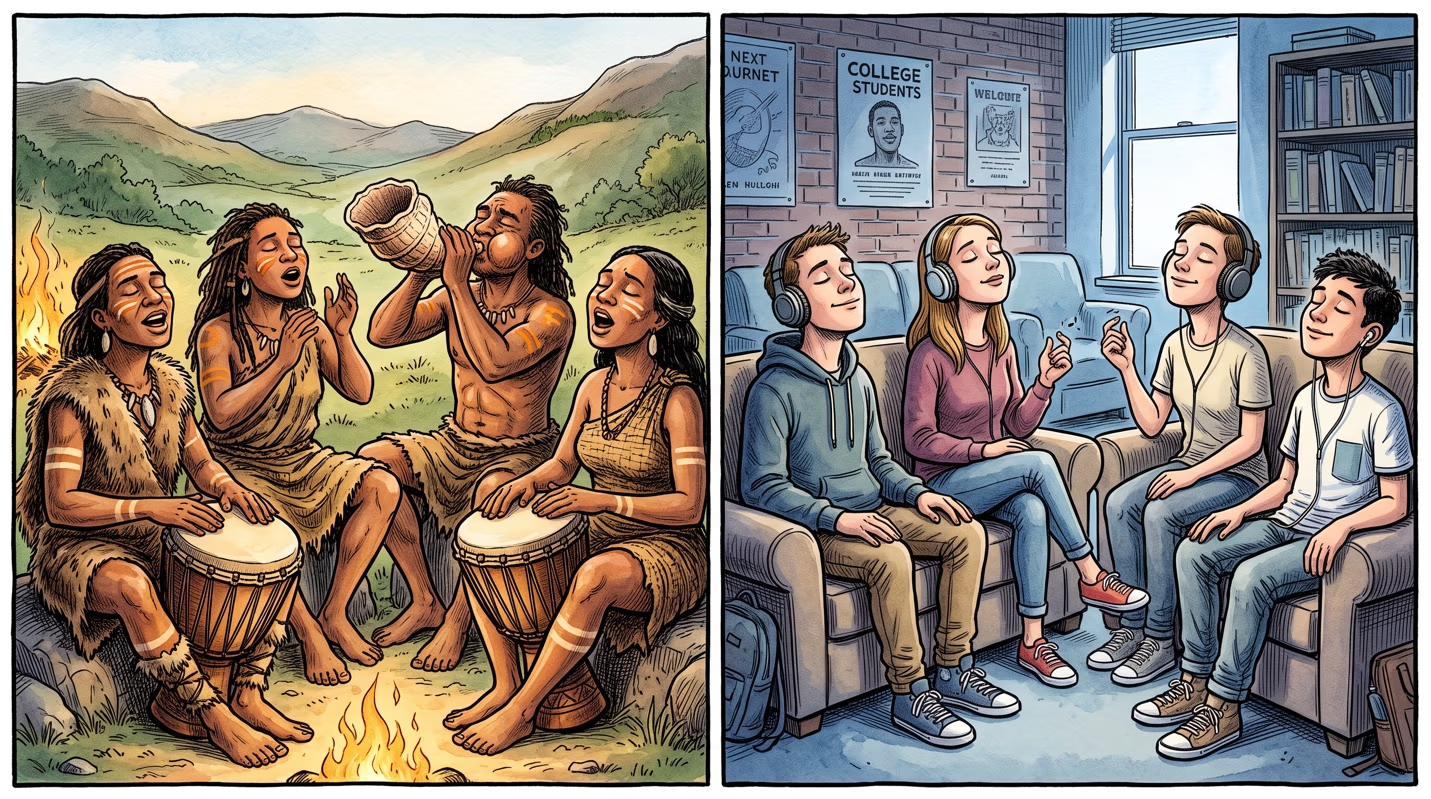
Radio had a fantastic and profound effect in retrieving the ordinary tribal consciousness of Germany in the 1920s and 1930s. TV, which is an addictive inner trip (regardless of program), sent American youth in pursuit of the occult and group awareness. Since there are no visual or quantifiable connections between radio and TV and their effects, Western man humbly and dumbly submits to their magic.
“The Violence of the Media”, in The Canadian Forum (1976), p 11
Year: 1976
Chapters:
Radio | Television

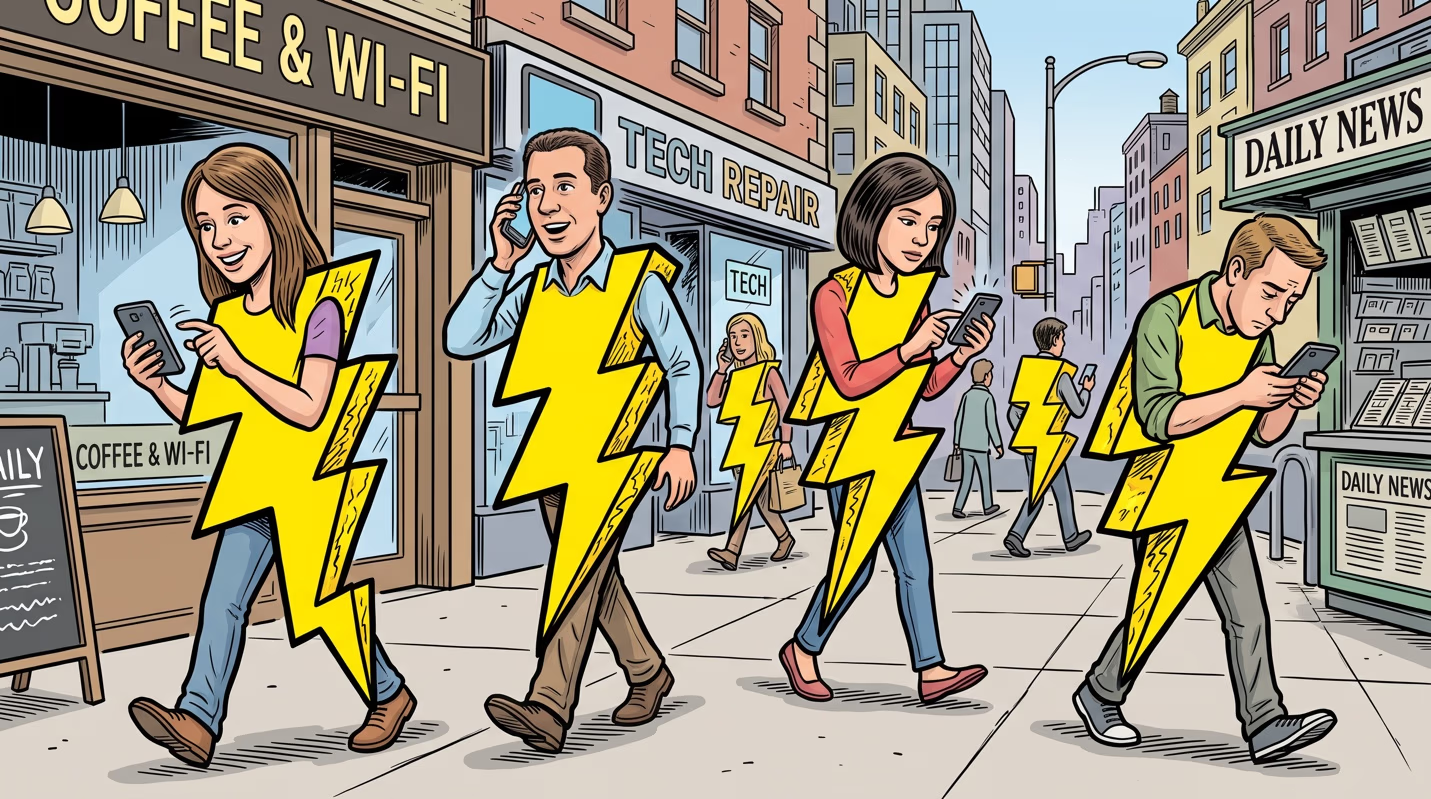




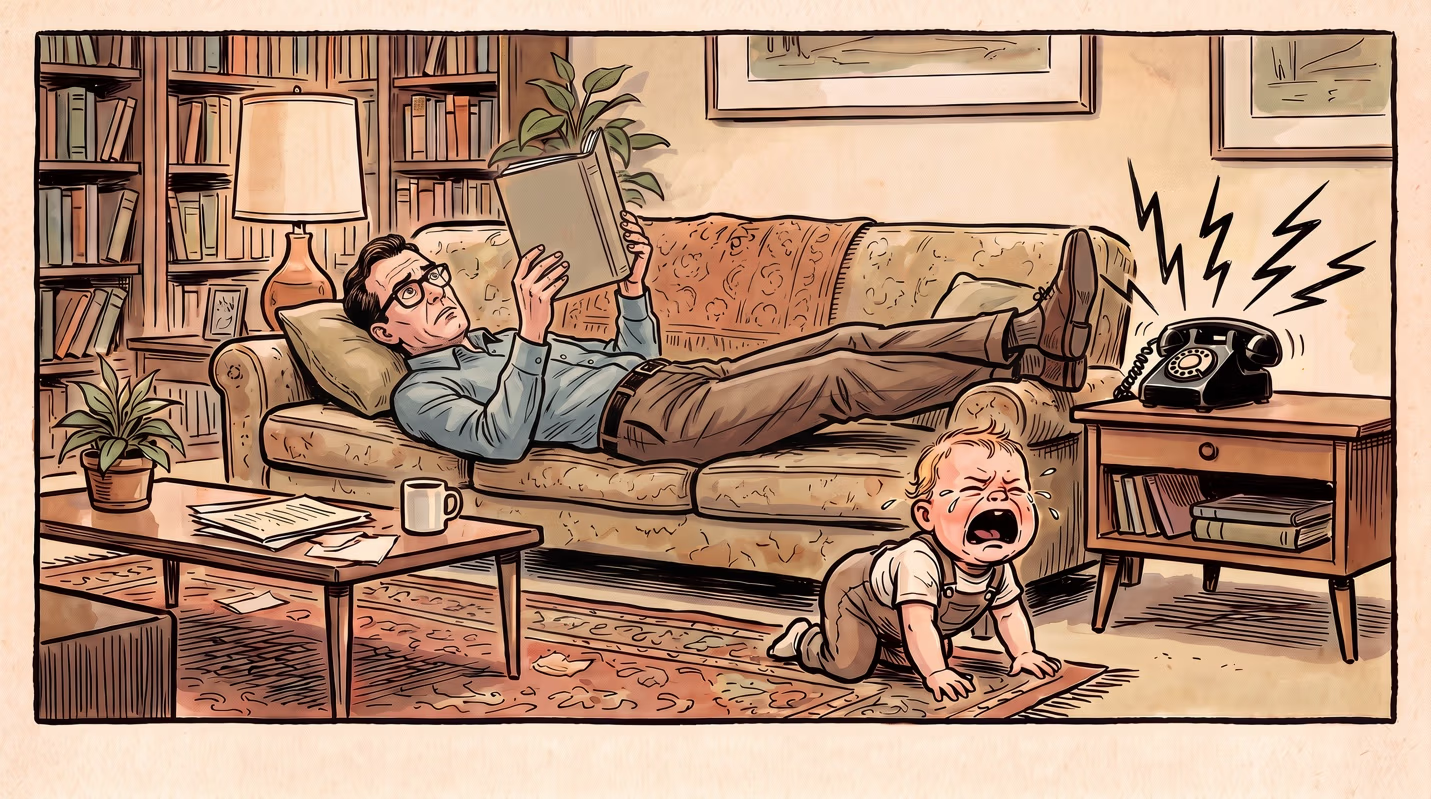
Take the telephone, it enhances the speed of the human voice; it causes the body as hardware to become obsolescent, retrieves telepathy (ESP, mysticism, the occult) and at last flips into the group voice or omni-presence.
“Euclidean Space to Outer Space: An Informal Discussion of the Effects”, in Et Cetera (1980), p 232
Year: 1980
At the same time, these same environmental services have recovered, or recuperated the entire world of the occult and ESP. Earlier, when Gutenberg set up his press, he scrapped the scribe and schoolmen and retrieved the whole of pagan antiquity.
“Innovation Is Obsolete”, in Evergreen Review, Vol. 15, No. 90, June (1971), p 48
Year: 1971
Chapter:
Occult
Returning from the visible to the occult we live in a world of submicroscopic analysis which, paradoxically, yields us not so much analytic as synesthetic awareness.
“Innovation Is Obsolete”, in Evergreen Review, Vol. 15, No. 90, June (1971), p 49
Year: 1971
Chapter:
Occult
P.S. Had you ever come across my little book From Cliche to Archetype? I think it is coming out in Paris this Spring. (Recently, while working on the ''laws of the media" and noticing that every form of human technology (a) enlarges some activity, (b) obsolesces some other activity, (c) retrieves an activity that had been obsolesced earlier, (d) flips into the opposite form when it reaches its limit) -- while noticing this pattern, I suddenly realized that Hegel had missed (e), the retrieval of an earlier obsolesced form that occurs with each innovation, e.g. today electricity retrieves the occult while pushing enlightenment to its limits, just as Gutenberg retrieved pagan antiquity while Pushing writing to its limits.
Letter to Tom and Janine Longan (December 20, 1973)”, p 2
Year: 1973
Chapter:
Occult
The Gutenberg age was seeking primitive Christianity and it retrieved pagan antiquity. The electric age, pursuing the path of enlightenment, retrieved the occult. Again, the electric age, attempting to implement the patterns of hardware industrialism by electric means, discarnated man.
“Letter to Tom and Janine Longan (January 9, 1974), p 1
Year: 1974
Chapter:
Occult
By the way, I want to mention a book to you, The Spear of Destiny by Trevor Ravenscroft, which concerns Wagner and the occult, and Hitler’s very considerable involvement in the higher mysteries of Satanism. It throws a good deal of light on the history of philosophy, especially since the Rosicrucians — including Hegel and Desjardines.
Letter to Professor Donald Theall, March 17, 1977, p 1
Year: 1977
Chapter:
Occult
This is a very irrational statement but it captures instantly this peculiar quality in an illogical world. A title like From Cliche to Archetype is simply a way of drawing attention to the fact that simultaneously, the most profound things and the most superficial things are the same. And when you scrap nature, you retrieve the most ancient forms of cliches from the world of the unconscious, and the world of the occult.
“Interview by Edwin Newman (1970)”, p 14
Year: 1970
Chapter:
Occult
And he had no trouble scrapping the old royalty, but he was unprepared for the retrieval - - it's one thing to scrap, turn into camp, or old-hat, some recent thing, but usually when you scrap, something recent like that, as print did when it scrapped the scribe and the scholastic philosopher, there' s always another kick, or flip, a retrieval, a sudden return of something long forgotten. It happened with us electrically with the coming back of horoscopes, ESP, and the occult.
“Interview by Edwin Newman (1970)”, p 21
Year: 1970
Chapter:
Occult
The parallel today has been the scrapping of old industrial hardware by the new electric information environments, and the unexpected retrieval of the occult.
“Erasmus: The Man and the Masks (1971)”, p 3
Year: 1971
Chapter:
Occult
Electricity brought back the occult.
“Marshall McLuhan interviewed by J. P. M. van Santen in Toronto, October 25 1972. (Transcription of tape recording part of the conversation.)”, p 5
Year: 1972
Chapter:
Occult
If Gandhi and Churchill would have been impossible without radio, what about the Beatles, and the shift from plain awareness to inner tripping, and to ESP, and to the occult? Is it possible that only in the UK has the figure of the programme remained unaltered by the changing ground of new media services?
“Letters The `Lusitania'”, in The Listener, 4 January (1973), p 19
Year: 1973
Chapter:
Occult
Electric information has carried enlightenment to the flip point! The world of bugging and X-ray has brought back the occult and the exterior world has yielded to the inner trip.
“My last three books (1976)”, p 2
Year: 1976
Chapter:
Chiasmus, Flips, Reversals
Since Einstein, science has moved steadily away from the left hemisphere into the orbit of the right hemisphere, toward the ranks of parapsychology and the occult. The gap between the two cultures has become a resonating interval, not unlike the "missing link" which also stimulated a great deal of speculation.
Letter to Kendrick Frazier, March 11, 1977, p 1
Year: 1977
Chapter:
Occult
Is it not a natural sequence that the age of enlightenment should be followed by a passion for the occult?
“For courses by newspaper”, March 17, 1978, p 1
Year: 1978
Chapter:
Occult
In the tribal world it is widely believed that the essence of a thing, of a person, resides deep within one's self as an inner quest, say an LSD trip, or in meditation, or in those transcendental unifications of experience associated with the occult and mysticism.
“McLuhan Looks at Fashion (1968)”, in On the nature of media, p 160
Year: 1968
Chapter:
Occult
With the new 'long chains' of 'causes,' each efficient cause results in another efficient cause, and so on The study of effects, because discontinuous, appears as occultism, as Newton observed.
“Proteus Unbound”, in Laws of media, p 51
Chapter:
Occult
Solipsism is going through the old motions, as if concepts still reigned, minus the ground-continuum of visual space: it is the prelude to transcendentalism and occultism, which bypass individualism (´a man all wrapped up in himself makes a very small package').
Laws of Media: The New Science with Eric McLuhan, (1988), p 59
Year: 1988
Chapter:
Occult
Husserl includes the occult or psychic experience, as indicating and as a part of transcendent consciousness.
Laws of Media: The New Science with Eric McLuhan, (1988), p 62
Year: 1988
Chapter:
Occult
Electricity scrapped industrialism and retrieved the occult.
Letter to J. G. Keogh (July 6, 1970), in Letters of Marshall McLuhan (1987), p 413
Year: 1970
Chapter:
Occult
Electric technology scrapped mechanical industry and retrieved the most primal and occult forms of awareness, dumping all the primitive societies of the world into the Western lap.
Letter to Barry Day (February 4, 1970), in Letters of Marshall McLuhan (1987), p 397
Year: 1970
Chapter:
Occult
The electric circuits of recent decades have "scrapped” the old industrial hardware and retrieved the occult.
Letter to D. Carlton WilliamsHe’s Doubtful (December 15, 1970), in Letters of Marshall McLuhan (1987), p 417
Year: 1970
Chapter:
Occult
On the phone "we are there" and "they are here", and so with radio and TV. Angelism and the occult alike are the by-products of electronics. Ecology is incidental to that.
“Letter to Edward T. Hall” (January 21, 1971), in Letters of Marshall McLuhan (1987), p 422
Year: 1971
Chapter:
Ecology
The trend toward increasing enlightenment by electric media has flipped us back into the world of the occult, that is, the world of horoscopes and hidden forces.
“Letter to the Editor, the Toronto Star” (July 24, 1974), in Letters of Marshall McLuhan (1987), p 503
Year: 1974
Survival now would seem to depend upon the extension of consciousness itself as an environment. This extension of consciousness has already begun with the computer and has been anticipated in our obsession with ESP and occult awareness.
Take Today with Barrington Nevitt (1972), p 14
Year: 1972
This pattern of incongruity had occurred with Gutenberg revival of antiquity, as it is now occurring with the electric revival of primitive occultism.
Take Today with Barrington Nevitt (1972), p 47
Year: 1972
Chapter:
Occult
Those who "play it by ear" are instantly aware of the effects of change. The same electric technology that has retrieved ESP and the occult for many levels and areas of American life has turned the kids away from "moreness," from glossy consuming to homespun and "camp" and "found" art.
Take Today with Barrington Nevitt (1972), p 100
Year: 1972
Chapter:
Occult
Much of what we call the occult or ESP today is simply the recovery of awareness of nonvisual ground for the figures and configurations of our visual civilization.
Take Today with Barrington Nevitt (1972), p 115
Year: 1972
Chapter:
Occult
Today, electronic retrieval of the occult horoscopic and the old movie stars alike is a built-in feature of the information environment.
Take Today with Barrington Nevitt (1972), p 122
Year: 1972
Chapter:
Occult
As my recent book, Cliche to Archetype, indicates, every new innovational surround is a cliche that scraps its immediate predecessor while retrieving much older forms, e.g. the electric surround has scrapped a lot of mechanical hardware but retrieved the occult and the horoscopic.
Letter to To Mr. L. A. Morse (December 9, 1970), p 1
Year: 1970
Chapter:
Occult
Electric circuits scrap wheels and industrial hardware but retrieve the occult.
Letter to Mr. David Standish (July 7, 1971), p 1
Year: 1971
Chapter:
Occult
Electric circuitry has obsolesced industrial hardware and extended its reign to every corner of the globe. Electric circuitry may have phased out the assembly line, but it has retrieved the inner life and the occult.
“IF IT WORKS, IT’S OBSOLETE”, in Letter to Mr. Robert Manning (July 21, 1971), p 1
Year: 1971
Chapter:
Occult
The computer has revived the “I Ching”, the book of change in China, it has revived some of the most ancient forms of Medicine, 4000 years old, in Japan, it is revived in Europe world, the coming year, has been dubbed the year of the witch, in book publishing, because it is the world of the occult.
“ADDRESS TO THE AUTHOR'S LUNCHEON (1966)”, 20:35 ff
Year: 1966
Chapter:
Occult
The electric age, this resonant acoustic time, retrieves, above all, the occult. The occult is by definition the form that is congenial to acoustic man, and he, therefore, appears to be superstitious.
“Art as Survival in the Electric Age”, reprinted in Understanding Me (2003), p 222
Year: 2003
Chapter:
Occult
He has encountered the public, the collective unconscious, and dubbed it "the mighty Mother," in accordance with the occultism of his time. It is Joyce's "Lead kindly Fowl" (foule, owl, crowd), which we have seen earlier.
“On Pope’s Duncaid”, in The Gutenberg Galaxy (1962), p 257, reprinted in The Interior Landscape (1969), p 171
Year: 1962
Chapter:
Occult
"Artists are the antennae of the race but the bullet-headed many will never learn to trust their great artists".
Oft-cited, from Ezra Pound
"The artist is always engaged in writing a detailed history of the future
because he is the only person aware of the nature of the present."
Oft-cited, from Wyndham Lewis
Oft-cited, from Wyndham Lewis
“The spirit of advertisement and boost lives and has its feverish being in a world of hyperbolic suggestion.”
Oft-cited, from Wyndham Lewis
“What is demanded is a change in our imaginative picture of the world…”
Oft-cited, from Bertrand Russell
“The West shall shake the East awake… while yet ye have the night for morn…”
Oft-cited, from James Joyce (FW)
“…the charge of the light barricade…” (McLuhan: Joyce’s’s take on TV)
Oft-cited, from James Joyce (FW)
“As for the visibility of vicinals, when invisible, they are invincible.” (McLuhan: Joyce’s take on environments)
Oft-cited, from James Joyce (FW)
“I wouldn’t have seen it if I hadn’t believed it.” (inaccurately attributed to McLuhan)
Oft-cited, attributed more accurately, to Ashley Brilliant
Chapter:
Rear View Mirror
“The eye—it cannot choose but see; we cannot bid the ear be still; our bodies feel, where’er they be, against or with our will.”
Oft-cited, from William Wordsworth
“Thirty spokes are made one by holes in a hub,
By vacancies joining them for a wheel’s use;
The use of clay in molding pitchers
Comes from the hollow of its absence.
Doors, windows, in a house,
Are used for their emptiness.
Thus we are helped by what is not,
To use what is.”
“Tao Te Ching”
Oft-cited, from Lao Tze
The use of clay in molding pitchers
Comes from the hollow of its absence.
Doors, windows, in a house,
Are used for their emptiness.
Thus we are helped by what is not,
To use what is.”
“Tao Te Ching”
Oft-cited, from Lao Tze
By the way, there is one thing that is enormously faster than light or electricity, and that is thought. That is why pattern recognition is only possible to the human mind.
Marshall McLuhan
Letter to Tom Easterbrook, 1972
Letter to Tom Easterbrook, 1972
Year: 1972
“To the blind all things are sudden."
Oft-cited, from Alex Leighton, quoted in Through the Vanishing Point, with Harley Parker (1968), p 81
Year: 1968
“There is absolutely no inevitability as long as there is a willingness to contemplate what is happening.”
Oft-cited, from Afred North Whitehead, quoted in The Medium Is the Massage (1967), p 25
Year: 1967
“The major advances of civilization are processes that all but wreck the societies in which they occur.”
Oft-cited, from Afred North Whitehead, quoted in McLuhan Pro and Con (1968), p 246
Year: 1968
“What it is possible for technology to do technology will have done.”
Oft-cited, from Archibald MacLeish, Saturday Review, July 23, 1968; quoted in Quoted in Culture Is Our Business (1970), p 260
Year: 1968
Information overload equals pattern recognition.”
“Media Ad-vice”, Introduction to Subliminal Seduction by Bryan Wilson Key, 1972
Year: 1972
Chapter:
Information Overload
“And who are you?” said the Caterpillar.
‘I–I hardly know, sir, just at present–at least I know who I was when I got up this morning, but I think I must have been changed several times since then.””
Oft-cited, from Lewis Carroll, Alice’s Adventures in Wonderland (1865)
“Today man has developed extensions for practically everything he used to do with his body. The evolution of weapons begins with the teeth and the fist and ends with the atom bomb. Clothes and houses are extensions of man's biological temperature-control mechanisms. Furniture takes the place of squatting and sitting on the ground. Power tools, glasses, TV, telephones, and books which carry the voice across both time and space are examples of material extensions. Money is a way of extending and storing labor. Our transportation networks now do what we used to do with our feet and backs. In fact, all man-made material things can be treated as extensions of what man once did with his body or some specialized part of his body.
Oft-cited passage from Edward T. Hall, The Silent Language (1959) p 79 Partially cited in The Gutenberg Galaxy (1962), p 9
Year: 1959