Viewing chapter Poetry (75 quotes)
It was some time after printing began that authors or readers discovered "points of view." Earlier, it was shown how Milton was the first to introduce visual perspective into poetry, and his work had to wait till the eighteenth century for acceptance.
The Gutenberg Galaxy: The Making of Typographic Man, (1962), p 136
Year: 1962
But the paradox is that the blank verse, being one of the first kinds of "spoken," as opposed to sung, poetry is very much faster than song, or perhaps even than speech itself.
The Gutenberg Galaxy: The Making of Typographic Man, (1962), p 198
Year: 1962
The divorce of poetry and music was first reflected by the printed page.
The Gutenberg Galaxy: The Making of Typographic Man, (1962), p 200
Year: 1962
Chapter:
Print
A newspaper is a corporate symbolist poem, environmental and invisible, as poem.
Culture Is Our Business, (1970), p 192
Year: 1970
Chapters:
Goodbye Linearity | Symbolists
Such is also the case in symbolist poetry whose completion of effect from moment to moment requires the reader to participate in the poetic process itself.
The Gutenberg Galaxy: The Making of Typographic Man, (1962), p 277
Year: 1962
The present volume has employed a mosaic pattern of perception and observation up till now. William Blake can provide the explanation and justification of this procedure. Jerusalem, like so much of his other poetry, is concerned with the changing patterns of human perception. Book II, chapter 34, of the poem contains the pervasive theme:
If Perceptive organs vary, Objects of Perception seem to vary; If Perceptive Organs close, their Objects seem to close also.
“THE GALAXY RECONFIGURED or the Plight of Mass Man in an individualist Society”, in The Gutenberg Galaxy: The Making of Typographic Man, (1962), p 265
Year: 1962
Chapter:
Pattern Recognition
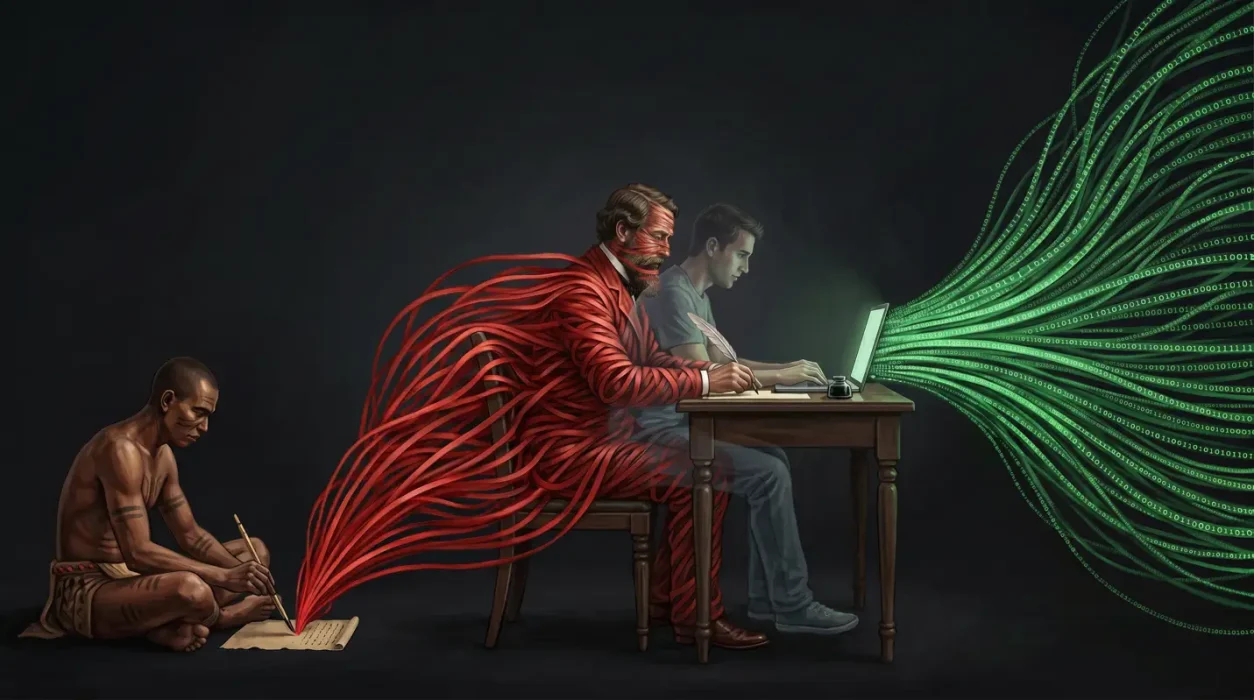
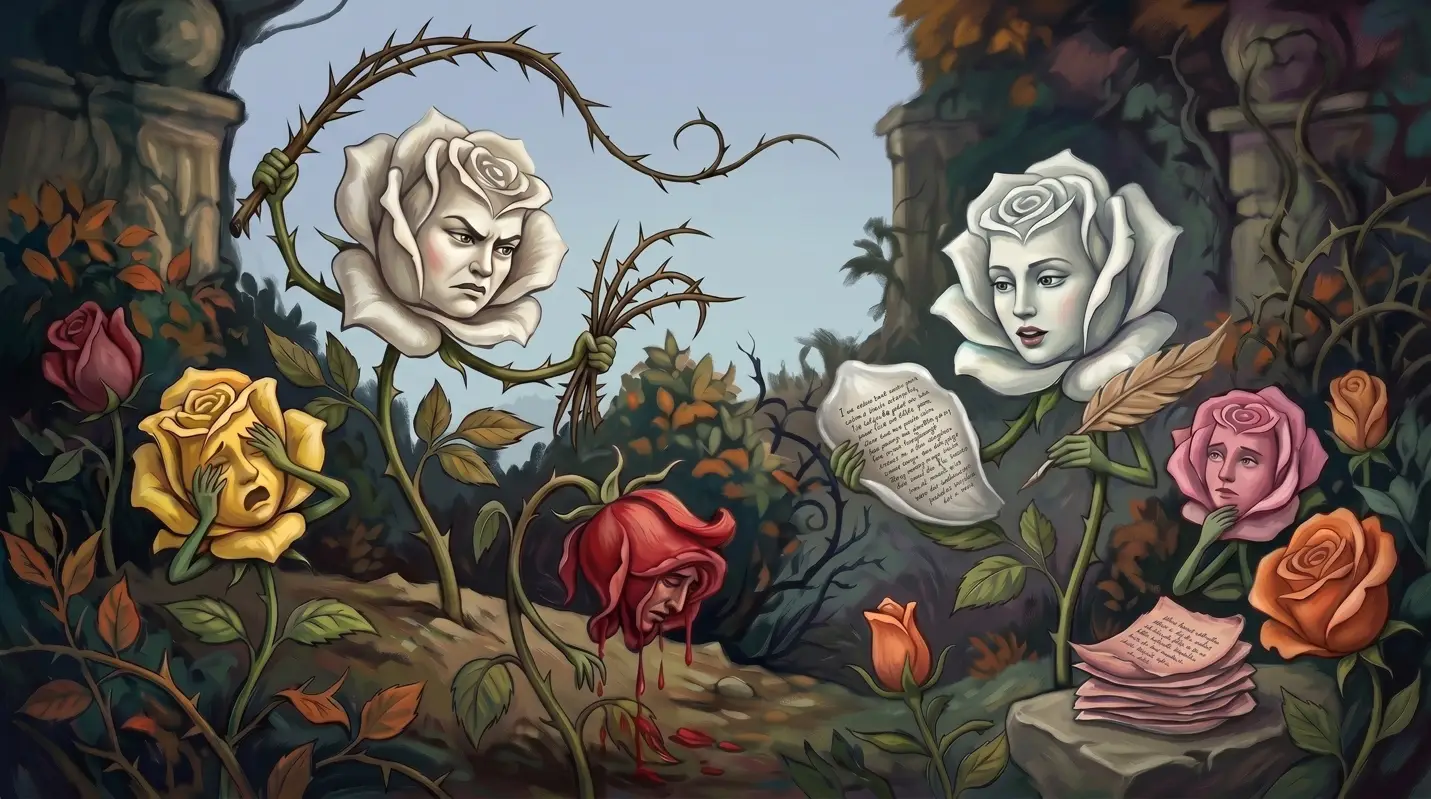


Poetry is the means of opening the doors of perception on areas of experience otherwise inaccessible. The press provides the individual with pap and packaged opinions. In its corporate design of invisible patterns, however, the daily press also provides new dimensions that are only revealed in poetry. Byron's
Don Juan is an early newspaper mock epic. Browning's Ring and the Book is explicitly a newspaper poem, as Ezra Pound acknowledged in the Cantos.
Culture Is Our Business ,(1970), p 270
Year: 1970
For the student of the arts and of politics it is instructive to observe how many of the techniques developed for example, in picturesque poetry, not only appear in the popular novel but in the press.
“Technology and Political Change,” International Journal, Vol 7, No. 3, Summer, (1952), p 191
Year: 1952
The symbolists and the painters of the same time answered HD pictorial effects with LD tactile effects in paint and in poetry.
General Introductions to Charts, in NAEB Report on Understanding New Media, June (1960), p 22
Year: 1960
The telegraph, like symbolist poetry, is in LD It works by minimal means creating maximal effects In SC.
Telegraph (Chart), in NAEB Report on Understanding New Media, June (1960), p 95
Year: 1960
The advantage of using two arts, both poetry and painting, simultaneously is that one permits a journey inward, the other a journey outward to the appearance of things.
Through the Vanishing Point with Harley Parker (1968), p 2
Year: 1968
Although The Child's Conception of Space by Piaget and Inhelder explores the changing spatial experience of children, there has so far been no guide to the changing spatial experience that adults typically encounter in poetry and painting.
Through the Vanishing Point with Harley Parker (1968), p 3
Year: 1968
The poet here is exercising his priestly powers of purifying the wells of existence, exerting his primary imagination which is the agent of all perception, not the secondary imagination which brings art into existence as an echo of the functions of perception.
“Coleridge as Artist” (1957) in The Interior Landscape (1969), p 120
Year: 1957
Chapter:
Perception
The doctrine of the aesthetic “moment” has a continuous history from the eighteenth century to the present, and a brief sketch of its development may serve to illuminate and unify a considerable diversity of practice in landscape painting and picturesque poetry. Often noted from Montaigne onward is the growing interest in the anatomy of states of mind which in Giambattista Vico reached the point of stress on the importance of reconstructing by vivisection the inner history of one’s own mined. A century separates Vico’s Autobiography and Wordsworth’s Prelude, but they are products of the same impulse. Another century, and Joyce’s Portrait carries the same enterprise a stage further. Vico generalized the process as a means of reconstructing the stages of human culture by the vivisection and contemplation of language itself.
“The Aesthetic Moment in Landscape Poetry” (1952), in The Interior Landscape (1969), p 161
Year: 1952
Chapter:
Language
Yet Gerard Manley Hopkins was crusading for tactile stress in word use and for vigorous oral poetry exactly at the time that Cezanne was giving tactile values to the retinal impression.
The Gutenberg Galaxy: The Making of Typographic Man , (1962), p 83
Year: 1962
With this new stress on the visual gradient, we enter the world that has been called neo-classical" in both painting and poetry
Through the Vanishing Point with Harley Parker (1968), p 19
Year: 1968
In the same way, a remarkable proportion of the stylistic changes in twentieth-century poetry have stemmed from Ireland.
Liturgy And Media” in The Critic Vol.31, No. 3, January-February (1973), p 17, reprinted in reprinted in The Medium and the Light: Reflections on Religion (1999), p 122
Year: 1973
This is why, I said to myself, French dramatic poetry is so often rhetorical, for what is rhetoric but the will trying to do the work of the imagination?
Liturgy And Media” in The Critic, Vol.31, No. 3, January-February (1973), p 18, reprinted in reprinted in The Medium and the Light: Reflections on Religion (1999), p 123
Year: 1973
Poetry and Song are major means by which speech is purified and strengthened, and poetry and music are extensions of speech, so it is not by chance that most of the English poetry and song of the twentieth century have come out of Ireland and the American south. T. S. Eliot would have been the first to insist upon his debt to W. B. Yeats and James Joyce.
Liturgy And Media” in The Critic, Vol.31, No. 3, January-February (1973), p 18, reprinted in reprinted in The Medium and the Light: Reflections on Religion (1999), p 123
Year: 1973
Chapters:
Eliot, T.S. | Music
A language is the encoded form of the collective perceptions and wisdom of many people. And, poetry and song are the major means by which a language purifies and invigorates itself.
"Liturgy and Media: Third conversation with Piere Babin" from Autre homme, autre chrétien å I'åge électronique,Lyon: Editions du Chalet,(1977), reprinted in The Medium and The Light (1999) P 145
Year: 1977
A poem in itself functions dramatically, not strategically or persuasively. It is for contemplation, and functions for the spectator or reader as a means of extending and refining moral perception or dramatic awareness.
“Poetic vs. Rhetorical Exegesis: The Case for Leavis Against Richards and Empson” (1944). p 276
Year: 1944
Chapter:
New Criticism
What is poetry? The essential qualities of poetry are economy or compactness, concereteness or “particularness,” and intensity… What makes poetry unique is that it exists in and through words; language is its medium, as movement is that of dance, sound that of music, and line and color that of painting… An ever-closer attention to words – to individual words – develops a feeling for language that makes possible the discovery of poetry and enable us to hear the voices of poetry.
The Voices of Literature, with Richard J. Schoeck (1964), p 233
Year: 1964
The telegraph had already created new forms of the printed word, in the newspaper and in poetry alike. By making it possible for information to be gathered simultaneously from every quarter of the globe, the telegraph press took on a mosaic and essentially acoustic character of simultaneity that occurred in Symbolist poetry as well.
“Liturgy and the Microphone”, (1974), p 111
Year: 1974
Chapter:
Telegraph
Anybody who has examined the development of new awareness in poetry and painting resulting from the forms of book, press and photograph will know that the sensibility of the young of today is being reshaped more rapidly than we are forming concepts about the matter.
“David Riesman and the Avant-Garde,” in Explorations 7, 1957, p 116
Year: 1957
The early edition of Sweeney Agonistes carried the epigraph: “Wanna Go Home Baby?” Mr. Eliot was one for whom the relations between poetry and speech and speech and song have always been a focal point of attention.
“Jazz and Modern Letters,” in Explorations 7, 1957, p 1
Year: 1957
In “The Music of Poetry” [T.S. Eliot] reflects that it "may appear strange, that when I profess to be talking about the “music" of poetry, I put such emphasis upon conversation.”
“Jazz and Modern Letters,” in Explorations 7, 1957, p 1
Year: 1957
But poetry remains one person talking to another; and this is just as true it you sing it, tor singing is another way of talking.
“Jazz and Modern Letters,” in Explorations 7, 1957, p 1
Year: 1957
In one respect, poetry approaches song in slowing down ordinary speech.
“Jazz and Modern Letters,” in Explorations 7, 1957, p 1
Year: 1957
Merely to mention the "blues” in connection with Eliot's early poetry is enough to evoke the quality of Prufrock ae well as much of the music of the ideas and the organization of images in many of the poems Before Ash-Wed nesday.
“Jazz and Modern Letters,” in Explorations 7, 1957, p 2
Year: 1957
The children of technological man respond with untaught delight to the poetry of trains, ships, planes, and to the beauty of machine products.
“Media Log” in Counterblast (1969), p 50
Year: 1969
Many of his typical effects resulted from pouring the visual masques and pageants of the court and high-life through the new medium of spoken or orated poetry.
The Effect of the Printed in the 16th Century Book on Language, Explorations 7, 1957, pp 103-104
Year: 1957
Print made possible the rapid reading of verse. In speeding up song, print fostered oratorically delivered poetry.
“The Effect of the Printed in the 16th Century Book on Language”, in Explorations 7, 1957, p 104
Year: 1957
When Donne and the Metaphysicals took over this new spoken verse for lyric poetry, they took over its heavy visual emphasis.
“The Effect of the Printed in the 16th Century Book on Language”, in Explorations 7, 1957, p 104
Year: 1957
They have ]earned the grammars of these new media and assimilated them to English grammar and to the tasks of poetry. To say that educators must do the same is a bit too obvious.
Knowledge, Ideas, Information, and Communication (1958), p 229
Year: 1958
But by 1870 when Rimbaud made his verbal landscapes (which he called illuminations or colored plates) the newspaper format had revolutionized poetry.
Counterblast (1969), p 113
Year: 1969
The difficulty which most people experience with the poetry of Rimbaud, Mallarmé, Eliot, Joyce, or the difficulty they imagine to be present in the work of Picasso or abstract art, is exactly the difficulty a listener might have in trying to listen to a disc played at the wrong speed.
Counterblast (1969), p 113
Year: 1969
Whereas the Romantics had developed outer landscape in poetry and painting as a means of defining and controlling inner mental states, the symbolists, by fragmenting the realistic Romantic landscapes, were able to use the pieces as heuristic probes.
“The Emperor´s Old Clothes” (1966), in McLuhan Unbound (2017), p 6
Year: 1966
One major difference between the age of Copernicus and that of Einstein is the fact that there was nobody who could apply the ideas of Copernicus to anything but poetry and painting. Today the most abstruse theories go into action even before they have had their day in science fiction.
“The Humanities in the Electronic Age” (1961), in McLuhan Unbound (2017), p 18
Year: 1961
This telegraph pattern was soon transferred to poetry, painting, and music, to the bewilderment of consumer-oriented people.
“What Fundamental Changes Are Foreshadowed In The Prevailing Patterns Of Educational Organization And Methods Of Instruction By The Revolution In Electronics?”, paper presented to Discussion Group 16 at the Fourteenth National Conference on Higher Education, March 3, 1959, p 5
Year: 1959
[What is meaning?] ‘The dance of the intellect among the words’ (Ezra Pound)
Laws of Media: The New Science with Eric McLuhan, (1988), p 186
Year: 1988
Chapter:
Pound, Ezra
The only advice given here about reading poetry aloud is to "read slowly"—good as far as it go.
Letter from Cambridge to Elsie, Herbert, and Maurice McLuhan, October 14, 1934, in Letters of Marshall McLuhan (1987) p 25
Year: 1934
But all of them try to read poetry—Forbes hasn’t started yet—and do it only respectably. That is firmly (doggedly determined to weigh scrupulously each syllable) and without any transitions of manner to suit the poem.
Letter from Cambridge to Elsie, Herbert, and Maurice McLuhan, October 14, 1934, in Letters of Marshall McLuhan (1987) p 25
Year: 1934
To get a better view of this process, let me take you back to that point in the nineteenth century where we saw Edgar Poe discover the poetic process — a discovery which included the new symbolist poetry (very high-brow) and the new detective thriller (very low-brow).
Catholic Humanism and Modern Letters” The McAuley Lectures: Christian Humanism in Letters, Saint Joseph College, West Hartford Connecticut, (1954), p 58, reprinted in The Medium and the Light (1999), p 163.
Year: 1954
Thus, symbolist poetry gave rise at once to modern pictorial advertising.
Catholic Humanism and Modern Letters” The McAuley Lectures: Christian Humanism in Letters, Saint Joseph College, West Hartford Connecticut, (1954), p 58, reprinted in The Medium and the Light (1999), p 163.
Year: 1954
Much modern poetry today is written to be sung. The boundaries between the written and the oral are becoming very elusive.
From Cliché to Archetype with Wilfred Watson (1970), p 83
Year: 1970
Today the entire world of rock poetry and of the related forms of jazz, of song and speech and dance, has created a complex world of genre which no professor of literature can ignore if he has any concern about maintaining contact with his students.
From Cliché to Archetype with Wilfred Watson (1970), p 87
Year: 1970
In modern poetry the concern with cause and effect in a society of rapid change brought the little epic form back into prominence in Pound, Eliot, and Joyce, among others”
From Cliché to Archetype with Wilfred Watson (1970), p 87
Year: 1970
Chapter:
Harmony
Until Newton the Senecans had dominated the literary scene from Montaigne to Pascal and from Donne to Pope. Their preoccupation was with the literary techniques for arresting and projecting some phase of the human mind: to arrest in order to project, and to project in order to contemplate. Like the inventors of cinema at the beginning of this century they hit upon the technique of stylistic discontinuity as a means of arresting a moment of consciousness. The movie camera takes a thousand still shots in order to capture the aspects of a brief moment. The style coupé and the “cutting period” attempted something comparable in the essay and the poem. But to have carried this art further than Pope was probably impossible. At any rate the advent of Newton’s Optics diverted artistic effort from poetic statement to the use of external landscape as a means of projecting and controlling states of mind under the guidance of two major concepts. The first of these derived from the study of the visual harmonics of the spectrum which led to a revival of the classic images of the harps of Aeolus and Memnon. If the surfaces of matter were varied prisms for revealing the qualities of light, then the entire visible and audible world could be conceived as a species of visual music. The second concept is related to the first. For, if the external world is attuned to the mind of man then the whole of Nature is a language and the poet is a pontifex or bridge between the two worlds.
“Coleridge as Artist” (1954), in The Interior Landscape (1969), pp 119-120
Year: 1954
Chapters:
Between Two Ages | Coleridge | From Tribal to Literate | Hardware / Software | Today’s Transition
��and the greatest musical bent of our own time has been to restore harmony among the sister arts of music and poetry.
“Printing and Social Change” (1959), in McLuhan Unbound (2017), p 24
Year: 1959
It must have been my training in Symbolist poetry and criticism that led me to adopt the formalist and structuralist approaches to art and technology alike.
Letter to Harry Skornia, March 25, 1974, in Letters of Marshall McLuhan (1987), p 491
Year: 1974
The poetry of the Symbolists, from Baudelaire until now is massive and explicit testimony to sensory change.
Letter to Frank Kermode, March 4, (1971), in Letters of Marshall McLuhan (1987), p 426
Year: 1971
Until stated and publicly recognized for what it is, poetry and the arts can't exist in America. Mere exposure to the arts does nothing for a mentality which is incorrigibly dialectical.
Letter to Ezra Pound, December 21, (1948), in Letters of Marshall McLuhan (1987), p 207
Year: 1948
For my part I confess I can enjoy poetry more when I go to it without thinking of all Shelley's rhapsodical claims for it. It falsifies the value of ordinary living to claim that all those who have never read a line of poetry are outcasts, unwashed and unregenerate.
Letter to Elsie McLuhan, December 17, (1934), in Letters of Marshall McLuhan (1987), p 47
Year: 1934
Now it is my firm belief that if you had the time to study carefully some of his poetry and some of Yeats and Gerard Manl[e]y Hopkins, (whose poems I bought with the last of my prize money) you could take the elite London by storm.
Letter to Elsie, Herbert, and Maurice McLuhan, December 6, (1934), in Letters of Marshall McLuhan (1987), p 42
Year: 1934
Because the poetry and criticism of Eliot established central criteria in English literature for the first time since Johnson. But around such authoritative figures Bloomsbury can only chant: "Give us our latch-keys. We are twenty-one."
“Review Mr. Connolly and Mr. Hook”, in The Sewanee Review, Vol. 55, No. 1, Jan – Mar 1947, p169
Year: 1947
Browning succeeded in getting the accents of human speech back into poetry in a way which perhaps prepared the vogue of Donne and which can be found fruitfully present in the early Pound and Eliot.
“The New York Wits”, in The Kenyon review, Vol. 7, No. 1, Winter, 1945, p 14
Year: 1945
The student of symbolist art and poetry will recall that the word symballein indicates a placing together without connections of two words or situations.
“Figures and Grounds in Linguistic Criticism”, book review, in Et Cetera, Jan 1, 1979, p 290
Year: 1979
Yeats, no doubt, felt that he was in the company of Wordsworth in rebelling against the printed in favor of the spoken word in poetry.
“Yeats and Zane Grey”, book review, in Renascence, Spring 1959, p 167
Year: 1959
The Greek, in this way, developed the notion of objectivity and detachment, the separation of the knower from the object of his awareness. This is the beginning of the scientific method and the source of the dichotomy the Greeks created between subjective thinking as found in art and poetry, and objective thinking as exemplified by philosophy and science. In art, percept precedes concept, while in science, method dominates both.
“The Alphabet, Mother of Invention” with Robert K. Logan, in Et Cetera, (1977), p 378
Year: 1977
Back in the 19th century Edgar Allan Poe had presented us with the detective story as an analogue of poetic composition. Already in the age of the telegraph, it had occurred to him that when information is simultaneous (electric speed) the beginning and end of any situation are interchangeable. He therefore proposed that we should write poetry backwards. starting with the effect we wish to obtain before proceeding to discover the causes necessary for producing that effect. This is also the pattern of detective fiction in which the writer necessarily begins with the solution to the crime, writing the story backward in order to fit the crime mysteriously.
“Politics As Theatre,” in Performing Arts In Canada, Volume 10, Number 4, 1973, p 14
Year: 1973
Rimbaud invented the newspaper landscape poem in 1870, giving the world a new art-form which provided luminous interpretation of the new technology. But many of his readers still profess to find themselves baffled by his art. This can only mean that they are equally baffled by their daily paper. And this is quite likely.
“The Subliminal Projection Project” (1957), p 196
Year: 1957
Poetry can have a visual rather than an auditory bias as in the poetry of Wordsworth.
“Why The Tv Child Cannot See Ahead”, in The Man and His Message (1989), p 126
Year: 1989
What the Greeks meant by "poetry" was radically different from what we mean by poetry. Their "poetic" expression was a product of a collective psyche and mind.
The Medium is the Massage with Quentin Fiore, 1967, p 113
Year: 1967
Is it possible to teach modern poetry without recognition of these dance-song forms that translate the sounds of the city into the rhythms of English?
“Roles, Masks and Performances (1971)”, reprinted in McLuhan Unbound number 17 (2005), p 25
Year: 1971
Poe had confronted the poetic process in a way entirely consistent with the new electric speed of events and reporting. He simply pointed to the possibility of writing poetry backwards, starting with the effect desired and then proceeding to discover the "causes" or means for the desired effect.
“At the Moment of Sputnik” (1972), in Marshall McLuhan: the Man and His Message (1989), p 73
Year: 1972
Paradoxically, stream of consciousness offered the reader a means of making rather than of matching.
“The Emperor´s Old Clothes” (1966), in McLuhan Unbound, No. 20 (2017), p 6
Year: 1966
They respond to the poetry of movement and their idea of community is radically different from that of any other era. To become an errant knight or a nomad is easy today thanks to the telephone, the car, and the jet.
“Religion and Youth: Second Conversation with Pierre Babin”, reprinted in The Medium and the Light: Reflections on Religion (1999), p 97
Year: 1999
That, for example, is the way T.S. Eliot composes his poems. Each is slanted to a different effect. So that it is not something his poems say but something they do that is essential about them. And the same is true of most significant painting and poetry since Poe and Baudelaire.
The Mechanical Bride (1951), p 106
Year: 1951
A generation earlier Edgar Allan Poe hit upon this principle of "reconstruction," or reasoning backwards, and made of it the basic technique of crime fiction and symbolist poetry alike.
The Mechanical Bride (1951), p 106
Year: 1951
Crowds are intoxicating. Statistics and production charts are part of the dithyrambic poetry of industrial man.
The Mechanical Bride (1951), p 96
Year: 1951
The visual makes for the explicit, the uniform, and the sequential in painting, in poetry, in logic, history.
The Gutenberg Galaxy (1962), p 57
Father Hopkins, the English poet, may have been trying to substitute syllabic for prosodic stress in English poetry, just as Frank Lloyd Wright seems to have substituted American space for European space in architecture.
Liturgy And Media” in The Critic, Vol.31, No. 3, January-February (1973), p 20, reprinted in The Medium and the Light: Reflections on Religion (1999), p 125-126
Year: 1973
And it was Newton's Opticks which gave these techniques in poetry and painting such early impetus.
“Space, Time and Poetry”, in Explorations 4, (1955), p 56
Year: 1955
Philip Marchand, author of the biography Marshall McLuhan: the Medium and the Messenger (1989):
The statement I remember most clearly, in this respect — and the statement I consider his most valuable teaching legacy — was a flat copulative formula: “Modern poetry is resonance.”
In Who Was Marshall McLuhan? by Barrington Nevitt and Maurice McLuhan, 1994, p 72
Year: 1994