Viewing chapter Politics and Government (53 quotes)
The War of Independence of 1776, Innis explains, was the clash between centre and margin, which is identical with the conflict between conformity and non-conformity, politics and literature, in the sixteenth century.
The Gutenberg Galaxy (1962), p. 237
Year: 1962
It is clear that the book was yet far from having become the main mode of politics and
society. It was still a surface fact which had only begun to obscure the traditional lineaments of Western society.
The Gutenberg Galaxy (1962), p 254
Year: 1962
Politicians use glop. It just sits there. It creates a link between their pillows and your hair. That’s their way to feature a nest.
Culture Is Our Business, 1970, p 294
Year: 1970
NBC and CBS could easily become the political “parties” of the future, just as the New York Central and the Pennsylvania railroads were once the political parties of the nineteenth century.
Culture Is Our Business, (1970), p 52
Year: 1970
But his wit and his politics combined with that dropping of the puritan tendency, but retention of the puritan tone which marked his class and generation, lifted him into a sphere which was utterly opposite to that from which he came.
“The Marfleet Lectures”, March 16-17 (1967), reprinted in Understanding Me (2003), p 107
Year: 1967
Under electric conditions of instant association of everybody with everybody, there is not only a great loss of private identity but a corresponding decline of ethics and values in the private sector...The predicament, then, of Nixon and his associates is to have got
caught in this speedy transition from the slack and sleazy private ethics to the novelty of an austere public ethic, which accompanies the new politics of total involvement and participation.
“Politics As Theatre,” in Performing Arts In Canada, Volume 10, Number 4, 1973, p 15
Year: 1973
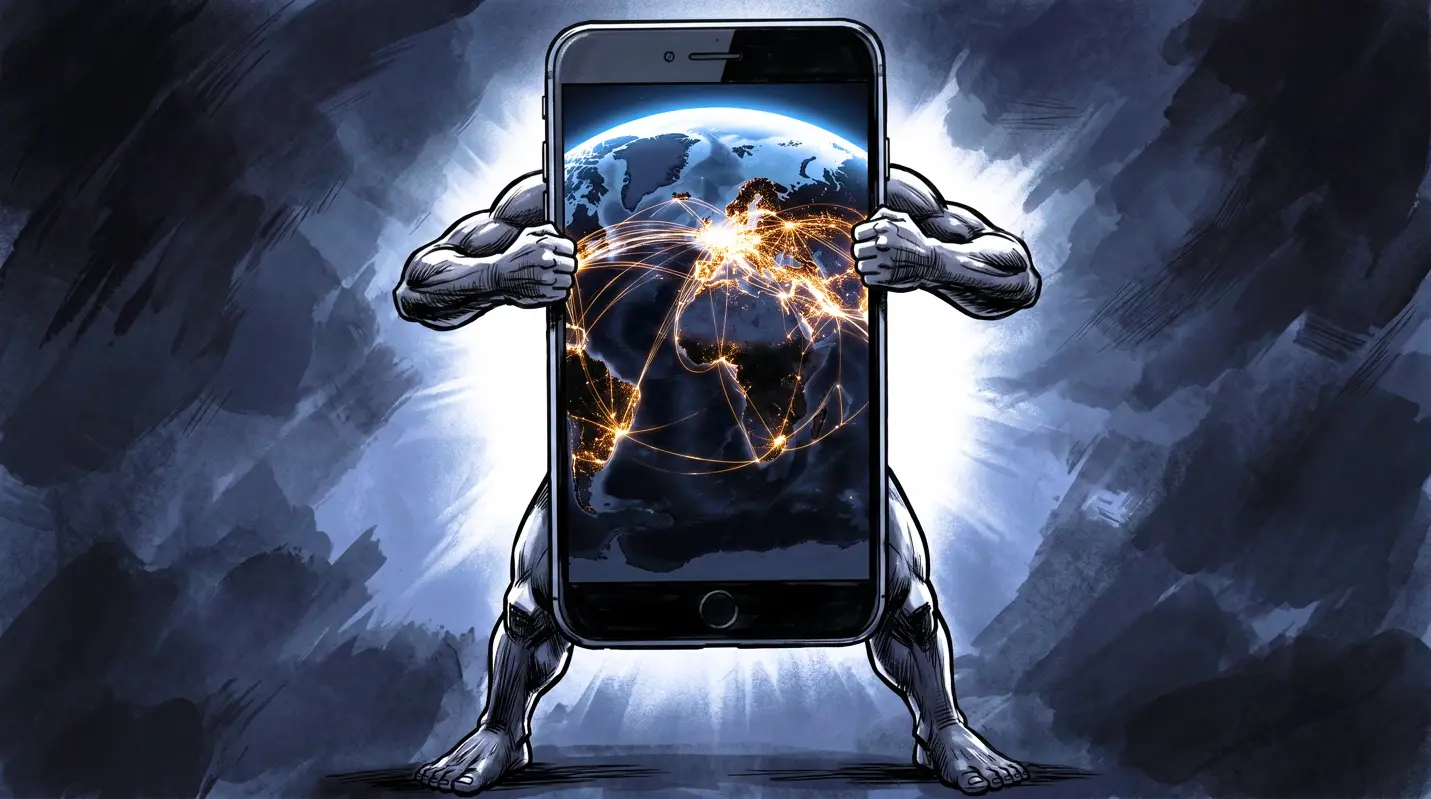
TV is revolutionizing every political system in the Western world. For one thing, it’s creating a totally new type of national leader... Through radio, TV and the computer, we are already entering a global theater in which the entire world is a Happening.
“Playboy interview” 1969, reprinted in Essential McLuhan (1995 edition), p 247
Year: 1969
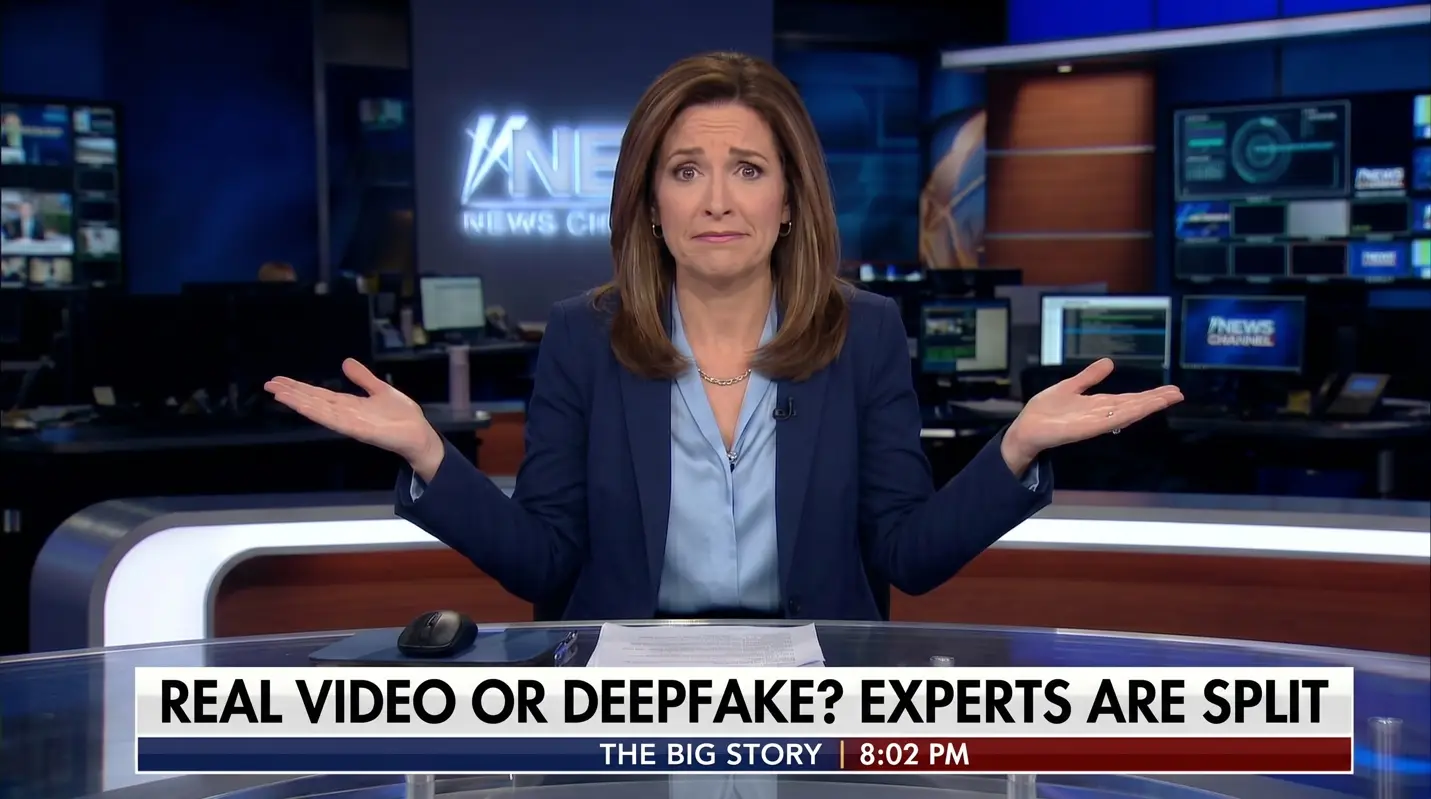

The political candidate who understands TV – whatever his party, goals or beliefs – can gain power unknown in history.
“Playboy Interview: Marshall McLuhan: A Candid Conversation with the High Priest of Popcult and Metaphysician of Media.” By Eric Norden. Playboy Magazine, March (1969), p 62, reprinted in Essential McLuhan (1995), p 248
Year: 1969
Chapter:
Predictions
Quite apart from the particular media, the hidden ground of American politics is now a simultaneous information environment that extends to the entire planet. This situation is structured and patterned for role-playing rather than for goals or policies. In effect, this means that both political parties and policies have little relevance in a world that expect a total-service environment. The charismatic image has replaced the goals and the parties and the policies. The main characteristic of an information environment is the proliferation of attractive images and promises. It is a world of public relations and prestige. It is a world of entertainment and promises, characteristic of the folklore of the advertising world, Mr. Ford and Mr. Carter are both, in their different ways, adequate television images.
“The Debates”, in the New York Times, September 23, 1976, p 41
Year: 1976
The new political pattern demands idealism not only of profession but behavior in public figures, but this demand is made by people who are quite permissive in their private ethics. A new kind of hypocrisy has been born among those who have grown up with the new media. They now demand of public figures a level of moral dedication which they feel no need to exemplify in the private sector of their own lives.
“When a president streaks”, in Indian Press, July 1974, p 12
Year: 1974
Technologies transform the most “socially conscious” people into conservatives.
Understanding Media, 1964, MIT/Routledge edition, p 34
Year: 1964
The corresponding flip from objective to immersion techniques in politics presents itself in the form of a political shift from parties and policies to images and services. That is, political parties and their explicit policies have simply been obsolesced by the images presented by the party leaders on the one hand, and the services taken for granted by the community, regardless of the party that happens to be in power, on the other hand.
"The End of the Work Ethic", reprinted in Marshall McLuhan Essays Media Research: Technology Art Communication (1997), p 107
Year: 1997
Chapters:
Chiasmus, Flips, Reversals | LOM 2 - Obsolesce
The future of government lies in the area of psychic ecology and can no longer be considered on a merely national or international basis.
Take Today with Barrington Nevitt (1972), p 227
Year: 1972
Politics offers yesterday’s answers to today’s questions.
The Medium Is the Massage (1967), p 22
Year: 1967
Chapter:
Rear View Mirror
The image now includes the electorate. Instead of his gathering in votes by saying the right things, he gathers his votes by looking right. It has nothing anymore to do with politics or parties. From that point of view Jimmy Carter will have la field day. He looks like the “All American Boy” and he’s got all sort of other All American characteristics.
Carl Scharfe interview, 1976, typescript transcript, p 4
Year: 1976
The successor to politics with be propaganda. Propaganda, not in the sense of a message or ideology, but as the impact of the whole technology of the times. So politics will eventually be replaced by imagery. The politician will be only too happy to abdicate in favor of his image, because the image will be so much more powerful than he could ever be.
“The Table Talk of Marshall McLuhan”, interview with Peter C. Newman, in Maclean´s magazine, (June 1971), p 45
Year: 1971
Chapter:
Propaganda
So that if politics is the art of the possible, its scope must now, in the electric age, include the shaping and programming of the entire sensory environment as a luminous work of art.
Letter to the Times Literary Supplement, appeared in the issue of August 6, 1964
Year: 1964
The implication…is that government is such a process [like Mind] and that it is a corporate extension of Mind itself.
Review of Deutsch’s The Nerves of Government (1964), p 3
Year: 1964
By formulating bad faith as a principle of power politics Machiavelli raised it to a new level of instrumental availability. He enabled men to use this age-old instrument quite impersonally and with a clear conscience. The ultimate recipe for deceit, said Bismark, is the truth.
Catholic Humanism and Modern Letters” The McAuley Lectures: Christian Humanism in Letters, Saint Joseph College, West Hartford Connecticut, (1954), p 55, reprinted in The Medium and the Light (1999), p 160
Year: 1954
Merely nationalist excitement about the English vernacular was embedded in religious controversy in the sixteenth and seventeenth centuries. Religion and politics had become so interfused as to be indistinguishable
The Gutenberg Galaxy: The Making of Typographic Man, (1962), p 224
Year: 1962
Thus the question of the mass in English today is as confused as the role of English in religion and politics in the sixteenth century.
The Gutenberg Galaxy: The Making of Typographic Man, (1962), p 224
Year: 1962
By the eighteenth century, on the other hand, the relations between language, religion, and politics had clarified
The Gutenberg Galaxy: The Making of Typographic Man, (1962), p 224
Year: 1962
[Commenting on NBC-TV after the Carter-Ford presidential debate]
Why did Ms. Drew and Gannon and Reynolds [moderators of the presidential debate] look so much more impressive than the candidates? This is another medium trick. All those three sounded most authoritative and emphatic and they knew what they were talking about… I mean the way they delivered themselves. It was authoritative, emphatic, like a good advertisement. Whereas the candidates were groping around in the fog.
“The Medium Rebelled Against the Message.” Excerpt from conversation between MM and Tom Brokaw (on NBC’s Today Show, September 24), in The Washington Post, September 26, 1976, p C7.
Year: 1976
The corresponding flip from “objective” to “immersion” techniques in politics presents itself in the form of a political shift from parties and policies to images and services. That is, political parties and their explicit politics have simply been obsolesced by their party leaders, on the one hand, and the services taken for granted by the community, on the other hand.
“The End of the Work Ethic” (1972), p 19
Year: 1972
Chapters:
Chiasmus, Flips, Reversals | LOM 2 - Obsolesce
If any candidate become aware of the dynamics of the 20th century, he would at once dissociate himself from political life.
Unpublished, undated typescript, circa the early 1970s, written for Look magazine.
Year: 1970
In diplomacy the same electric speed causes the decisions to be announced before they are made in order to ascertain the varying responses that might occur when such decisions actually are made.
Understanding Media, 1964, MIT/Routledge edition, p 203
Year: 1964
What we call entertainment at the present time is really, basically, a form of politics. There is really far more politics in Hollywood in the consumer attitudes and personal preferences and goals as set by casting bureaus and so on, far more political reality in the Hollywood scene than there has ever been in the so-called political scene.
Diebold discussion (1966), p 11
Year: 1966
What we call entertainment at the present time is really, basically, a form of politics. There is really far more politics in Hollywood in the consumer attitudes and personal preferences and goals as set by casting bureaus and so on, far more political reality in the Hollywood scene than there ever has been in the so-called political scene.
Diebold conversation, McLuhan, Mike Wallace, etc., 1966, p 11
Year: 1966
Poor old Richard Nixon hasn’t got a chance. He has no mask. He just has his bare face hanging out, just private Dickie Nixon. The public are dying to see themselves there. They don’t want to see Nixon; they want him to put them on. If he would even grow sideburns, if he would do anything, they would be transformed in their attitude to Nixon.
“Table Talk of MM” (1971), p 45
Year: 1971
Chapters:
Masks | Television
[Of the Nixon-Frost TV discussions]
Well I thought, this is the first time in human history that a major actor in history played himself.
Monday Conference, Australian TV, 1977, transcript p 13
Year: 1977
Canadian politicians are faced with a serious “dropout” problem. They’re still talking, but fewer people are bothering to listen. The successor to politics will be propaganda. Propaganda, not in the sense of a message or ideology, but as the impact of there whole technology of the times. So politics will eventually be replaced by imagery. The politician will be only too happy to abdicate in favor of his image, because the image will be so much more powerful than he could ever be.
“ The Table Talk of Marshall McLuhan”, Interview with Peter C. Newman in Maclean´s magazine, (June 1971), p 45
Year: 1971
Chapter:
Propaganda
(Referring to the 1976 presidential debates)
If, during the debate, either Ford or Carter makes a definite policy commitment, he will cloud or even destroy his image for much of the population.
Letter to NY Times, September 17, 1976
Year: 1976
Plato, who had old-fashioned tribal ideas of political structure, said that the proper size of a city was indicated by the number of people who could hear the voice of a public speaker.
Understanding Media, 1964, MIT/Routledge edition, pp 306-307
Year: 1964
A Conservative used to be a person who preferred the old technology to the new technology. In the electric age the most backward and ancient technologies are as much a part of the present as we are, and the most advanced people have to use all their energies to accommodate themselves to the most backward.
Pres release, Fredericton, 1964, p 1
Year: 1964
It is in danger of being brushed aside today in every area of Western experience. We have long been accustomed to praising the Greeks for the invention of visual order in sculpture, painting, science, as well as in philosophy, literature, and politics.
The Gutenberg Galaxy (1962), p 54
Year: 1962
In the same way the nineteenth century newspaper underwent complete revolution with the advent of the telegraph. The mechanical printed page was crossed with a new organic form that changed layout as it changed politics and society.
The Gutenberg Galaxy (1962), p 130
Year: 1962
The scriptures had had none of that uniform and homogeneous character during the
centuries before Gutenberg. It was, above all, the concept of homogeneity, which
typography fosters in every phase of human sensibility, that began to invade the arts, the sciences, industry, and politics from the sixteenth century forward.
The Gutenberg Galaxy (1962), p 135
Year: 1962
Think of the tremendous shift in political power that is going on at this moment through the use of television in politics.
“Popular / mass culture”, in Understanding Me (2003), p 39
Year: 2003
McCarthy folded a week after he went on television. And if Huey Long had gone on television he would had been a flop at once. TV will not take a sharp character, a hot character. It's a cool medium, and our politics are being cooled off to the point of rigor mortis, according to many people
“Popular / mass culture”, in Understanding Me (2003), p 40
Year: 2003
On the other hand, if you make an inventory of all the changes that have taken place in the last twelve, fifteen years since TV, without any preconceptions, without any theories about what television is or what television does, if one merely made an inventory of all the changes in speech, in politics, in habits of human association, habits of reading, habits of dress and food, it might become quite evident that there had been a kind of a pattern of change
“The Medium is the Message” (1966) in Understanding Me (2003), p 90
Year: 1966
When you put a new medium into play in a given population, all their sensory life shifts
a bit, sometimes shifts a lot. This changes their outlook, their attitudes, changes their feelings about studies, about school, about politics.
“Predicting Communication via the Internet (1966), in Understanding Me (2003), p 100
Year: 1966
Our politics require much more hotting up than the TV medium will give them. TV is ideal when you get two experts like ourselves discussing TV.
“Predicting Communication via the Internet”, in Understanding Me (2003), p 100
Year: 2003
The old and new journalism, corresponding to the old nineteenth-century hardware
and the new electric software and the old and new politics, match these accordingly.
“The End of the Work Ethic” (1972), in Understanding Me (2003), p 202
Year: 1972
The corresponding flip from objective to immersion techniques in politics presents itself in the form of a political shift from parties and policies to images and services.
“The End of the Work Ethic” (1972), in Understanding Me (2003), p 203
Year: 1972
Chapter:
Chiasmus, Flips, Reversals
The revolution I have been describing in reporting and in politics is the theme of a book called Deschooling Society by Ivan Illich.
“The End of the Work Ethic” (1972), in Understanding Me (2003), p 203
Year: 1972
The new politics is in the same position. The old politics had parties, Policies, planks,
Opposition. The new politics is concerned only with images. The Problem in the new politics is to find the right image. So search committees are formed to find the candidates who have the right image.
“Living at the Speed of Light”, in Understanding Me (2003), p 234
Year: 2003
Politics offers yesterday's answers to today's questions
The Medium is the Massage (1967), p 22
Year: 1967
Chapter:
Rear View Mirror
A new form of "politics" is emerging, and in ways we haven't yet noticed. The living room has become a voting booth.
The Medium Is the Massage (1967), p 22
Year: 1967
In those cities, the age of acoustic space in politics will surface with a vengeance. Centers everywhere and margins nowhere in a new tribalism. We may very well see ethnic barrios organizing themselves into self-sufficient, electronically coordinated enclosures, where old-style, ward-heel politics will flourish at the speed of light.
The Global Village with Bruce Powers (1989), p 85
Year: 1989
The computer will create large amounts of leisure time for the employed. It will also create for the unemployed on extended welfare time to participate in electronic politics.
The Global Village with Bruce Powers (1989), p 114
Year: 1989
As software information becomes the prime factor in politics and industry, the First World inevitably is minus the situation which has given meaning and relevance to its drive for mere quantity.
The Global Village with Bruce Powers (1989), p 150
Year: 1989
France was driving to the extremes of specialism and centralism under the fragmenting pressure of print technology, creating the matrix for Napoleon while Tocqueville was enjoying the naivete of Americans whose politics were the first to be founded on the printed word.
The Global Village with Bruce Powers (1989), p 161
Year: 1989
The pains that F.D.R. spent on adjusting his image for a radio audience were not misspent. He understood that the radio medium put ht President in an entirely new relation to the governed – a relation quite different from that created by the press. Indeed, he was at great paints to use an unfavourable press to enhance his radio image.
‘”Public and Private Sectors in the Electronic Age,” 1964, p 5
Year: 1964
Chapters:
Media Reprocess Media | Radio