Viewing chapter Pound, Ezra (10 quotes)
“The dance of the intellect upon the words”
Ezra Pound
Quoted in Laws of Media, by Marshall McLuhan and Eric McLuhan (1988), p 186
Year: 1988
Chapter:
Poetry
The work of Jung and Freud is a laborious translation of non-literate awareness into literary terms, and like any translation distorts and omits. The main advantage in translation is the creative effort it fosters, as Ezra Pound spent his life in telling and illustrating. And culture that is engaged in translating itself from one radical mode such as the auditory, into another mode like the visual, is bound to be in a creative ferment, as was classical Greece or the Renaissance.
The Gutenberg Galaxy: The Making of Typographic Man, (1962), p 72
Year: 1962
Chapters:
Freud, Sigmund | Jung, Carl G
[In a letter to Pound] It is my ambition to present your work to the lazier readers of our time. That sounds presumptuous. It is presumptuous. And I know how much work it involves. Reading your prose carefully, and reading the things you suggest should be read, will take time. But the time so spent will be much rewarded…. But should you disapprove of the project I shall desist.
Letter to Ezra Pound, July 5, 1948, in Letters of Marshall McLuhan (1987), p 196
Year: 1948
Pound has a horror of popular culture, which was the occasion of his blue-pencilling a good deal of The Waste Land. Much of what he threw out of The Waste Land was from the music hall world that Eliot loved. Pound took culture very seriously and phonetically and moralistically.
Letter to J. G. Keogh, July 6, 1970, in Letters of Marshall McLuhan (1987), pp 412-413
Year: 1970
The world of Ezra Pound is based upon a recovery of the idea of mask as a pattern of energy. Thus any poem, painting, novel is a mask of the writer worn by the audience.”
From Cliché to Archetype with Wilfred Watson, (1970), p 97
Year: 1970
But most of the difficulties which the ordinary person encounters with the poetry of Pound and Eliot disappear if it is viewed as a historical newsreel of persons, myths, ideas, and events with thematic musical score built in.
“Sight, Sound and The Fury,” in Commonweal, April 9, 1954, Vol. 60, No. 1, p 9
Year: 1954
Chapter:
Eliot, T.S.
[In a letter to Pound] You and Eisenstein have shown me how to make use of the Chinese ideogram to elicit the natural modes of American sensibility. But I‘ve just begun. Feeling my way.
Letter to Ezra Pound, January 5, 1951
Year: 1951








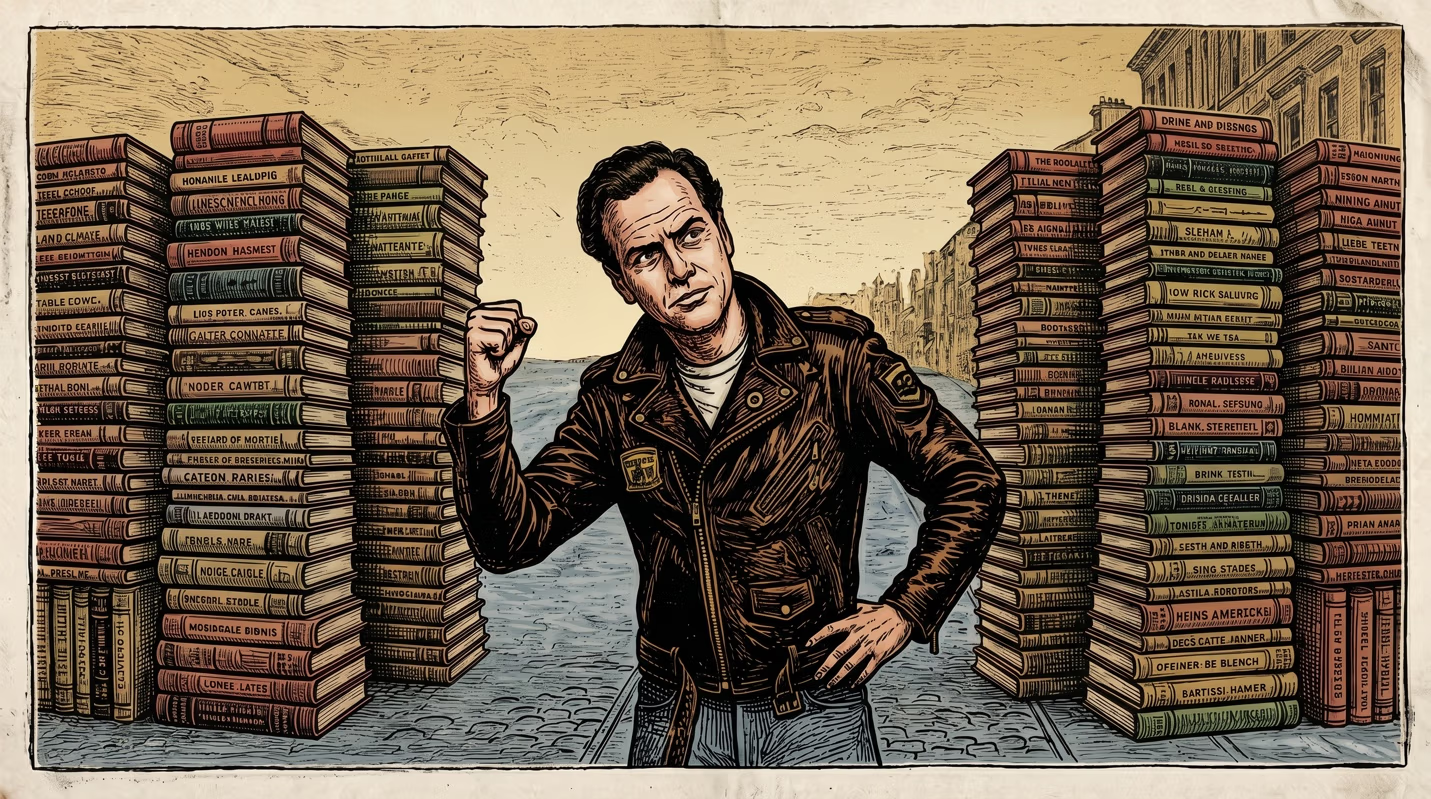
THE BEST THING that could happen would be for Ezra Pound to do a book on T. S. Eliot. What is happening with all the books on Joyce and Eliot is that the spirit of monolithic dullness is settling down on literature, Grover Smith is to be thanked for providing many facts which we can all copy into our collected Poems of Eliot, as for example the relation between Mr, Apollinax and Bertrand Russell or that the cock crows in Portuguese in The Waste Land,
“Classic Treatment,” review of T.S. Eliot's Poetry and Plays 1958, in Renascence, Vol. 10. No. 2, p 102
Year: 1958
It was a point of cultural orientation which never failed a cultural navigator in our time. Joyce, she tells us, in a sentence which should become famous, "had been discovered by Ezra Pound, a great showman and leader of a gang that hung out around the Egoist and included such suspicious characters as Richard Aldington, H.D., T.S. Eliot, Wyndham Lewis, and others almost as bad." She tells the story of how Hemingway read Wyndham Lewis' article about him in her shop: "Ernest Hemingway-'the Dumb Ox,' " and went berserk.
“The Personal Approach,” review of Shakespeare and Company, by Sylvia Beach, in Renascence, Vol. 13, No. 1, 1960, p 42
Year: 1960
Ezra Pound on McLuhan:
“Cordially as if descending through the shades to meet with McL…”
Quoted from a review of The Mechanical Bride, referring to a Pound letter that has not survived, indicating Pound’s disappointment with The Mechanical Bride; quoted by William Toye in a footnote in The Letters of Marshall McLuhan (1987), p 412
Year: 1987