Viewing chapter Rear View Mirror (74 quotes)
“To most men, experience is like the stern lights of a ship, which illumine only the track it has passed.”
Samuel Taylor Coleridge
Quoted in Symposium, 1973, p 6
Year: 1973
Chapter:
Rear View Mirror
Knowledge is a bigger obstacle to problem-solving than ignorance.
Exact source citation needed
Chapter:
Rear View Mirror
It occurs to me that artists go forward by going backward, something which I have nothing against intrinsically when it is a reproduced retreat — as is the case with the better artists.
Soren Kierkegaard
Journal, September 29, 1835
Chapter:
Rear View Mirror
“It's not easy to experience the unfamiliar, the unnamed. We say, “If I hadn't seen it with my own eyes, I wouldn't have believed it," but the phrase really should be, ‘If I hadn't believed it with all my heart, I wouldn't have seen it.’"
Edmund (“Ted”) Carpenter
Oh, What a Blow That Phantom Gave Me! (1974), p 14
Year: 1974
Chapter:
Rear View Mirror
There are very many reasons why most people prefer to live in an age just behind them. It's safer. To live right on the shooting line, right on the frontier of change and so on is terrifying.
The New Majority,” Interview with Ed Fitzgerald, CBC-TV, (1970), transcript p 12; also “The global theatre”, in Ekistics 190 (Sept 1971), p 182
Year: 1970
We are living in a situation which has been called "future shock." Future shock, in fact, is culture lag, that is, the failure to notice what is happening in the present.
“The End of the Work Ethic”, in Understanding Me (2003), p 205
Year: 2003
Chapter:
Anticipating Change
Most people… still cling to what I call the rearview-mirror view of their world. By this I mean to say that because of the invisibility of any environment during the period of its innovation, man is only consciously aware of the environment that has preceded it; in other words, an environment becomes fully visible only when it has been superseded by a new environment; thus we are always one step behind in our view of the world. Because we are benumbed by any new technology — which in turn creates a totally new environment — we tend to make the old environment more visible; we do so by turning it into an art form and by attaching ourselves to the objects and atmosphere that characterized it.
Playboy Interview (1969), in Essential McLuhan (1995), p. 238
Year: 1969
Chapter:
Environment
The U.S. space program apes the old hardware economy of the pre-electric age. Electric space is not outer but inner. NASA could have created anti-gravitational transportation long ago except for the rear-view obsession of the scientific establishment.
Culture Is Our Business, (1970), p 176
Year: 1970
We might ask ourselves what is the consequence of living in one age and thinking in another? Such would seem to be a frequent situation in human history. We can achieve a massive psychic irrelevance that renders us ripe not for challenges but collapse.
Review of The Nerves of Government (1964), p 3
Year: 1964
Chapters:
McLuhanisms & Zingers | Warnings
We can always see the Emperor’s old clothes, but not the new ones.
“Our Dawning Electric Age” (1965), p 12
Year: 1965
Chapter:
Environment
The content or time-clothing of any medium or culture is the preceding medium or culture.
Culture Is Our Business, (1970), p 168
Year: 1970
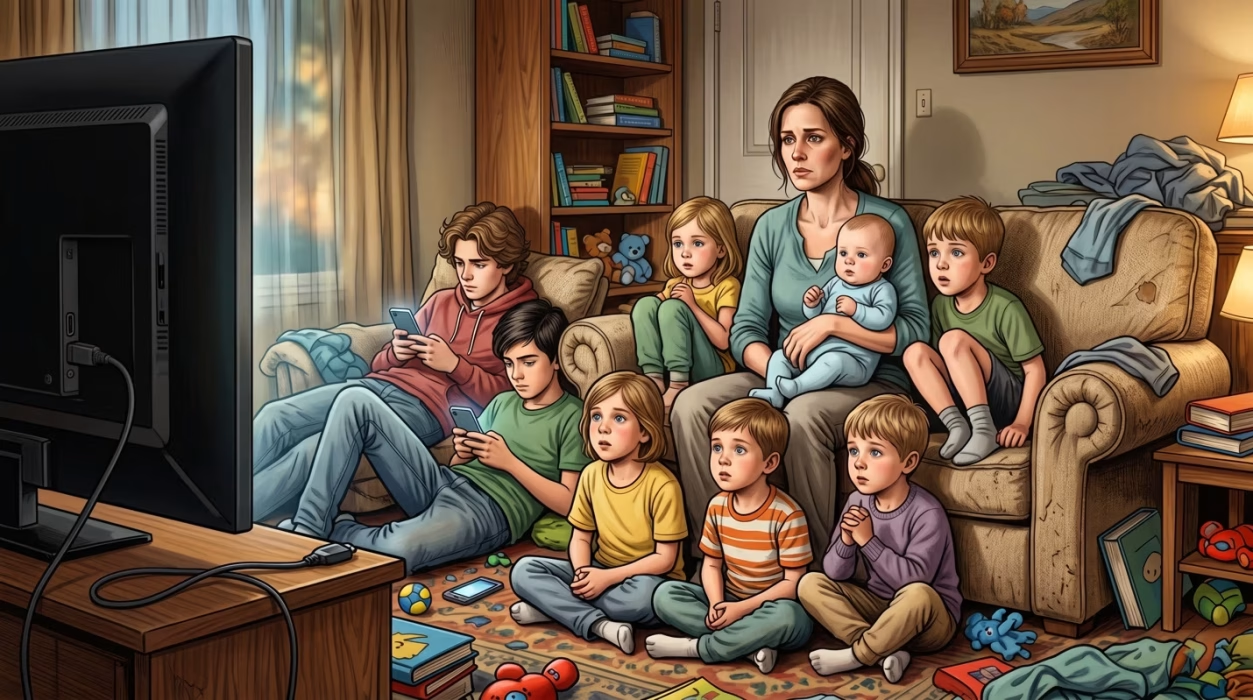
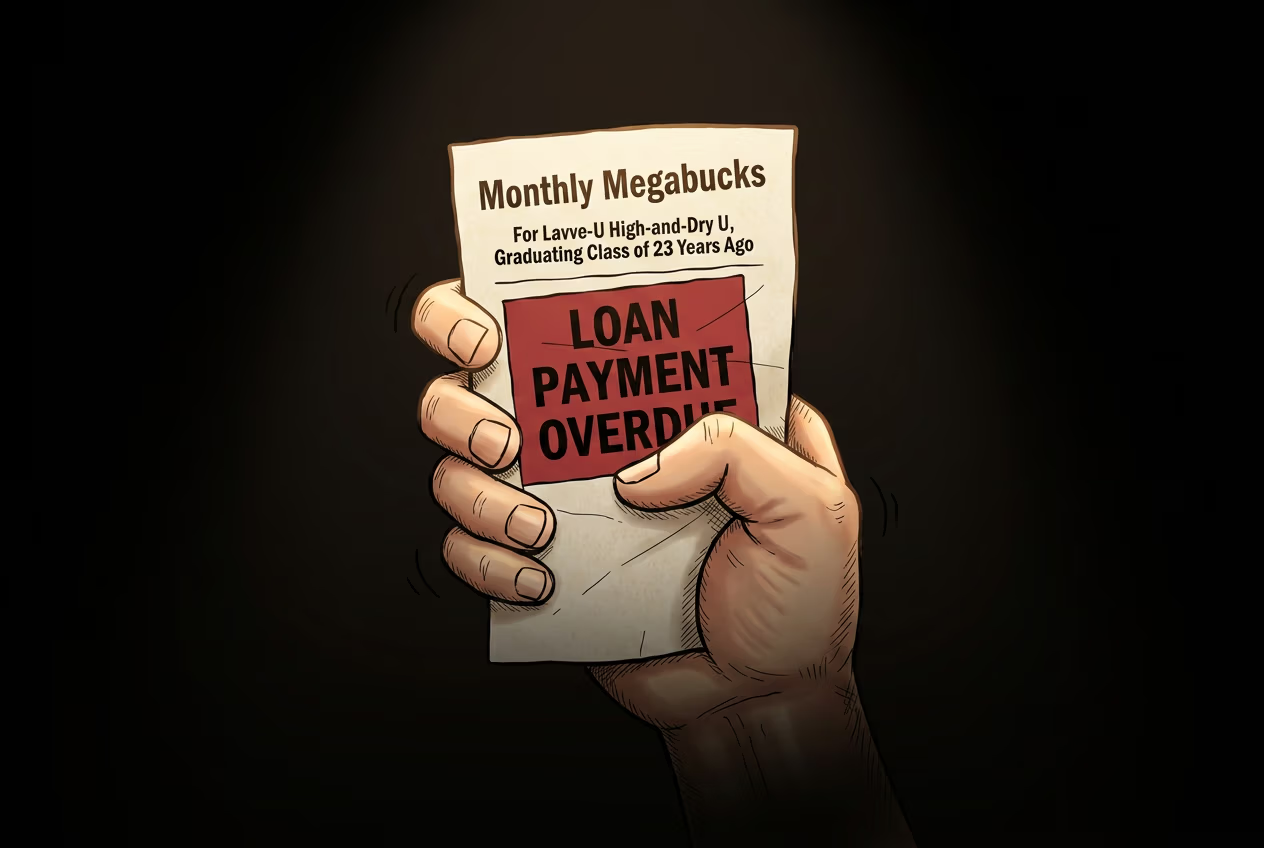
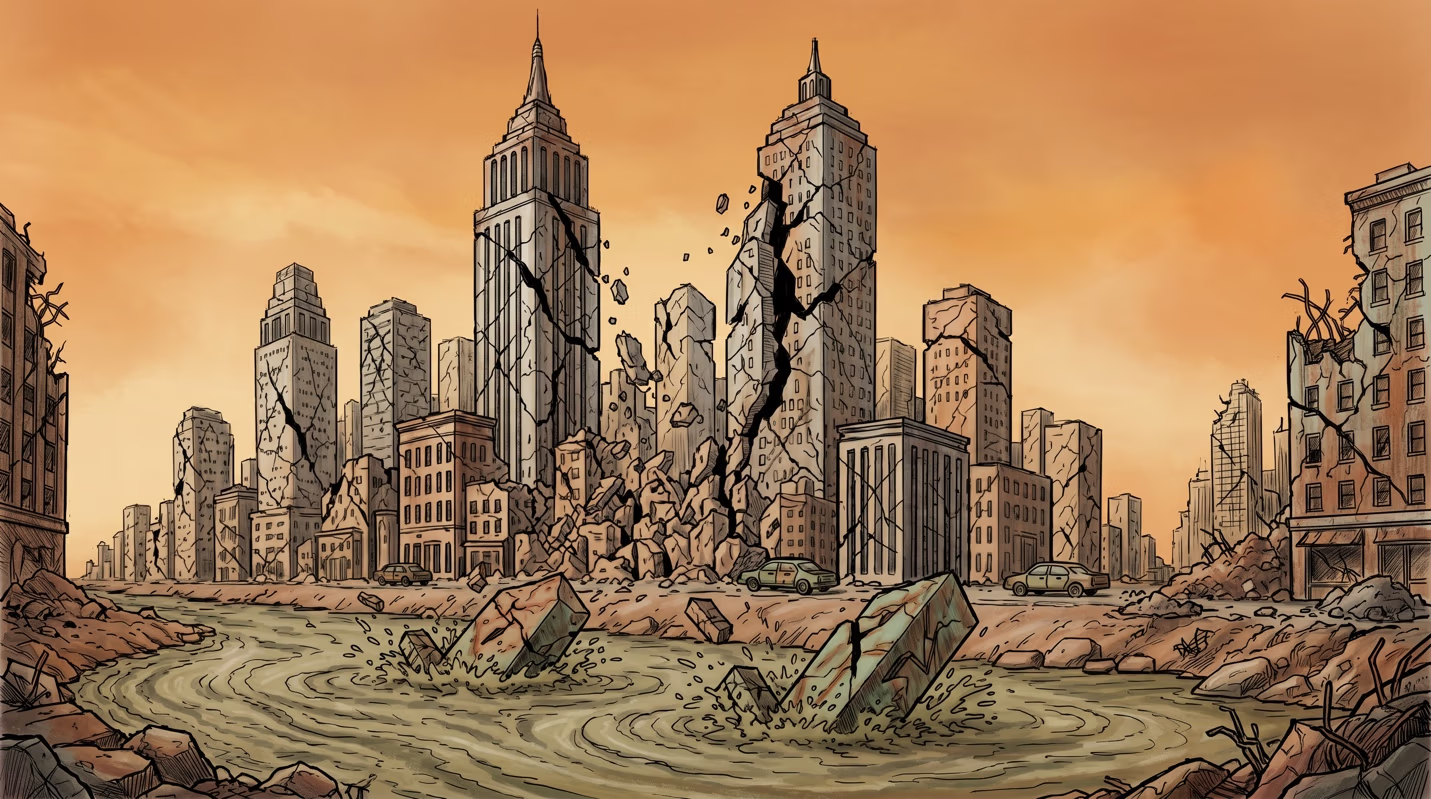
My "foul language" consisted in explaining to such big names as Bob McNamara, George Ball, Dean Rusk, and many from the U.K., that they had not a single clue concerning a world in which information moved at the speed of light. They were uniformly nineteenth-century minds pretending to relate to the twentieth century.
Letter to Robert H. Eringer, May 30, 1977, In Letters of Marshall McLuhan (1987) p 531
Year: 1977
Surely, it is not unbelievable that decision-makers are totally out of touch with the world they live in? How could any contemporary person in any age be entrusted with powers carefully developed and monopolized by people from the previous time?
Culture Is Our Business, (1970), p 104
Year: 1970
The NASA space program, like Ayn Rand, is concerned with the old visual space of Newton and the eighteenth century. Purely retrograde and rear-view mirror. If top science is outdated, what about the print-oriented clergy?
Culture is Our Business (1970), p 176
Year: 1970
One of the scandals of our age: vast expenditures on “new” educational hardware of nineteenth-century relevance.
Culture Is Our Business, (1970), p 40
Year: 1970
Chapter:
Education
[P]eople have never, in any age, known what they were doing, that is, what the effects would be of what they were doing…
First Fordham Lecture, 1967, reprinted in Understanding Me (2002), p 144
Year: 1967
The old hidden ground then emerges as a new rear-view figure, for all to see. Computers are still serving mainly as agents to sustain precomputer effects.
“The Argument: Causality in the Electric World”, in Technology and Culture, Vol.14, No. 1, January (1973), p 10, reprinted in McLuhan Unbound # 3, (2005). p 18
Year: 1973
Media effects are new environments as imperceptible as water to a fish, subliminal for the most part. Freud's censor is the mechanism by which in sensation we protect ourselves from over-stimulation. We live in the rear-view mirror.
“Counterblast 70”, p 22
Chapter:
Media
Our technologies are generations ahead of our thinking. If you even begin to think about these new technologies you appear as a poet because you are dealing with the present as the future. That is my technique.
McLuhan Hot and Cool (1967), p 29
Year: 1967
We impose the form of the old on the content of the new. The malady lingers on.
The Medium is the Massage with Quentin Fiore, 1967, p 86
Year: 1967
Unhappily, we confront this new situation with an enormous backlog of outdated mental and psychological responses. We have been left d-a-n-g-l-i-n-g. Our most impressive words and thoughts betray us—they refer us only to the past, not to the present.
The Medium is the Massage with Quentin Fiore, 1967, p 63
Year: 1967
For heaven knows how long, people have encountered each new technology by translating it back into the old familiar one. You know all the types of examples of that. The first motor cars were made with buggy whip holders. And the new automation computer devices are being made as if they were card catalogues. This strange habit of looking backward when moving forward is one that perhaps won't quite bear up, isn't quite consistent with jet speeds and electronic speeds.
“The Medium Is the Massage” (1966), in Understanding Me (2003), p 86
Year: 1966
Chapter:
Law of Implementation
Spaceship earth is still operated by railway conductors, just as NASA is managed by men with Newtonian goals.
Take Today with Barrington Nevitt (1972), p 90
Year: 1972
…these children of ours are older than Methuselah. At electric speeds of information, mankind now moves through a century or so of growth and experience every decade.
“Where It’s At” (1972), p 1
Year: 1972
All that has ever appeared on the retinal screen of mankind over the years is old movies.
Quoted in “Understanding McLuhan,” Newsweek, February 28, 1966
Year: 1966
Chapters:
McLuhanisms & Zingers | Radio
We use the new to do the old, even if it doesn't need doing at all. (The Law of Implementation)
“At the Flip Point—” (1975), typescript, p 5
Year: 1975
Chapter:
Law of Implementation
We seem stuck with the age-old habit of using new means for old purposes instead of discovering what are the new goals contained in the new means.
From Cliché to Archetype, 1970, p 202
Year: 1970
Chapters:
Innovation | Law of Implementation
Why do people assume that there's an absolute, static fixed value inherent in some pre- existing situation, while they spend all their time and energy creating new situations which will surely liquidate the pre-existing one?
Letter to Claude Bissell, December 14, 1960, in Letters of Marshall McLuhan (1987), p 275
Year: 1960
Chapter:
Law of Implementation
We're always living away ahead of our thinking.
Televised Interview by George Garlock and Paul Soles(1965), Transcript: 8:00
Year: 1965
Chapter:
Anticipating Change
Ension Theory
We need new perceptions to cope. Our technologies are generations ahead of our thinking. If you even begin to think about these new technologies you appear as a poet because you are dealing with the present as the future. That is my technique.
“The Hot and Cool Interview with Gerald Stearn“, in McLuhan: Hot & Cool: A Primer For The Understanding Of & A Critical Symposium With A Rebuttal By McLuhan ,(1967), p 292, reprinted in Marshall McLuhan Essays Media Research: Technology Art Communication, (1997), p 78
Year: 1967
Chapters:
Anticipating Change | McLuhan on McLuhan
We’re living in a highly integrated life but we’re still thinking in terms of specialism. People will have to work like fury to be contemporary and relevant. The future work of mankind is to achieve relevance. Specialists don’t have to worry about relevance. Specialists cannot be pushed beyond a point. They are interested only in their own specialty – the rest, they argue, is none of their business. But in a non-specialist society, relevance will be our business.
Quoted in “The McLuhan Galaxy” by Kay Kritzwiser, Globe and Mail, January 4, 1964, p 9
Year: 1964
You cannot tell what it is until you have seen it do things to the old one.
“The Invisible Environment: The Future of an Erosion”, Perspecta, Vol.11, (1967), p 166, reprinted in On the Nature of Media, (2016), p 119
Year: 1967
Chapters:
Environment | McLuhanisms & Zingers
Our technologies are generations ahead of our thinking. If you even begin to think about these new technologies you appear as a poet because you are dealing with the present as the future.
“The Hot and Cool Interview”, in Media Research (1997), p 78
Year: 1997
O.K., throw the idea out. Don't explore my statements. Explore the situation. Statements are expendable. Don't keep on looking in the rear-view mirror and defending the status quo which is outmoded the moment it happens.
Weekend Magazine, March 18, 1967
Year: 1967
Chapter:
Advice
In 1500 nobody knew how to market or distribute the mass-produced printed book. It was handled in the old manuscript channels.
The Gutenberg Galaxy (1962), p 130
Year: 1962
A movie like 2001 belongs to 1900 or even the world of Jules Verne.
“Eye vs Ear,” Dew-Line newsletter issue 1.5, November, 1968
Year: 1968
For a century the book, the printed book, pretended to be a cheap manuscript.
The Electronic Revolution in North America, 1959, p 8
Year: 1959
Chapter:
Law of Implementation
We look at the present through a rear view mirror. We march backwards into the future. Suburbia lives imaginatively in Bonanzaland.
The Medium Is the Massage (1967), p 75
Year: 1967
You ask about seeing ahead. What we call “seeing ahead” means looking into the rear-view mirror. And it’s just a joke: the ability to see ahead is zero in the human being. Because he is terrified of the present, let alone the future. And what is called “the future” is always a rear-view image, whether you start with Plato or move on to George Orwell. What you call the future is always the old culture just behind them. So the ability to look ahead in the modern child is not better than that of the great men of the past: it is an ability that does not exist!
Interview, Catholic Trustee, December, 1967, p 24
Year: 1967
When faced with a totally new situation, we tend always to attach ourselves to the objects, to the flavor of the most recent past.
The Medium Is the Massage (1967), p 75
Year: 1967
Chapter:
McLuhanisms & Zingers
We are often smothered in images of ourselves and of others that do not correspond to “presences.”
“Symposium” (1973), p 16
Year: 1973
I was wrong about the rear view mirror. It is not something you use to look at the past, it’s where you see the foreseeable future. When you look in the rear view mirror you don’t see cars which have gone by, you see what’s coming up.
“Genius or Whimsy?” (1979), p 13
Year: 1979
The first motor cards had buggy-whip holders and that is the stage which your report has achieved.
Letter to Sidney G. Tickton, 1970, Executive Director of the President’s Commission study on instructional technology; reported in AV Communications Review, fall, 1970
Year: 1970
Chapter:
McLuhanisms & Zingers
Our thinking is all done still in the old nineteenth-century world because everyone always lives in the world just behind – the one they can see.
“Television in a New Light” in The Meaning of Commercial Television, Ed. Stanley T. Donner, 1966, p 89
Year: 1966
The sort of thing Xerox is doing is the trend of the present and future, except that Xerox is behaving in the usual rear-view style, buying up old publishing companies. This buying up whole textbook companies is hilarious. They’re trying to buy markets, not books. What a bunch!
“Like Yoga, Not Like the Movies”, in Forbes magazine March 15, 1967, p 40
Year: 1967
NASA people are 18th Century types, pre-Jules Verne, pre-H.G. Wells. They live in a kind of nursery world like in Yellow Submarine. NASA is a very old fashioned bunch, semi-literate, never been through the real course. Anyway, the stuff they put out is cheap science fiction. It’s hardware. And it’s thanks to their ignorance of literacy in its full sense and ignorance of auditory space. Now the peculiarity of auditory space – and I’m simply challenging anyone of them to come forward, any scientist at all. I’ve met them on their own ground many times on this point. Auditory space is a very peculiar thing and we live in echoland now, in a simultaneous, instantaneous, all-at-once world, that is echoland, and that is auditory space. And space has a very peculiar property. It is a perfect sphere whose center is everywhere and whose margin is nowhere. It is totally nonvisual and nonvisualizable. Our DNA boys and our NASA boys still try to visualize space, meaning they have no relation whatever to the science they talk about.
Address to the Author's Luncheon, 1966; video is on Youtube; transcript, 16:30
Year: 1966
Most of our assumptions have outlived their uselessness
Quoted by Edmund Carpenter in his memoir of McLuhan, “That Not So Silent Sea” (1993), reprinted in The Virtual McLuhan by Donald Theall (2002)
Year: 1993
Chapter:
McLuhanisms & Zingers
When the movies were new, they used literature as content. When TV was new, it used movies as content. The laser beam will use human dreams and the audience of the intellect right off the court decks. They will be scrubbed, but good!
“Response to New Media,” in Explorations, Insert in University of Toronto's Varsity Graduate, Number 23, November, 1968, p 68
Year: 1968
Edwin Schoedinger has explained how he and his fellow physicists had agreed that they would report their new discoveries and experiments in quantum physics in the language of the old Newtonian physics. That is, they agreed to discuss and to report the non-visual, electronic world in the language of the visual world of Newton.
Paper to Information Management Conference, 1974, p 12
Year: 1974
Orwell's 1984 is a replay of 1934 and the 1920's. All those things that happened then. He made them surface. "Newspeak," for heaven's sake, was Time magazine.
Macleans interview With Professor Marshall McLuhan, 1977
Year: 1977
Life Jan 1/51 War assets issue. Pin-up girls featured as major asset. I have in forthcoming (March) Mechanical Bride to devise a technique for elucidating this scene. It can't be satirized. Trouble with duffers like Geo. Orwell is that they satirize something that happened 50 yrs ago as a threat of the future! Effect is narcotic. Regards.
Letter to Ezra Pound, January, 1951, in Letters of Marshall McLuhan (1987) p 219
Year: 1951
While people are engaged in creating a totally different world, they always form vivid images of the preceding world.
"Marshall McLuhan and Mike Wallace: A Dialogue." Taped interview from The Diebold Research Program Dinner, September 13, 1966, in New York City. Appeared in the booklet, The Diebold Research Program: Professional Paper Series, Document, No. PP10 (New York: The Diebold Group), 1966 – p 8
Year: 1966
Frederick Winslow Taylor made himself famous by his time-and-motion studies and scientific management. Like any other avant-gardist, he had one foot firmly planted in the past.
Take Today with Barrington Nevitt (1972), p 257
Year: 1972
Chapter:
McLuhanisms & Zingers
[At the appearance of any new form] We’re just trying to lift the old things into the new form, instead of asking what is the new form going to do to all the assumptions we had before.
Quoted by Alan Jacobs in “Why Bother With Marshall McLuhan?”, in The New Atlantis, Spring, 2011
Year: 2011
The more mechanized and urbanized America became, the more flamboyant became its Bonanzas, and its westerns.
“The Crack in the Rear-View Mirror”, in McGill Journal of Education, Spring 1966, p 34
Year: 1966
The history of the arts and sciences could be written in terms of the continuing process by which new technologies create new environments for old technologies.
“New Media and the Arts” (1964), p 239
Year: 1964
In practice the new conservativism has as its content the old liberalism.
Counterblast, 1969, p 31
Year: 1969
History need never be oriented to the past. But to-day when we are again trying to make the new media do the old jobs we also have an orientation to the past which ensures the destruction of all achieved values, like recording on recorded tape.
Letter to David Riesman, Feb 18, 1960 (LAC)
Year: 1960
Chapters:
History | Law of Implementation
A twelve-year-old child today is older than Methuseleh.
Jean Pare 1973Interview for Hydro-Quebec's Forces magazine, p 7 of the typescript
Year: 1973
Chapter:
McLuhanisms & Zingers
The prophets of change are always a rear-view oriented people.
MIT-SSSR speech, 1966, p 7
Year: 1966
Chapter:
McLuhanisms & Zingers
A parody is a new vision.
From Cliche to Archetype with Wilfred Watson, 1970, p 168
Year: 1970
Chapter:
McLuhanisms & Zingers
The natural tendency for everybody to go on doing what they happen to be doing does not offer any adequate means of navigation in a period of major technical innovation.
“Communism Hard and Soft”, DEW-Line Newsletter, v 1, #6, August 1969, p 6
Year: 1969
You can never perceive the impact of any new technology directly, but it can be done in the manner of Perseus looking in the mirror at Medusa. It has to be done indirectly.
“Address at Vision 65”, in The American Scholar, Spring, 1966, p 202
Year: 1966
Chapters:
Environment | Media Study
Our most impressive words and thoughts betray us – they refer us only to the past, not the present.
The Medium Is the Massage, 1967, p 63
Year: 1967
The past went that-a-way. When faced with a totally new situation, we tend always to attach ourselves to the objects, to the flavor of the mot recent past.
The Medium Is the Massage, 1967, p 74
Year: 1967
Chapter:
McLuhanisms & Zingers
[W]e are witnessing a clash of cataclysmic proportions between two great technologies. We approach the new with the psychological conditioning and sensory responses to the old…. [Today’s] fears are expressed in the Theatre of the Absurd. [Which represents] a common failure: the attempt to do a job demanded by the new environment with the tools of the old.
The Medium Is the Massage, 1967, pp 94-95
Year: 1967
The rear-view mirror shows the forseeable future.
Written in guest book of artist Eric Wesselow, n.d., included in Who Was MM, 1994, p 223
Year: 1994
Politics offers yesterday’s answers to today’s questions.
The Medium Is the Massage, 1967, p 22
Year: 1967
Chapter:
Politics and Government
Our “Age of Anxiety” is, in great part, the result of trying to do today’s job with yesterday’s tools—with yesterday’s concepts.
The Medium Is the Massage (1967), p 9
Year: 1967
Chapters:
Anxieties Caused By Change | Today’s Transition
In place of the lively disputation, came the lecture-the single lecturer reading written notes to silent listeners who spent their remaining time in silent reading.
“The Effect of the 16th century Book on Language,” in Explorations 7, 1957, p 102
Year: 1957
The misleading effect of books like George Orwell's 1984 is to project into the future a state of affairs that already exists. Such books distract attention from the present actuality. In the same way spoof books like Science Is a Sacred Cow by Anthony Standen provide entertainment rather than insight into the processes by which science gets onto the liability side of the social ledger. That's why Life saw fit to give it a big spread.
The Mechanical Bride, 1951, p 93
Year: 1951
The ignorance of how to use new knowledge stockpiles exponentially.
Take Today with Barrington Nevitt (1972), p 37
Year: 1972
Chapter:
McLuhanisms & Zingers
Print made possible the rapid reading of verse.
“The Effect of the Printed Word in the 16th Century Book on Language”, in Explorations 7, 1957, p 104
Year: 1957
The ordinary person is blocked in his perceptions of the present by accumulation of past habits of perception.
“New Journey for the Magi” (1965), p 4
Year: 1965
I wouldn’t have seen it if I hadn’t believed it.
Widely attributed to McLuhan, though no secure source indicates he was the first to say it. In no secure source can he be heard saying it. Located in other, earlier sources, including his close friend Edmond Carpenter.
Chapter:
Oft-Cited Quotes
The history of utopias is a fascinating study because men in utopias always thought they were projecting ideal images of some age to come, whereas they were in fact taking detailed pictures of the days just behind them. … That’s just as true of George Orwell as it is of Bonanza or Plato’s Republic. They are all rearview mirrors of the preceding ago…. That’s what we’re doing now, today. Is not a museum an image of the preceding age, not the present? It’s a utopian image of a preceding age, not our time at all.
The Museum as Large-Room Pinball Machine, Marshall McLuhan, Harley Parker, and Museum Professionals, 1967, full transcript of a seminar at the City Museum of New York, October 9-10, 1967, edited by William Buxton, U. of Alberta Press, 2026, p 172
Year: 1967