Viewing chapter Rhetoric (16 quotes)
Rhetoric is the science of the audience. I mean, all conventional, disparaging notions aside, rhetoric is a science, and an art, it’s one of the arts of the logos. It is the art of persuasive speech, actually, it’s the art of persuasion, which is to say it’s the art of transforming audiences. You could care less what you think before, during, or after a speech as long as when you’re done they do what you want them to do, and the cheap practitioners of rhetoric on these shores, and in recent times have been the advertisers.
Eric McLuhan
Derrick de Kerkhove interview with Eric McLuhan, n.d., transcript p 7
Chapters:
Audience, Public, Mass | Rhetoric
Just as the Japanese insist that it is not the tea but the ritual that gives meaning, Dr. Kormos [from a New York Times series on prevalent drug taking] suggested that it is the procedure of group Participation and sharing of the drug that lends "a sense of belonging and Identity that may be more important to the student than the effect of the drug."
War and Peace in the Global Village, 1968, p 82
Year: 1868
Technology cannot bring in the century of the common man. It can merely reduce man to his lowest common denominator as a consuming animal. If technology is to minister to free men, men must struggle to acquire the practical disciplines related to speech as they have never struggled before. For in acquiring excellent speech men acquire the heritage of our entire civilization.
“Education of Free Men: The Liberal Arts” (1943), p 49
Year: 1943
Chapters:
Democracy | Media Study
The ideal orator will be a man of encyclopedic knowledge because learning precedes eloquence. And because he will be the type of the perfect citizen, he will be eloquent about everything which concerns corporate life. But eloquence implies great tact, a sense of the propriety of word and thing as befits each contingency.
“James Joyce: Trivial and Quadrivial” Thought: Fordham University Quarterly, Vol. 28, No 1, (1953) in The Interior Landscape (1969), p 28
Year: 1953
If technology is to minister to free men, men must struggle to acquire the practical disciplines related to speech as they have never struggled before. For in acquiring excellent speech men acquire the heritage of the entire civilization.
“Education of Free Men: the Liberal Arts” (1943) Typescript, p 49
Year: 1943
Chapters:
Democracy | Media Study
[Cicero insisted] that the orator be a versatile or encyclopedia amateur.
Thomas Nashe in the Learning of His Time, 1943, original typescript, p. 337, from a footnote
Year: 1943
My historical work has been in the field of the history of rhetoric, where I have long noticed that the divisions of rhetoric -- inventio, disposito, etc., are simultaneous and acoustic whereas the parts of oratory -- exhortium, confimatio, etc., are sequential.
Letter to Prof. Samuel Becker, August 30, 1976
Year: 1976
When I did a study of the Trivium years ago, I encountered the techniques by which grammatica was eliminated from humanistic studies. The strategy of eliminating the study of language is via abstraction. The rise of logic in the ancient world came with the Euclidean abstractions of figures.
Comments on Mr. Ackerley's PhD thesis, no date
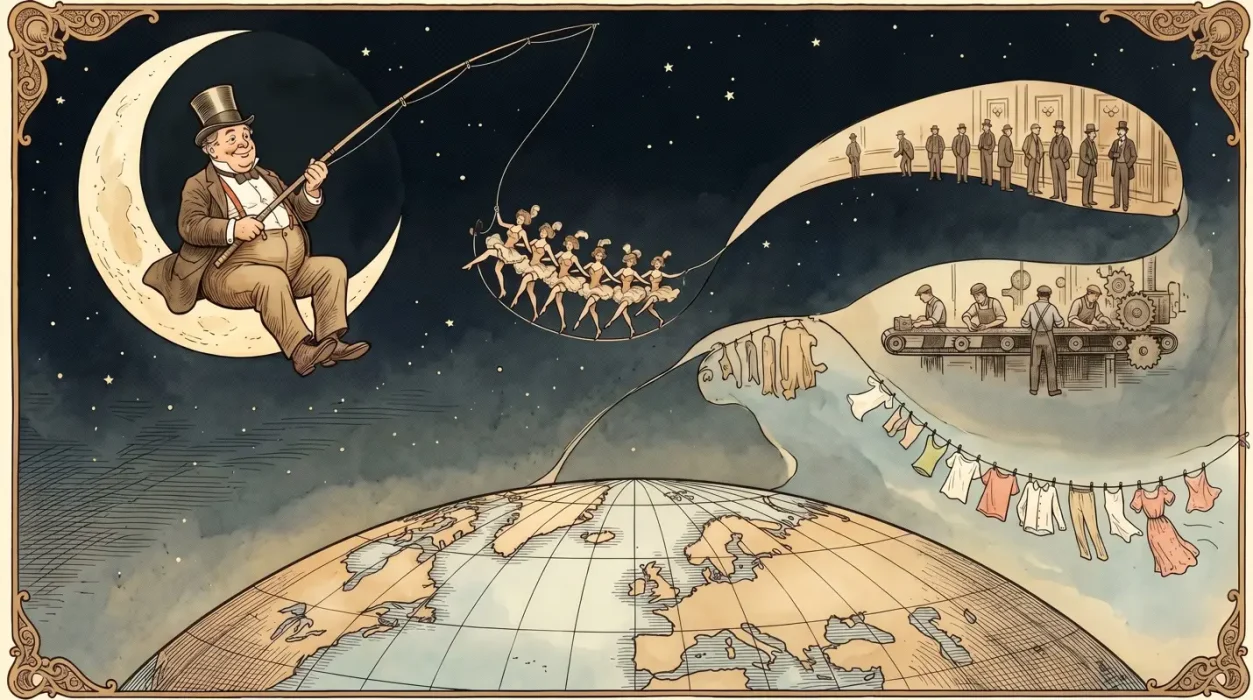




Eloquentia is supreme among all these [rhetorical] arts, since it is the art in virtue of which... the orator is able to direct all the other arts for the advantage of human life.
Thomas Nashe in the Learning of His Time, 1943, original typescript, p. 77
Year: 1943
[The rhetoricians of Greece] claimed in all seriousness to teach the means to wisdom. Wisdom, as well as eloquence, was thought to be a by-product of erudition. It was this claim which most annoyed Plato.
Thomas Nashe in the Learning of His Time, 1943, original typescript, p. 52
Year: 1943
Many facts contributed to make [the Elizabethan period] an age of rhetoric, and even of conflicting rhetorics; but we have long persisted in viewing it in the light of the violent reaction against what Huxley called "the pestilent cosmetic of rhetoric." It required, perhaps, the advent of such a successful devotee of the rhetoric of the second sophistic as James Joyce, to prepare the ground for a scholarly understanding of Elizabethan literature.
Thomas Nashe in the Learning of His Time, 1943, original typescript, p. 447
Year: 1943
Perhaps it is this last factor [artists’ and scientists’ conception of the public to be addressed and thereby to be altered] that has excluded the study of communication as transformation from our schools and universities.
“English Literature as Control Tower” (1974), p 5
Year: 1974
…there is no philosopher or poet or scientist who does not have a theory of communication. A theory of communication concerns the resources available to the writer or performer as well as the public upon which these resources are brought to bear… Further, it is within the work of the people that is to be found their theory of communication, that is, both their perception of the problems and their conception of the public to be addressed…
“English Literature as Control Tower in Communication Study”, in English Quarterly (University of Waterloo), Vol. 7, No. 1, p 5
Cicero says that the poet is the rival and almost the equal of the orator. That poetry (grammatica) is the handmaid of rhetoric, is a commonplace in Quintilian, St. Augustine, and throughout the medieval and Renaissance periods.
Thomas Nashe in the Learning of His Time, 1943, original typescript, p. 83, footnote
Year: 1943
There are many arts, says Cicero, but the great ones are politics, war, and eloquence. The mediocre arts consist of philosophy and its many branches, mathematics, physics, ethics, logic, grammar, etc.
Thomas Nashe in the Learning of His Time, 1943, original typescript, p. 77
Year: 1943
In studying the history of dialectics and rhetoric, as, indeed, of grammar, it is unavoidable that one adopts the point of view of one of these arts; and the history of the trivium [dialectics, rhetoric, grammar] is largely a history of the rivalry among them or of ascendancy. Ancient grammar was at odds with the dialectics of Plato and, especially, of Aristotle, as the art of interpreting phenomena. As the method of patristic theology, grammar enjoyed uninterrupted ascendancy until the revival of dialectics by Gerbert, Roscellinus, and Abelard in the eleventh and twelfth centuries.
Thomas Nashe in the Learning of His Time, 1943, Typescript pp 47-48
Year: 1943
Symbolism is a kind of witty jazz, a consummation of Ruskin’s aspirations for the grotesque that would have shocked him a good deal. But it proved to be the only way out of “single vision and Newton’s sleep.
The Gutenberg Galaxy: The Making of Typographic Man, (1962), p 267
Year: 1962
Chapter:
Symbolists