Viewing chapter Science (18 quotes)
For it has been the prime characteristic of science and philosophy since Newton and Kant, that they seek to control the world rather than to understand it. We can, they say, control by magical formula what necessarily eludes our understanding or comprehension.
“Wyndham Lewis: His Theory of Art and Communication” in Shenandoah, Vol. 4, No. 2-3, Summer-Autumn (1953),P 78, reprinted in The Interior Landscape (1969), p 84
Year: 1953
The linguistic studies of Edward Sapir and B.L. Whorf have lately shown that language is not only the storehouse of scientific thought. All actual and implicit scientific theories are implicit in the verbal structure of the culture associated with them.
“James Joyce: Trivial and Quadrivial” Thought: Fordham University Quarterly, Vol. 28, No 1, (1953), in The Interior Landscape (1969), p 25
Year: 1953
Chapter:
Language
Scientists make their discoveries as ‘artists,’ not specialists. Such scientists construct experiments as “works of art” to probe the environment.
Media and Formal Cause with Eric McLuhan, (2011), p 55
Year: 2011
Chapter:
Art, Artists
The modalities of grammar, etymology and word-formation could be made to yield a complete account of the economic, social, and spiritual adventures of mankind. If geology could reconstruct the story of the earth from the inert strata of rock and clay, the scienza nuova could do much better with the living languages of men.
“James Joyce Trivial and Quadrivial,” 1953, reprinted in The Interior Landscape (1969), p 24
Year: 1953
Chapters:
Information | Language
…the modern scientist has sought to merge the functions of the primitive and civilized magicians. He has developed formulas for control of the material world and then applied them to the control of the human mind. He invades the human mind and society with his patterned information. That is the key to the nature of the new “mass media.”
Wyndham Lewis:” in Shenandoah, Vol. 4, No. 2-3, Summer-Autumn (1953),P 78, reprinted in The Interior Landscape (1969), p 84-85
Year: 1953
But biology is no longer the dominant science. The multi-leveled consciousness fostered by modern physics and anthropology is matched in the contemporary arts of music, poetry, and painting.
Auden: An Introductory Essay (Book Review), Renascence, 1952, p 220
Year: 1952
Chapters:
Consciousness | Living Unity
One major difference between the age of Copernicus and that of Einstein is the fact that there was nobody who could apply the ideas of Copernicus to anything but poetry and painting. Today the most abstruse theories go into action even before they have had their day in science fiction.
“The Humanities in the Electronic Age” (1961), in McLuhan Unbound (2017), p 18
Year: 1961





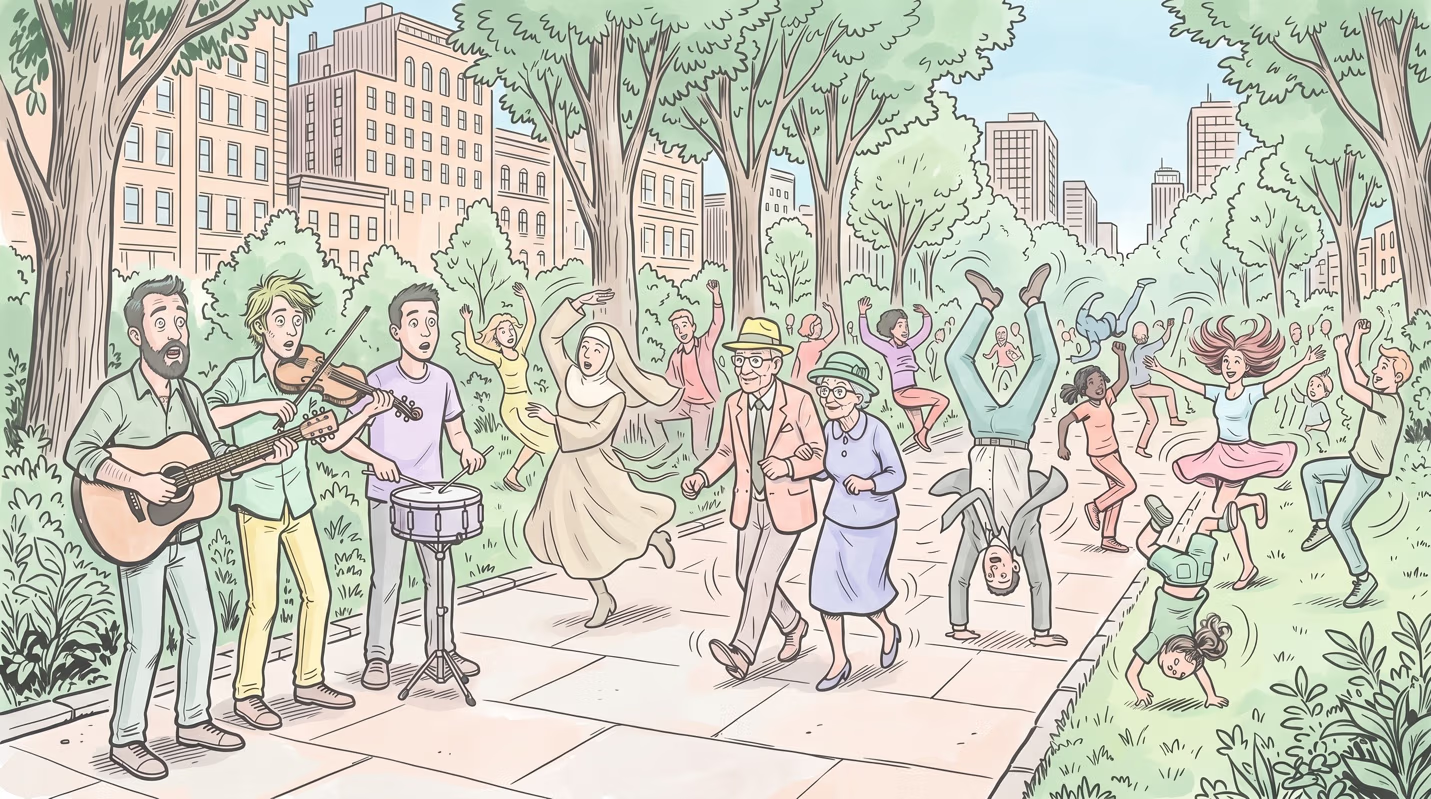

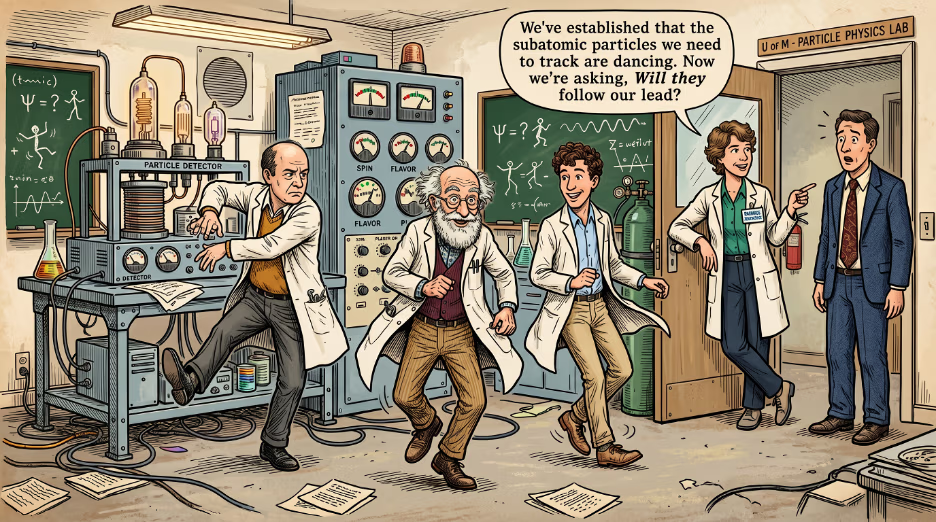
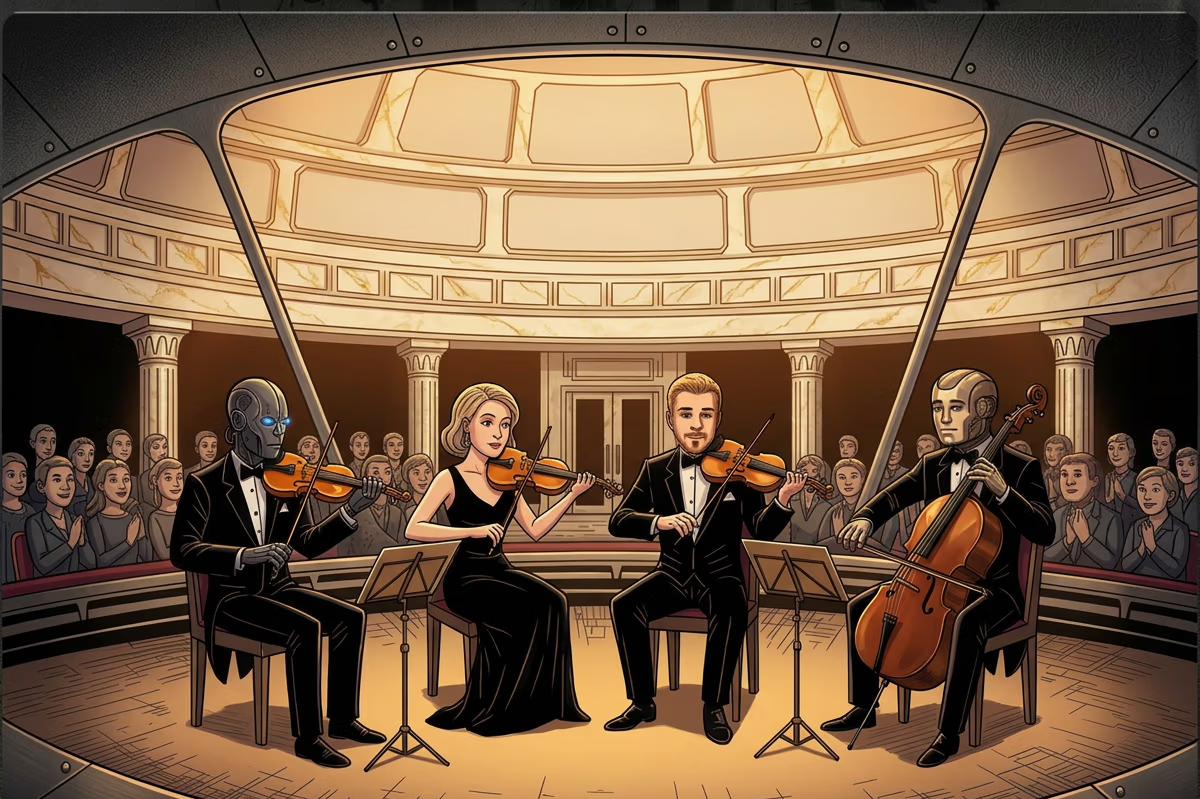

It is thus not at all accidental that physics is mainly cultivated by men from cultural areas in which visual values are at a minimum.
“The Role of New Media in Social Change” Address to The Canadian Orthopsychiatric Association, 1964, typescript, p 3
Year: 1964
Mysticism is just tomorrow's science dreamed today.
"A Candid Conversation with the High Priest of Popcult and Metaphysician of Media" interview with Eric Norden, in Playboy (March 1969), in Essential McLuhan (1995), p 244
Year: 1969
Chapter:
McLuhanisms & Zingers
[After hearing Margaret Mead tell how tribesmen were excited by the “magical” nature of replicated, identical books] We forget perhaps that the criterion of scientific “proof” for a long time was (and remains) the power to repeat an effect or an experiment. Since we consider magic and science to be antithetic, it is a little strange to encounter a culture in which magic and repetition are one and the same.
“Libraries, Past, Present, Future” (1970), p 16
Year: 1970
Scientists have no interest even of the effects of science on people. Just take the recent O.M.B. hearings which revealed over and over again that the experts who had designed the various city developments said over and over: “Nobody asked us what would be the social effects of any of these plans. Our job was to deal with traffic.” They were indignant to think that they should have been aware of the destruction of the city by their new traffic arrangements. A scientist is a specialist, and the specialist is not interested in causation because cause is not special, it is total.
“Marshall McLuhan: An Interview?", in The Mike (University of Toronto, St. Michael’s College), Vol XXII, February 4, 1971, p 3
Year: 1971
Chapter:
Specialism
(All “elementary particles” are packaged ignorance.) Aristotle’s “pairs” where one process is always the privation of another, were also familiar to the Chinese sage Wang Gu (A.D. 90-165): “Poverty arises from wealth, weakness derives from power / Order engenders disorder, and security insecurity.” That is, affluence breeds poverty… just as matter creates space (not void). Such complementarity of figure-ground appears as a causal relation in all “prepackaged” processes. Complementarity is the process whereby effects become causes.
“Symposium” (1973), p 111
Year: 1973
Chapter:
Complementarities
In Einstein’s world, matter, through its gravitational interactions, creates “space” which, in turn, reactions back on this matter. Lineal, connected, infinite, static Euclidean space gives way to a dynamic, resonating, non-lineal, non-Euclidean, finite, closed universe which folds back on itself – “On a clear day you can see the back of your head.”
“Alphabet, Mother of Invention” with Robert K. Logan, in Et Cetera (1977), p 381
Year: 1977
To say that a body or its gravitational field “bends in space” in its vicinity is to discuss visual space in acoustic terms.
Laws of Media: The New Science with Eric McLuhan, (1988), p 40
Year: 1988
Chapter:
Acoustic Space
Relativity theory forced the abandonment, in principle, of absolute space and absolute time.
Laws of Media: The New Science with Eric McLuhan, (1988), p 43
Year: 1988
Chapter:
Acoustic Space
What is needed is a readiness to undervalue the world altogether. This is only possible for a Christian. Willingness to laugh at the pompous hyperboles and banalities of moon-shots may need to be cultivated by some. The "scientific mind" is far too specialized to grasp very large jokes. For example, Newton did not discover gravity, but levity, not earth-pull, but moon-pull. To this day no scientist has a single clue as to what "gravity" is. In the eighteenth century it was defined as: "a mysterious carriage of the body to conceal the defects of the mind." The comedy of science as presented by Swift in the third book of Gulliver 's Travels (Leputa, the floating island) employed the principle of levity to enlarge the gaiety of nations.
Letter to Robert J. Leuver, July 30, 1969; in Letters (1987), pp 386-387
Year: 1969
Yesterday I read H.D. Smyth’s report on “Development of Methods of Using Atomic Energy in Military Purposes.” It read like aWalpurgis Nacht transposed into the lingo of the newspaper. His account of the building of “the first self-sustainin chain-reacting pile” sounds like a parable of a robber baron. The whole graphite sphere was supported by a timber framework mounted on th floor of a squash court under the west stands of Stagg Field.” We have made… our pile and now we can sit on it.
Letter to Felix Giovanelli, May 10, 1946
Year: 1946
[Written at 22] Science implies values but seeks none
“A Personal Apologia,” Jan. 30, 1933 (LAC)