Viewing chapter Speedups (50 quotes)
Literally, there are no goals at the speed of light, but there are roles. At the speed of light, instead of having a job or an objective, you have to determine for yourself a totally new pattern, a new function in the world. And your new function is that of role-playing, which consists in taking on a whole variety of jobs at once. An ordinary mother with a family has many jobs to perform. So does a farmer. We consider them to be role-players. A farmer doesn't have a job and a mother doesn't have a job. They have roles, very involved and complicated ones. Role-playing is the new electronic form of job-holding; it is replacing job-holding. It does require a kind of reallocation of energies. At the speed of light all the old hardware pattern recognition is useless. If you do not know the new pattern in instant replay, you will be unable to make any use of it.
Man and Media,” lecture delivered at York University, Toronto, (1979), in Understanding Me (2003), p 293 -294
Year: 1979
At the speed of light you cannot have executives. You cannot have hierarchy. The job yields to roles and a role consists of multiple jobs Institutionally, I would say, the Church is always out of place. Culturally as well. Sometimes way ahead; sometimes way behind.”
"Our Only Hope Is Apocalypse" in The Medium and the Light, p 57
Chapter:
Catholic Church
Americans have lost their sense of identity because of the speed of information.
The American bureaucracy, political and educational, was set up for very slow speeds of the print word and for railways. At electric speeds, nothing in the USA makes sense. The most benign political democracy becomes a police state as soon as you improve the speed of communication. Everybody then becomes under surveillance, everybody is put into a data bank, and there is no freedom left.
“The New Majority,” Interview with Ed Fitzgerald, CBC-TV, (1970), transcript p 6 (11:25 in the video)
Year: 1970
Chapter:
America, North America
Today the most abstruse theories go into action even before they have had their day in science fiction
“The Humanities in the Electronic Age”, 1961, in McLuhan Unbound, 2017, p 18
Year: 1961
Chapter:
Change
Once it is understood that the hidden ground of our time is information moved at the speed of light, then it becomes easy to see why schooling is changing so drastically. It becomes possible to explain why universities really need not much concern themselves any longer with instruction.
Letter to Franklin R. Gannon, June 12, 1973, in Letters, p 478
Year: 1973
Yes, everybody tends to merge his identity with other people at the speed of light, it's called being mass man, by the way, one of the big marks of the loss of identity is nostalgia and so, revivals on all hands in every phase of life today, revivals of clothing, of dances, of music, of shows, of everything. We live by the revival, it tells us who we are or where.
Video TVO ap[appearance with Mike McManus, “Violence as a Quest for Identity” (1977), transcript, 04:39
Year: 1977
The different ways of life on this planet would afford little cause for friction if information still moved over land and sea at the speed of the horseman and the ship.
“The Care and Feeding of Communication Media”, 1961, p 4
Year: 1961

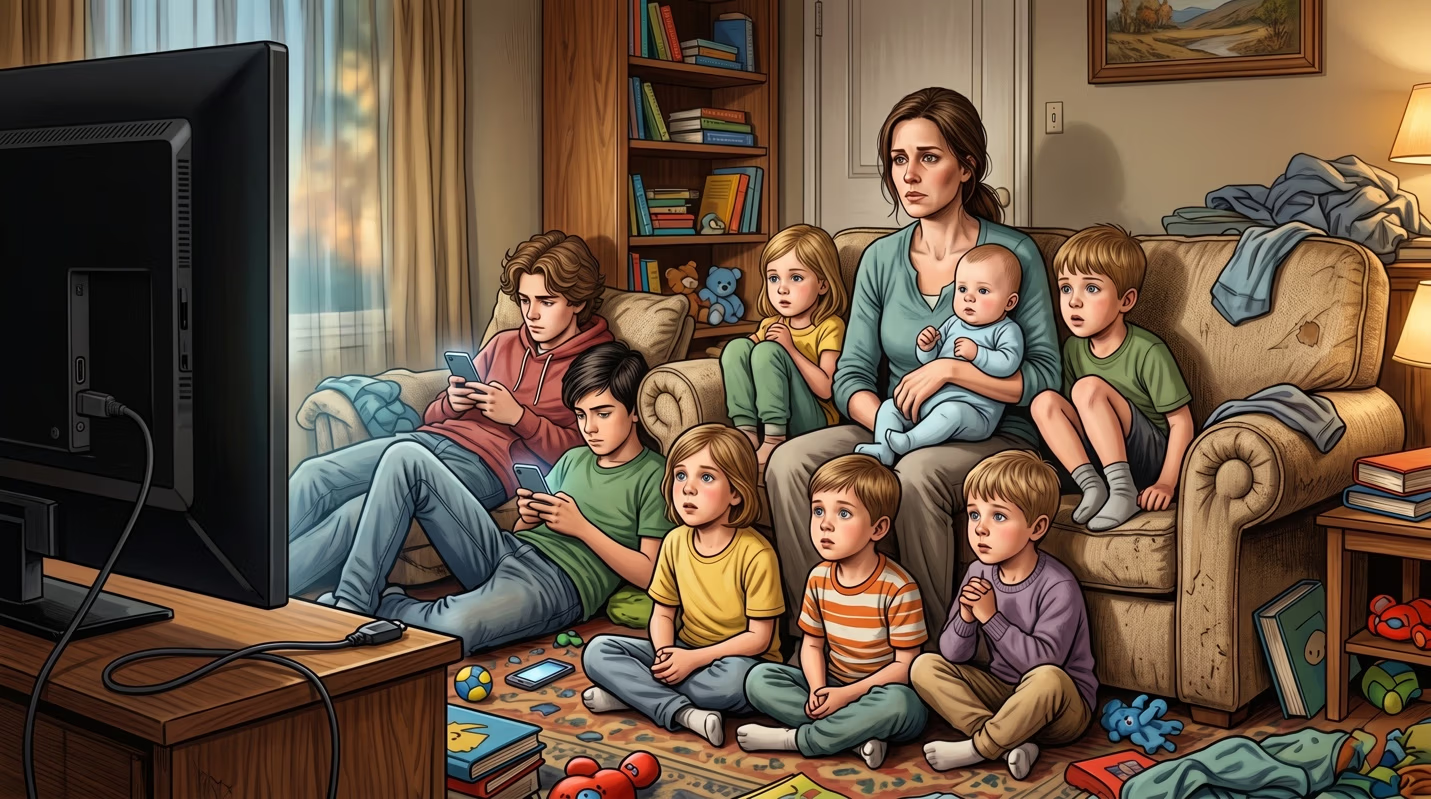

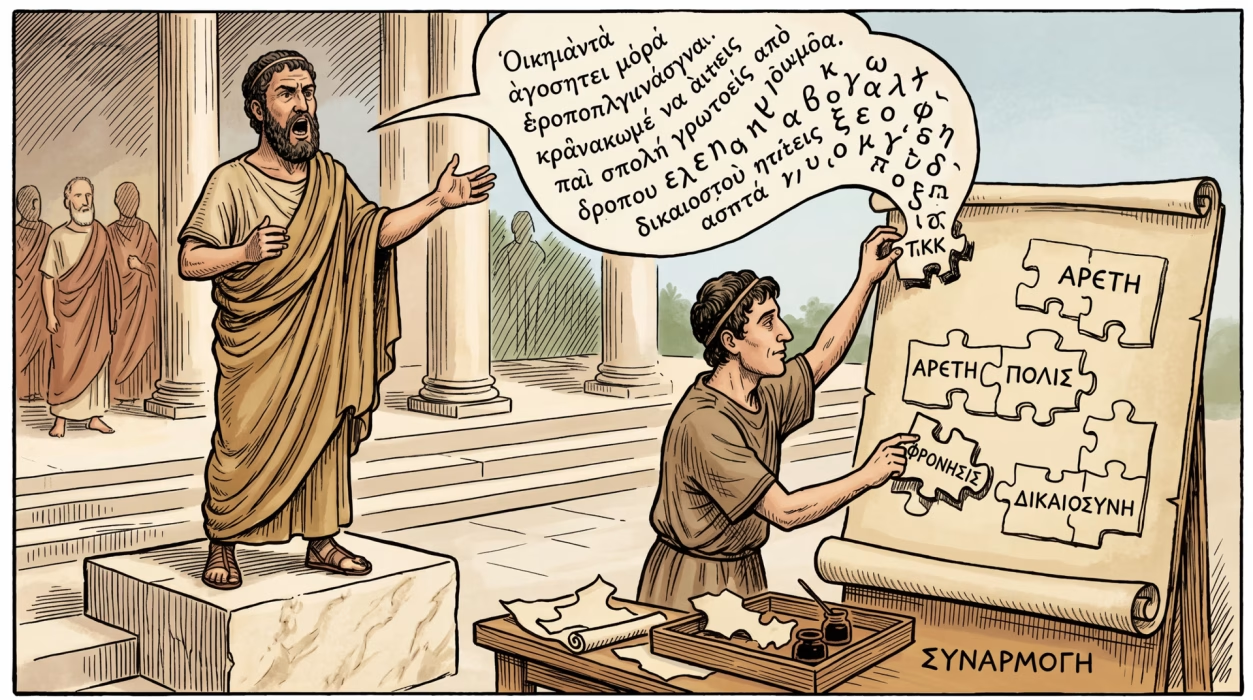

In order to think, you have to forget most of what you are experiencing in order to relate it to earlier things that you knew, otherwise you can´t infer anything from what you are seeing. So, at the speed of light, which is now the normal speed of most information, on TV, radio, telephone and so on -at that speed the need to forget has become a form of nostalgia.
Interview with Gov. Jerry Brown, in The CoEvolution Quarterly, Winter 1977-1978, p 178
Year: 1977
At the speed of light there is no sequence; everything happens at the same instant. That's acoustic, and everything happens at once. There's no continuity, there's no connection, there's no follow-through, it's just all now.”
“What TV Does Best,” (1976), in Understanding Me, (2003), p 246
Year: 1976
Chapter:
Simultaneity
The hidden ground of the entire development [today] is the new speed of information movement, for it is this movement at the speed of light which not only transforms our image of ourselves but involves us in the lives of others in a completely new way.
“Letter to Franklin R. Gannon, June 12, 1973”, in Letters of Marshall McLuhan (1987), p 477
Year: 1973
“It is not matching—which visual man would do—but making. Now, visual man was hung up on the idea of matching as a criterion of Truth. Under electric conditions, at the speed of light, there can never be matching, only making. The scientists discovered this forty, fifty years ago when they developed the "uncertainty principle," saying that no experiment could ever be repeated. You can't step into the same river once. This is now seen to be literally true. It had always been true, but electric speed made it obvious.”
“Technology and the Human Dimension”, interview with Louis Forsdale (1974), reprinted in MM: The Man and His Message, 1989, p 12
Year: 1974
Chapter:
Matching and Making
“The absence of space brings to mind the idea of a village. But actually, at the speed of light, the planet is not much bigger than this room we're in. In terms of time and the speed of the event that are now programmed, they hit each other so fast that even a village is too big a thing to use for a comparison. The acoustic or simultaneous space in which we now live is like a sphere whose center is everywhere and whose margins are nowhere. Acoustic space cannot be cut into pieces, as visual space can. It is both compressed and indivisible.”
“Technology and the Human Dimension”, Interview with Louis Forsdale, 1974, reprinted in Marshall McLuhan: the Man and His Message (1989), p 24
Year: 1974
Whereas visual man had dreamed of distant goals and vast encyclopedic programs of learning, electronic man prefers dialogue and immediate involvement. Since nothing on earth can be distant at the speed of light, electronic man prefers the inner to the outer trip and the inner to the outer landscape.”
“At the Moment of Sputnik” (1972), reprinted in Marshall McLuhan: the Man and His Message (1989), p 72
Year: 1972
Chapter:
Inner/Outer
“Without exception, then, the activity of media, old and new, as invaders of both public and private space, raises the question and image of violence at every turn. At the speed of light, American political institutions are trembling and quaking in this bicentennial year.”
“Violence of the Media”, 1976, reprinted in Marshall McLuhan: the Man and His Message (1989, 1989, p 91
Year: 1976
In the mechanical age of the wheel and the lever, acceleration had expanded and enlarged the sphered of action. At electric or instant speeds the same sphere contracts almost to the dimensions of a single consciousness.
“The Role of New Media in Social Change” (1964), p 1
Year: 1964
Chapters:
Electric, Electronic | Mechanization
“When information moves at the speed of signals in the central nervous system, man is confronted with the obsolescence of all earlier forms of acceleration, such as road and rail. What emerges is a total field of inclusive awareness. The old patterns of psychic and social adjustment become irrelevant”
Understanding Media (1964), MIT/Routledge edition, p 104
Year: 1964
Chapter:
LOM 2 - Obsolesce
”Time can be defeated, as it were, by reversal of its characteristics if only it be speeded up enough. Experience of this fact awaited the electronic age, which found that instant speeds abolish time and space, and return man to an integral and primitive awareness.”
Understanding Media (1964), p 151-152
Year: 1964
Chapter:
Retribalizing
The speed of the railway not only [set] work and residence apart, but dispersed the larger family groupings of innumerable relatives, leaving mom and the kids to face each other minus a community. Enter Dr. Freud to prop up the fragments.
“Understanding Megascenes,”” PRINT: America’s Graphic Design Magazine, July/August 1970, vol XXIV: IV,
Year: 1970
If you are moving at the speed of light, you are already there.
“The Undiluted Wisdom of Marshall McLuhan,” The Montreal Gazette, May 16, 1975, p 13
Year: 1975
Chapter:
McLuhanisms & Zingers
All you can look at in the rear-view mirror is literally the foreseeable future. Now, at the speed of light, there is no foreseeable future. You are there literally. It does not matter what situation you choose to consider. There is literally no possible future. You are already there the moment you name the situation. That is why in our age there are no goals. That is the reason for the streakers' antics: they are protesting the disappearance of goals. Where are we going? We are all dressed up with no place to go. We think we have taken all the right school courses, studied the right subjects, but now it all seems pointless. Where do we go from here?”
Man and Media,” lecture delivered at York University, Toronto, (1979), in Understanding Me (2003), p 293
Year: 1979
Chapter:
Environment
Well, when things change at very high speeds, a need for continuity develops. You see, you're in such a complete discontinuity at high speed. Everything you're looking at now is gone in a second and our demands are to hang on to older things. So the antique stores and the love of taking the varnish off of old tables, revealing their original state, and that sort of thing is a passion today. In order toy' think, you have to forget most of what you are experiencing in order to relate it to earlier things that you knew, otherwise you can't infer anything from what you are seeing. So, at the speed of light, which is now the normal speed of most information, on TV, radio, telephone and so on—at that speed the need to forget has become a form of nostalgia.
Interview with Jerry Brown in The CoEvolution Quarterly, Winter 1977-1978, p 178
Year: 1977
[Man’s] collective consciousness or intuitive awareness is diminished by this technical extension of consciousness that is speech.
Understanding Media (1964), MIT/Routledge edition, p 79
Year: 1964
At very high speeds both target and marksmen are in rapid and often contrary movement and have little to do with one another. The medical student who spends several years pursuing the goal of becoming a doctor, graduates into a world where the very concept of medicine has changed during his period of training. The ordinary engineer graduates into a world which regards his experience as obsolete.
“The Man Who Came to Listen” (1970), p 49
Year: 1970
All meaning alters with acceleration, because all patterns of personal and political interdependence change with any acceleration of information.
Understanding Media (1964), MIT/Routledge edition, p 199
Year: 1964
Chapter:
Information Overload
On earth can be distant at the speed of light, electronic man prefers the inner to the outer trip and the inner to the outer landscape.
“At the Moment of Sputnik—” (1974), typescript p 3
Year: 1974
As change becomes our only constant, speed becomes a gyroscopic factor of stability in our world.
Untitled essay for Dot Zero magazine (1964), typescript p 1
Year: 1964
The mass is created by speed and everyone reading the same thing or doing the same thing at the same time. It is like Einstein’s idea that any kind of particle of matter can acquire infinite mass at the speed of light. Any minute, trite bit of news acquires infinite potential at the speed of electricity. Anything becomes momentous at electric speeds.
“TV in a New Light” In The Meaning of Commercial Television. Ed. Stanley T. Donner (1966), p 96
Year: 1966
Chapter:
Audience, Public, Mass
The matrix of the family, the community, has been ripped off by new instruments of transportation, which simply eliminate the neighborliness and the natural rapport that men have with one another by proximity and daily dialogue and familiarity. It is the daily dialogue and familiarity that has been ripped off by rapid transport, so that people now go as quickly to Berlin, or to a Munich, or to Moscow, as formally they made a short journey or rather a 30 or 40 mile journey to some neighborhood on their own country. Now this has temporarily at least destroyed what we call community and so the family is left isolated, the nuclear family, stark naked unsupported by community.
Televised interview by Father Patrick Peyton, on Father Peyton’s Family Theatre, 1972; transcript, p 10
Year: 1972
Such speed of synchronized information has rendered, for example, both wheel and assembly-line obsolescent.
Counterblast (1969), p 36
Year: 1969
The human need to learn by going from the familiar to the unfamiliar, beings us into a trap whereby we are unable to make direct contact with the unfamiliar except by pretending that is something we have already experienced…. One of the effects, therefore, of the great speedup of change in human arrangements, is well expressed in the popular saying, “If it works, it’s obsolete.”
“Great Change-overs for You” (1966), p 33
Year: 1966
Inflation is depression, i.e., any speed-up of transactions among any given set of people or components diminishes the satisfactions and the involvement. The best meal in the world, eaten in ten minutes, is a misery.
Letter to Walter Buckner, December 17, 1969
Year: 1969
The great speed-up of transactions creates a huge depression, or drop-out of human values. Radio did this in the 20’s and TV in the 60’s. When Henri Bergson was asked how could you tell if the speed of all things was doubled, he answered: “I could tell by the impoverishment of my consciousness.” What applies to the complex system of human awareness equally concerns the corporate life. The overall speed of transactions creates vast depression of body and spirit alike.
“Where It’s At, Where It’s Going,” unpublished 1969 essay, typescript, p 1
Year: 1969
One of the dominant effects of our electric time is the effect of speedup on decision-making and on awareness of innumerable patterns and processes which had been quite undetectable at slower speeds.
“The End of the Work Ethic”(1973) in Media Research (1997), p 106
Year: 1973
“It is the effect of speedup that creates the discontinuity that Drucker refers to as "ministates."”
“The Man who Came to Listen” (1970), in On the Nature of Media (2016), p 181
Year: 1970
Again, the transmission of data at the speed of light creates non-persons.
The Global Village with Bruce Powers (1989), p 143
Year: 1989
Chapter:
Identity
At electric speeds of information, mankind now moves through a century or so of growth every decade.
“Where It’s At”, 1972, p 1
Year: 1972
At the speed of light there is no sequence; everything happens at once.
To Tom Snyder on The Tomorrow Show, September 6 (1976)
Year: 1976
...people still are trying to find goals in a world that is moving so fast that no possible goal could remain in focus for ten seconds.
CBC TV show, Fletcher Markle, “Telescope 67” (1967); Transcript
Year: 1967
Chapter:
McLuhanisms & Zingers
In the mechanical age of the wheel and the lever, acceleration had expanded and enlarged the sphere of action. At electric or instant speeds the same sphere contracts almost to the dimensions of a single consciousness.
“The Role of New Media in Social Change” (1964), in The Man and His Message (1989), p 35
Year: 1964
Chapters:
Electric, Electronic | Mechanization
At instant speeds, everybody begins to live inside a 360-degree module in which every event echoes every other event back and forth at electric speeds, and all events bounce off each other creating patterns. There is one optimistic feature. The mind moves very much faster than light. Light travels to Mars in minutes. The mind can go and come back from Mars in an instant many times. The mind can actually recognize all these electric patterns as easily as it can alphabetic letters. It's very much faster than the computer.
“McLuhan Dissects the Executive” Business Week, June 24, 1972, p 118
Year: 1972
…speedup completely alters pattern recognition, completely alters the ways in which we cope with their own lives.
Interview by Eric F. Goldman for "The Open Mind," WNBC Television, Harch 1966 , transcript, p 10
Year: 1966
What is in conflict is not human efficiency or motivation but technologies of incompatible speeds.
Take Today with Barrington Nevitt (1972), p 222
Year: 1972
“…let's notice that when you move at the speed of light, on a telephone, you do not have a private identity and when you don't have a private identity, or rather when you don't have a body, you don't relate to natural law, your gravity has no control, over you at the speed of light, you are suddenly outside of the natural scheme of things, you're a Superman.
Televised Debate on Nature and Media, Cambridge U., 1978, transcript, 12:38
Year: 1978
At electric speeds of information, mankind now moves through a century of growth and experience every decade.
Commencement Address, U of Western Ontario, 1972, typescript, p 1
Year: 1972
It might even be hypothesized that at the speed of light man has neither goals, objectives, nor private identity. He is an item in the data bank – software only, easily forgotten.
“Living at the Speed of Light,” 1979 article for Macleans, p 5 of the manuscript
Year: 1979
At electric speeds, every kind of human past is present, exactly in the manner in which T.S. Eliot discerned the prehistorical and contemporary simultaneity of the life of words [in his passage] “What I call the auditory imagination…”
“Implications of Cultural Uniformity,” 1975, p 56
Year: 1975
At very high speeds both targets and marksmen are in rapid and often contrary movement and have little to do with one another. The medical students, who spends several years pusuing the goal of becoming a doctor, graduartes into a world where the very concept of medicine has changed during his period of training.
“The Man Who Came to Listen,” 1970, p 49
Year: 1970
Myth is highly speeded up information and experience, as in dreams – where you begin to move at the speed of your own nervous systems, you inevitably come up with mythic structure. You do not have classified data in dream lilfe, you have myth – muti-layered, rich, fast-moving data. It is collage, transparency, etc.
“The New Education”, 1967, p 72
Year: 1967
Chapter:
Myth, Mythic
At the speed of light, there occurs a quantum leap from “hardware” to “software”, a leap from the visually connected and lineal sequence to the simultaneous field and structure of the resonant interval, which is basic to quantum mechanics…
Paper to Conference on Management Information Systems, 1974, p 2
Year: 1974
By the age of three the modern child has encountered as many gestalts as his grandfather at sixty years of age.
“Education and the New Media”, 1970, p 5
Year: 1970