Viewing chapter Tactile, Touch (25 quotes)
When, in 1896, Bernard Berenson wrote, "The painter can accomplish his task only by giving tactile values to retinal impressions," he was not only very much aboard the impressionist bandwagon, he was advocating the television image. Unlike the movie image, the mosaic mesh of the TV bombards the viewer with tactile values.
“Popular/Mass Culture: American Perspectives” (1960), in Understanding Me (2003), p 17
Year: 1960
Audile-tactile space is the space of involvement. We "lose touch" without it. Visual space is the space of detachment
Culture Is Our Business, (1970), P 194
Year: 1970
It is like becoming conscious of the unconscious, and of consciously promoting unconscious values by an ever clearer consciousness.
The Agenbite of Outwit”, In Location Magazine, Vol. 1, No. 1, (1963), reprinted in Marshall McLuhan Essays Media Research: Technology Art Communication, (1997), p 124
Year: 1963
Such was the painterly strategy, since Cezanne, to paint as if you held, rather than as if you saw, objects.
The Gutenberg Galaxy: The Making of Typographic Man , (1962), p 42
Year: 1962
I would suggest that "touch" is not so much a separate sense as the very interplay of the senses. That is why it recedes in significance as the visual faculty is given separate and abstract intensity.
The Gutenberg Galaxy: The Making of Typographic Man, (1962), p 65
Year: 1962
…“getting in touch”…[is a matter of] sight translated into sound and sound into movement and taste and smell.
Understanding Media, 1964, MIT/Routledge edition, p 60
Year: 1964
More and more it has occurred to people that the sense of touch is necessary to integral existence. The weightless occupant of the space capsule has to fight to retain the integrating sense of touch. Our mechanical technologies for extending and separating the functions of our physical beings have brought us near to a state of disintegration by putting us out of touch with ourselves. It may very well be that in our conscious inner lives the interplay among our senses is what constitutes the sense of touch. Perhaps touch is not just skin contact w i t h things, but the very life of things in the mind? T h e Greeks had the notion of a consensus or a faculty of "common sense" that translated each sense into each other sense, and conferred consciousness on man.
Understanding Media, 1964, MIT/Routledge edition, p 108
Year: 1964
Chapter:
Consciousness


The invisibility of color TV, the supposition that it has some relation to black-and-white TV has proved a corker. Sigfried Giedion's Phrase: "anonymous history ' (in introducing Space-Time & Architecture) was an attempt to cope with the difficulty of introducing a new design form to people imbued with many unconscious habits of perception. Color is not so much a visual as a tactile medium (as Harley Parker and I explain in Through the Vanishing Point: Space in Poetry and Painting)
Culture Is our Business,(1970), p 200 (210??)
Year: 1970
Yet Gerard Manley Hopkins was crusading for tactile stress in word use and for vigorous oral poetry exactly at the time that Cezanne was giving tactile values to the retinal impression.
The Gutenberg Galaxy: The Making of Typographic Man, (1962), p 83
Year: 1962
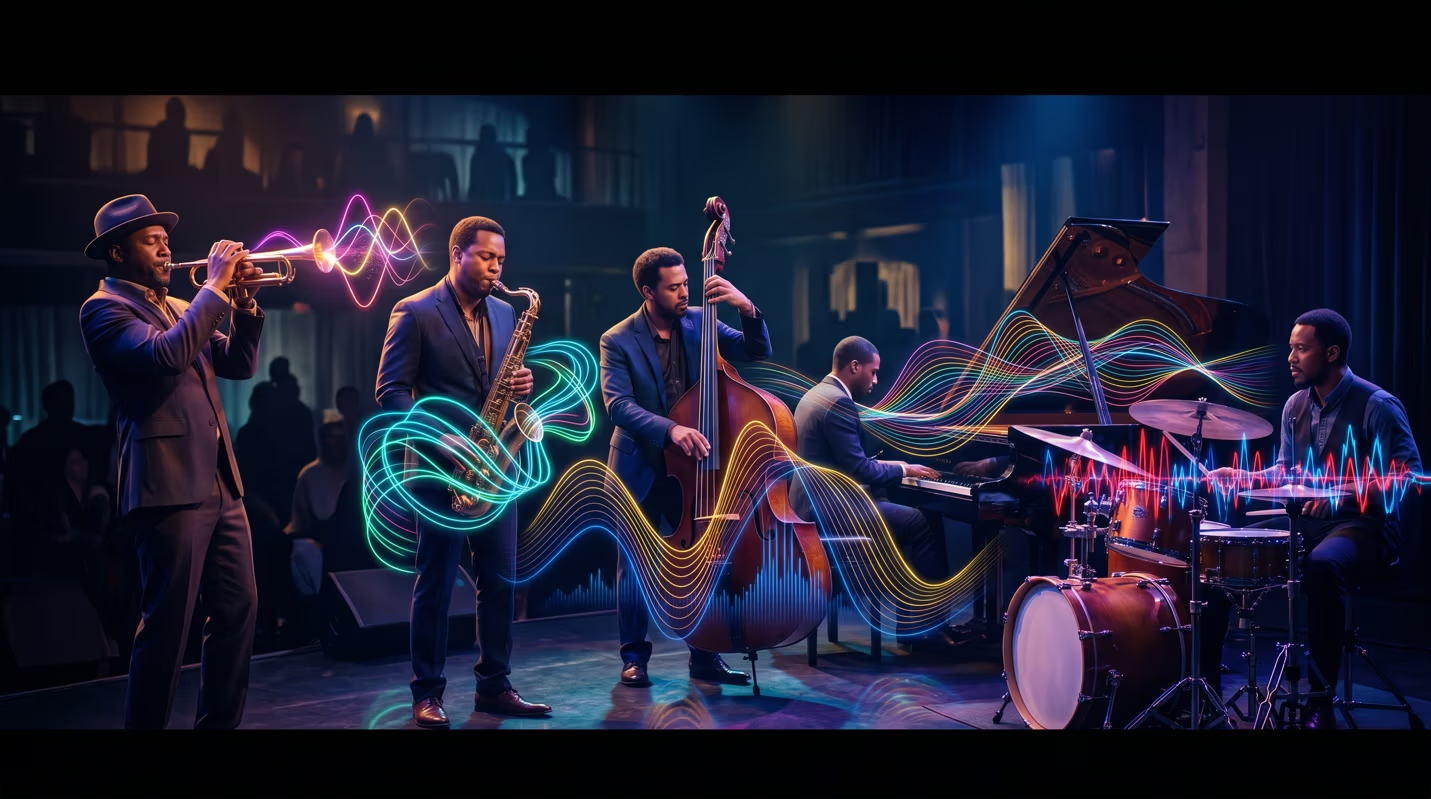
To be in the presence of performing musicians is to experience their touch and handling of instruments as tactile and kinetic, not just as resonant. So it can be said that hi-fi is not any quest for abstract effects of sound in separation from the other senses. With hi-fi, the phonograph meets the TV tactile challenge.
Understanding Media (1964), MIT/Routledge edition, p 282
Year: 1964
The world of impressionism, associated with painting in the late nineteenth century, found its more extreme form in the pointillisme of Seurat and the refractions of light in the world of Monet and Renoir. The stipple of points of Seurat is close to the present technique of sending pictures by telegraph, and close to the form of the TV image or mosaic made by the scanning finger.
Understanding Media (1964), MIT/Routledge edition, p 249
Year: 1964
Our very word "grasp" or "apprehension" points to the process of getting at one thing through another, of handling and sensing many facets at a time through more than one sense at a time. It begins to be evident that "touch" is not skin but the interplay of the senses, and "keeping in touch" or "getting in touch" is a matter of a fruitful meeting of the senses, of sight translated into sound and sound into movement, and taste and smell. The "common sense" was for many centuries held to be the peculiar human power of translating one kind of experience of one sense into all the senses, and presenting the result continuously as a unified image to the mind. In fact, this image of a unified ratio among the senses was long held to be the mark of our rationality, and may in the computer age easily become so again. For it is now possible to program ratios among the senses that approach the condition of consciousness.
Understanding Media, 1964, MIT/Routledge edition, p 60
Year: 1964
Chapter:
Senses
There is no upside down to touch. And there is no upside down in Eskimo art, and there is no upside down for the small child. Whether he is drawing or looking at a picture. Until he learns to read and write there is no upside down.
Conversation with Harley Parker,” The Innis Herald, April 1978
Year: 1978
In music and poetry and painting, the tactile implosion means the insistence on qualities that are close to casual speech.
Understanding Media (1964) MIT/Routledge edition, p 328
Year: 1964
Unlike the movie image, the mosaic mesh of the TV bombards the viewer with tactile values.
“Popular / Mass Culture” (1960), in Understanding Me, 2003, p 17
Year: 1960
In The Problem of Form, 1893 Adolf Hildebrand] insisted that true vision must be imbued with tangibility, and that creative, aesthetic awareness was touching and making. Such was the timeliness of his insistence, that the theme of artistic vision as tangible, tactile, and based on the interplace of the senses began to enjoy acceptance in poetry and painting alike.
“Inside the Five Sense Sensorium” (1961) p 49
Year: 1961
Chapter:
Living Unity
The great problem confronting the engineers of space travel is weightlessness which suppresses the operation of the tactile sense. This sense appears to be the bond among the other senses.
“The Care and Feeding of Communication Innovation” (1961), p 5
Year: 1961
[After TV] It no longer seemed strange to us that Francois Sagan should drive her car in bare feet. Even life behind the tweed curtain of the British Isles assumed a new plausibility as our girls abandoned visual values in favor or coarse cloth and socks and low heels.
Tactility drove us to paper-backs, to the wraparound space of the small car that you put on like your pants, and to skin-diving, small boats, water-skiing…
“The Care and Feeding of Communication Innovation” (1961), p 7
Year: 1961
Since black is not a color but an interval, may this not be the ultimate secret of Negro mastery of rhythm?...touch creates interval and evokes closure or rhythm.
Culture Is Our Business, (1970), p 226
Year: 1970
Chapter:
Jazz
It is postulated that just as white is a result of the assembling of the primary colors in ratio, so touch is an assembly of all the senses in ratio. Black is, therefore, the after-image of touch.
Through the Vanishing Point with Harley Parker (1968), p15
Year: 1968
Chapter:
Senses
... the fact that touch creates an interval involves the audience very much more, the interval has to be closed. When you create an interval you have to close and it is the closing of the interval that creates participation and rhythm.
The Museum as Large-Room Pinball Machine, Marshall McLuhan, Harley Parker, and Museum Professionals, 1967, full transcript of a seminar at the City Museum of New York, October, 1967, edited by William Buxton, published by U. of Alberta Press, 2026, p 67
Year: 1967
Chapters:
Audience, Public, Mass | Interval
I have watched people in museums for many years and it is rather interesting, both in Europe and America. You find a person will walk up to an object and look at it casually, read the label, give it a cursory glance, and walk on. They have not really looked at anything, because they are data oriented and they figure that now they’ve got th4e answer to that and they know it is tenth-century this or that, so they walk away from it. So the idea of setting up a gallery which just asks questions is going to force people to look at that or touch it if possible but at any rate look at it.
The Museum as Large-Room Pinball Machine, Marshall McLuhan, Harley Parker, and Museum Professionals, 1967, full transcript of a seminar at the City Museum of New York, October, 1967, edited by William Buxton, published by U. of Alberta Press, 2026, p 71
Year: 1967
Chapters:
Audience, Public, Mass | Interval
On the other hand we are sort of circling or cycling back to that pre-visual culture – so that much of the latest culture in our world is getting very close to the most primitive culture in terms of the sensory bias. The real gripe we have about the beats, and the hippies, the teenagers, teenyboppers is that they are so primitive.
The Museum as Large-Room Pinball Machine, Marshall McLuhan, Harley Parker, and Museum Professionals, 1967, full transcript of a seminar at the City Museum of New York, October 9-10, 1967, edited by William Buxton, published by U. of Alberta Press, 2026, p 72
Year: 1967
Chapters:
Audience, Public, Mass | Interval
The researcher is a man who deliberately creates interfaces in order to make discoveries. He deliberately sets off situations that will irritate one another, until you suddenly get a flash insight. But it is very rarely that… this is a matter of territoriality…. Each man is defending his own territory.
The Museum as Large-Room Pinball Machine, Marshall McLuhan, Harley Parker, and Museum Professionals, 1967, full transcript of a seminar at the City Museum of New York, October 9-10, 1967, edited by William Buxton, published by U. of Alberta Press, 2026, p 73
Year: 1967
Chapters:
Audience, Public, Mass | Interval
You may have heard about the two mice in the nose cone and one says to the other, “How do you like this kind of work?” And the other says, “Oh well, it’s better than cancer research.”
The Museum as Large-Room Pinball Machine, Marshall McLuhan, Harley Parker, and Museum Professionals, 1967, full transcript of a seminar at the City Museum of New York, October 9-10, 1967, edited by William Buxton, published by U. of Alberta Press, 2026, p 79\
Year: 1967
Chapters:
Audience, Public, Mass | Interval