Viewing chapter Technology (21 quotes)
It is the framework that changes with new technology, and not the picture within the frame.
Marshall McLuhan
Understanding Media (1964), MIT/Routledge edition, p 219
Year: 1964
Chapters:
Technology | Change
The most human thing about us is our technology.
“Predicting 1983,” 1976, contribution to Man and the Future of Organizations, p 19; after Peter Medawar
Year: 1983
Chapters:
Extension Theory | McLuhanisms & Zingers
Electric technology is a qualitative extension of this age-old man-machine relationship; 20th Century man’s relationship to the computer is not by nature very different from prehistoric man’s relationship to his boat or to his wheel—with the important difference that all previous technologies or extensions of man were partial and fragmentary, whereas the electric is total and inclusive. Now man is beginning to wear his brain outside his skull and his nerves outside his skin; new technology breeds new man.
“Playboy Interview: Marshall McLuhan: A Candid Conversation with the High Priest of Popcult and Metaphysician of Media”. By Eric Norden. Playboy Magazine, March (1969), p 74 (1969), in The Essential McLuhan, p 264-265
Year: 1969
Chapter:
Tools We Shape, Reshape Us
As for technological acceleration, it now approaches the speed of light. All nonelectric media had merely hastened things a bit. The wheel, the road, the ship, the airplane, and even the space rocket are utterly lacking in the character of instant movement.
Understanding Media (1964), MIT/Routledge, p 348
Year: 1964
Chapter:
Change
[Defining media, or technologies] It makes no difference whatever whether one considers as artefacts or as media things of a tangible 'hardware' nature such as bowls and clubs or forks and spoons, or tools and devices and engines, railways, spacecraft, radios, computers, and soon; or things of a 'software' nature such as theories or laws of science, philosophical systems, remedies or even the diseases in medicine, forms or styles in painting or poetry or drama or music, and so on.
Introduction, Laws of Media with Eric McLuhan, 1988, p 3
Year: 1988
It is easier to teach the arts (especially contemporary arts) to those who are participants in our technological culture than to those who sit on the sidelines registering distaste and incomprehension.
Letter to Norbert Wiener, May 28, 1951 (LAC)
Year: 1951
The machine is power. And practical politics mean quite simply that the machine must assume increasingly its most powerful form. The shape and rational form of man is now irrelevant. The will of all society has persisted in this direction for more than a century. Enthusiastic abdication on behalf of the machine. Eager embrace of man when deloused of his humanity by technics. That is the impatient wish, the wider hope embedded in the Luce publications [Time, Life, and Fortune] examined here.
“The Psychopathology of ‘Time’ and “Life’ (1949), reprinted in The Scene Before You (1955), p 159
Year: 1949
Technology is an abstract tyrant that carries its ravages into deeper recesses of the psyche than did the sabre-toothed tiger or the grizzly bear.
The Mechanical Bride, 1951, p 45
Year: 1951
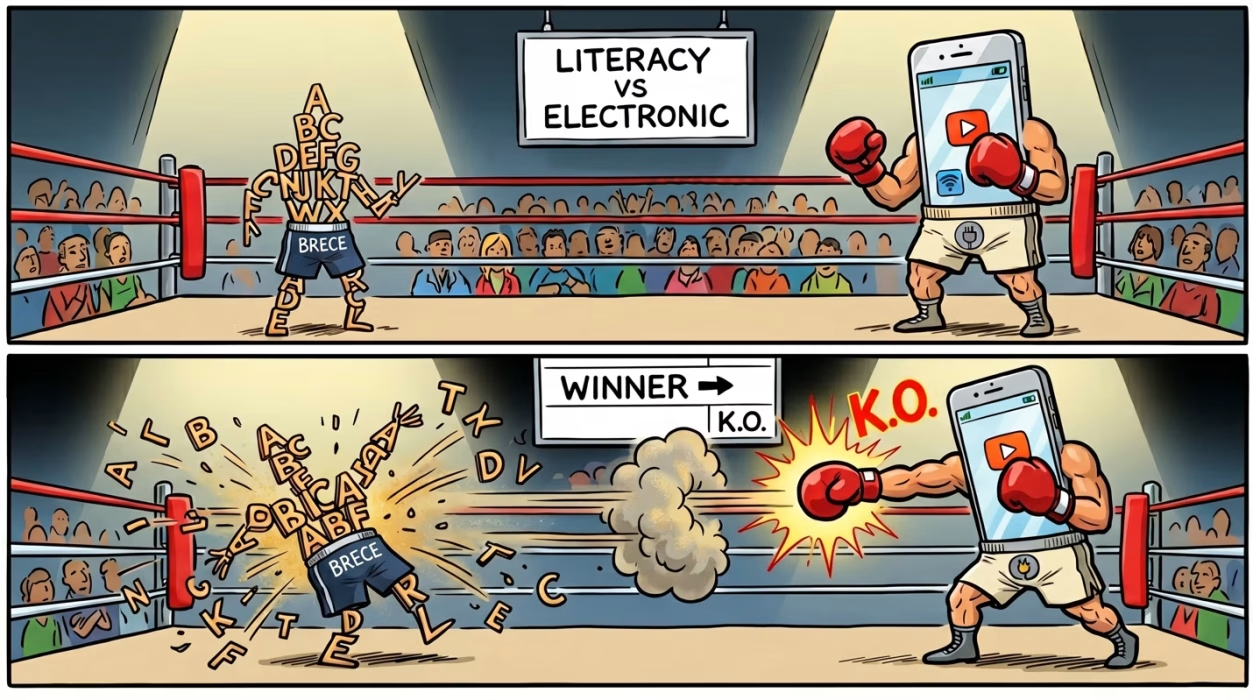
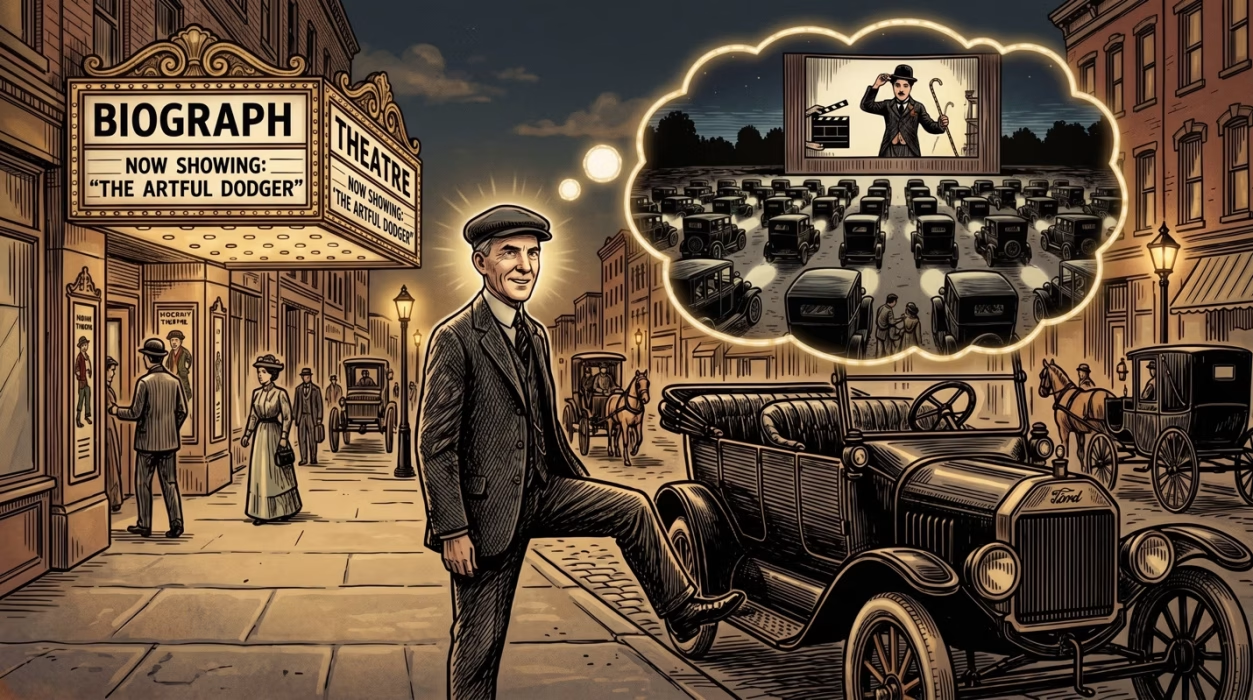



Has technology adopted as its province the entire human psyche and the earth which it inhabits?
“Space, Time and Poetry”, Explorations 4, 1955, p 59
Year: 1955
Chapter:
Mastering Technology
I suppose you could call a man in an iron lung a cyborg but the concept has far wider implicatons than this.
“Alarums in a Brave New World”: Review of Cyborg: Evolution of the Superman by D.S. Halacy, in Winnipeg Free Press, December 11, 1965, p 73
Year: 1965
It was A.N. Whitehead who pointed out that one of the great sources of confusion in our time is the illusion that all chance and innovation occur within this unchanging environment. This illusion is a legacy of the Newtonian system. This system has no more place for change than it has for people.
“Alarums in a Brave New World”: Review of Cyborg: Evolution of the Superman by D.S. Halacy, in Winnipeg Free Press, December 11, 1965, p 73
Year: 1965
Chapter:
Change
[Arthur C. Clarke:] “One day we may be able to enter into temporary unions with any sufficiently sophisticated machines, thus being able not merely to control but to become a spaceship or a submarine or a TV network…” … One of the interesting things about [this] passage…is its prediction that the mind of man may become enextensive, not only with his artefacts but with his concept. Is this not to suggest the philosophical idea that the mind in knowing is also a maker? Pushed far enough, that is to say, science fiction can become humanistic philosophy.
“Alarums in a Brave New World”: Review of Cyborg: Evolution of the Superman by D.S. Halacy, in Winnipeg Free Press, December 11, 1965, p 73
Year: 1965
Are there sufficient signs that technological man is prepared to manipulate, as his matter, both earth and spirit?
“Space, Time and Poetry,” Explorations 4, 1955, p 59
Year: 1955
Chapter:
Mastering Technology
It makes no difference whatever whether one considers as artefacts or as media things of a tangible ‘hardware’ nature such as bowls and clubs or forks and spoons, or tools and devices and engines, railways, a spacecraft, radios, computer, and soon, or things of a ‘software’ nature such as theories or laws of science, philosophical systems, remedies or even the diseases in medicine, forms or style in painting or poetry or dreams or music, and so on. All are equally artefacts, all equally human, all equally susceptible to analysis, all equally verbal in structure.
Introduction, Laws of Media: The New Science with Eric McLuhan, (1988), p 3
Year: 1988
The cathode tube carries ‘the charge of the light brigade’. The tube carries both the charge and the answering barrage. The result is the painting of images by the ballet of electrons.
“Notes on the Media as Art Forms”, Explorations 2, 1954
Year: 1954
The real revolution is in this later and prolonged phase of “adjustment” of all personal and social life to the new model of perception set up by the new technology.
The Gutenberg Galaxy, (1962), p 27
Year: 1962
Chapters:
Anticipating Change | Tools We Shape, Reshape Us
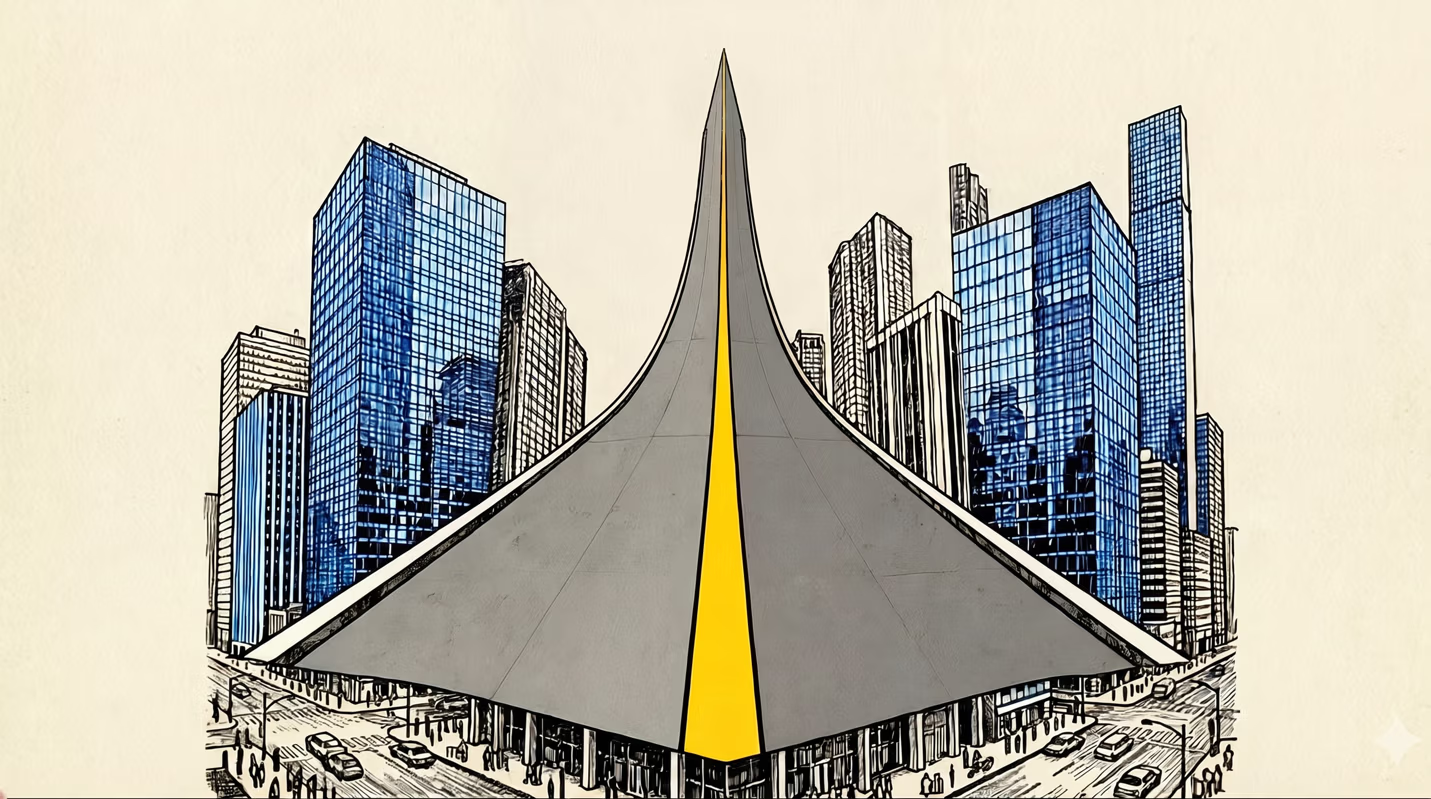
The vanishing point is a perspective made possible by a fixed view on a fixed target. TODAY NOBODY CAN OCCUPY A FIXED POSITION OR FIND A FIXED OR STATIONARY TARGET. Electric technology excludes both possibilities.
The DEW-Line Newsletter Vol 1 # 3 (1969), p 5
Year: 1969
Chapter:
Perspective, Point of View
What we have today, instead of a social consciousness electrically ordered, however, is a private subconsciousness or individual "point of view" rigorously imposed by older mechanical technology.
Understanding Media (1964), MIT/Routledge edition, p 108
Year: 1964
Machiavelli saw the new private morality created by the new specialist technology of print as creating new political goals.
From Cliché to Archetype with Wilfred Watson (1970), p 46
Year: 1970
Chapters:
Anticipating Change | Print
If we persist in a conventional approach to these developments our traditional culture will be swept aside as scholasticism was in the sixteenth century. Had the Schoolmen with their complex oral culture understood the Gutenberg technology, they could have created a new synthesis of written and oral education, instead of bowing out of the picture and allowing the merely visual page to take over the educational enterprise. The oral Schoolmen did not meet the new visual challenge of print, and the resulting expansion or explosion of Gutenberg technology was in many respects an impoverishment of the culture, as historians like Mumford are now beginning to explain.
Understanding Media, 1964, MIT/Routledge edition, p 71
Year: 1964
Chapters:
Advice | Anticipating Change
The reason that Baudelaire and Valery were so impressed by the work of Edgar Allan Poe was that Poe had demonstrated the relation between the stages of knowing and the stages of making. Poe was the first to grasp the new feedback pattern of electric technology.
“A Phantom City Phaked” (1964), p 2
Year: 1964
Chapter:
Poe, Edgar Allan
Technologies seem to be as unconscious as much in their origins as in their effects. A new technology enjoys a brief reign as an anti-environment, then it becomes environmental in turn.
Letter to J. Miller, January 8, 1965
Year: 1965
Chapter:
Unconscious