Viewing chapter Time (11 quotes)
There is no time since everything is always now.
Spectrum of Catholic Attitudes, 1969, p 138
Year: 1969
Chapter:
McLuhanisms & Zingers
Just as work began with the division of labor, duration begins with the division of time, and especially with those subdivisions by which mechanical clocks impose uniform succession on the time sense.
Understanding Media (1964) MIT/Routledge edition, pp 145-146
Year: 1964
Chapters:
Mechanization | Specialism
As a piece of technology, the clock is a machine that produces uniform seconds, minutes, and hours on an assembly-line pattern. Processed in this uniform way, time is separated from the rhythms of human experience. The mechanical clock, in short, helps to create the image of a numerically quantified and mechanically powered universe. It was in the world of the medieval monasteries, with their need for a rule and for synchronized order to guide communal life, that the clock got started on its modern developments. Time measured not by the uniqueness of private experience but by abstract uniform units gradually pervades all sense life, much as does the technology of writing and printing. Not only work, but also eating and sleeping, came to accommodate themselves to the clock rather than to organic needs. As the pattern of arbitrary and uniform measurement of time extended itself across society, even clothing began to undergo annual alteration in a way convenient for industry. At that point, of course, mechanical measurement of time as a principle of applied knowledge joined forces with printing and assembly line as means of uniform fragmentation of processes.
Understanding Media, 1964, in the MIT/Routledge edition, p 146
Year: 1964
Chapter:
Mechanization
The most integral and involving time sense imaginable is that expressed in the Chinese and Japanese cultures. Until the coming of the missionaries in the seventeenth century, and the introduction of the mechanical clocks, the Chinese and Japanese had for thousands of years measured time by graduations of incense. Not only the hours and days, but the seasons and zodiacal signs were simultaneously indicated by a succession of carefully ordered scents.
Understanding Media, 1964, in the MIT/Routledge edition, p 146
Year: 1964
Chapter:
China, Chinese
But it was by means of electricity applied to the wheel that the wheel merges once more with animal form. In fact, the wheel is now an obsolete form in the electric-missile age. But hypertrophy is the mark of obsolescence, as we shall see again and again. Just because wheel is now returning to organic form in the twentieth century it is quite easy for us to understand how primitive man “invented” it. Any creature in motion is a wheel in that repetition of movement has a cyclic and circular principle in it. Thus the melodies of literate societies are repeatable cycles.
The Gutenberg Galaxy: The Making of Typographic Man, (1962), p 44
Year: 1962
As an example, the popular detective story depends on a technique of analysis and reconstruction which depends on the discontinuity of newspaper reportage. This discontinuity in turn is related to the technique of cinematic montage and also to the most successful contemporary methods of scientific analysis and to advanced technique in historiography, archaeology, and anthropology.
“Advertising as a Magical Institution” from The Commerce Journal, Toronto, (1952), reprinted in On the Nature of Media (2016), p 21
Year: 1952
Chapters:
Effect | From Tribal to Literate | Hardware / Software | Living Unity | Symbolists | Today’s Transition
It needs to be understood that only short discontinuous shots of such a work as Joyce's are possible. Linear or continuous perspectives of analogical structures are only the result of radical distortion, and the craving for “simple explanations” is the yearning for univocity.
“James Joyce: Trivial and Quadrivial” Thought: Fordham University Quarterly, Vol. 28, No 1, (1953), in The Interior Landscape (1969), pp 36-37
Year: 1953

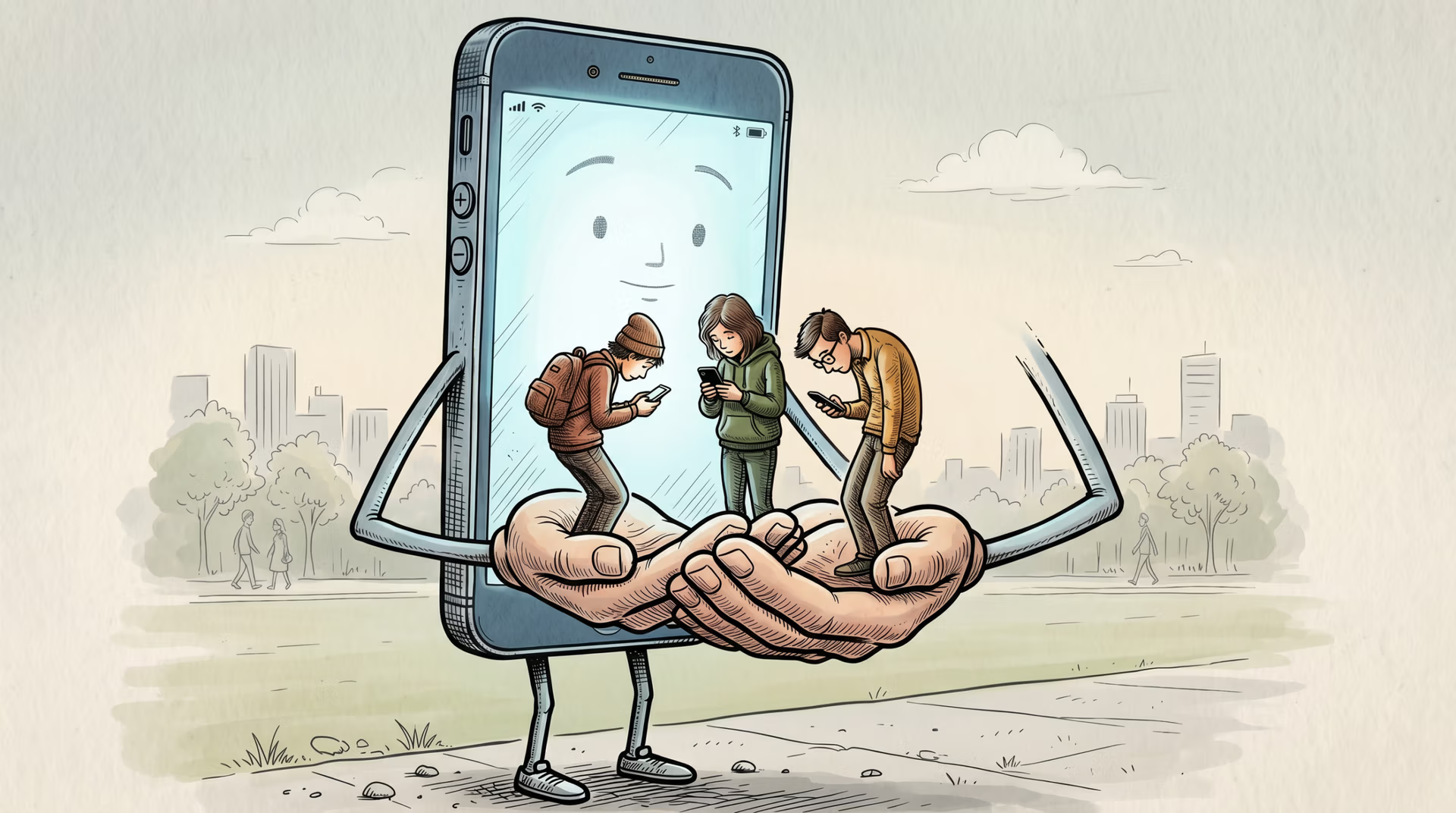
Perhaps the terrifying thing about the new media for most of us is their inevitable evocation of irrational response. The irrational has become the major dimension of experience in our world.
“Culture without Literacy”, in Explorations #1, December (1953), p 126 reprinted in Essential McLuhan, (1995), p 311, additional reprint in Media Research Technology, Art and Communication (1997), p 136, and McLuhan Unbound #6, (2017)
Year: 1953
Of all the great hybrid unions that breed furious release of energy and change, there is none to surpass the meeting of literate and oral cultures. The giving of man of an eye for an ear by phonetic literacy is, socially and politically, probably the most radical explosion that can occur in any social structure. This explosion of the eye, frequently repeated in “backward areas", we call Westernization. With literature now about to hybridize the cultures of the Chinese, the Indians, and the Africans, we are about to experience such a release of human power and aggressive violence as makes the previous history of phonetic alphabet technology seem quite tame.
Understanding Media (1964), MIT/Routledge edition, pp 49-50
Year: 1964
For a century it has been evident in North America that great frustration of mind and purpose has resulted from the gap between official and unofficial education. Official institutional instruction at all levels has tried to maintain the priority of traditional verbal and written culture. Unofficial culture has been mainly non-verbal and visual. Unofficially the young have responded spontaneously and enthusiastically to the new technological environment. Their sensibilities have been shaped by the new machine forms which are themselves the product of the artistic imagination in mathematics and physics. But these forms and the popular culture linked to them have no official recognition in the traditional curriculum of verbal culture... There does exist, then, a two-way bridge between the traditional and technological worlds which are at war in Western culture. But it has been officially ignored or condemned. To travel this bridge requires of the traveler an acquaintance with the language and techniques of poetry on the one hand, and of the language and techniques of painting, architecture, and the visual world on the other. Few are prepared to acquire both languages and so the war between these worlds continues, waged witlessly in classroom.
“Space, Time and Poetry”, in Explorations 4, (1955), p 60, (2016) reprint, p 55, reprinted as McLuhan Unbound #13, (2017), p
Year: 1955
For tribal man space itself is the enemy because charged with voodoo menace. For such a man the beautiful is that which suggests the indestructible or the invulnerable, just as for the time-frayed the womblike security of the limousine is beautiful because a promise of pneumatic bliss. For tribal man space was the uncontrollable mystery. For technological man it is time that occupies the same role. Time is still loaded with a thousand decisions and indecisions which terrify a society that has yielded so much of its autonomy to merely automatic processes and routines. The problem, therefore, is to control panic by “killing time” or by shredding it into “ragtime.” To reduce it to an imbecilic bebop point. We seek to hide in the tight bebop moment, as the tribesman hid in the squat spatial unit.
The Mechanical Bride: Folklore of Industrial Man, (1951), p 85
Year: 1951
Chapters:
McLuhanisms & Zingers | Tribal Societies