Viewing chapter Training of Perception (24 quotes)
The great advantage of studying space in the arts is that the arts offer an extraordinary range of sensory situations for the training of perception. For example, it is not commonly understood that the visual is the only sense which creates the illusion of uniform, connected spaces.
Through the Vanishing Point with Harley Parker (1968), pp 5-6
Year: 1968
In short, taking an intelligent interest in everyday things at once enlarges the area of attention and reveals the meaning for us all.
“Baseball Is Culture” (1952), p 4
Year: 1952
The teaching of reading and literature therefore, has now to assume the job of directing perception and of training judgment...
“What the Mass Media Mean for Teachers of English,” 1955 p 3
Year: 1955
Apart from those shaped by the phonetic alphabet, the universal condition of man has been corporate and tribal and family-oriented.
Liturgy And Media” in The Critic, Vol.31, No. 3, January-February (1973), p 21, reprinted in reprinted in The Medium and the Light: Reflections on Religion (1999), p 128
Year: 1973
The radical deficiency of American intellectual life vis-a-vis the new tasks of revaluation, synthesis, and exploration, is its lack of communal sense. This is true even of the academic scene. But outside the academic world there is certainly no likelihood of finding the leisure, the erudition or the disinterestedness for the work at hand. The first step, therefore, is to perform a basic overhaul job on the academies. To redirect the energies of the American college from the immediate goal of preparing students for a local commercial society to preparing students for the fullest kind of citizenship, such as is actually demanded of us as a condition of present survival — that is the task.
From McLuhan’s 1947 Proposal to Robert M. Hutchins, to launch an interdisciplinary seminar and associated journal (later, narrowly accomplished by the Ford Foundation Grant with the Explorations groups and the journal Explorations: Studies in Culture and Communication).
Year: 1947
Chapters:
Sleepwalkers | Wake Them Up!
For a century it has been evident in North America that great frustration of mind and purpose has resulted from the gap between official and unofficial education. Official institutional instruction at all levels has tried to maintain the priority of traditional verbal and written culture. Unofficial culture has been mainly non-verbal and visual. Unofficially the young have responded spontaneously and enthusiastically to the new technological environment. Their sensibilities have been shaped by the new machine forms which are themselves the product of the artistic imagination in mathematics and physics. But these forms and the popular culture linked to them have no official recognition in the traditional curriculum of verbal culture... There does exist, then, a two-way bridge between the traditional and technological worlds which are at war in Western culture. But it has been officially ignored or condemned. To travel this bridge requires of the traveler an acquaintance with the language and techniques of poetry on the one hand, and of the language and techniques of painting, architecture, and the visual world on the other. Few are prepared to acquire both languages and so the war between these worlds continues, waged witlessly in classroom.
“Space, Time and Poetry”, in Explorations 4, (1955), p 60, (2016) reprint, p 55, reprinted as McLuhan Unbound #13, (2017), p 11
Year: 1955
Would it not seem natural and necessary that the young be provided with at least as much training of perception in this graphic and photographic world as they get in the typographic? In fact, they need more training in graphics, because the art of casting and arranging actors in ads is both complex and forcefully insidious.
Understanding Media (1964), MIT/Routledge edition, p 230
Year: 1964


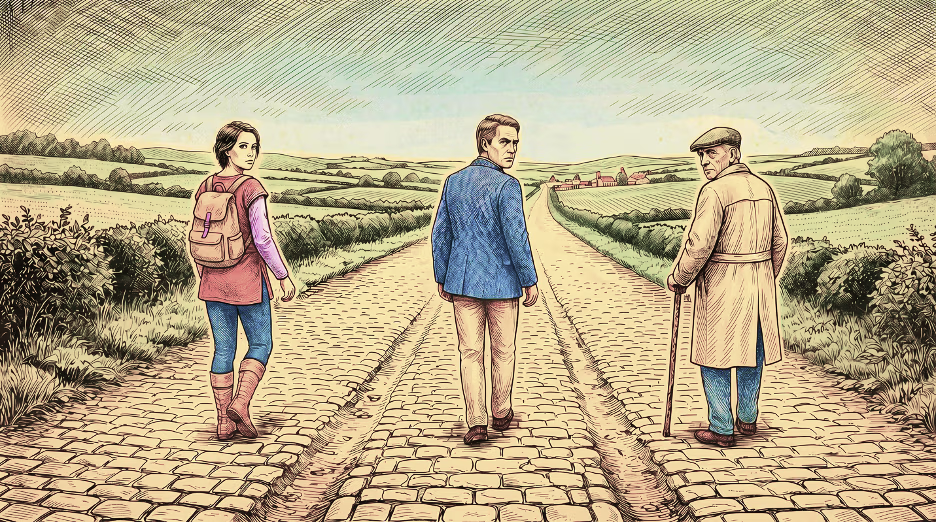

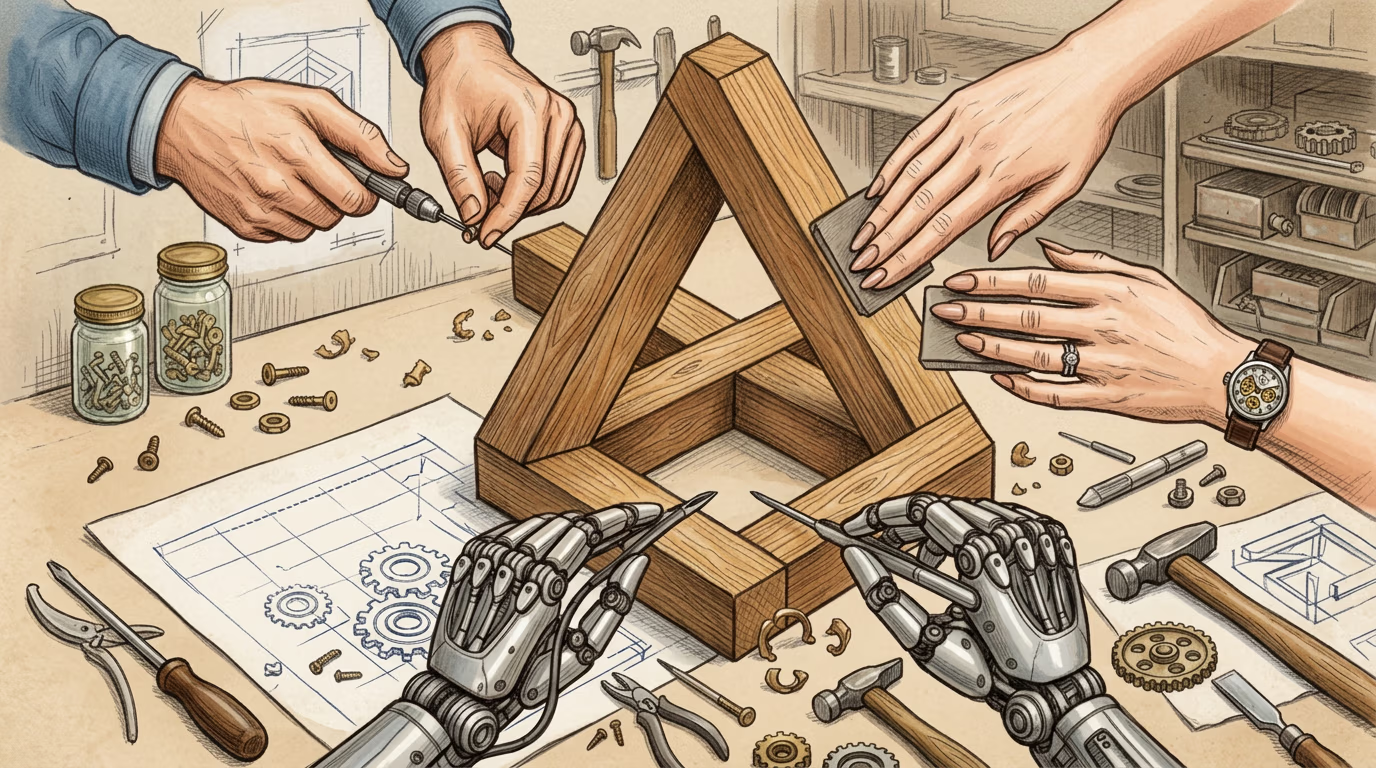

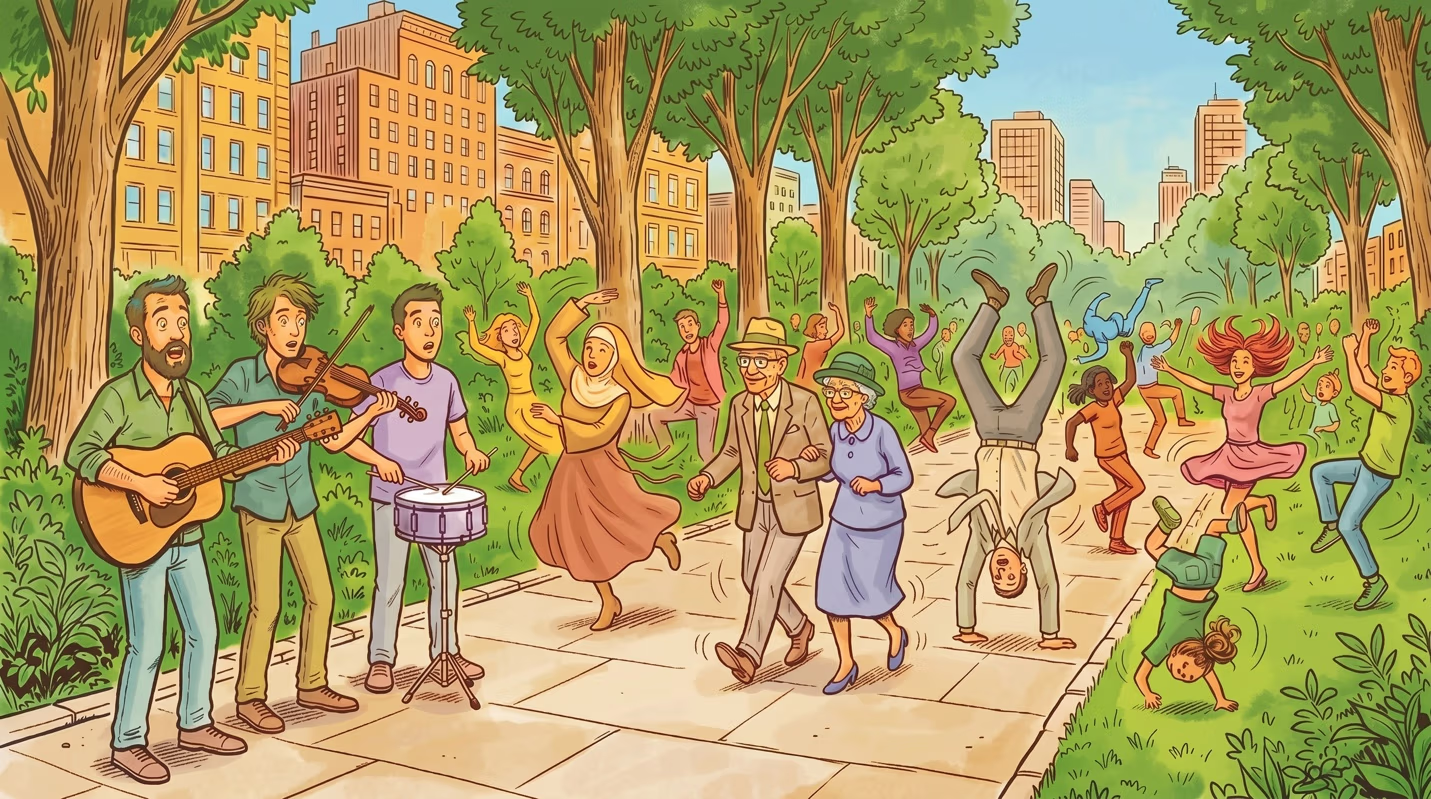

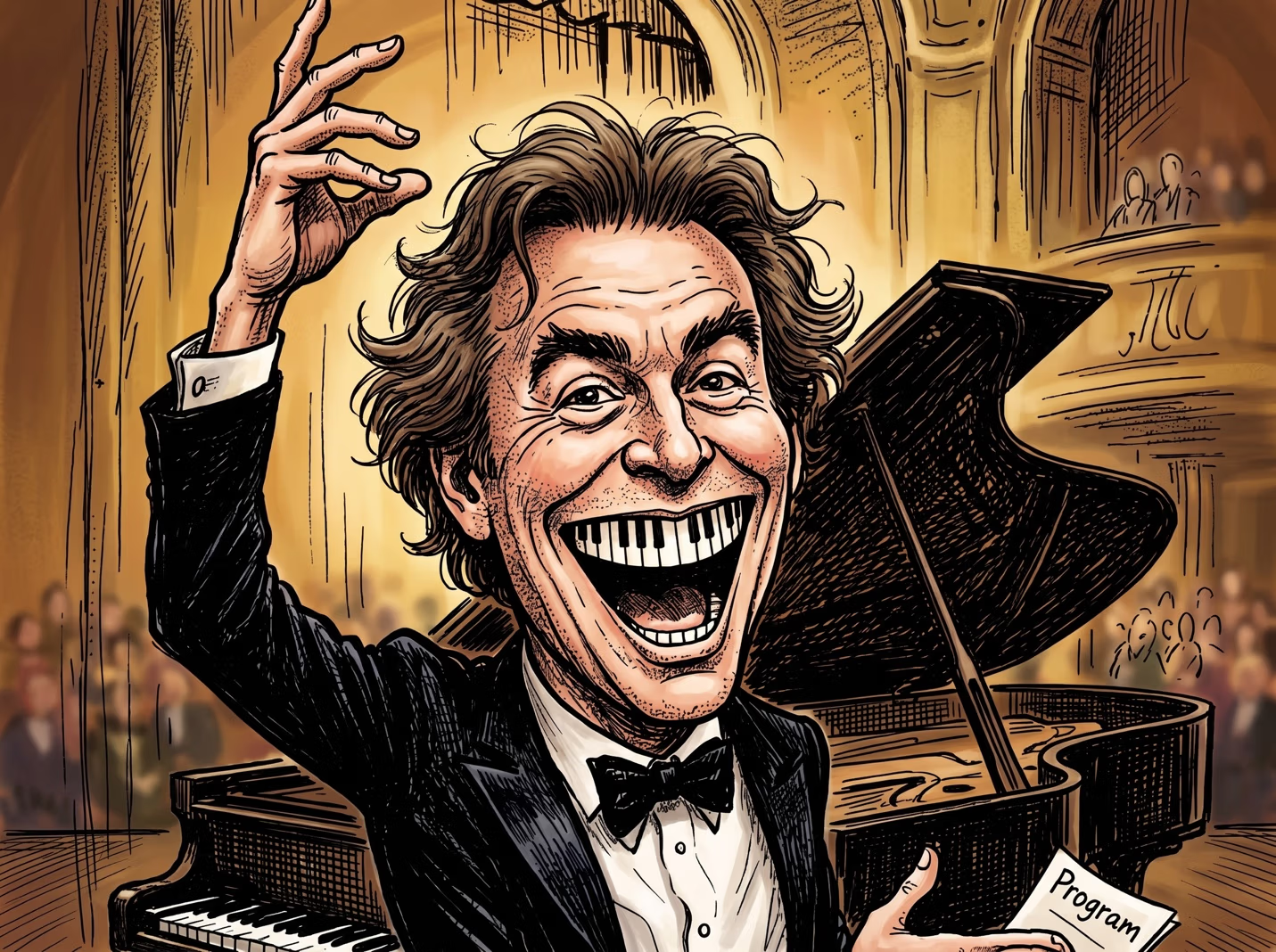

It has been said that the job of the teacher is to save the student’s time. At Cambridge there were men who knew how to do this by putting a student in touch with his time. Much life and energy is wasted in perceptual alienation from one’s own age. The training of perception has been the aim and boast of many educators at Cambridge in this century.
“Autobiography,” an undated 3-page typescript, probably from the early 1970s, p 1
Year: 1970
For the untrained awareness, all reading and all movies, like all travel , are equally banal and unnourishing as experience.
Understanding Media (1964), MIT/Routledge edition, p 198
Year: 1964
The patterns of formerly hidden processes now begin to obtrude on every hand. Prescience, prophetic vision, and artistic awareness are no longer needed to establish an understanding of the most secret causes of personal and social processes. Mere electric speed-up makes X-ray awareness natural. Any administrator today is aware of his environment as a universal teaching machine.
Take Today with Barrington Nevitt (1972), p.193
Year: 1972
Why has it never occurred to Dr. [Robert] Hutchins that the only practical answer to the “storm of triviality and propaganda” is that it be brought under control by being inspected. Its baneful effects are at present entirely dependent on its being ignored. In launching such a pastime program of uninhibited inspection of popular and commercial culture Dr. Hutchins would find himself on a radical task at last.
The Mechanical Bride (1951), p 45
Year: 1951
Chapter:
Media Effects
Print would seem to have lost much of its monopoly as a channel of information, but it has acquired new interest as a tool in the training of perception.
Counterblast (1969), p 99
Year: 1969
I have not wandered so far from literature as might appear. In so far as literature is the study and training of perception, the electric age has complicated the literary lot a great deal. However the new extensions of our senses have greatly enhanced the role of language for coping with the total environment. As the total environment becomes a technologically prepared environment, languages assume new roles over and above the confrontation of the printed page. Yet the literary man is potentially in control of the strategies needed in the new sensory environment. Language alone includes all the senses and interplay at all times.
Letter to Michael Wolff, July 3, 1964, in Letters of Marshall McLuhan (1987) p 304
Year: 1964
Chapter:
Language
This perhaps appears in the new criticism which is so unsympathetic to many of those trained in an earlier period of book culture. As a tool in the training of perception, the book, I think, has acquired a great new role in the past two decades. The unexplained popularity of highbrow paper-backs may be related to this complex situation.
Counterblast (1969), p 99
Year: 1969
Chapter:
New Criticism
A poem or a painting is in every sense a teaching machine for the training of perception and judgment.
“The Emperor New Clothes” (1966), in Essential McLuhan (1995), p 339
Year: 1966
“The necessary training is not available in philosophy and dialectic. Yet it does exist both in the arts as training of perception, and in our Western learned tradition as grammatical training of critical awareness for application to both the written book and the Book of Nature.
Laws of Media: The New Science with Eric McLuhan, (1988), p 63
Year: 1988
I suggest that this entirely consistent strategy for the training of perception was characteristic of [Wyndham] Lewis, who might in this matter join with Conrad in saying that "it is above all that you may see.”
Review of the book Wyndham Lewis, Renascence. 1960, pp 94-95
Year: 1960
“This perhaps appears in the new criticism which is so unsympathetic to many of those trained in an earlier period of book culture. As a tool in the training of perception, the book, I think, has acquired a great new role in the past two decades. The unexplained popularity of highbrow paper-backs may be related to this complex situation
Counterblast (1969), p 99
Year: 1969
Chapter:
New Criticism
In so far as literature is the study and training of perception, the electric age has complicated the literary lot a good deal. However the new extensions of our senses have greatly enhanced the role of language as training for coping with the total environment.
Letter to Michael Wolff (1964) Letters. (1987), p 304
Year: 1964
“The function of art in a tribal society is not to orient the population to novelty but to merge it with the cosmos. Value does not inhere in art as object but in its power to educate the perceptions.
From Cliche to Archetype with Wilfred Watson, 1970, p 177
Year: 1970
Chapter:
Tribal Societies
One item that has come much into focus here at the Centre concerns graduate studies. It can be put very briefly this way: whereas for centuries the Universities have been the main processing plants for young minds, they have become in the electric age, the principal organs of perception for the entire community. The undergraduate division still carries all the marks of the older University, being mainly verbal in its approach to the training of perception and judgment.
Letter to Ernest Sirluck December 2, 1963, in Letters (1987), p 293
Year: 1963
Chapter:
Education
The training of perception upon the otherwise unheeded environment became the basis of experimentation in what is called modern art and poetry. The artist, instead of expressing himself in various patterns and packages of message, turned his senses and the work of art to the business of probing the environment. The symbolists, for example, broke up the old romantic landscape into fragments that they used as probes to explore the urban and metropolitan environments. Then they turned to probing the inner life of man with the same verbal instruments in hand. Instead of using the verbal as a way of expression, they turned it inward for the purpose of exploring and discovering the contours of the inner life.
“The Emperor’s New Clothes,” 1966, reprinted in Essential McLuhan (1997, UK edition), 213p
Year: 1966
The business of the critic is to get the reader into contact then to mold him, to constrain what he contacts. This is to assume no more for literature than for music. The critic-teacher has to know at least as much about the technologies and forms of literature as a symphony conductor about scores and instruments.
Jotted onto a page addressed “Dear reader” found in the U of T Quarterly, January, 1950, in Eric McLuhan’s library, retrieved and published by Andrew McLuhan
Year: 1950
Chapters:
Education | Literary Criticism
Carl Orff, the noted contemporary German composer, has refused to accept as a student any but the pre-school child whose spontaneous sense perceptions have not yet been channeled by formal, literary, visual prejudices.
Attribution?
FLAG: Need to locate source
FLAG: Need to locate source