Viewing chapter Transform (15 quotes)
… new technology breeds new man.
“Playboy Interview: Marshall McLuhan: A Candid Conversation with the High Priest of Popcult and Metaphysician of Media”. By Eric Norden. Playboy Magazine, March (1969), p 74 (1969), in The Essential McLuhan, p 264-265
Year: 1969
Chapters:
McLuhanisms & Zingers | Tools We Shape, Reshape Us
Mine is a transformation theory, how people are changed by the instruments they employ. I wish there were a lot more people in this field of transformation, but there are extremely few, and I would be embarrassed to mention more than two or three.”
“Living in an Acoustic World,” Speech at the University of Florida, 1974, Transcript: 14:00
Year: 1974
[The ancient Trivium, a core portion of the curriculum of ancient Greek education, consists of Rhetoric, Grammar, and Dialectic, or Logic. McLuhan’s Cambridge PhD dissertation, Thomas Nashe and the Learning of His Time, completed in 1943, tracked the conflicts between Rhetoric/Grammar and Dialectic from pre-Socratic Greeks to the 16th century.
.
When Alice went through the vanishing point of the visual world, breaking the hardware of the looking-glass world, she became involved in a series of rapid metamorphoses, not unrelated to her tears.
Culture Is Our Business (1970), p 68
Year: 1970
Chapters:
Goodbye Linearity | Today’s Transition
There are no connections in resonant [acoustic] space. There are only interfaces and metamorphoses.
“The Papal Interval”, 1970, unpublished typescript, p 3
Year: 1970
My own approach, following Harold Innis, is a transformation theory, thus homeostasis of the perceptual factors in a rapidly changing environment requires much redistribution of emphasis among the senses. For example, a blind or deaf person compensates for the loss of one sense by a heightening of activity in the others. It seems to me that this also occurs in whole populations, when new technologies create new sensory environments.
Quoted in “McLuhan Delivers His Message,” by Bella Strumbo, Los Angeles Times, February 28, 1972; later quoted in W. Terrence Gordon’s Marshall McLuhan: Escape into Understanding (1997), p 150
Year: 1972
There is no difference that does not make a difference,
Laws of Media: The New Science with Eric McLuhan, (1988), p 183
Year: 1988
Chapters:
McLuhanisms & Zingers | Tools We Shape, Reshape Us
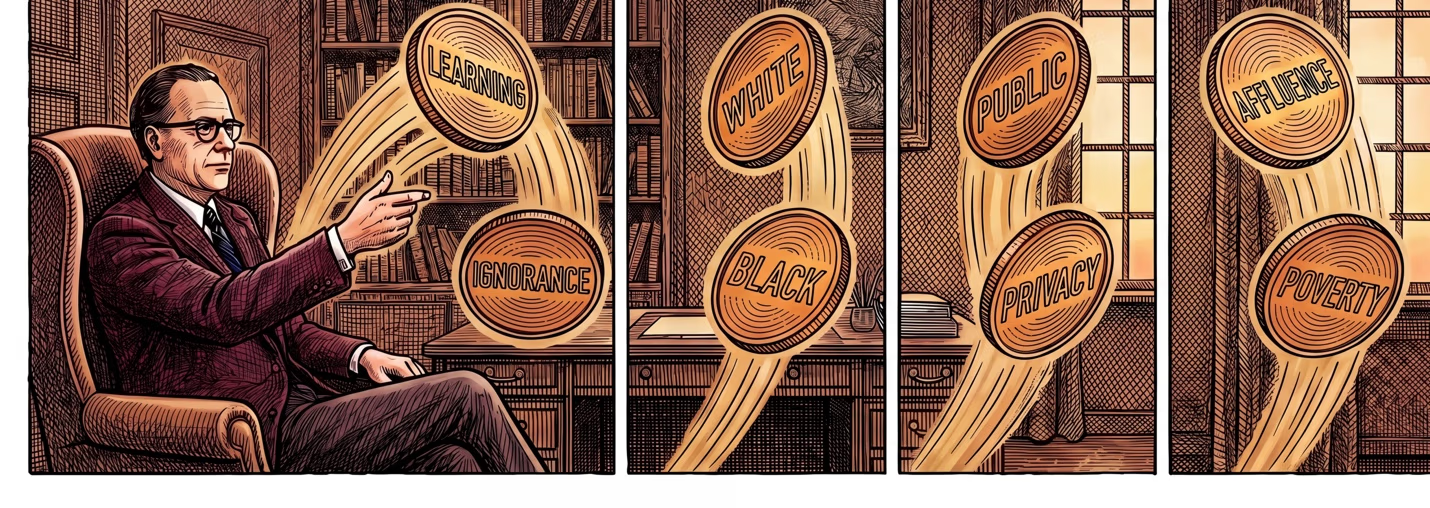
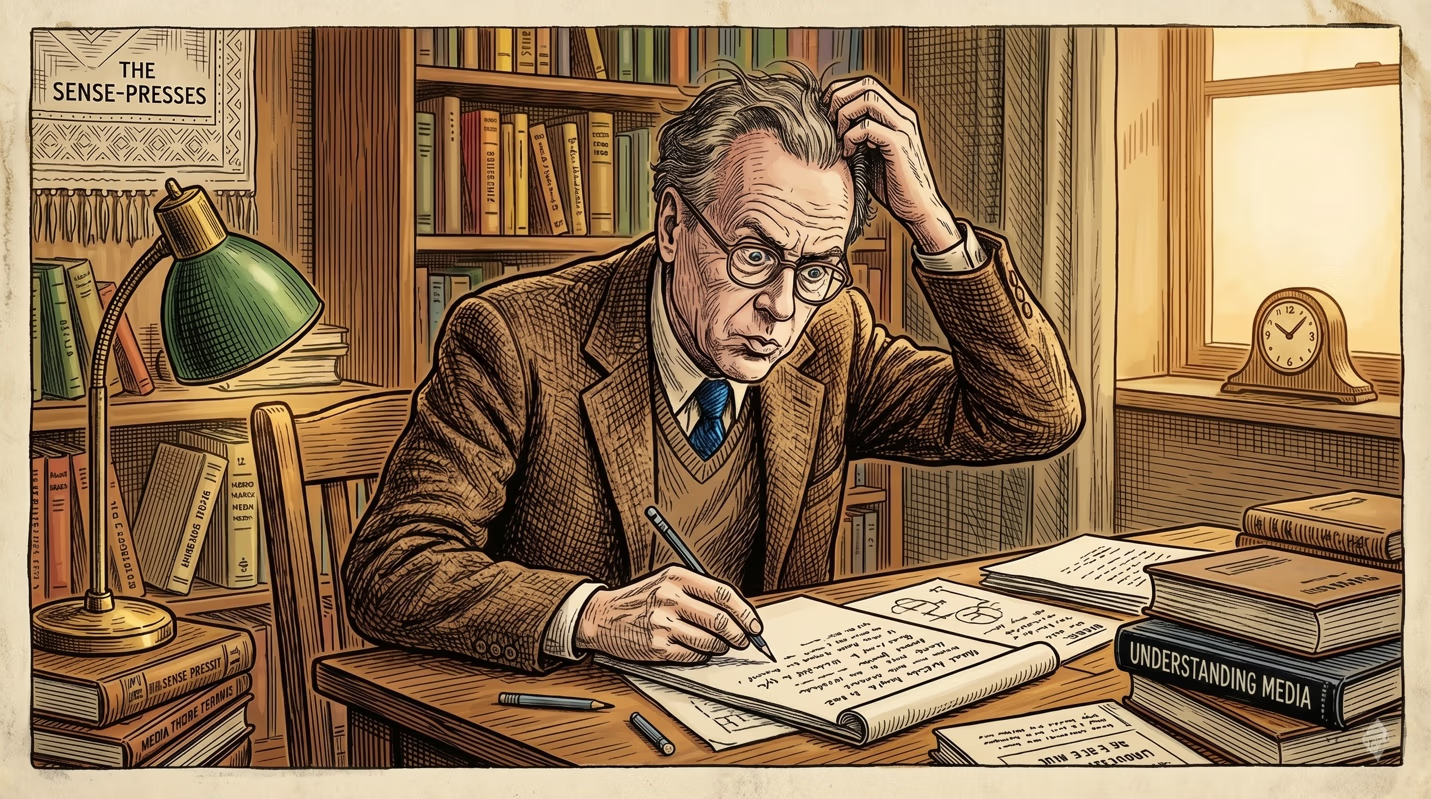
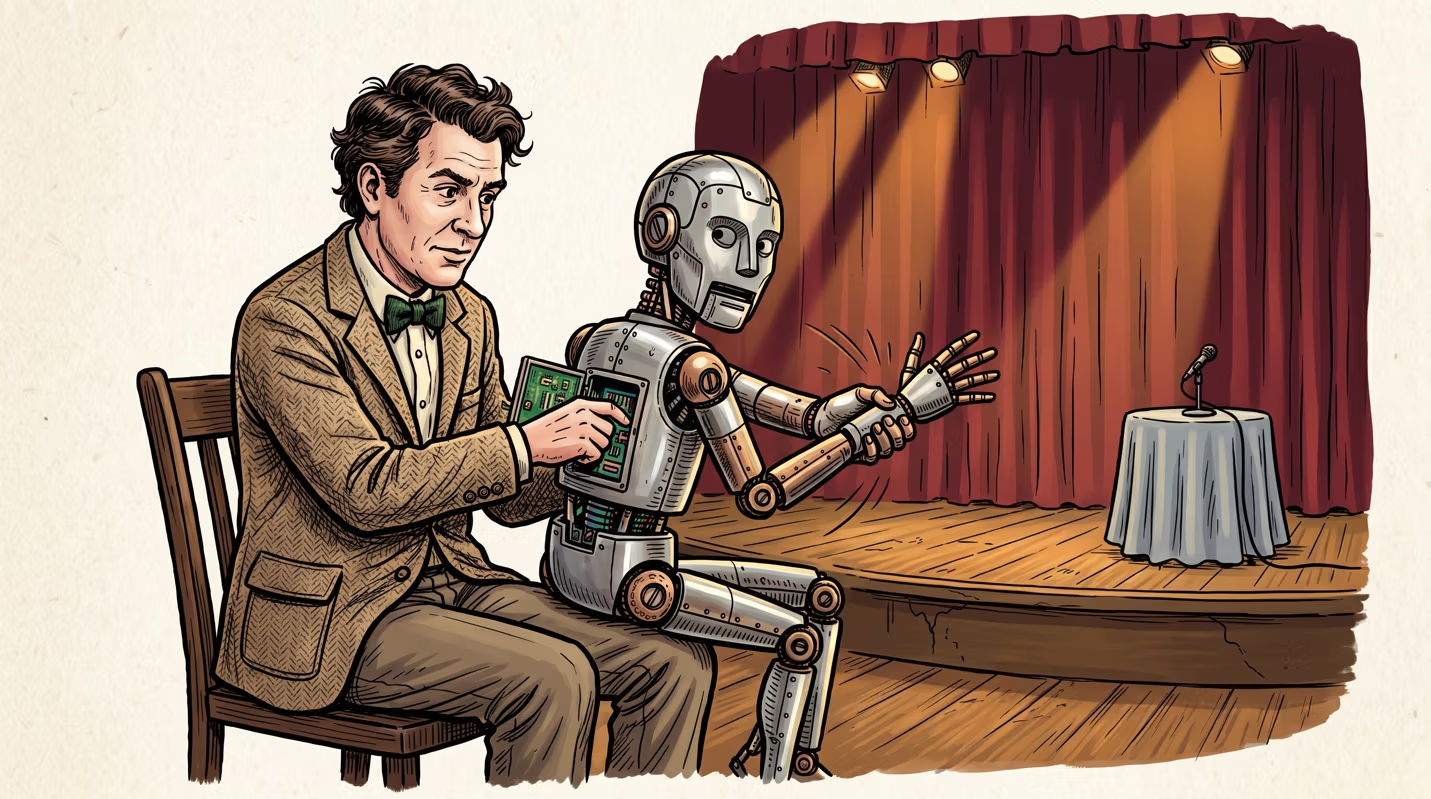
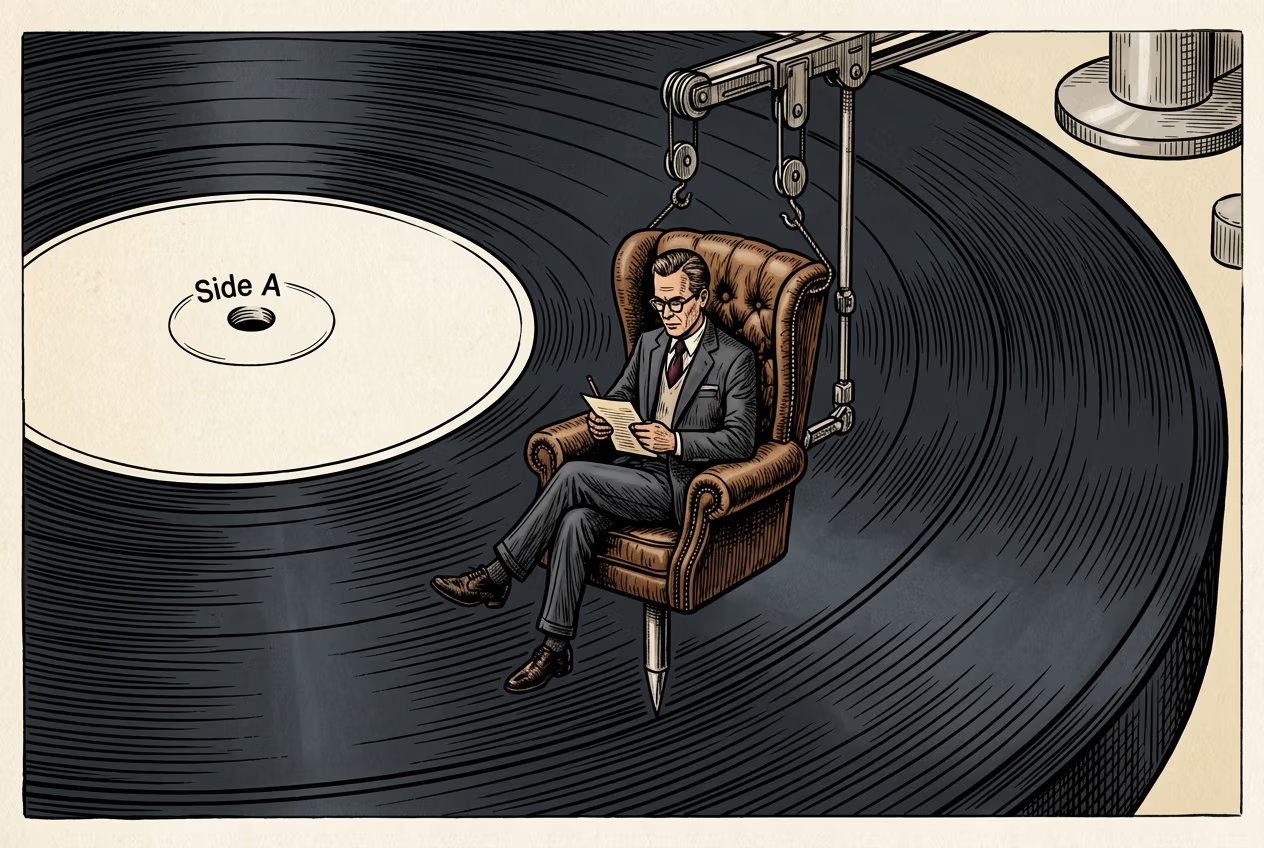
PLAYBOY: You said a few minutes ago that all of contemporary man’s traditional values, attitudes and institutions are going to be destroyed and replaced in and by the new electric age. That’s a pretty sweeping generalization. Apart from the complex psychosocial metamorphoses you’ve mentioned, would you explain in more detail some of the specific changes you foresee?
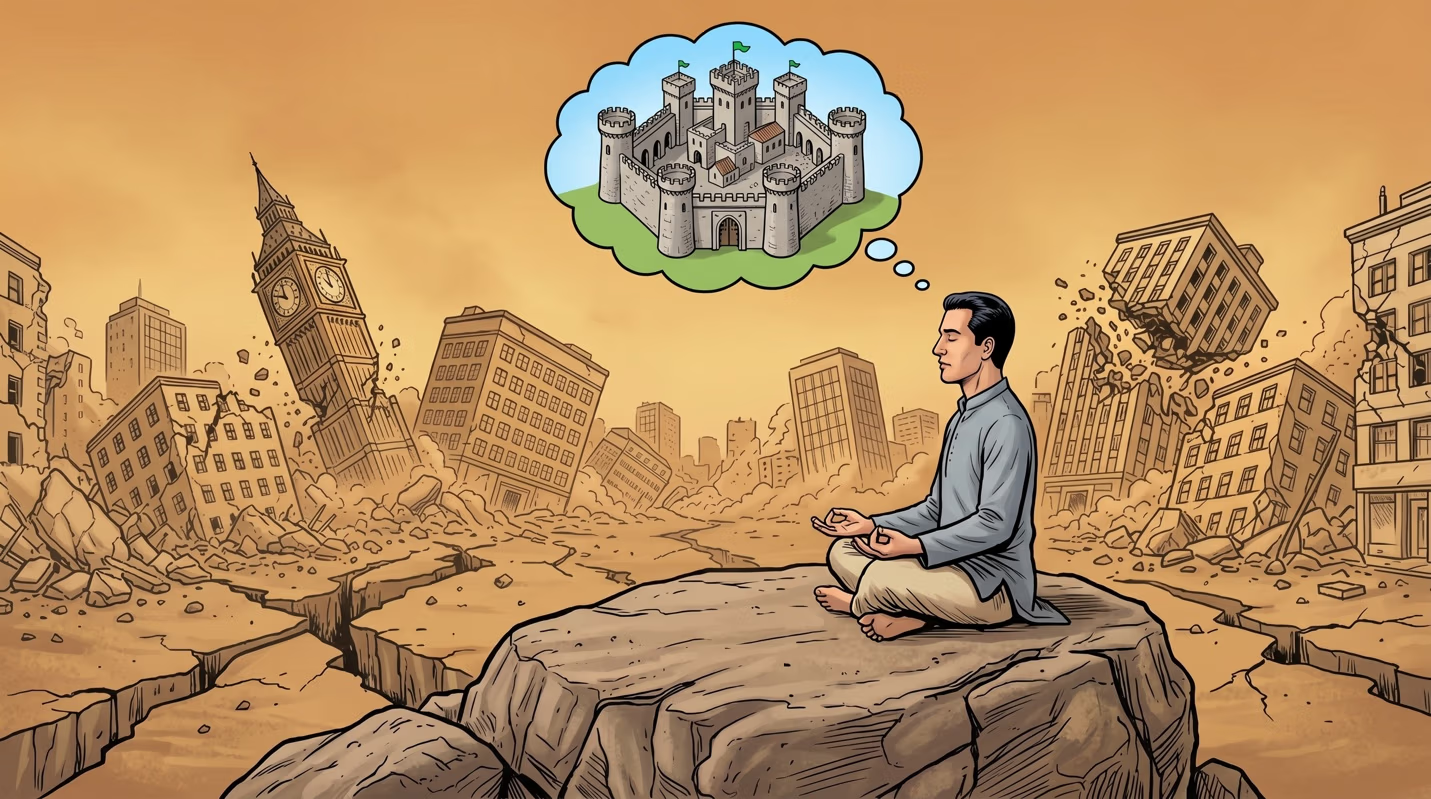
McLUHAN: The transformations are taking place everywhere around us. As the old value systems crumble, so do all the institutional clothing and garbage they fashioned. The cities, corporate extensions of our physical organs, are withering and being translated along with all other such extensions into information systems, as television and the jet—by compressing time and space—make all the world one village and destroy the old city-country dichotomy. New York, Chicago, Los Angeles—all will disappear like the dinosaur. The automobile, too, will soon be as obsolete as the cities it is currently strangling, replaced by new antigravitational technology. The marketing systems and the stock market as we know them today will soon be dead as the dodo, and automation will end the traditional concept of the job, replacing it with a role, and giving men the breath of leisure. The electric media will create a world of dropouts from the old fragmented society, with its neatly compartmentalized analytic functions, and cause people to drop in to the new integrated global-village community.
Playboy Interview (1969), in Essential McLuhan (1995), po 253-254
Year: 1969
Chapter:
Today’s Transition
In every situation, metamorphosis depends on the frozen arrest of an action. The diehard, paradoxically, can be read as an epitath on his own tombstone.
Take Today with Barrington Nevitt (1972), p 5
Year: 1972
Chapter:
Anticipating Change
Perhaps it is this last factor [the assumption by artists and scientists that the public should be addressed but not changed] that has excluded the study of communication as transformation from our schools and universities.
“English Literature as Control Tower in Communication Study,” English Quarterly (University of Waterloo), Vol. 7, No. 1, Spring, 1974, p 5
Year: 1974
Chapter:
Anticipating Change
Early in the Offertory of the Mass, the phrase alluding to the Incarnation speaks of man as “miabiliter conidisti, et mirabilius reformasti” [“You have made me in a wonderful way, and you have remade me more wonderfully”]. … this statement has always seemed to me to indicate that both the incarnation and the Mass are profound and total re-makings of man and the world. Now in the electronic age when so much of our environment is man-made, it becomes easier to comprehend some of the wonders of this doctrine.
"The Future of Morality: The Inner vs. the Outer Quest" in The New Morality, ed., William Dunphy (1967), p 183
Year: 1967
When we say that the user is the content of a medium, be it a hammer, a language, or telephone, we draw attention to the fact that the extensions of man surround him with services and environments. This aspect does not contradict “the medium is the message,” but rather sets up the figure-ground pattern more clearly. The user of a coinage or radio is in a perpetual interface with that which he uses, and both user and used are modified thereby. It is this resulting modification that constitutes the “message” of the medium.
“Bulls Eye, Cow’s Eye (1971), an unpublished typescript on user as content
Year: 1971
Chapters:
Tools We Shape, Reshape Us | User as Content
Our most ordinary and conventional attitudes seem suddenly twisted into gargoyles and grotesques. Familiar institutions and associations seem at times menacing and malignant. These multiple transformations, which are the normal consequence of introducing new media into any society whatever, need special study and will be the subject of another volume on Understanding Media in the world of our time.
The Gutenberg Galaxy: The Making of Typographic Man, (1962), p 279
Year: 1962
PLAYBOY: Do you think the surviving hippie subculture is a reflection of youth's rejection of the values of our mechanical society?
MCLUHAN: Of course. These kids are fed up with jobs and goals, and are determined to forget their own roles and involvement in society. They want nothing to do with our fragmented and specialist consumer society. Living in the transitional identity vacuum between two great antithetical cultures, they are desperately trying to discover themselves and fashion a mode of existence attuned to their new values; thus the stress on developing an “alternate life style”. We can see the results of this retribalization process whenever we look at any of our youth -- not just at hippies.
“Playboy Interview: Marshall McLuhan: A Candid Conversation with the High Priest of Popcult and Metaphysician of Media”. By Eric Norden. Playboy Magazine, March (1969), p 64, reprinted in Essential McLuhan (1995), p 252
Year: 1969
By default rather than design, most futurists assume that “human nature” will hold firm. They ignore the fact that technological change has always struck human life right at the heart, changing people just as it changes things.
“The Future of Sex” (1967), typescript p 2
Year: 1967