Viewing chapter Tribal Societies (34 quotes)
THE TRUTH SHALL MAKE YOU FREE Herbert Marshall McLuhan JULY 21, 1911 – December 31, 1980
Headstone, Holy Cross Cemetery, Thornhill, Ontario
Chapter:
Truth
Horizontal man, prehistoric man, in this view, was innocent of "mine" and "thine." He was without individual self-consciousness.
“The God-Making Machines of the Modern World” (1954), in The Medium and the Light, 1999, p 199
Year: 1954
Chapter:
From Tribal to Literate
All preliterate societies are communist, just as they are tribal. They have never experienced nationalism, since that is one of the visual effects of phonetic literacy. (Chinese script is not visual but iconic and tactile. It does not disturb the tribal bonds.)
Culture Is Our Business, (1970), p 72
Year: 1970
The modes of life of nonliterate people were implicit, simultaneous and discontinuous, and also far richer than those of literate man. By their dependence on the spoken word for information, people were drawn together into a tribal mesh; and since the spoken words is more emotionally laden than the written – conveying by intonation such rich emotions as anger, joy, sorrow, fear – tribal man was more spontaneous and passionately volatile.
Playboy interview, 1969, in Essential McLuhan (1997, UK edition), p 229
Year: 1969
Psychologists explain that when the field of attention has a centre without a margin we are hypnotized. Such is the condition of tribal man, past and present.
“Inside the Five Sense Sensorium” (1961), p 54
Year: 1961
Chapter:
Radio
Naturally, all members of a tribe are descended from kings. The head of a clan is a king constituted by the corporate participation of all the members of the clan
Culture Is Our Business, (1970), p 246
Year: 1970
Any culture is an order of sensory preferences, and in the tribal world, the senses of touch, taste, hearing and smell were developed, for very practical reasons, to a much higher level than the strictly visual. Into this world, the phonetic alphabet fell like a bombshell, installing sight at the head of the hierarchy of senses.
Playboy Interview (1969), in Essential McLuhan (UK edition, 1997), p 230
Year: 1969
…tribal peoples… [are] those whose entire social existence is an extension of family life….
Understanding Media (1964), MIT/Routledge edition, p 300
Year: 1964
Chapter:
From Tribal to Literate
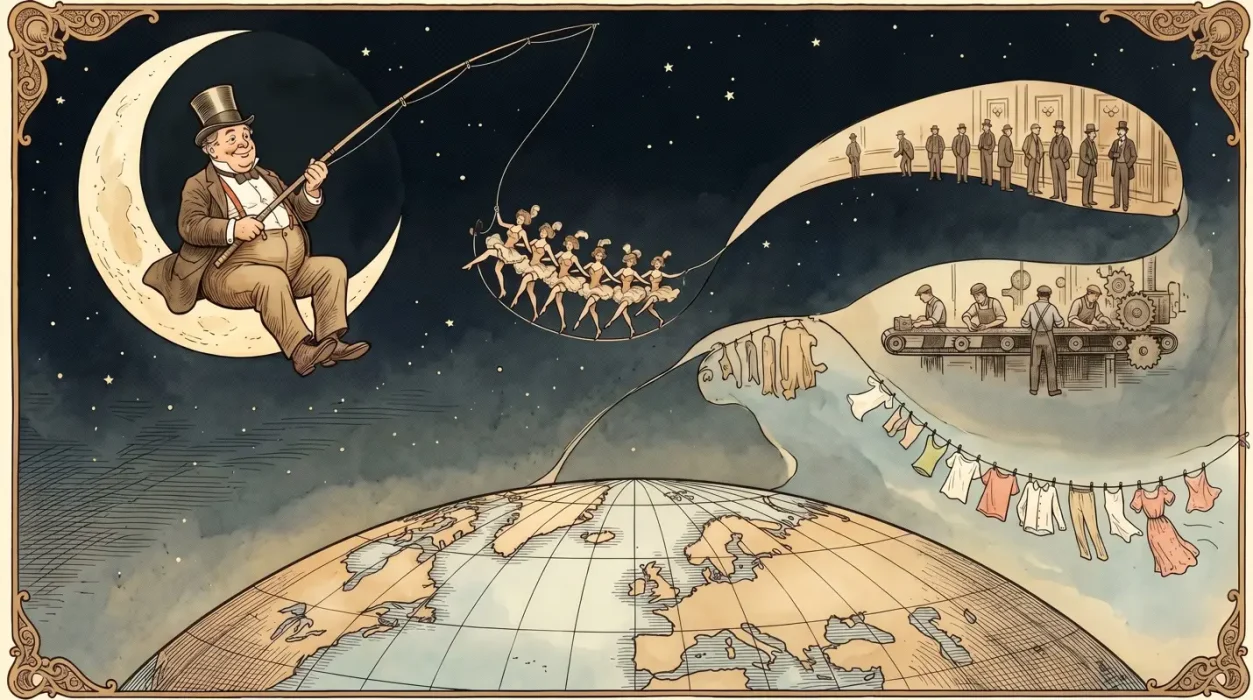


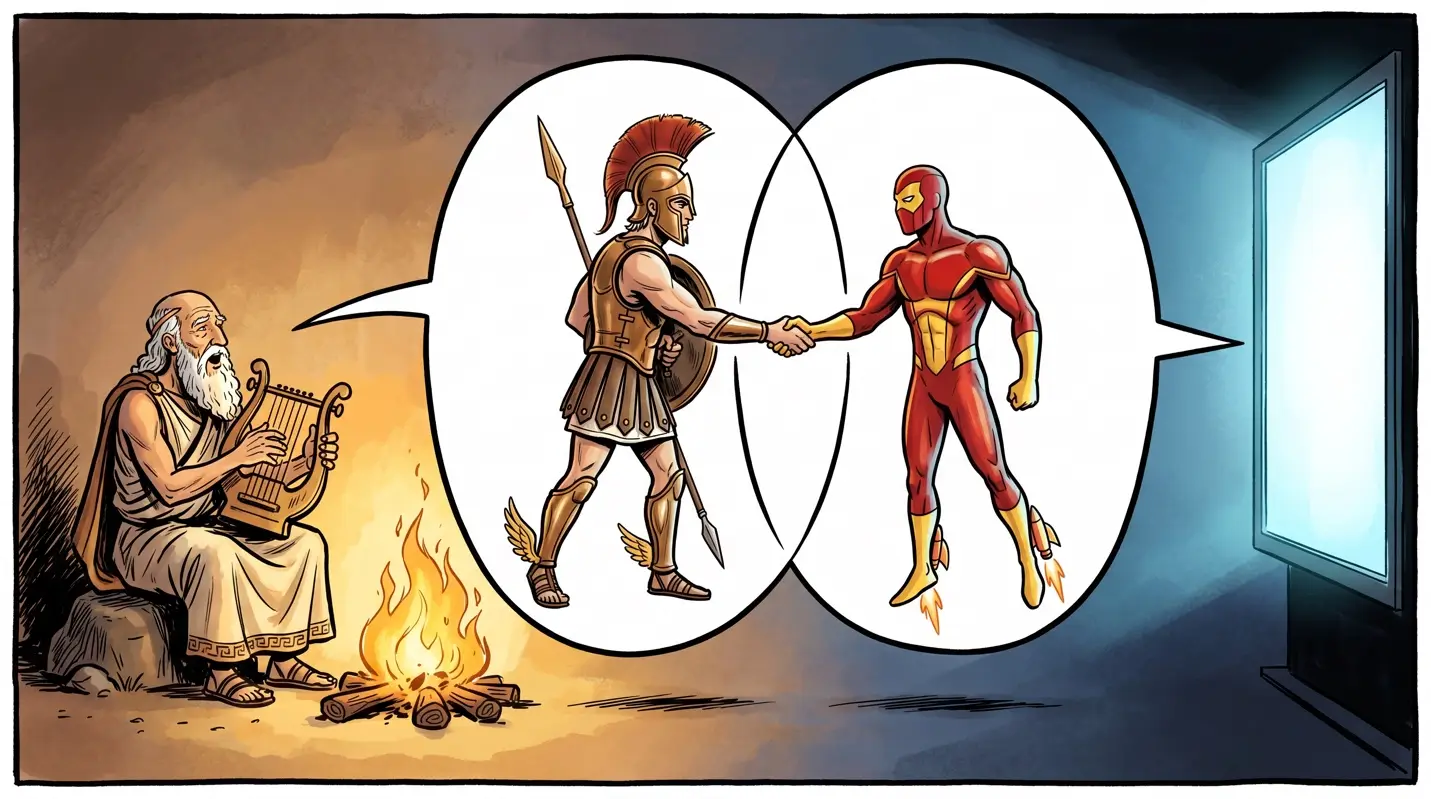


Tribal cultures cannot entertain the possibility of the individual or of the separate citizen. Their ideas of spaces and times are neither continuous nor uniform, but compassional and compressional in their intensity. It is in its power to extend patterns of visual uniformity and continuity that the "message" of the alphabet is felt by cultures.
Understanding Media (1964), MIT/Routledge edition, p 84
Year: 1964
In tribal cultures, experience is arranged by a dominant auditory sense-life that represses visual values.
Understanding Media (1964), MIT/Routledge edition, p 86
Year: 1964
Well this: we then hijack the [Inuit] group with Anik, with the satellites, and we put them on the air. You heard the story about having telephones put in there [Far North], but the people didn't want any private phones. Everybody wanted a party line so they could listen in to everybody else. They refused to have any private phones up in the Eskimo country. They insisted that everybody's conversation be available to everybody simultaneously.
“Jean Pare interview”, in Forces magazine, a Hydro Quebec publication, No.22, (1973), p 24
Year: 1973
Chapters:
Corporate Consciousness | Privacy
The most primitive tribes of Australia and Africa, like the Eskimos of today, have not yet reached finger-counting, nor do they have numbers in series. Instead they have a binary system of independent numbers for one and two, with composite numbers up to six. After six, they perceive only "heap." Lacking the sense of series, they will scarcely notice when two pins have been removed from a row of seven. They become aware at once, however, if one pin is missing. Tobias Dantzig, who investigated these matters, points out (in Number: The Language of Science) that the parity or kinesthetic sense of these people is stronger than their number sense. It is certainly an indication of a developing visual stress in a culture when number appears. A closely integrated tribal culture will not easily yield to the separatist visual and individualistic pressures that lead to the division of labor, and then to such accelerated forms as writing and money.
Understanding Media (1964), MIT/Routledge edition, pp 110-111
Year: 1964
Tribal societies cannot touch alcohol because they are already so keyed up as communities – as tribal groups – that the sort of increased social activity that comes from alcohol is just poison to them. On the other hand a WASP [White Anglo Saxon Person] is so individualistic – so up-tight—that he needs an awful lot of booze in order just to be human at all.
“The global theatre”, in Ekistics 190 (Sept 1971), p 182
Year: 1971
Well this: we then hijack the [Inuit] group with Anik, with the satellites, and we put them on the air. You heard the story about having telephones put in there, but the people didn't want any private phones. Everybody wanted a party line so they could listen in to everybody else. They refused to have any private phones up in the Eskimo country. They insisted that everybody's conversation be available to everybody simultaneously.
“Jean Pare interview”, in Forces magazine, a Hydro Quebec publication, No.22, (1973), p 24
Year: 1973
Chapters:
Corporate Consciousness | Privacy
Oh, a tribe does not have any objectives or goals. It is like a poem or a piece of music. It has its own way of just being in harmony together.
“It Will Probably End the Motor Car,”. Cinema Canada 1976, pp 28-29
Year: 1976
Julian Jaynes proposed that the preliterate Homeric hero had 'no subjective consciousness, no mind, soul, or will.��
Laws of Media: The New Science with Eric McLuhan, (1988), p 78
Year: 1988
The function of art in a tribal society is not to orient the population to novelty but to merge it with the cosmos. Value does not inhere in art as object but in its power to educate the perceptions.
From Cliché to Archetype, with Wilfred Watson (1970), p 177
Year: 1970
Chapter:
Training of Perception
Primitive, and pre-alphabet people integrate time and space as one and live in an acoustic, horizonless, boundless, olfactory space, rather than in visual space. Their graphic presentation is like an x-ray. They put in everything they know, rather than only what they see. A drawing of a man hunting seal on an ice floe will show not only what is on top of the ice, but what lies underneath as well. The primitive artist twists and tilts the various possible visual aspects until they fully explain what he wishes to represent.
The Medium is the Massage, 1967, pp. 56-57.
Year: 1967
Instead of translating nature into art, the native nonliterate attempts to invest nature with spiritual energy.
Understanding Media, 1964, Gingko Critical Edition, p 59
Year: 1964
So far as I know, there is no instance of a pre-literate society with an architecture or a city structure. And the reason, presumably, is that pre-literate man lived in acoustic space, a space structured by sound and incantation. It was not until he had developed the visual equivalent of sound that he learned how to shape and control visual space.
“A Historical Approach to the Media” (1955), p 106
Year: 1955
You are immeasurably the greatest Prime Minister Canada has ever had, the first who has ever been equipped with an awareness of contemporary culture. Heath and Nixon are provincial schoolboys beside you. Your detractors cannot imagine how humble one is made by the recognition of the scope of your problems.
Letter to to Pierre Elliott Trudeau, Sept. 21, 1971
Year: 1971
By contrast a female enjoyed a lively internal sensibility. Her attention was constantly claimed by inner sensations. Her whole psychic life was physically involved. She was always aware of her body as interposed between her inner self and the outer world; she devoted constant attention to it. One result was that her body appeared to literate man as mysterious. Her body was firm, but filled with tremulous spirit. She created an impression of weakness. The erotic attraction she produced was not aroused by her body as body, but by the mysterious spirit permeating it. Literate man spoke of feminine mystique, feminine intuition.
But this inner sensory concert is not uniquely feminine. In the tribe, it characterizes both sexes: hence all members adorn and ornament the body. Nothing could be more natural. The inner life imposes on every tribal member the habit of noticing and beautifying the body which becomes the most immediate object in the perspective of his world. And so tribal members everywhere create that remarkable culture of the body: adornment, cleanliness, and finally, courtesy, which inspired invention, which is indeed a subtle gesture. Today, as we re-enter the tribal world, sharp difference between the sexes, which marked the past, disappear rapidly. Sex is cooled down. Men and women dress alike. They share hair-styles. Men wear jewelry. They are interested in scents, hair dyes, cosmetics. This disturbs older, literate types who keep saying, “You can’t tell the difference,” and then slap their knees.
Young men and young women today share a common sensate world. Their feelings about themselves are much alike. After twenty-five hundred years of lonely separation, they can once again share their experiences.
“Marshall McLuhan Looks at Fashion” (1968), On the Nature of Media (2016), pp 148-149.
Year: 1968
An Eskimo mask may depict walrus-wolf-seal; turned this way, the walrus is emphasized, but wolf and seal remain; turned another way, the wolf is emphasized, etc.
One may describe the alteration as if the object had altered before one's eyes. But what altered was not the picture. It was the observer's impression of it, his point of view, his emphasis upon one organization over another.
Suppose he has no "point of view," at least none resembling the private, delimiting one of literate man. Suppose his art, language, everything in his culture, deny a private point of view, and stress, instead, group awareness, with many points of view simultaneously presented. Suppose, finally he is capable of grasping such a multilevel pattern instantaneously, with total awareness, no delay, no suppression, all sense (simultaneously!) involved. Suppose all this and you have gone a long way toward describing tribal man, a man who has no private point of view because he doesn't "view" experience, nor conceive of himself as a point. Instead, he conceives of each person as containing, simultaneously, many selves, all in flux, yet each present.
“Marshall McLuhan Looks at Fashion” (1968), On the Nature of Media (2016), p151
Year: 1968
No one in a tribe can act, even exist, without affecting everyone else. Everyone affects everyone. So, much of the time, tribal man wears a stolid mask. He's like a beautiful woman who, to avoid advances, goes through life with downcast eyes. Unless he intends to, he isn't going to show emotion and thereby release a chain reaction that might shatter the togetherness of the tribe
“Marshall McLuhan Looks at Fashion” (1968), On the Nature of Media (2016), p 156
Year: 1968
In conversation, natives generally look to one side or down, a habit Westerners regard as shy or sly. Literate man values the person who "looks one right in the eye,” but to a native there is something baneful in the direct glance; one who stares at another is considered as planning, or actually to be causing, some evil.
“Marshall McLuhan Looks at Fashion” (1968), On the Nature of Media (2016), p 156
Year: 1968
Tribesmen generally regard the eye as an organ of will. They believe it is both transmitter and receiver; they fear the Evil Eye. They hold that a luminous quality goes from the eye into what it sees. Such theories have their analogy with children who equate seeing and giving light. For very young children, seeing is partly outside the eye. It comes from the eye, it gives light, and they’re puzzled why they don't feel it. Boy of five: "Daddy, why don t our looks mix when they meet?"
“Marshall McLuhan Looks at Fashion” (1968), On the Nature of Media (2016), p 157
Year: 1968
We live in a time when whole peoples have gone out of their wits when impelled by new massive forms such as radio. Psychologists explain that when the field of attention has a centre without a margin we are hypnotized. Such is the condition of tribal man, past and present.
“Inside the Five Sense Sensorium” (1961), p 54
Year: 1961
Chapter:
Radio
For tribal man space itself is the enemy because charged with voodoo menace. For such a man the beautiful is that which suggests the indestructible or the invulnerable, just as for the time-frayed the womblike security of the limousine is beautiful because a promise of pneumatic bliss. For tribal man space was the uncontrollable mystery. For technological man it is time that occupies the same role. Time is still loaded with a thousand decisions and indecisions which terrify a society that has yielded so much of its autonomy to merely automatic processes and routines. The problem, therefore, is to control panic by “killing time” or by shredding it into “ragtime.” To reduce it to an imbecilic bebop point. We seek to hide in the tight bebop moment, as the tribesman hid in the squat spatial unit.
The Mechanical Bride: Folklore of Industrial Man, (1951), p 85
Year: 1951
Chapters:
McLuhanisms & Zingers | Time
So chary of all private impulse are native societies that they regularly report their dreams in public lest some undetected and warped tendency toward individualism might have crept into their night-lives.
"The Future of Morality: The Inner vs. the Outer Quest" in The New Morality, ed. Dunphy, (1967) pp 178-179
Year: 1967
Tribal societies cannot entertain the possibility of the individual or of the separate citizen. Their ideas of space and time are neither continuous nor uniform, but compassional and compressional in their intensity. It is in the power to extend patterns of visual uniformity and continuity that the “message” of the alphabet is felt by cultures.
Understanding Media (1964), MIT/Routledge edition, p 84
Year: 1964
Instead of translating nature into art, the native nonliterate attempts to invest nature with spiritual energy.
Understanding Media, 1964, Gingko Critical Edition, p 59
Year: 1964
Another approach to cliché is to point out that the more deeply people participate in a culture, the less the motive for innovation.
From Cliché to Archetype with Wilfred Watson (1970), p 58
Year: 1970
Manhattan is an island and is a museum. It probably should be preserved. Like people on other islands, the Manhattan population has taken to living in discontinuous, tribal space. Unlike any other space I know of except England, the space of Manhattan is discontinuous, nuclear, and pocketlike. “You can’t get there from here.” That is true not only outside, but inside most homes. It’s completely unconscious on the part of the dwellers in that area.
The Museum as Large-Room Pinball Machine, Marshall McLuhan, Harley Parker, and Museum Professionals, 1967, full transcript of a seminar at the City Museum of New York, October 9-10, 1967, edited by William Buxton, published by U. of Alberta Press, 2026, p 98
Year: 1967
Eskimos don’t live in igloos, they live in stone houses on the seashore, somewhat round in shape. The igloo is a product of the white man’s visitations. When the white man showed them the Primus stove, they added that to the snow house and it became possible to live there. Or if they didn’t live there, they used it for their trapping lines.
The Museum as Large-Room Pinball Machine, Marshall McLuhan, Harley Parker, and Museum Professionals, 1967, full transcript of a seminar at the City Museum of New York, October 9-10, 1967, edited by William Buxton, published by U. of Alberta Press, 2026, p 103
Year: 1967
Chapter:
Architecture
At a university in Vancouver they have been experimenting by taking people out of the African jungle and in five months turning them into proficient mechanics. But they discovered they were equally good at prescribing particular therapy. Give them a case history, a sick man, and they can spot the trouble just as quickly as they can in the airplane engine. Because they play the total field, they don’t have a point of view. They do it with smell.
The Museum as Large-Room Pinball Machine, Marshall McLuhan, Harley Parker, and Museum Professionals, 1967, full transcript of a seminar at the City Museum of New York, October 9-10, 1967, edited by William Buxton, published by U. of Alberta Press, 2026, p 107
Year: 1967