Viewing chapter Visual Space (22 quotes)
Visual space is connected and creates detachment or non-involvement. It also tends to exclude the participation of the other senses.
Laws of Media: The New Science with Eric McLuhan, (1988), p 240
Year: 1988
an enclosed space…is one in which all spatial qualities have been reduced to visual terms.
Understanding Media (1964), MIT/Routledge edition, p 327
Year: 1964
Chapter:
Space
For what it is worth, when I was being introduced by Jonathan Miller of the B.B.C. program last month, he said: "McLuhan is doing for visual space what Freud did for sex". Flattery apart, that does make sense to me. Freud revealed the pervasiveness of sex as structure in experience and environment and in situations that seem to have just nothing at all to do with sex. As soon as you begin to deal with the sensory modalities, you quickly discover that the visual mode may occur in situations that are quite unvisualizable. For example, central heating structures the thermal space of a room visually. That is, a centrally heated room has a thermal space that is uniform, and continuous, and connected. That is visuality as such.
Letter to Harold Rosenberg, March 1. 1965, in Letters (1987), p 318
Year: 1965
Visual space, on the other hand, is continuous, connected, homogeneous and static. It is the only sensory mode having these characteristics. Visual space is infinitely divisible, whereas all the other senses have spaces that are quite indivisible. This is probably why the electric space of simultaneous information is transforming our entire outlook. That is, we are now using our eye as an ear, and vice-versa.
Letter to Gerald Mason Feigen, January 23, (1974), in Letters of Marshall McLuhan, (1987), p 489
Year: 1974
Chapter:
Acoustic Space
In this passage he [William Ivins, Prints and Visual Communication] not only notes the ingraining of lineal, sequential habits, but, even more important, points out the visual homogenizing of experience in print culture, and the relegation of auditory and other sensuous complexity to the background. The reduction of experience to a single sense, the visual, as a result of typography leads him to speculate that “the more closely we confine our data for reasoning about things to data that come to us through one and the same sense channel the more apt we are to be correct in our reasoning.” (p. 54)
The Gutenberg Galaxy, 1962, p 125
Year: 1962
The “literacy of the blind” is like that of the Chinese – multi-sensuous. The literacy of the sighted created dissociated sensibility.
Culture Is Our Business ,(1970), p 116
Year: 1970
The ancient seer was typically figured as blind. He lived by insight.
Culture Is Our Business (1970), p 112
Year: 1970
Chapter:
McLuhanisms & Zingers
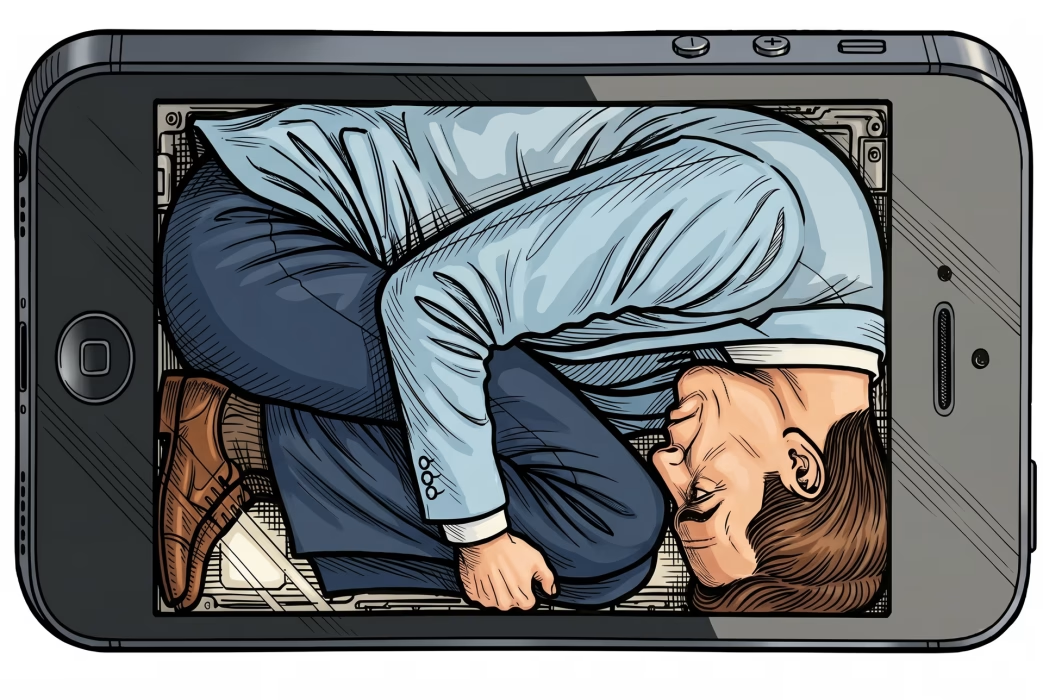
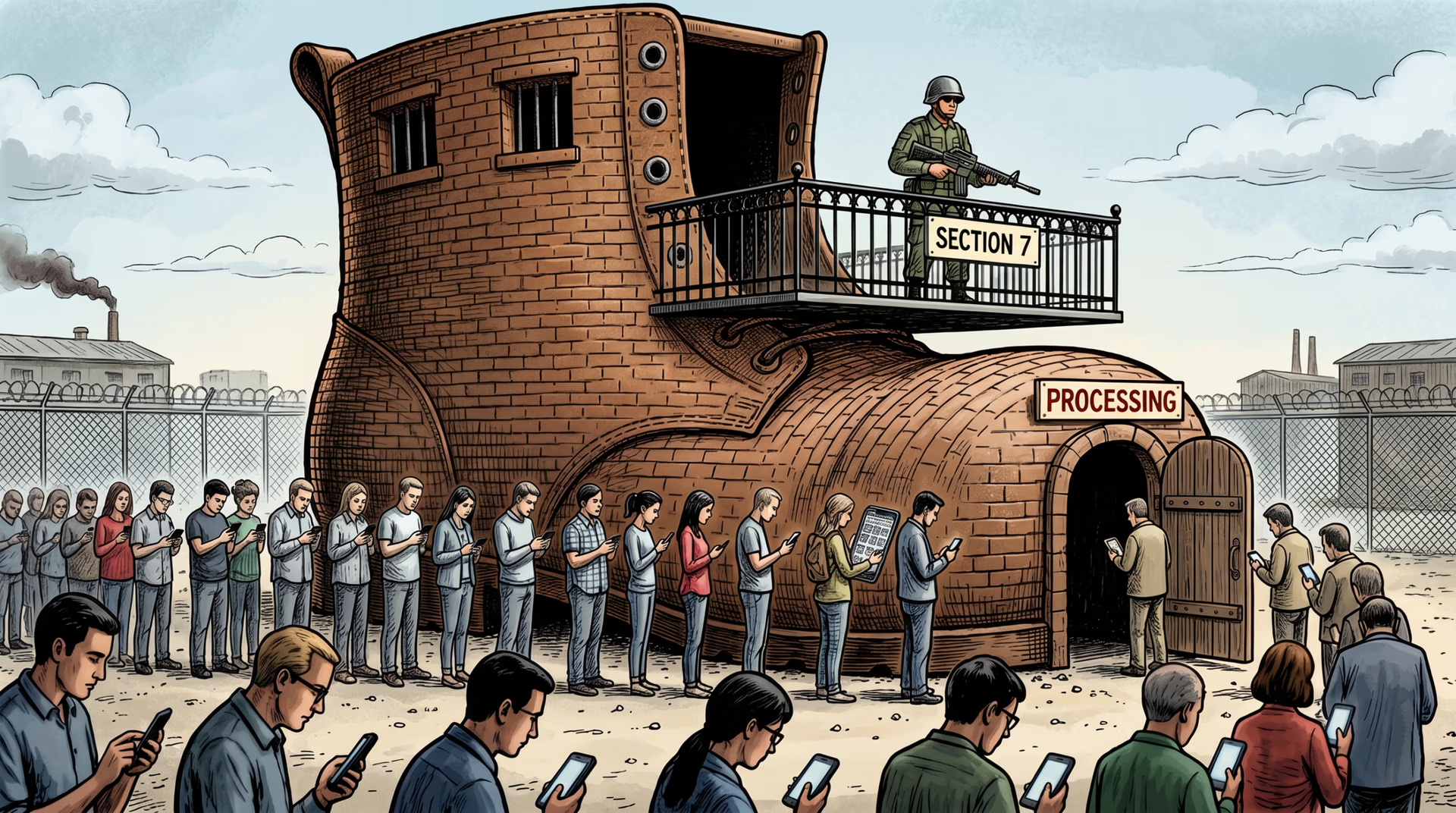


It was not until the experience of mass production of exactly uniform and repeatable type, that the fission of the senses occurred, and the visual dimension broke away from the other senses.
The Gutenberg Galady : The Making of Typographic Man (1962), p 54
Year: 1962
The visual sense (which was used mainly in the civilized ages of literacy) is the only sense we possess that gives detachment, and not involvement; it is the one un-involving sense that man possesses. All his touch, and taste and smell and movement and sound, these are all profoundly involving experiences.
Interview in Catholic Trustee, December, 1967, p 23
Year: 1967
The reason that high visual stress leads to fragmentation of experience seems to be that sight has the unique power to separate or to capture single aspects of space in brief moment of time.
Through the Vanishing Point with Harley Parker (1968), p 10
Year: 1968
Chapter:
Fragmentation
I have been with psychologists and physicists a good deal over these recent years. I’ve never met one who knew what visual space consisted of, or acoustic space, or tactile space. And yet you have to know a lot about these things to survive in the world of advertising.
J Kirsch interview (1976), transcript, p 16
Year: 1976
So-called objective news is that kind which is strongly dependent on the eye. The eye alone of all our senses fosters detachment. Touch and smell and hearing do not claim objectivity. The horse that’s known by touch along is all horse but not visibly recognizable. The horse drawn by a blind man would be a blotty gestalt.
“Sharing the News” (1971), p 9
Year: 1971
Chapter:
News
What you get [in cave paintings and tribal peoples’ drawings] is a bounding line, the sort of thing a kid draws. It’s not for the eye or by the eye. The perspective comes in not until printing. You have to push the visual up to a high intensity before there’s any perspective, and it’s gone today… there’s no perspective anymore, just as melody is gone from music, perspective is gone from there.
J Kirsch interview (1976), transcript, p 17
Year: 1976
Chapter:
Perspective, Point of View
The isolation of visual space from the indiscrimate complex of other sensory spaces has happened only once in human history. The numerous other alphabets are utterly lacking in the power of phonetilc fissuion with its isolated manifestation of visual space.
“Literature and Scientific Knowledge” (1976), p 4
Year: 1976
Chapter:
Space
Visual space is uniform, continuous, and connected. The rational man in our Western culture is a visual man. The fact that most conscious experience has little “visuality” in it is lost on him.
The Medium Is the Massage (1967), p 45
Year: 1967
As soon as you begin to deal with the sensory modalities, you quickly discover that the visual mode may occur in situations that are quite unvisualizable. For example, central heating structures the thermal space of a room visually. That is, a centrally heated room has a thermal space that is uniform, and continuous, and connected. That is visuality as such.
Letter to Harold Rosenberg, March 1, 1965, in Letters of Marshall McLuhan (1987) p 318
Year: 1965
Ordinary human instinct causes people to recoil from the new environments and to rely on the rear-view mirror as a kind of repeat or ricorso of the preceding environments, thus insuring total disorientation at all times ... The visual space creates a kind of human identity that is extremely fragmented. To retain such an image of the self requires persistent violence, both to one's self and to others. As Joyce put it, 'Love thy label as thyself.' Labels as classification are extreme forms of visual culture.
Through the Vanishing Point with Harley Parker (1968), Preface, pp xxiii-xxiv
Year: 1968
Only Graeco-Roman man has ever had this visual faculty in isolation, and today it is threatened, not by any single factors such as television or radio, but by the electric speed of information movement in general. Electric speed is approximately the speed of light, and this constitutes an information environment that has basically an acoustic structure. At the speed of light, information is simultaneous from all directions and this is the structure of the act of hearing. i. e. the message or effect of direct information is acoustic, even when it is read in a newspaper with a mosaic of world-wide items under a single date-line.
“Letter to Barbara Ward, February 9, 1973”, in Letters of Marshall McLuhan (1987), p 466
Year: 1973
The visual man is always looking for connection. “I don’t follow you.” This is always the autograph of the visual man.
The Museum as Large-Room Pinball Machine, Marshall McLuhan, Harley Parker, and Museum Professionals, 1967, full transcript of a seminar at the City Museum of New York, October, 1967, edited by William Buxton, published by U. of Alberta Press, 2026, p 90
Year: 1967
We never said that the museum was a failure. The museum is a magnificent illustration of our Western bias towards the whole world of artifacts.
The Museum as Large-Room Pinball Machine, Marshall McLuhan, Harley Parker, and Museum Professionals, 1967, full transcript of a seminar at the City Museum of New York, October 9-10, 1967, edited by William Buxton, published by U. of Alberta Press, 2026, p 90
Year: 1967
You will find the story line starts only in places that are highly visual, and that oral cultures don’t use story lines. A myth doesn’t move on one level, it moves on many levels and once and you can’t have a story line on many levels.
The Museum as Large-Room Pinball Machine, Marshall McLuhan, Harley Parker, and Museum Professionals, 1967, full transcript of a seminar at the City Museum of New York, October 9-10, 1967, edited by William Buxton, published by U. of Alberta Press, 2026, p 145
Year: 1967
Chapter:
Linear and Nonlinear
Logical. You might as well say rational. Both of them are synonyms for visuality only. Logic and rationality are visual.
The Museum as Large-Room Pinball Machine, Marshall McLuhan, Harley Parker, and Museum Professionals, 1967, full transcript of a seminar at the City Museum of New York, October, 1967, edited by William Buxton, published by U. of Alberta Press, 2026, p 146
Year: 1967
Chapter:
Logic & its Faultlines