Viewing chapter Wake Them Up! (76 quotes)
All dimensions are enigmas to a blindfolded consciousness.
Untitled, unpublished essay prepared for the Los Angeles Times, 1969, typescript p 6 (LAC)
Year: 1969
Chapters:
McLuhanisms & Zingers | Sleepwalkers
To accomplish this end [activating conversation between philosophy, sciences and the arts] it would be pointless to talk to presidents and deans and department heads. What must be done is rather to re-energize the entire body of the arts and sciences. That such a flow of energy into long dormant arts and sciences as poetics, rhetoric, and metaphysics has actually occurred is already evident to many. In fact, no such major revisions have taken place within the main provinces of human knowledge since the time of Hume and Kant….At the end of the eighteenth century the main lines of human thought and action had been established for the ensuing century and a half. And in England and America the major means of making effective the new adjustments in the arts and sciences was the Edinburgh Review. In this Review the consequences of the positions of Adam Smith, Bentham, and Hume were thrashed out for and by economists, historians, philologists, critics, and scientists. What the French encyclopedists had been to France, the Edinburgh Review was for England and America. All the provinces of learning and investigation were opened up to discussion and revaluation. The due inter-relation between them was decided and the degree of cognizance which one was to take of the other was considered and settled.
From McLuhan’s 1947 Proposal to Robert M. Hutchins, to launch an interdisciplinary seminar and associated journal (later, accomplished narrowly by the Ford Foundation Grant with the Exploratons groups and the journal Explorations in Communication and Culture).
Year: 1947
Well, I think people who are subjected to the arrangement of language visually in lines, highly sequential and precisely rigid, develop habits of arranging their lives, arranging their whole social existence, which are very closely geared to these forms. They’re not especially aware of this. Linearity, though, is not characteristic of radio or television or movies. And so we have been subjected to tremendous new forces, new influences which have broken up the older habits acquired from the print world.
“The Communications Revolution,” a conversation with Gilbert Seldes and Keith Tyler at Ohio State University (1960), in McLuhan Speaks transcript
Year: 1960
Chapter:
Goodbye Linearity
The hyperaesthesia of the ad-men's rhetoric has knocked the public into a kind of groggy, slap-happy condition in which perhaps are cushioned a good many of the brutal shock felt more keenly by the realistic European. Viewed merely as an interim strategy for maintaining hope, tolerance, and good humour in an irrational world, this orgy of irrationalism may not be without its cathartic function.
“American Advertising” (1947), in McLuhan Unbound (2017), p 6
Year: 1947
Why should writing weaken the human memory? Pre-literate man, amazed at the efforts of the white man to write down his thoughts and sayings, asks: "Why do you write; can you not remember?"
McLuhan Hot and Cool, 1967, page 154
Year: 1967
Chapter:
Medium is the Message
The current literati who begin to splash about in print at 25 to-day (when a man's powers should begin to amount to something) are, mentally, refugees from Buchenwald. Their only fare has been soup made from straw. Show me some of the vigorous non-professorial young of today. I've been prowling about looking for them everywhere.
Letter to Ezra Pound, July 30, 1948, in Letters of Marshall McLuhan (1987) p 198
Year: 1948
How are you to argue with people who insist on sticking their heads in the invisible teeth of technology, calling the whole thing freedom?
Quoted in Hacking the Future by Arthur and Marilouise Kroker (1996), p 8
Year: 1996
Chapter:
McLuhanisms & Zingers



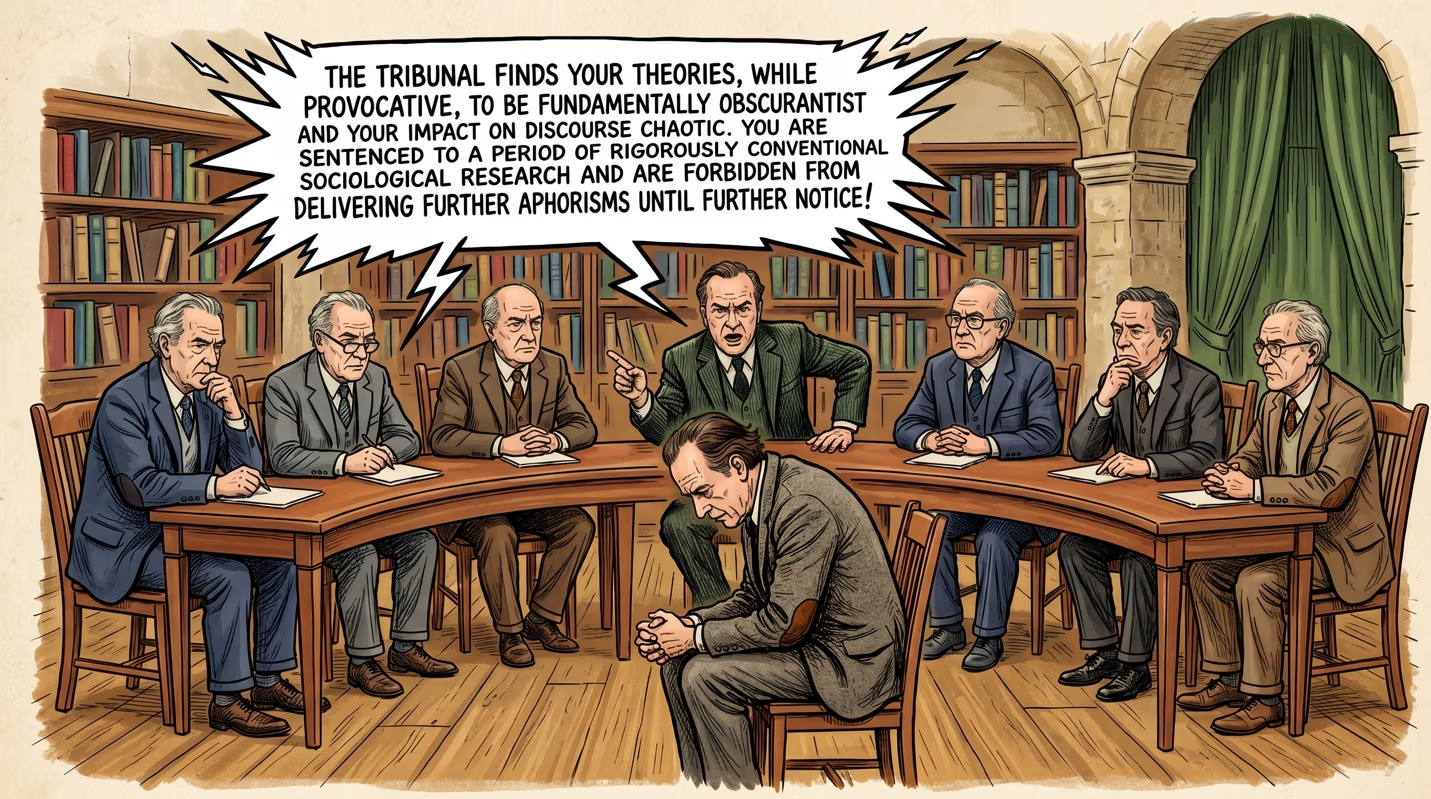

Recent contact with the staff of Western Ont. University has shocked me into vigilance once more. Not merely mediocrity but tepidity of soul, timidity of mind and a horrible rebellion against anything real marks these people. The are the obverse of Babbitt, not the antithesis. Smirking little automatons. L'infame.
Letter to Walter J. Ong, S.J., and Clement J. McNaspy, S.J., December 23, 1944, in Letters of Marshall McLuhan (1987), p 166
Year: 1944
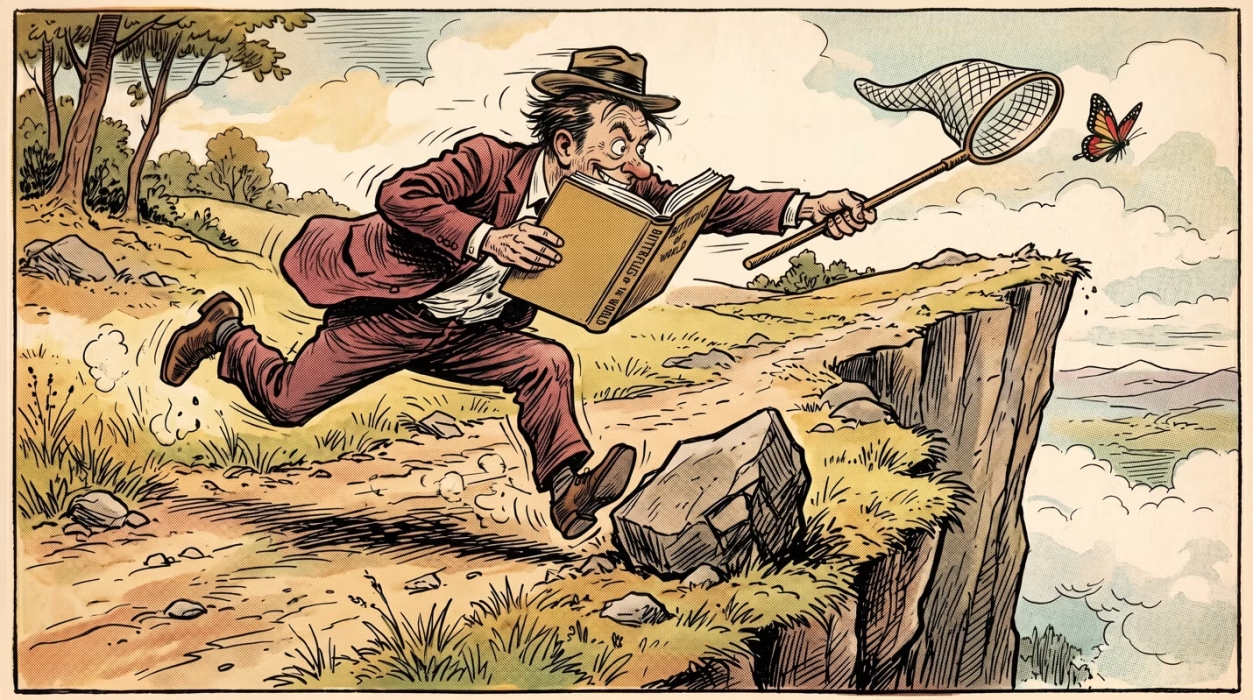
The only form of response that people in general ever make to anything is a numb, somnambulistic response. They do whatever happens to come into their heads – like tulips.
“An informal interview with Marshall McLuhan “, by Linda Sandler, In Miss Chateleine, Fall Fashion Issue, (1974), p 82, quoted in Marchand, Marshall McLuhan The Medium and the Messenger (1989), p 229
Year: 1974
Chapter:
Sleepwalkers
… Modern man, philosophically conditioned to sensation and its twin, action, is automatically manifesting the fruits of that philosophy in a multitude of ways. Fanatically wedded to matter, he is giving an enormous inductive demonstration of the fact that matter has an appetite not for form as BETTER but for form as OTHER. The constituted of created being guarantees modern man that in seeking sensation and thrills, ALL his acts will uniformly possess a character of accelerated imbecility…
WYNDHAM LEWIS: LEMUEL IN LILLIPUT, Studies in Honor of St. Thomas Aquinas: Key Thinkers and Modern Thought, Saint Louis University, 1944, Vol. 2, pp.58-72
Year: 1944
So the process of renewal can't come from above. It can only take the form of reawakened critical faculties. The untrancing of millions of individuals by millions of individual acts of the will. Psychological decentralization. A merely provisional image of how it might (not how it should) occur could be formed by supposing every mechanical agency of communication in the world to be suspended for six months. No press. No radio. No movies. Just people finding out who lived near them. Forming small communities within big cities. It would be agony. All psychological drugs cut off. No capsulated thoughts or melodies. To say that anything like this could never happen, or that it should never be allowed to happen is a remark worthy of those mesmerized practical men who are efficiently arranging for the obsequies of our world's mind and body alike. If something like this doesn't happen it is quite plain what will happen.
"Psychopathology of 'Time' and 'Life’", in SCENE BEFORE YOU: A New Approach to American Culture, New York: Rinehart, 1955. (First published in Neurotica 5, 1949).
Year: 1955
Chapter:
Drugs
“[McLuhan’s] chief claim for literary study, indeed, was that it sharpened one’s response to experience and helped one stand out from what he called the ‘zombie horde’ of urban consumers.”
John Wain
“The Incidental Thoughts of Marshall McLuhan” In Wain’s Dear Shadows (1986), p 82
Year: 1986
…it has taken me a long time to take stupidity and indifference for granted as a universal and irremediable human condition.
Letter to Felix Giovanelli, September 5, 1948, in Letters of Marshall McLuhan (1987) p 203
Year: 1948
Chapter:
McLuhanisms & Zingers
[Wyndham] Lewis confronts modern society with the trained eye of a painter to whom the cut of every garment, every gesture, every contour is a richly expressive language. However, the modern man has long lost the use of his eyes. He only has ears and those for the Napoleonic and romantic thunder of Beethoven, the erotic day-dreaming of Tchaikovsky, or the tom-tom and African bottom-wagging of swing calling to rut. With Dr. Coué-like repetition we hear on every hand: “This isn’t a war, it’s a revolution. “We live in an age of transition.” “Things will be different after this war.” “This won’t be the last war.” Whether spoken by the responsible or the moronic, these remarks and countless others like them have no meaning. They are spoken in a trance of inattention while the reason is in permanent abeyance. They are typical of men who no longer understand the world they have made and which, as robots, they operate day to day.
“Wyndham Lewis: Lemuel in Lilliput” (1944), p 60
Year: 1944
Chapter:
Lewis, Wyndham
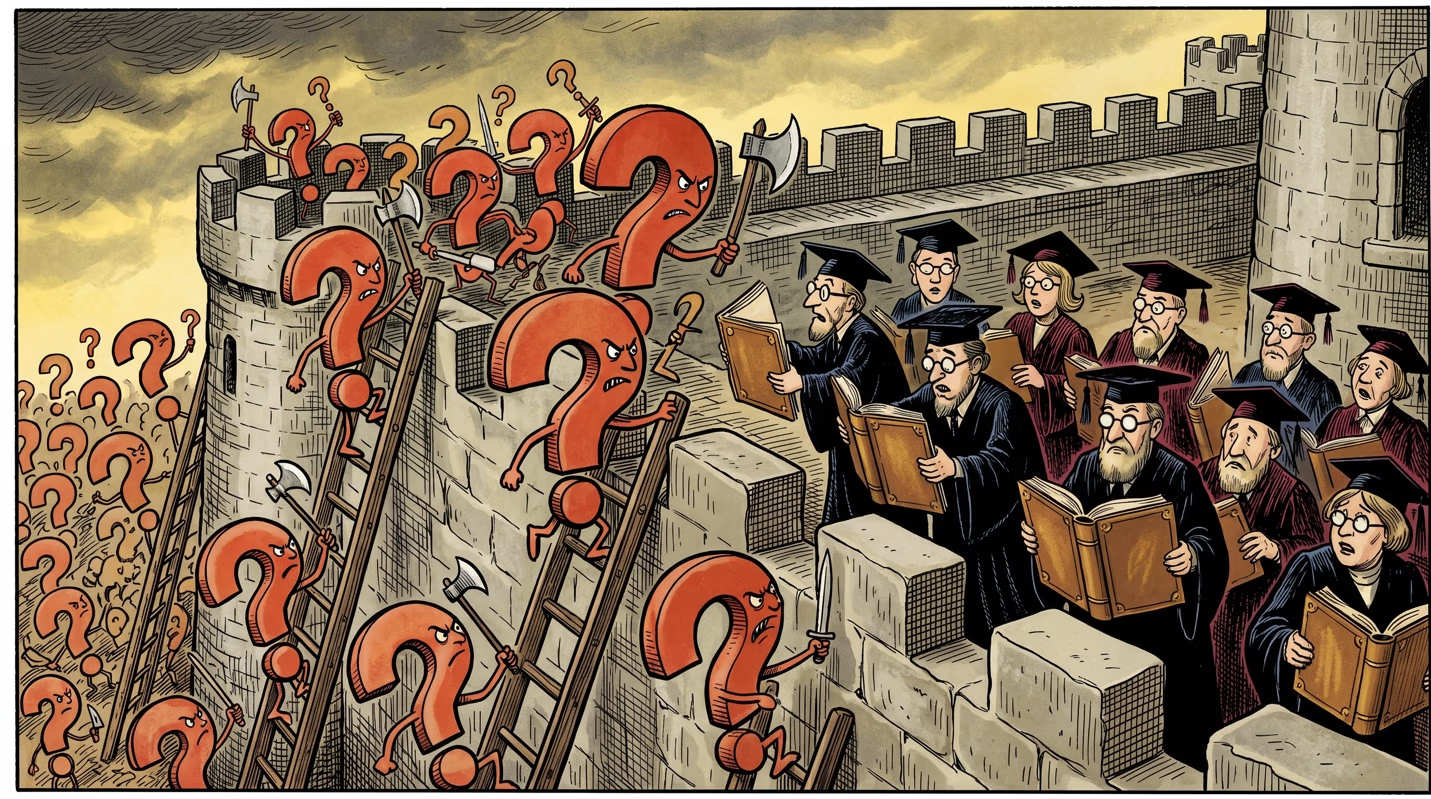
The radical deficiency of American intellectual life vis-a-vis the new tasks of revaluation, synthesis, and exploration, is its lack of communal sense. This is true even of the academic scene. But outside the academic world there is certainly no likelihood of finding the leisure, the erudition or the disinterestedness for the work at hand. The first step, therefore, is to perform a basic overhaul job on the academies. To redirect the energies of the American college from the immediate goal of preparing students for a local commercial society to preparing students for the fullest kind of citizenship, such as is actually demanded of us as a condition of present survival — that is the task.
From McLuhan’s 1947 Proposal to Robert M. Hutchins, to launch an interdisciplinary seminar and associated journal (later, accomplished narrowly by the Ford Foundation Grant with the Exploratons groups and the journal Explorations: Studies in Culture and Communication).
Year: 1947
Chapters:
Sleepwalkers | Training of Perception
“Was it Hercules Poirot who, when asked, “What is truth?” replied, “Eet ees whatever upsets zee applecart.”
Letter to James W. Carey, March 25, 1974, in Letters of Marshall McLuhan (1987) p 492
Year: 1974
The present clamor against serious poetry [i.e., the symbolists] is based on the assumption that the function of art in society is like that of advertising, to provide assurance and convictions about those things which, regardless of facts, people want to believe. If art has any deeper function than that, if the poetic process is the embodiment and projection of the modes of human cognition themselves, than the present clamor [against the symbolists] is as mistaken as it is ill-conceived.
Review of Hugh Kenner’s The Poetry of Ezra Pound, in Renascence, Volume 4, number 2, Spring, 1952, p 217
Year: 1952
“How are words to be used to unweave the spell of print? Of radio commercials and newscasts”? I’m working on that problem.”
Letter to Ezra Pound, June 22, 1951, in Letters of Marshall McLuhan (1987) p 227
Year: 1951
Chapter:
Advertising
MEANS CREATE ENDS FOR THE SOMNAMBULIST
ENDS CREATE MEANS FOR THE ENTREPRENEUR
MEANS BECOME ENDS FOR THE BUREAUCRAT
Take Today with Barrington Nevitt (1972),, p 194
Year: 1972
Chapter:
Sleepwalkers
The areas of consciousness, though, are now pin points. Just a mind here and there struggling against freeze-sleep. Sent it [manuscript of The Mechanical Bride] as book to Reynall Hitchcock but haven't heard from them. Embraces the entire business of Existenz by anticipation.
Letter to Felix Giovanelli, May 10, 1946, in Letters, (1987), p 184
Year: 1946
Little Bo Peep wants to lose her B.O. She isn’t interested in her academic sheep no more no more. New deodorants fix you so’se your dog won’t recognize you again. The cube root of fug-all.
Letter to Ezra Pound, June 22, 1951, in Letters of Marshall McLuhan (1987) pp 227-228
Year: 1951
This job must be conducted on every front – every phase of the press, book-rackets, music, cinema, education, economics. Of course, points of reference must always be made. That is, the examples of real art and prudence must be seized, when available, as paradigms of future effort. In short, the methods of F.R. Leavis and Wyndham Lewis applied with all the energy and order denied them from faith and philosophy – These can serve to educate a huge public, both Catholic and non-Catholic, to resist the swift obliteration of the person which is going on.
Undated letter to an unclear recipient, from the mid-1940s, quoted in W. Terrence Gordon, Marshall McLuhan: Escape into Understanding (1997), pp 132-133
Year: 1940
The average parent today should be detained in a mental-delousing institution until cleansed of the verminous accretions of pseudo philosophy acquired while rolling around in the Circe of sensate culture.
From a 1940s draft of Typhon, the manuscript that became The Mechanical Bride, quoted in W. Terrence Gordon, MM: Escape into Understanding (1997), p 133
Year: 1940
The reader is a moron who has to be babied, tickled, prodded, propped and paddled.
From a 1940s draft of Typhon, the manuscript that later became The Mechanical Bride, quoted in W. Terrence Gordon, MM: Escape into Understanding (1997), p 133
Year: 1940
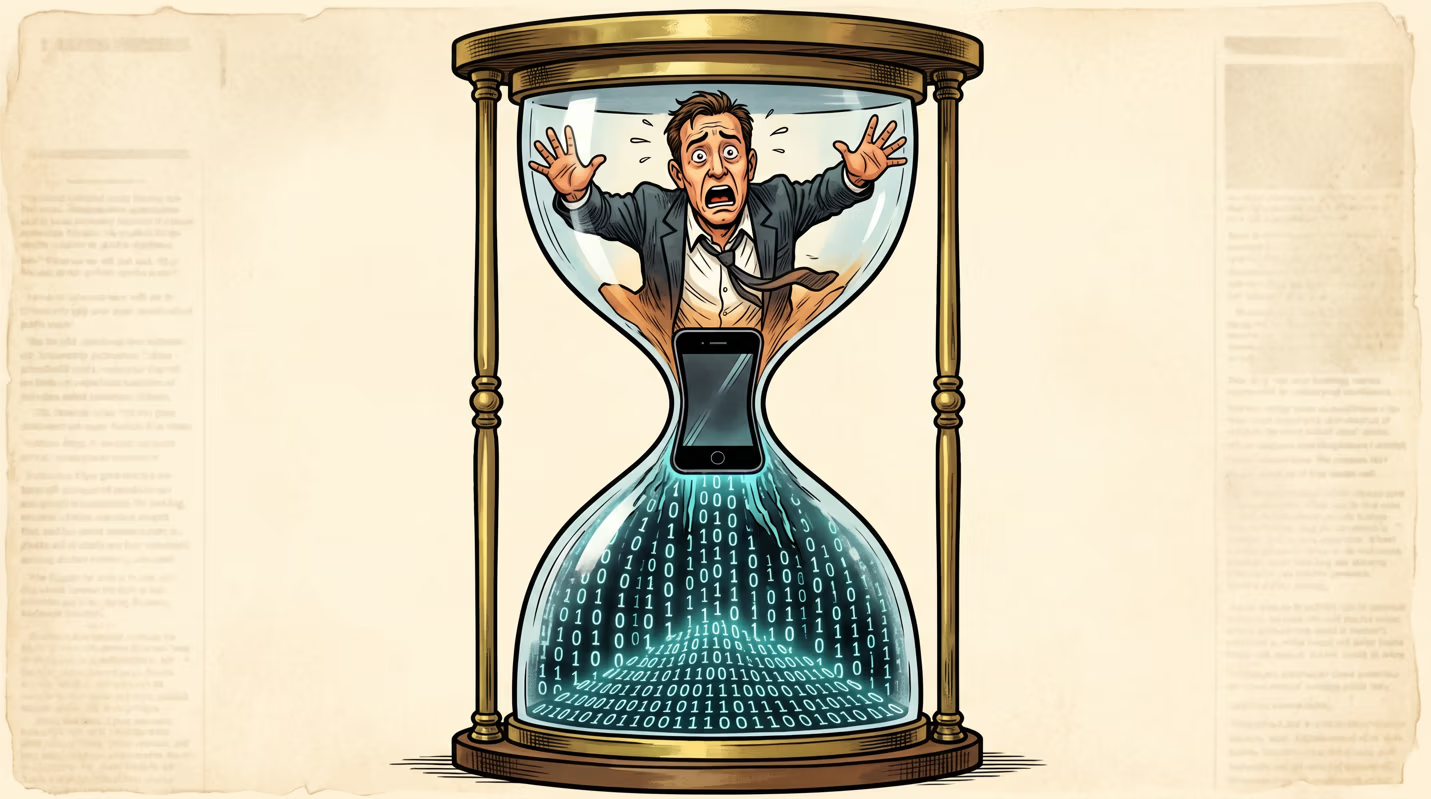
When a new problem becomes greater than the human scale can cope with, the mind instinctively shrinks and sleeps. Today, for the first time, things happening at the speed of light can illuminate even the inveterate human somnambulism, forcing pattern recognition and intelligibility on the most reluctant.
“Identity, Technology and War,” U.S. Catholic/Jubilee, January, 1970, p 37
Year: 1970
"The ordinary person senses the greatness of the odds against him even without thought or analysis, and he adapts his attitudes unconsciously. A huge passivity has settled on industrial society. For people carried about in mechanical vehicles, earning their living by waiting on machines, listening much of the waking day to canned music, watching packaged movie entertainment and capsulated news, for such people it would require an exceptional degree of awareness and an especial heroism of effort to be anything but supine consumers of processed goods."
The Mechanical Bride, 1951, p 21
Year: 1951
But ads are carefully designed by the Madison Ave. frogmen-of-the-mind for semiconscious exposure. Their mere existence is as testimony, as well as a contribution, to the somnambulistic state of a tired metropolis.
Understanding Media (1963), MIT/Routledge, p 229
Year: 1963
Chapter:
Sleepwalkers
[Let it not be supposed] that it has been argued here that there is value in merely attacking vulgarity and stupidity. Because today there is far too much of these commodities intermixed with valuable articles to make such a course desirable. What is needed is not attacks on obvious imbecility but a sharp eye for what supports and is now involved in it. It is from this habit of dissociation that the means of recreating shopworn values can come. As said earlier… our situation is very like that of Poe’s sailor in “The Maelstrom”, and we are now obliged not to attack or avoid the STORM but to study its operation as providing a means of release from it.
The Mechanical Bride (1951), p 148
Year: 1951
The ordinary person senses the greatness of the odds against him even without thought or analysis, and he adapts his attitudes unconsciously. A huge passivity has settled on industrial society. For people carried about in mechanical vehicles, earning their living by waiting on machines, listening much of the waking day to canned music, watching packaged movie entertainment and capsulated news, for such people it would require an exceptional degree of awareness and an especial heroism of effort to be anything but supine consumers of processed goods. Society begins to take on the character of the kept woman whose role is expected to be submission and luxurious passivity. Each day brings its addition of silks, trinkets, and shiny gadgets, new pleasure techniques and new pills for pep and painlessness.
The Mechanical Bride, (1951), p 21
Year: 1951
The "censor" protects our central system of values, as it does our physical nervous system by simply cooling off the onset of experience a great deal. For many people, this cooling system brings on a lifelong state of psychic rigor mortis, or of somnambulism, particularly observable in periods of new technology
“Media Hot and Cold”, in Understanding Media, p 24
Chapter:
Sleepwalkers
The products of modern science are not in themselves good or bad; it is the way they are used that determines their value." That is the voice of the current somnambulism. Suppose we were to say, "Apple pie is in itself neither good nor bad; it is the way it is used that determines its value." Or, "The smallpox virus is in itself neither good nor bad; it is the way it is used that determines its value."
The Medium is the Message (1969), in Understanding Media, p 11
Year: 1969
Chapter:
Sleepwalkers
Those who, from political motives, would now add their force to the anti-individual action of our electric technology are puny subliminal automatons aping the patterns of the prevailing electric pressures. A century ago they would, with equal somnambulism, have faced in the opposite direction
“Television”, in Understanding Media, p 315
The audience acts as the environmental cliche and the players enact the metaphorical archetype of the wider situation. This is a form of that anti-environmentalism which was previously discussed as indispensable to any culture that seeks to avoid complete somnambulism. Such somnambulism is certainly not avoided by tribal man. Tribal societies have long been called "the people of the dream," precisely because they are locked in a collective awareness and avoid anti-environments rigorously.
“War and peace in the global village”, p 169-170
Today, for the first time, things happening at the speed of light also illuminate even the inveterate human somnambulism, forcing pattern recognition and intelligibility on the most reluctant. It is not brains or intelligence that is needed to cope with the problems which Plato and Aristotle and all of their successors to the present have failed to confront: what is needed is a readiness to undervalue the world altogether.
“Identity, Technology and War”, in US Catholic and Jubilee (January, 1970), p 37 (i believe is 37, because the file doesn´t show any number)
Year: 1970
When the mechanization of death occurs on a vast scale, the minds of civilized people are numbed. Decent and well - meaning people, acting as if in a corporate somnambulism, are engaged today in repeating in abortion centres the patterns of life - processing which worked so well in meat packing and death camps.
"Private Individual vs. Global Village" (1973), p 4
Year: 1973
Chapter:
Sleepwalkers
It has, then, been McLuhan's blunder to assume that awareness rather than somnambulism is desired by mankind as a means of achieving a good life.
“Understanding McLuhan--and fie on any who don't”, in The Globe and Mail (Sep 10, 1973), p 7
Year: 1973
If the mechanism of Descartes looks paltry today, it may be for the same subliminal reasons that it looked resplendent in its own time. In that sense all fashions betoken somnambulism of some kind, and are one means of critical orientation to the psychic effects of technology.
“The Gutenberg galaxy”, p 248
It seems necessary to postulate a profound motivation for such universal somnambulism. People in general seem to have a built-in intuition of the safe limits of their human awareness at any given time.
Take Today with Barrington Nevitt, 1972, p 192
Year: 1972
Somnambulism is the normal response to new knowledge. The West pays a price of somnambulism and loss of self-awareness as it extends its power over the world. Many would consider it a terrifying fate for a conqueror to fall asleep in the very moment of conquest.
“Hard Experience v. Soft Knowledge”, in Take today: the executive as dropout, p 226
The shock treatment for motivated somnambulism is when the neglected children strike back at the successful parent. The last hero becomes the latest villain. The standard response: Don't learn how to anticipate effects with causes; react with a sledgehammer, too late!
“Conglomerate Emperors in Global Theater”, in Take today: the executive as dropout, p 246
The same thing is happening today with the snatching of conventional goals and patterns from our midst by the sudden lurch from a mechanical to an electric world. The young are deprived of both identity and goals. They react in a kind of narcolepsy or apathetic somnambulism. They regard all aid as unwarranted interference. They submerge in their "yellow submarine”
“Off-Spins and In-Spins”, in Take today: the executive as dropout, p 259
Trying to formulate the chances of the American candidates for publication, I can find only one word: "somnambulism." It was Professor Broughton of McGill who recently explained that somnambulism is a highly motivated state. The real drama of our age, the shift from hardware service environments of the 19th century to the software (electric information) service environments of the 20th century, is as big a leap as that from primitive tribalism to literate individualism.
“To Pierre Elliott Trudeau (1968)”, in Letters of McLuhan, p 352
Year: 1968
Ordinary people live thirty years back in a state of motivated somnambulism.
“To Prince Bernhard of The Netherlands (1969)”, in Letters of McLuhan, p 372
Year: 1969
I am, of course, interested in understanding why this motivated ignorance and somnambulism is so necessary a part of our human makeup. I don't think it is new or eradicable.
“To Edward T. Hall (1969), in Letters of McLuhan, p 384
Year: 1969
Today, for the first time, things happening at the speed of light also illuminate even the inveterate human somnambulism, forcing pattern recognition and intelligibility on the most reluctant.
“To Robert J. Leuver (1969)”, in Letters of McLuhan, p 386
Year: 1969
For the most part, people are frozen in sheer terror at the speed of changes brought about by such new environments and enter upon a prolonged course of motivated somnambulism. One way of describing the transition from experience to knowledge is to point to the differences between "hardware" and software.
“The man who came to listen”, in Through the vanish point, p 182
Are we not still inclined to suppose that our formen objectives are still valid even though all of our assumptions and parameters have changed? What are we to say of the hypnotic daze of such people? Educators present a uniform, homogeneous front of somnambulism.
“General introduction to the languages and grammars of the media”, in Report on understanding new media, p 8 (page 19 of the file)
It is only one of the many fortunate features of Trudeau that he is indifferent to the power that results from the bureaucratic congregating of the misguided somnambulists that make up ordinary human society. If his were a private opinion or point of view, it would be insufferable.
“Federalism And the French Canadians”, in New York Times (Nov 17, 1968), p BR 36
Year: 1968
It is our own new technology that has created black power. The somnambulist response to this positive Negritude and assurance is the negative backlash, white power. It is this tragically misunderstood situation that only the trained perceptions of a Trudeau could resolve.
“Federalism And the French Canadians”, in New York Times (Nov 17, 1968), p BR 36
Year: 1968
The portentous discovery he made was that any controlled environment, any man-made environment, is a conditioner that creates non-perceptive somnambulists. The fact that a natural or non-controlled environment has quite different effects upon human perception has long agitated the anthropological world.
“War and peace in the global village”, p 71
In our electric century the mechanical time-kept city looks like an aggregation of somnambulists and zombies, made familiar in the early part of T . S. Eliot's The Waste Land.
“Clocks”, in Understanding Media, p 149
We need beware of those who announce programs for restoring man to the original state and language of the race. These crusaders have never examined the role of media and technology in tossing man about from dimension to dimension. They are like the somnambulistic African chief with the alarm clock strapped to his back.
“Clocks”, in Understanding Media, p 155
Their mere existence is a testimony, as well as a contribution, to the somnambulistic state of a tired metropolis.
Understanding Media, p 229
Chapter:
Sleepwalkers
So far, Western man has encountered the restoration of the role only tentatively. He still manages to keep individuals in delegated jobs. In the cult of the movie star, we have allowed ourselves somnambulistically to abandon our Western traditions, conferring on these jobless images a mystic role.
“The telephone”, in Understanding Media, p 273
In a radio speech in Munich, March 14, 1936, Hitler said, " I go my way with the assurance of a somnambulist." His victims and his critics have been equally somnambulistic. They danced entranced to the tribal drum of radio that extended their central nervous system to create depth involvement for everybody. " I live right inside radio when I listen. I more easily lose myself in radio than in a book, " said a voice from a radio poll .
Understanding Media, 1964, MIT/Routledge edition, p 298
Year: 1964
The crossing of these two most intimate and potent of human technologies could not possibly have failed to provide some extraordinary new shapes for human experience. So it proved with Hitler, the somnambulist. But does the detribalized and literate West imagine that it has earned immunity to the tribal magic of radio as a permanent possession?
Understanding Media, 1964, MIT/Routledge edition, p 302
Year: 1964
The sheer method and vastness of the operation motivated this perfectly typical somnambulist. Today, the utmost degree of social fragmentation achieved by the vertical city streets of high-rise units makes it obvious that the entire social strategy is ready for reversal.
Take Today with Barrington Nevitt, 1972, p 28
Year: 1972
The interface or interplay of figure and ground necessary to community, or social dialogue and diversity, are alien to their uniform concepts and blueprints. They are motivated somnambulists for whom transit is a way of life and for whom our servants, the car and truck, are left to do our "living" for us
Take Today with Barrington Nevitt, 1972, p 33
Year: 1972
This verbal implication of ricorso, the millions of repetitions of the cognitive labyrinth, which is traced on the first page of the Portrait, is the task of making sense, of waking the somnambulists in the labyrinth of cognition.
From Cliché to Archetype with Wilfred Watson, 1970, , p 149
Year: 1970
Daniel Boorstin's The Image, or What Happened to the American Dream is an interesting documentation of the somnambulist literary demand for matching as a criterion of integrity.
From Cliché to Archetype with Wilfred Watson, 1970, p 138
Year: 1970
Chapters:
Matching and Making | Sleepwalkers
Is it not absurd for men to live involuntarily altered in their inmost lives by some mere technological extension of our inner senses?
The Gutenberg Galaxy: The Making of Typographic Man, (1962), p 183
Year: 1962
Chapter:
Warnings
The huge vortices of energy created by our media present us with similar possibilities of evasion of consequences of destruction. By studying the pattern of the effects of this huge vortex of energy in which we are involved, it may be possible to program a strategy of evasion and survival.
Man and Media,” lecture delivered at York University, Toronto, (1979), in Understanding Me (2003), p 285
Year: 1979
And until we understand that the forms projected at us by our technology are greatly more informative than any verbal message they convey, we���re going to go on being helpless illiterates in a world we made ourselves.
“A Historical Approach to the Media of Communication” (1955). Two pp. of excerpts from a talk given July 26, 1955, at Teachers College, Columbia University. In Communication Lines (Columbia).
Year: 1955
Chapters:
Media Literacy | Warnings
Is it not terribly wasteful of values and opportunities, as well as destructive of harmony that unwittingly men should so embroil themselves in civil feuds arising from media change?
“New Media and the New Education” (1960), p 190.
Year: 1960
If we knew what we were doing, we wouldn’t do it
“Technology Kills Democracy, McLuhan Warns Exchangers,” University of Toronto Varsity (student newspaper), Vol LXXXII, No. 26, November 19, 1962, p 1
Year: 1962
In an imploded world there is little room for a democratic way of life.
“Technology Kills Democracy, McLuhan Tells Exchangers” The Varsity (U of Toronto student newspaper), vol LXXXII, No. 26, November 19, 1962, p 7
Year: 1962
Chapter:
Warnings
If we want to keep our civilization, we have to freeze our technology. After all, why shouldn’t the world pull back some of the technology it has pushed out. Irritation has created technology and at the same time created more problems than it solved.
“Technology Kills Democracy, McLuhan Tells Exchangers” The Varsity (U of Toronto student newspaper), vol LXXXII, No. 26, November 19, 1962, p 7
Year: 1962
Chapters:
Mastering Technology | Warnings
Just how little consideration has been given to such matters in the past [as study into the effects of media] can be gathered from the consternation of one of the editors of this book [Understanding Media]. He noted in dismay that "seventy-five per cent of your material is new. A successful book cannot venture to be more than ten per cent new." Such a risk seems quite worth taking at the present time when the stakes are very high, and the need to understand the effects of the extensions of man becomes more urgent by the hour.
Understanding Media (1964), Introduction, MIT/Routledge edition, p 4
Year: 1964
Chapter:
Warnings
“Leasing our eyes and ears and nerves to commercial interests is like handing over the common speech to a private corporation, or like giving the earth's atmosphere to a company as a monopoly. Something like this has already happened with outer space, for the same reasons that we have leased our central nervous systems to various corporations. As long as we adopt the Narcissus attitude of regarding the extensions of our own bodies as really out there and really independent of us, we will meet all technological challenges with the same sort of banana-skin pirouette and collapse.”
Understanding Media (1964), MIT/Routledge edition, p 68
Year: 1964
TV reaches out for the corporate attributes of office. Potentially, it can transform the Presidency into a monarchic dynasty.
Understanding Media, 1964, MIT/ROUTLEDGE, p 336
Year: 1964
Chapter:
Warnings
A tour through Toynbee will reveal that all the civilizations of the past have gone down through failure to devise cultural strategies suited to their new technologies. They failed to see the new pattern because they looked at it through the old spectacles.
Letter to Bascom St. John, July 10, 1964, Letters of Marshall McLuhan (1987) p 307
Year: 1964
Chapter:
Warnings
Wyndham Lewis wrote a book once called The Art of Being Ruled, and the moral of the book is quite simple: all you have to do in order to be completely enslaved is to pay no attention to the environment you, yourself, have created.
“The Password is Involvement” (1967), p. 21
Year: 1967
Chapters:
Environment | Warnings
The culturally depraved, or deprived, can now join hands in a daisy-ring of electronic circuitry. Henceforth we shall see all of both the most elevated and degraded features of man simultaneously enlarged to as least planetary scale. Man-as-'Cyborg' can exploit the possibility either of total extension of his consciousness as a world environment or as a perpetual and collective organism of war.
“Inflation as new rim-spin,” The McLuhan DEW-Line Newsletter, Vol. 2, No. 1, September, 1969
Year: 1969
When one passes through the sound barrier, supersonic speed reverses the pattern of controls of an aircraft. The new combination hardware-software economy is now moving at supersonic speeds, and the men at the controls are quite unaware that the manipulation of the controls in the customary patterns can only lead to disaster.
“The Man Who Came to Listen” (1970), in On the Nature of Media (2016), p 184
Year: 1970
Chapters:
Chiasmus, Flips, Reversals | Warnings
In a certain way, I also think that this could be the time of the Antichrist. When electricity allows for the simultaneity of all information for every human being, it is Lucifer’s moment. He is the greatest electrical engineer.
“Tomorrow’s Church: Fourth Conversation with Pierre Babin (1977), in The Medium and the Light (1999), p 209
Year: 1977
Chapter:
Warnings
“The goose’s quill put an end to talk. It abolished mystery; it gave architecture and towns; it brought roads and armies, bureaucracy. It was the basic metaphor with which the cycle of civilization began, the step from the dark into the light of the mind. The hand that filled the parchment page built a city.
McLuhan and Fiore, 1967 : 48
Year: 1967
Chapter:
Writing