Viewing chapter Xerography (15 quotes)
Xerography tends to restore the custom-made book. Writing and publishing tend to become services of a corporate and inclusive kind. The printed word created the Public.
The Public consists of separate individuals each with his own point of view. Electric circuitry does not create a Public. It creates the Mass. The Mass does not consist of separate individuals, but of individuals profoundly involved in one another.
“The Relation of Environment to Anti-Environment” In The University of Windsor Review, Vol 11, No 1, Fall (1966) p 8-9, reprinted in Through the Vanishing Point with Harley Parker (1968), p 251 and McLuhan Unbound #4, (2017)
Year: 1966
Xerography makes the reader both author and publisher in tendency. The highly centralized activity of publishing naturally breaks down into extreme decentralism when anybody can, by means of xerography, assemble printed, or written, or photographic materials which can e supplied with sound tracks.
“The Emperor’s Old Clothes” , (1966), reprinted in McLuhan Unbound #20 (2017), p 12
Year: 1966
Never go after anything less than big game.
Reported by Eric McLuhan as an oft-repeated private maxim of his father
Chapter:
McLuhan on McLuhan
Xerox is behaving in the usual rear-view style, buying up old publishing companies....
They're trying to buy markets, not books. What a bunch!
“Like Yoga, Not Like the Movies,” Forbes, March 15, 1967, p 40
Year: 1967
Chapter:
Innovation
With Xerox the book becomes a service industry. It ceases to be a package or a product. The future of the book in school or outside of school is a service. You will go to the phone, or use some other means of announcing your interest, and say "The history of Egyptian arithmetic” and that you know a little Sanskrit and a lot of French and a lot of this and that and, “Please send me the latest.” You will receive in an hour or so a package with all the latest studies of Egyptian arithmetic from every journal in the world, and custom-made for your resources and means .
“Education in the Electronic Age”, Interchange Vol 1, No 4, 1970, p 2
Year: 1970
The result [of accessible Xerox) is that confidential briefing is now beginning to take an oral rather than a written form.
“The Future of the Book” (1972), in Understanding Me (2003), p 180
Year: 1972
Xerox extends the function of the typewriter almost to the point where the secret, personal memo is moved into the public domain, as with the Pentagon Papers. When notes for briefing individuals or groups are first typed and then Xeroxed, it is as if a private manuscript were put in the hands of the general reader. The typewriter plus photocopying thus, unexpectedly, restores many of the features of confidential handwritten records.
“Do Books Matter?” (1973), in On the Nature of Media (2016), p 214
Year: 1973
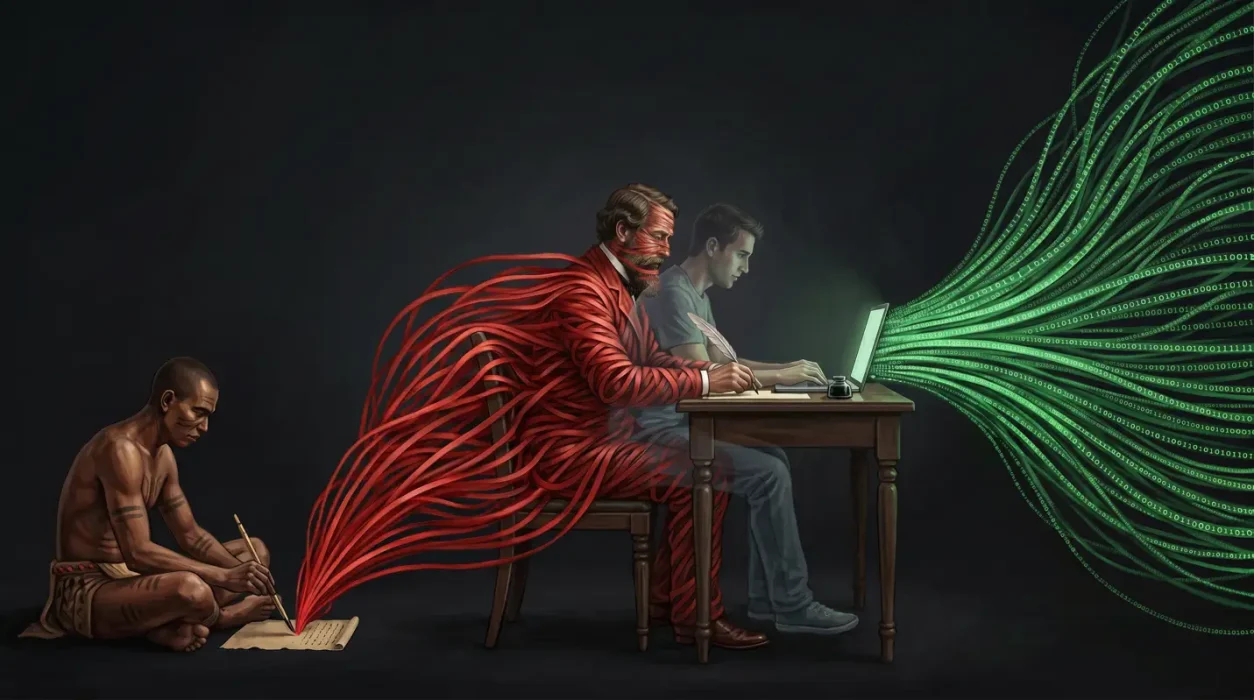
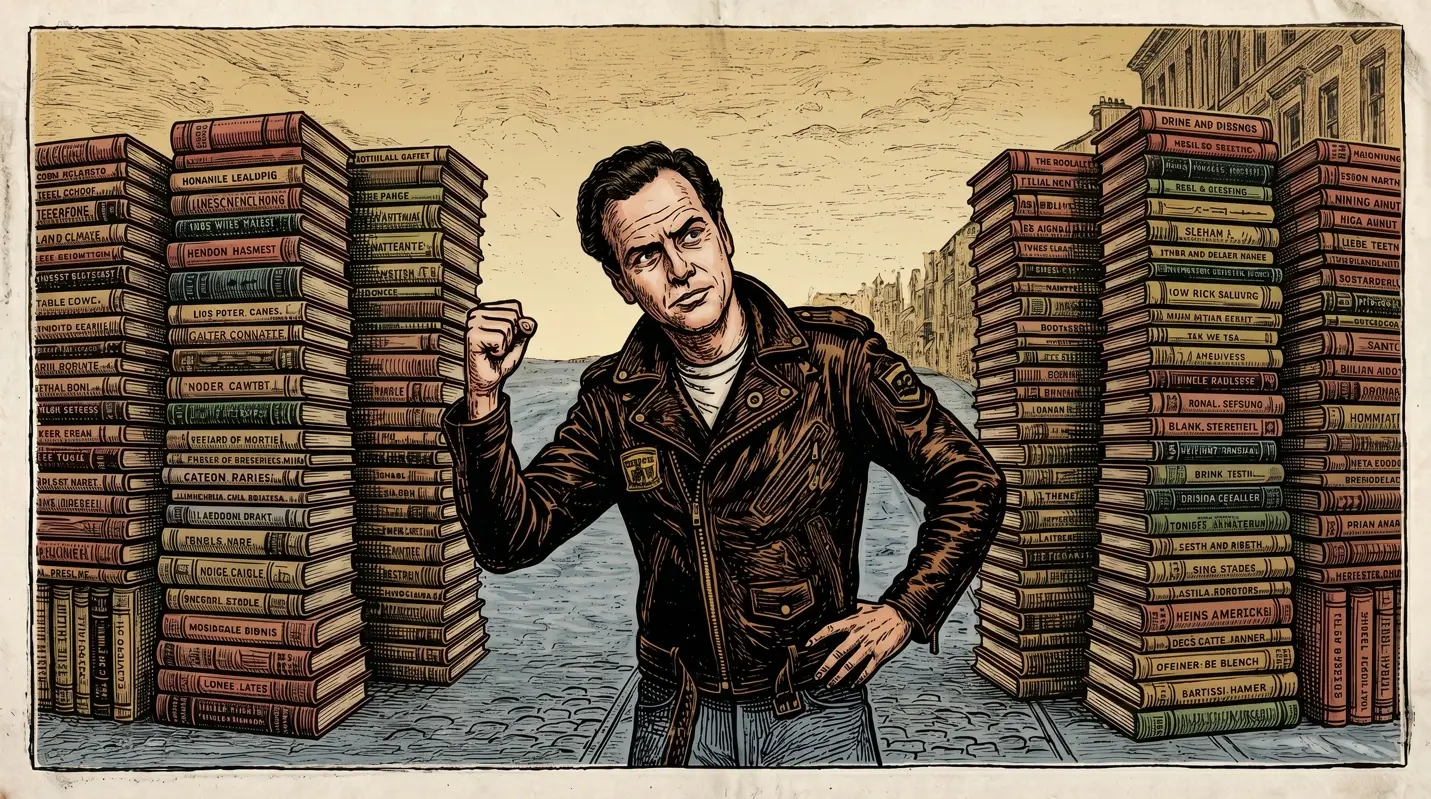

Current methods of type reproduction are themselves not far from the TV process. Xerox has paradoxically revived a great popular interest in all printed books and manuscripts. Ian Willison of the Rare Book Department of the British Museum has noted how the reproduction of rare books has become a considerable commercial business since xerox.
“The Changing Structure of Printing in the Electronic Age” (1974)
Year: 1974
Chapter:
LOM 3 – Retrieve
When notes for briefing individuals or groups are first typed and then Xeroxed, it is as if a private manuscript were put in the hands of the general reader. The typewriter plus photocopying thus, unexpectedly, restores many of the features of confidential hand-written records.
“Do Books Matter?” Proceedings of a seminar promoted by the Working Party on Library and Book Trade Relations and the National Book League; reprinted in Understanding Me (2003), pages179-180 and Essential McLuhan (1997, UK) p 279.
Year: 2003
Xerography—every man’s brain-picker—heralds the times of instant publishing. Anybody can now become both author and publisher. Take any books on any subject and custom-make your own book by simply xeroxing a chapter from this one, a chapter from that one—instant steal!”
Address at Vision 65, (1965), p. 9
Year: 1965
Chapter:
Next Medium [The]
The Pentagon papers were position papers that probably were never read by anyone. Xerox is responsible for the proliferation of large committees and their position papers.
“Watergate – Participatory Torture” (1973), p 3
Year: 1973
Xerox has also created a new form of reading material called the “position paper These are the briefing materials set before members of committees, of which the Pentagon Papers are a notorious instance.
“The Changing Structure of Printing in the Electric Age” (1974)
Year: 1974
But xerography is electricity invading the world of typography, and it means a total revolution in this old sphere, or this old technology, a revolution that is being felt in the classroom itself.
“Our Dawning Electric Age” (1965), p 16
Year: 1965
Position papers are secret or confidential documents for the attention of committees, and any office boy can publish these, no matter how top secret they may be.
“At the Moment of Sputnik” (1974), reprinted in MM: the Man and His Message (1989), p 70
Year: 1974
…xerography is the antithesis of letters and typography. It deals with the page and the book as a single gestalt. With xerography the reader can become once more like the ancient scribe, both author and publisher of anything that intrests him. Xerography ends the central position of the publisher and ends the role of the author as one seeking a vehicle of self-expression, and is about to become a corporate probe of society.
“The Crack in the Rear-View Mirror” (1966), p 32
Year: 1966