Found 21 quotes (7 duplicates hidden).
“School is the advertising agency, which makes you believe you need the society as it is.” -Ivan Illich
Deschooling Society, New York: Harper and Row (1971), p 48
Year: 1971
Chapter:
Advertising
Advertising is substituting for product, because the consumer today gets his satisfaction from the ad, not the product. This is only beginning.
“Television in a New Light” in The Meaning of Commercial Television (1966), p 104
Year: 1966
Chapter:
Advertising
One of them is timeless, and the other is right on the focal point of the sixteenth century metamorphosis via print. First, then, the matter of the proverb, the maxim, the aphorism, as an indispensable mode of oral society.
The Gutenberg Galaxy : The Making of Typographic Man , (1962), p 104
Year: 1962
Chapter:
Aphorism
The implication of this visual approach for the oral aphorism, and for the compendia of sentences, adages, and maxims which had been the medieval staple of learning, was recession.
The Gutenberg Galaxy: The Making of Typographic Man, (1962), p 104
Year: 1962
Chapter:
Aphorism
Nature and history seem to have agreed to designate us in Canada for a corporate, artistic role. As the U.S.A. becomes a world environment through its resources, technology, and enterprises, Canada takes on the function of making that world environment perceptible to those who occupy it. Any environment tends to be imperceptible to its users and occupants except to the degree that counter-environments are created by the artist.
“The Marfleet Lectures” , March 16-17, 1967, reprinted in Understanding Me (2003), p 104
Year: 1967
Chapter:
Canada
It is now possible to include all the assembly line programs of an entire enterprise on a few little "solid state" chips. Along with the flip from hardware sequence speeds, comes the flip from hardware scale to software programming.
“The End of the Work Ethic” (1973), in Essays Media Research Technology, Art, Communication (1997), p 104
Year: 1973
Chapter:
Chiasmus, Flips, Reversals
It is only since the telegraph that information has detached itself from such solid commodities as stone and papyrus, much as money had earlier detached itself from hides, bullion, and metals, and has ended as paper… Our electric extensions of ourselves simply by-pass space and time, and create problems of human involvement and organization for which there is no precedent. We may yet yearn for the simple days of the automobile and the superhighway.
Understanding Media (1964), MIT/Routledge edition, pp 104-105
Year: 1964
Chapter:
Electric, Electronic

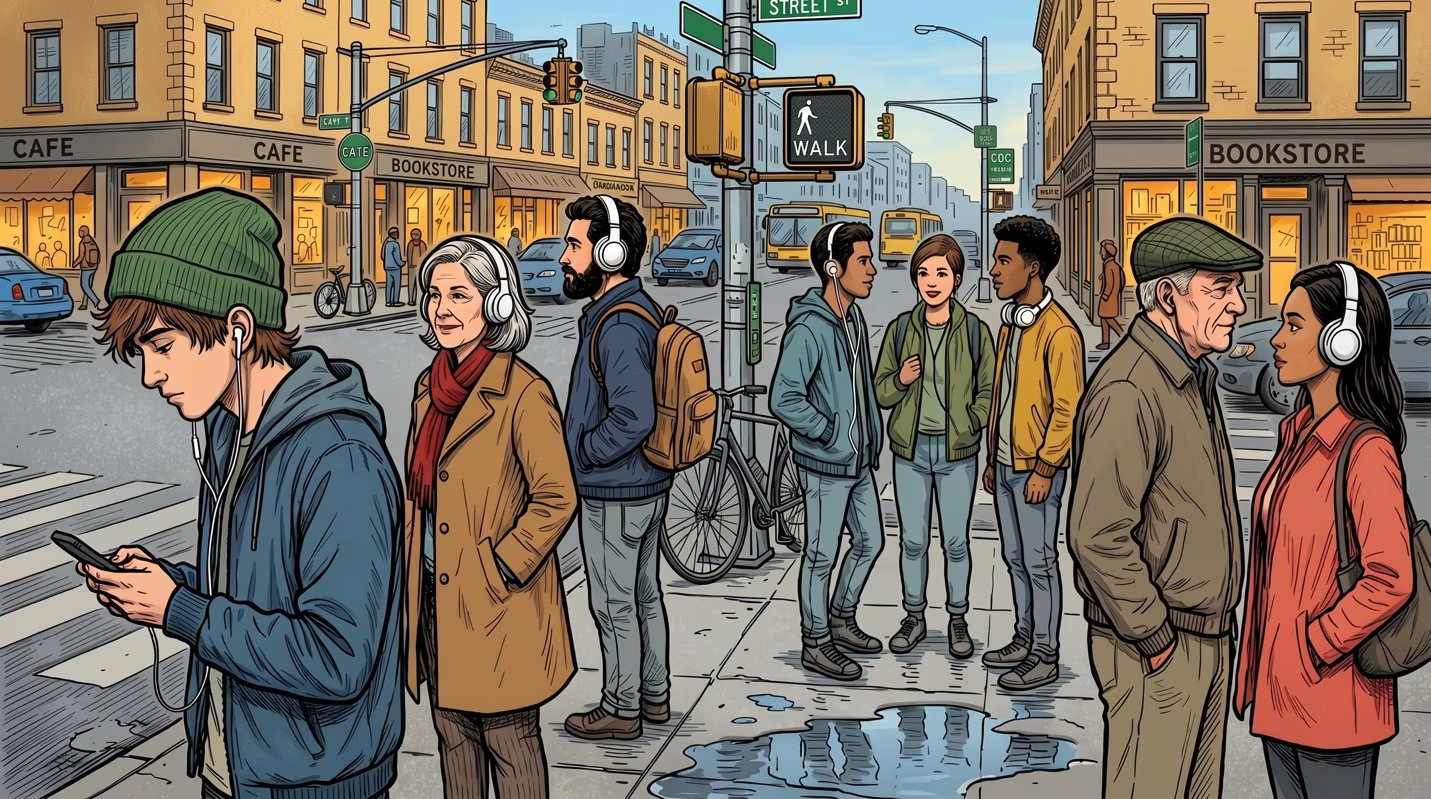
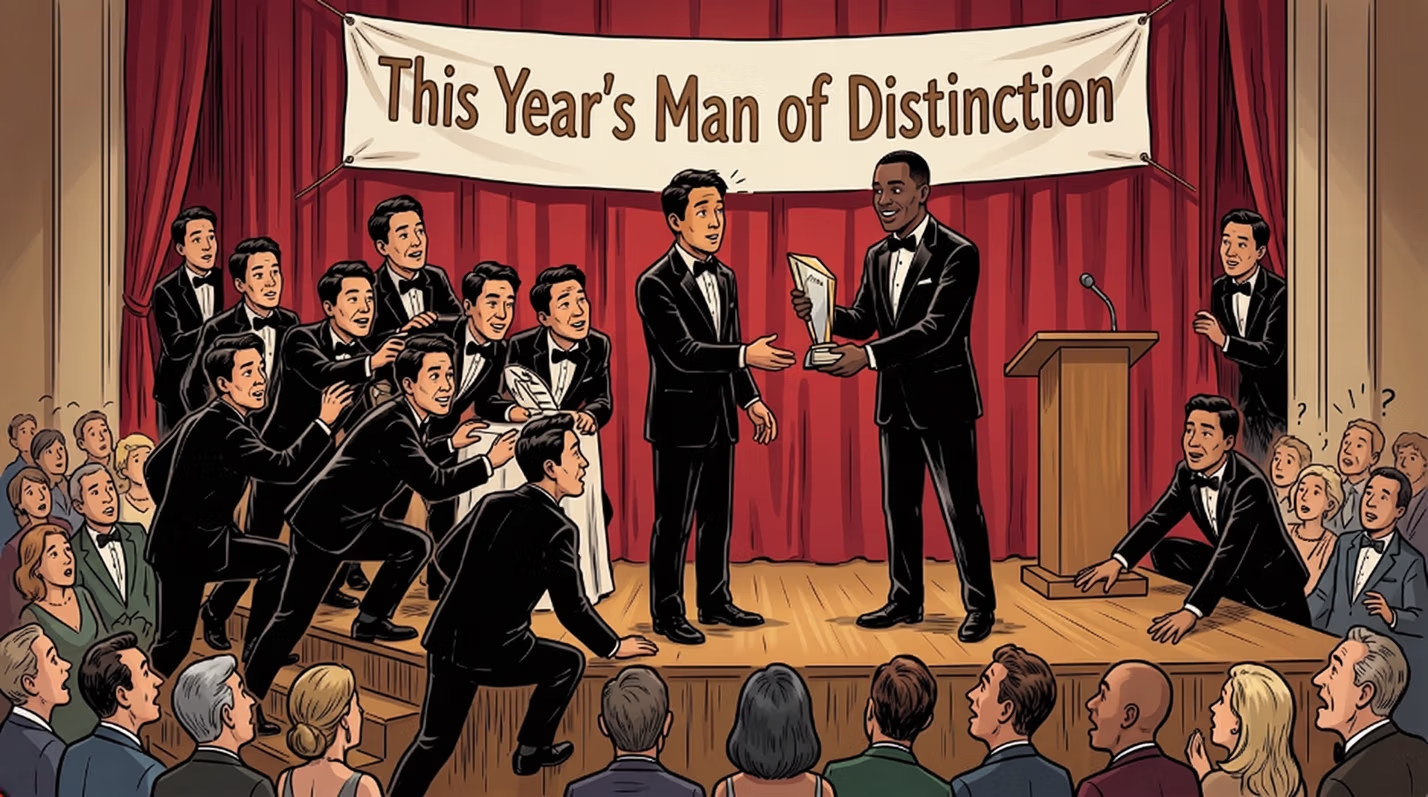
The archetype is retrieved awareness or consciousness. It is consequently a retrieved cliché - an old cliché retrieved by a new cliché. Since a cliché is a unit extension of man, an archetype is a quoted extension, medium, technology, or environment, an old ground seen as figure through a new ground.
Laws of Media: The New Science with Eric McLuhan, (1988), pp 103-104
Year: 1988
Chapters:
Figure/Ground | LOM 3 – Retrieve
↪ Also at #3416
As our original book technology has been succeeded by movie and television we have lost book literacy without acquiring visual literacy. So now the principle of natural selection unexpectedly favors the Chinese and Japanese, for example; their pictorial mode of writing, once a great disadvantage in relation to the abstract culture of print, now favors them in a world of visual communication.
“A Historical Guide to the Media” (1955), p 104
Year: 1955
What the town planners call "the human scale" in discussing ideal urban spaces is equally unrelated to these electric forms. What the town planners call "the human scale" in discussing ideal urban spaces is equally
“Roads and Paper Routes”, in Understanding media, p 104-105
Chapter:
Human Scale
Today the business of business is becoming the constant invention of new business.
Take Today with Barrington Nevitt (1972), p 104
Year: 1972
Chapters:
Management | McLuhanisms & Zingers
↪ Also at #4329
Many of his typical effects resulted from pouring the visual masques and pageants of the court and high-life through the new medium of spoken or orated poetry.
The Effect of the Printed in the 16th Century Book on Language, Explorations 7, 1957, pp 103-104
Year: 1957
Chapter:
Poetry
Print made possible the rapid reading of verse. In speeding up song, print fostered oratorically delivered poetry.
“The Effect of the Printed in the 16th Century Book on Language”, in Explorations 7, 1957, p 104
Year: 1957
Chapter:
Poetry
When Donne and the Metaphysicals took over this new spoken verse for lyric poetry, they took over its heavy visual emphasis.
“The Effect of the Printed in the 16th Century Book on Language”, in Explorations 7, 1957, p 104
Year: 1957
Chapter:
Poetry
Surely, it is not unbelievable that decision-makers are totally out of touch with the world they live in? How could any contemporary person in any age be entrusted with powers carefully developed and monopolized by people from the previous time?
Culture Is Our Business, (1970), p 104
Year: 1970
Chapter:
Rear View Mirror
Print made possible the rapid reading of verse.
“The Effect of the Printed Word in the 16th Century Book on Language”, in Explorations 7, 1957, p 104
Year: 1957
Chapter:
Rear View Mirror
The media can be viewed as artificial extensions of our sensory experience – each medium an externalized species, as it were, of the inner genus sensation.
A Historical Approach to the Media, 1955, p 104
Year: 1955
Chapter:
Senses
In school and business and laboratory alike, the specialist cannot get into action in time to have relevance. The ground changes faster than the figure.
Take Today with Barrington Nevitt (1972), p 104
Year: 1972
Chapter:
Specialism
“When information moves at the speed of signals in the central nervous system, man is confronted with the obsolescence of all earlier forms of acceleration, such as road and rail. What emerges is a total field of inclusive awareness. The old patterns of psychic and social adjustment become irrelevant”
Understanding Media (1964), MIT/Routledge edition, p 104
Year: 1964
Chapters:
LOM 2 - Obsolesce | Speedups
↪ Also at #3382
At present, TV is a service only during a crisis.
Culture Is Our Business, (1970), p 104
Year: 1970
Chapter:
Television
Our new computer world is an extension of our nervous system into a total environment, not just around the planets but around the cosmos. What the muse of the computer will be, heaven knows. But the muses are the human faculties, mental, spiritual, sensory, extended out into the environment. A museum is then, presumably, a collection of all of them into a kind of consciousness.
The Museum as Large-Room Pinball Machine, Marshall McLuhan, Harley Parker, and Museum Professionals, 1967, full transcript of a seminar at the City Museum of New York, October, 1967, edited by William Buxton, published by U. of Alberta Press, 2026, p 104
Year: 1967