Found 23 quotes (10 duplicates hidden).
With more and more products competing for attention, you need a selling medium with dramatic impact - films. And films are ready.
The Mechanical Bride, (1951), p 90
Year: 1951
Chapter:
Advertising
And the complex shuttling of eye, ear and speech factors once engaged in this ballet necessarily reshape the entire communal life, both inner and outer, creating not only the "stream of consciousness" rediscovered by contemporary art, but ensuring multiple impediments to the activities of perception and recall.
“Culture without Literacy”, in Explorations #1, December (1953), p 119 reprinted in Media Research Technology, Art and Communication (1997), p 128
Year: 1953
Chapter:
Anticipating Change
Rhetoric, placed under dialectics by Aristotle...
The Classical Trivium: The Place of Thomas Nashe in the Learning of His Time, 1943, published by Gingko in 2006, p 119
Year: 1943
Chapter:
Aristotle
Art makes the corporate and communal accessible to the individual, whose task it is to assimilate the tradition, to modify it in relation to the new situations that are continuously forming.
The Marfleet Lectures” , March 16-17 (1967), reprinted in Understanding Me (2003), p 119
Year: 1967
Chapters:
Art, Artists | Individual
↪ Also at #2918
Until Newton the Senecans had dominated the literary scene from Montaigne to Pascal and from Donne to Pope. Their preoccupation was with the literary techniques for arresting and projecting some phase of the human mind: to arrest in order to project, and to project in order to contemplate. Like the inventors of cinema at the beginning of this century they hit upon the technique of stylistic discontinuity as a means of arresting a moment of consciousness. The movie camera takes a thousand still shots in order to capture the aspects of a brief moment. The style coupé and the “cutting period” attempted something comparable in the essay and the poem. But to have carried this art further than Pope was probably impossible. At any rate the advent of Newton’s Optics diverted artistic effort from poetic statement to the use of external landscape as a means of projecting and controlling states of mind under the guidance of two major concepts. The first of these derived from the study of the visual harmonics of the spectrum which led to a revival of the classic images of the harps of Aeolus and Memnon. If the surfaces of matter were varied prisms for revealing the qualities of light, then the entire visible and audible world could be conceived as a species of visual music. The second concept is related to the first. For, if the external world is attuned to the mind of man then the whole of Nature is a language and the poet is a pontifex or bridge between the two worlds.
“Coleridge as Artist” (1954), in The Interior Landscape (1969), pp 119-120
Year: 1954
Chapters:
Between Two Ages | Coleridge | From Tribal to Literate | Hardware / Software | Poetry | Today’s Transition
[With the printed book…] There were no more stuttering pilgrimages through the crabbed columns of manuscript abbreviations. But it was a long time before people got to be at home with print. And by that time the newspaper page layout had begun to disturb the precarious equilibrium of 18the century book culture. The format of the 19th century newspaper page was like a dozen book pages set on a single sheet. The telegraph made this format the instantaneous global cross-section of a single day. This was no longer the book. Nor could the book stand up to this new cultural form botn out of technology. The book tried to swallow this rival: Joyce in Ulysses, Eliot in The Waste Land – non-narrative epics which incorporate the newspaper art form.
Counterblast (1969), p 119
Year: 1969
Chapter:
Book
Canadians are all a very humble bunch. They take it for granted that everything they do must be second rate.
Quoted in Philip Marchand, Marshall McLuhan: The Medium and the Messenger (1989), p 119
Year: 1989
Chapter:
Canada
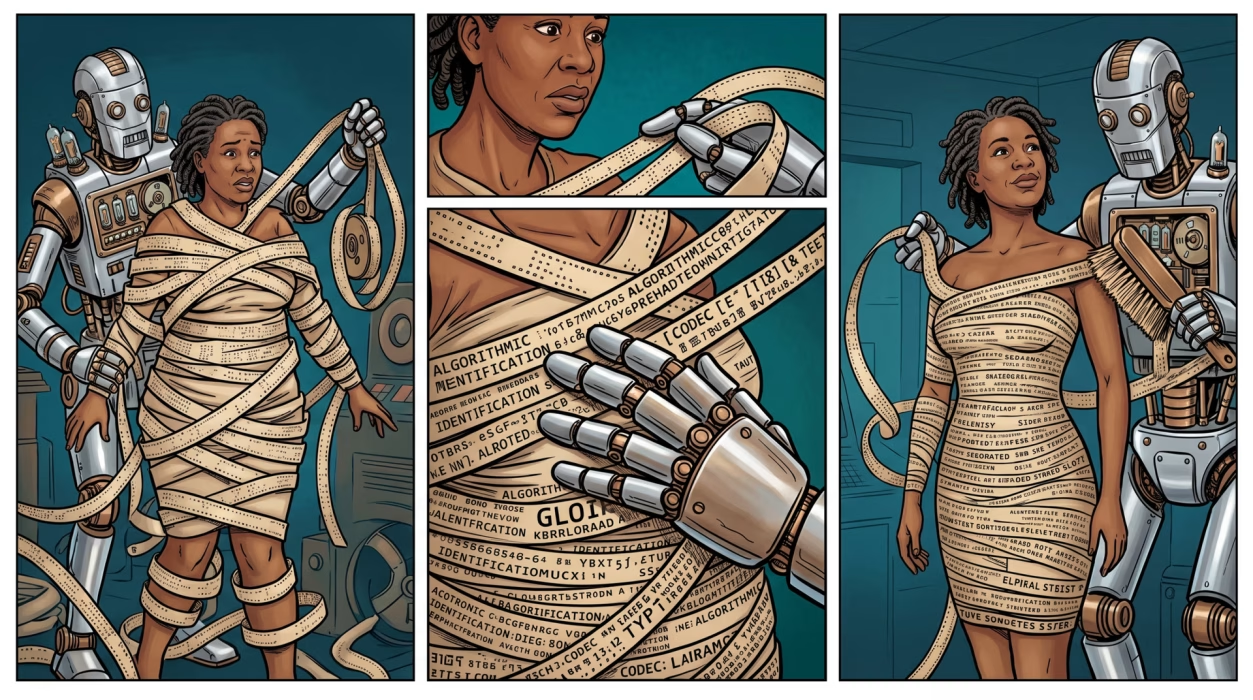

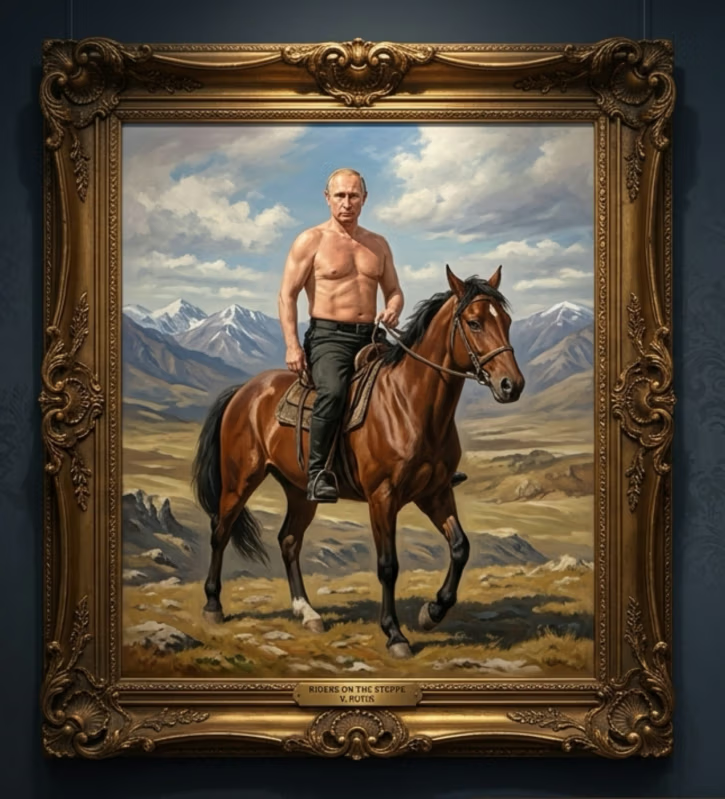
Economists have estimated that an unclad society eats 40 percent more than one in Western attire. Clothing as an extension of our skin helps to store and to channel energy, so that if the Westerner needs less food, he may also demand more sex.
Understanding Media, 1964, MIT/Routledge edition, p 119
Year: 1964
Chapter:
Clothing and Nakedness
Clothing, as an extension of the skin, can be seen both as a heat-control mechanism and as a means of defining the self socially. I n these respects, clothing and housing are near twins , though clothing is both nearer and elder; for housing extends the inner heat-control mechanisms of our organism, while clothing is a more direct extension of the outer surface of the body. Today Europeans have begun to dress for the eye, American-style, just at the moment when Americans have begun to abandon their traditional visual style. The media analyst knows why these opposite styles
suddenly transfer their locations.
Understanding Media, 1964, MIT/Routledge edition, pp 119-120
Year: 1964
Chapter:
Clothing and Nakedness
[George] Steiner is also acutely aware of the enhancement (cognition) and retrieval (re-cognition, re-making) aspects of language and suggests that it was the discovery of the retrieval function that enabled speakers to flip language out of content and into technology…
Laws of Media: The New Science with Eric McLuhan, (1988), p 119
Year: 1988
Chapter:
Cognition and Recognition
…computers will demonstrate that [mankind] can afford nothing short of the best, which is to make spaceship earth a successful environment for man.. . . Our greatest problem is the educational problem of getting man to realize in time what his problems are, and what the most effective priorities may be.
Take Today with Barrington Nevitt, 1972, pp 118-119
Year: 1972
Chapter:
Computer
Education must always concentrate its resources at the major point of information intake, we merely have to ask, from what sources do growing minds nowadays acquire most factual data? How much critical awareness is conferred at these points?
Counterblast (1969), p 119
Year: 1969
Chapter:
Education
You cannot tell what it is until you have seen it do things to the old one.
“The Invisible Environment: The Future of an Erosion”, Perspecta, Vol.11, (1967), p 166, reprinted in On the Nature of Media, (2016), p 119
Year: 1967
You have to perceive the consequences of the new environment on the old environment before you know what the new environment is. You cannot tell what it is until you have seen it do things to the old one. The need, however, to understand the processes and changes brought about by the new technology gets stronger as the technology does.
“The Invisible Environment: The Future of an Erosion”, Perspecta, Vol.11, (1967), p 166, reprinted in On the Nature of Media, (2016), p 119
Year: 1967
Chapter:
Environment
Coaxial cable has been obsolesced. Open wireless transmission, being truly acoustic, is a group voice.
The Global Village with Bruce Powers (1989), p 119
Year: 1989
Chapter:
LOM 2 - Obsolesce
Canadians are all a very humble bunch. They take it for granted that everything they do must be second rate. [In publishing Explorations] Carpenter and I just blithely assumed that, since nearly everything in the world is second rate at best, there was no reason why we couldn’t do something that was first rate right here.
Quoted in Philip Marchand, Marshall McLuhan The Medium and the Messenger: a Biography (1989), p 119
Year: 1989
Chapter:
McLuhan on McLuhan
The bias of each medium of communication is far more distorting than the deliberate lie.
“A Historical Approach to the Media”, in Teachers College Record, Vol.57, Issue 2, Nov (1955) ,p 110. Reprinted in Counterblast,(1970), p 119
Year: 1955
You cannot tell what it [any innovation and the environment it creates] is until you have seen it do things to the old one.
“The Invisible Environment: The Future of an Erosion”, Perspecta, Vol.11, (1967), p 166, reprinted in On the Nature of Media, (2016), p 119
Year: 1967
Chapter:
Media Study
You have to perceive the consequences of the new environment on the old environment before you know what the new environment is.
“The Invisible Environment: The Future of an Erosion”, Perspecta, Vol.11, (1967), p 166, reprinted in On the Nature of Media, (2016), p 119
Year: 1967
Chapter:
Media Study
But it's an interesting sidelight or insight to say that the tradition of church music really was a kind of corporate, communal art shared by all, and that bound the community together.
“The Marfleet Lectures”, March 16-17 (1967), reprinted in Understanding Me (2003), p 119
Year: 1967
Chapter:
Music
“Everything we do is music”
John Cage
Quoted in The Medium is the Massage (1967), p 119
Year: 1967
Chapter:
Music
And with writing comes the break in that direct, intuitive relationship between men and their surroundings which modern art had begun to uncover.
“Culture without Literacy”, in Explorations #1, December (1953), p 119 reprinted in Essential McLuhan, (1995), p 304, additional reprint in Media Research Technology, Art and Communication (1997), p 128, and McLuhan Unbound #6, (2017)
Year: 1953
Chapter:
Writing
So far as writing is the spatializing and arrest of oral speech. however, it implies that further command of space made possible by the written message and its attendant road system.
“Culture without Literacy”, in Explorations #1, December (1953), p 119 reprinted in Essential McLuhan, (1995), p 304, additional reprint in Media Research Technology, Art and Communication (1997), p 128 , and McLuhan Unbound #6, (2017)
Year: 1953
Chapter:
Writing