Found 14 quotes (8 duplicates hidden).
In the same way, the American south has a variety of traditional English dialects and an overriding rhythm that is corporate and oral.
Liturgy And Media” in The Critic Vol.31, No. 3, January-February (1973), p 18, reprinted in The Medium and the Light: Reflections on Religion (1999), p 122
Year: 1973
Chapter:
America, North America
As the information that constitutes the environment is perpetually in flux, so the need is not for fixed concepts but rather the ancient skill of reading that book, for navigating through an ever uncharted and unchartable milieu.
Laws of Media: The New Science with Eric McLuhan, (1988), p 239
Year: 1988
Chapter:
Anticipating Change
TV, as the very image of the new corporate and participant ways of electric living, fosters habits of unified awareness and social interdependence that alienate us from the peculiar style of baseball, with its specialist and positional stress.
Understanding Media (1964), MIT/Routledge edition, p 239
Year: 1964
Chapter:
Corporate
The futurists, the cubists, the Vorticists and others accepted the mechanical as an art form. Today, Pop Art, derived from the old environment of advertising technology, appears as an art form.
“New Media and the Arts”, 1966, p 239
Year: 1966
The goal of science and the arts and of education for the next generation must be to decipher not the genetic but the perceptual code. In a global information environment, the old pattern of education in answer-finding is of no avail: one is surrounded by answers, millions of them, moving and mutating at electric speed. Survival and control will depend on the ability to probe and to question in the proper way and place.
Laws of Media: The New Science with Eric McLuhan, (1988), p 239
Year: 1988
Chapter:
Education
The history of the arts and sciences could be written in terms of the continuing process by which new technologies create new environments for old technologies.
“New Media and the Arts” (1964), p 239
Year: 1964
Already the Freudian patterns of perception have
become an outworn code that begins to provide the cathartic
amusement of a game, rather than a guide to living.
Understanding Media, 1964 (MIT/Routledge edition), p 239
Year: 1964
Chapters:
Freud, Sigmund | Perception
↪ Also at #5331
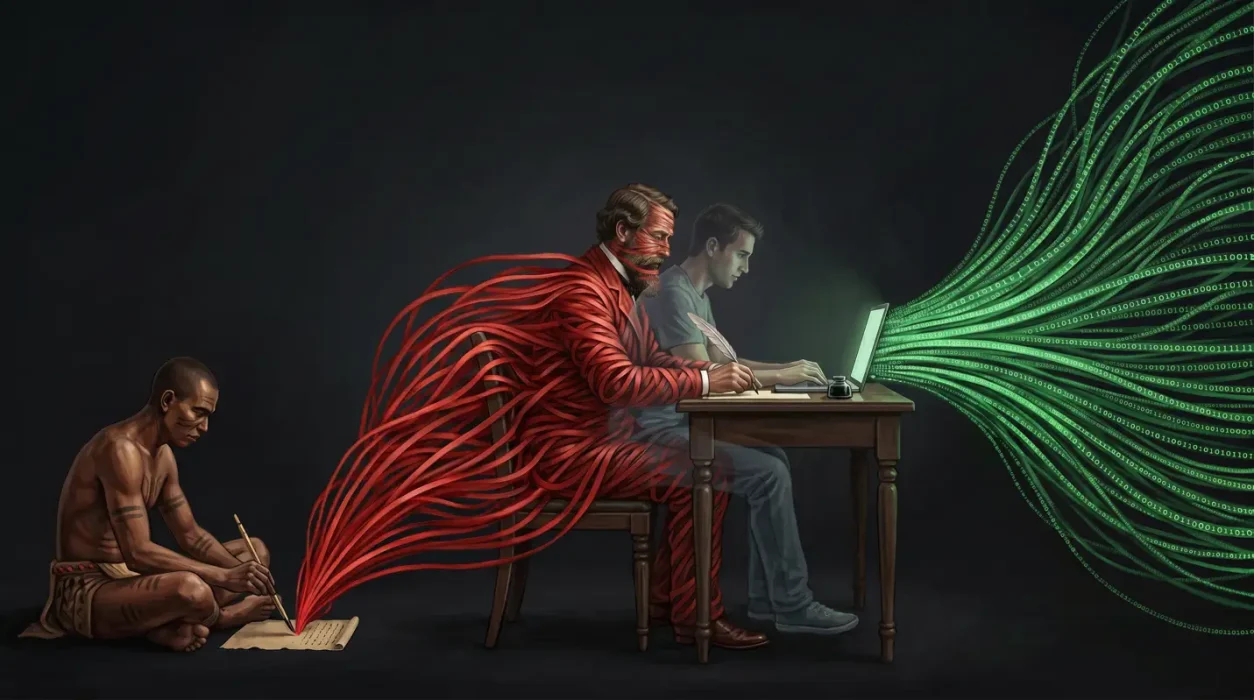

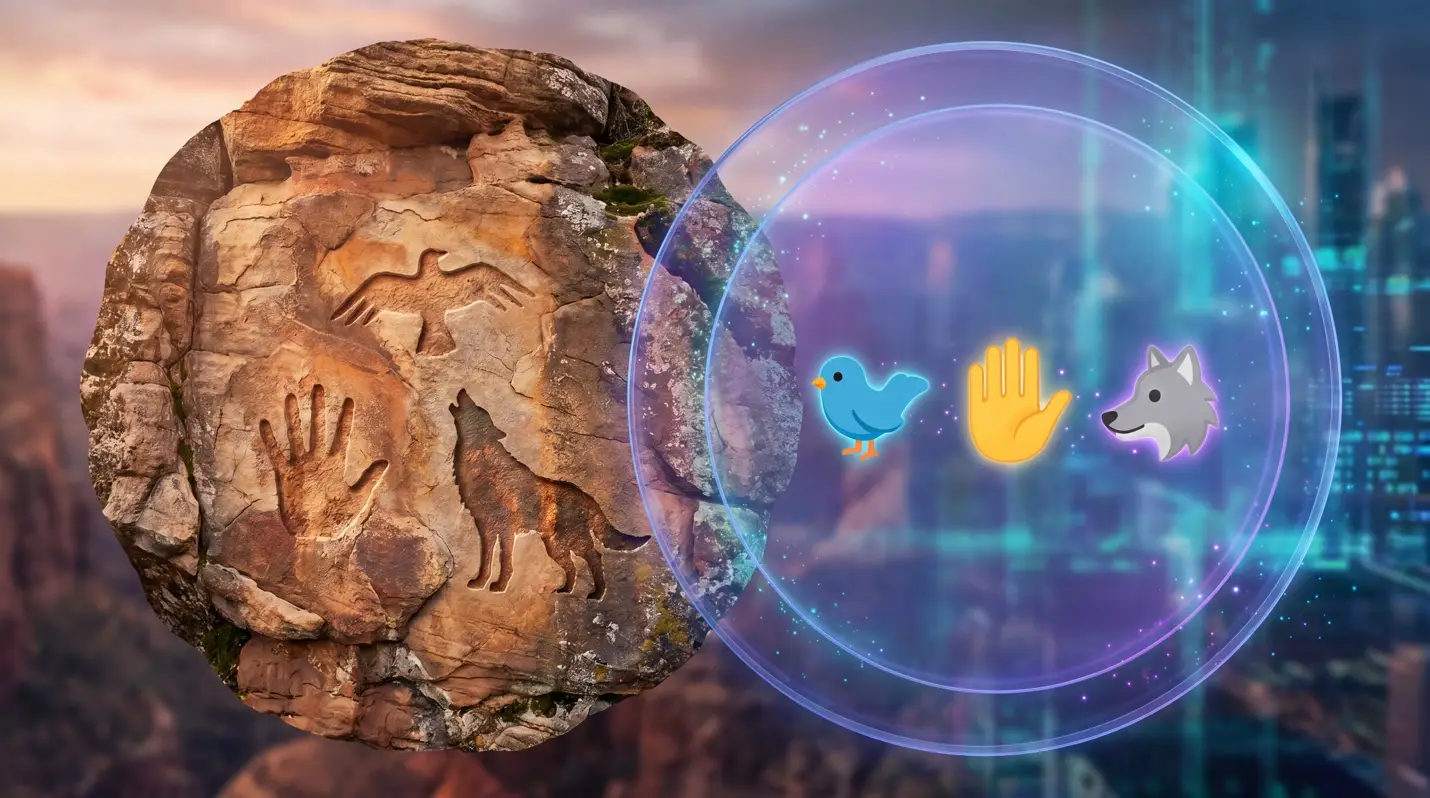

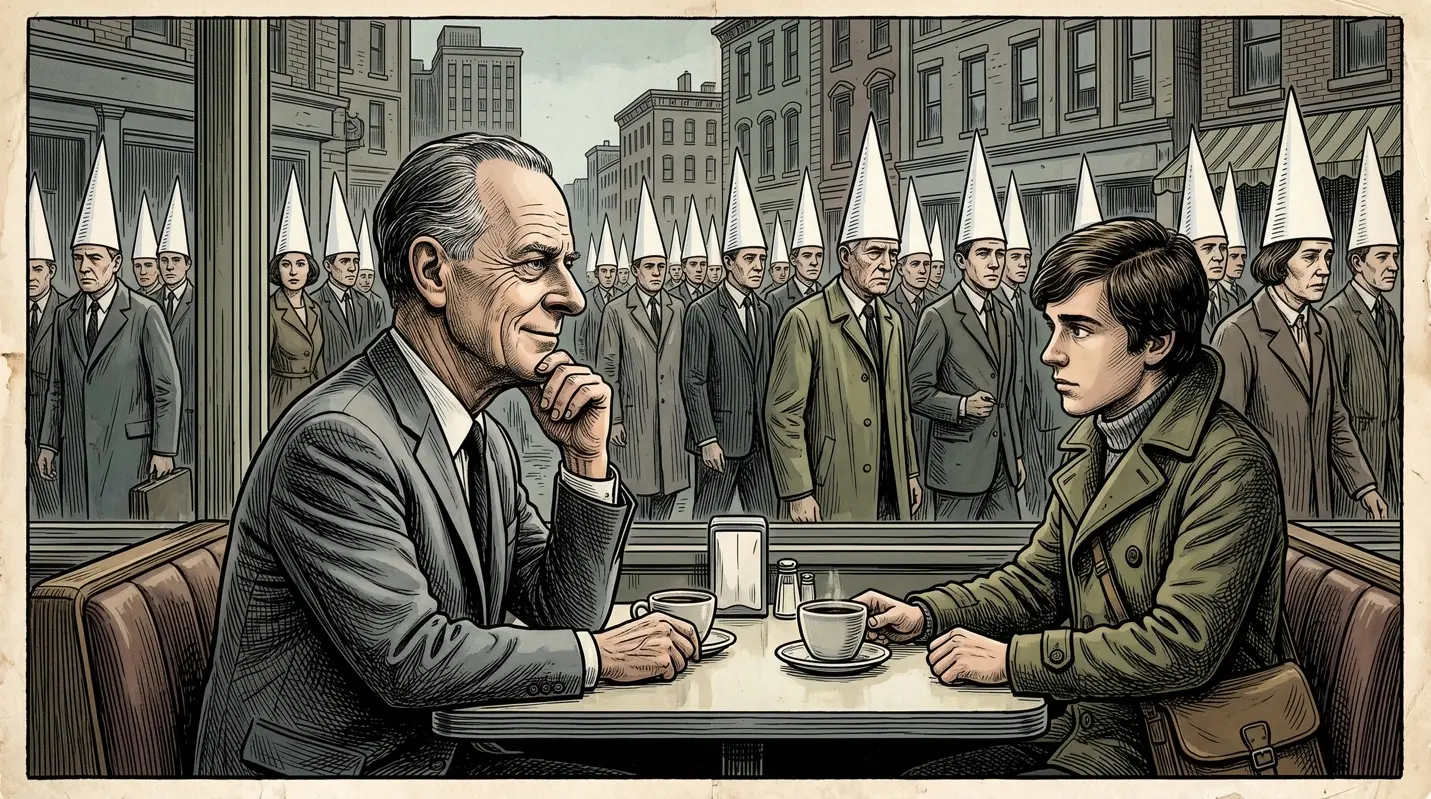

Before the invention of the phonetic alphabet, man lived in a world where all the senses were balanced and simultaneous, a closed world of tribal depth and resonance, an oral culture structured by a dominant auditory sense of life. The ear, as opposed to the cool and neutral eye, is sensitive, hyperaesthetic and all-inclusive, and contributes to the seamless web of tribal kinship and interdependence in which all members of the group existed in harmony. The primary medium of communication was speech, and thus no man knew appreciably more or less than any other--which meant that there was little individualism and specialization, the hallmarks of "civilized" Western man. Tribal cultures even today simply cannot comprehend the concept of the individual or of the separate and independent citizen. Oral cultures act and react simultaneously, whereas the capacity to act without reacting, without involvement, is the special gift of "detached" literate man. Another basic characteristic distinguishing tribal man from his literate successors is that he lived in a world of acoustic space, which gave him a radically different concept of time-space relationships.
“Playboy Interview: Marshall McLuhan: A Candid Conversation with the High Priest of Popcult and Metaphysician of Media”. By Eric Norden. Playboy Magazine, March (1969), p 56,59, reprinted in Essential McLuhan (1995), p 239-240
Year: 1969
Chapter:
From Tribal to Literate
There is no part of the world in which we do not participate, whether we know it or not. And there is no part of us which is not equally invaded by everything in the world.
Take Today with Barrington Nevitt (1972), p 239
Year: 1972
Chapter:
Global Village
When cultures change, so do games. Baseball, that had become the elegant abstract image of an industrial society living by split-second timing, has in the new TV decade lost its psychic and social relevance for our new way of life. The ball game has been dislodged from the social center and been conveyed to the periphery of American life.
Understanding Media (1964), MIT/Routledge edition, p 239
Year: 1964
Chapter:
Linear and Nonlinear
“In 1973 he devoted himself primarily to two such projects. One was a book that he referred to as a ‘twentieth-century Baedeker,’ a kind of tour guide to the major scientific and artistic achievements of the century. In a ‘structural analysis’ of these achievements, the structure of artistic breakthroughs would be closely related to the structure of the scientific breakthroughs…”
Philip Marchand
MM: the Medium and the Messenger (1989), p 239
Year: 1989
Chapters:
Living Unity | Uncompleted and “Dream” Projects
↪ Also at #7180
“McLuhan signed a contract for his ‘Baedeker’ in 1971 with Doubleday, for what he called a ‘handsome advance.’ He intended to do a series of thousand-word essays on the various achievements he inventoried. These quickly transformed, in his mind, into one-hundred-word ‘groupings,’ highly aphoristic, that emphasized two basic themes.” [Accentuating the interweave of fresh modes of perception emerging from artists and scientists]
Philip Marchand
MM: the Medium and the Messenger (1989), p 239
Year: 1989
Chapter:
Living Unity
Today, in the electronic age of instantaneous communication, I believe that our survival, and at the very least our comfort and happiness, is predicated on understanding the nature of our new environment because unlike previous environmental changes, the electric media constitute a total and near-instantaneous transformation of culture, values and attitudes. This upheaval generates great pain and identity loss, which can be ameliorated only through a conscious awareness of its dynamics. If we understand the revolutionary transformations caused by new media, we can anticipate and control them; but if we continue in our self-induced subliminal trance, we will be their slaves.
Playboy Interview: Marshall McLuhan: A Candid Conversation with the High Priest of Popcult and Metaphysician of Media.” By Eric Norden. Playboy Magazine, March (1969), p 56, reprinted in Essential McLuhan (1995), p 238-239
Year: 1969
Chapters:
Mastering Technology | Warnings
↪ Also at #7420
[t]he environmental is also the unnoticeable... Nature had been environmental for a good while before it became the content of the new industrial environment of the 18th and 19th centuries.
“The New Media and the Arts”, 1964, p 239
Year: 1964
Chapter:
Media Effects