Found 23 quotes (21 duplicates hidden).
I'm suggesting that the very components that make for a divided consciousness also can, with a certain encouragement, become the means of an inclusive consciousness such as Bacon took for granted in his own case.
“The Marfleet Lectures” , March 16-17 (1967), reprinted in Understanding Me (2003), p 125
Year: 1967
Chapters:
Acoustic Space | Consciousness
↪ Also at #1308
Advertising can be regarded as a profoundly important art form, but it is not private self-expression.
“Television in a New Light,” in The Meaning of Commercial Television (1966), p 97
Year: 1966
Chapter:
Advertising
By the time of the power press in the early 19th century, the newspapers were rapidly changing the character of politics by creating public opinion. In a new country like America the new medium of the press created the first instance of a state founded on public opinion. English political forms, predating the press, still depend much less on public opinion, as do those of Canada.
Counterblast, (1969), 125
Year: 1969
When enclosed, or translated into visual space, architecture tends to lose its tactile kinetic pressure. A square is the enclosure of a visual space; that is, it consists of space properties abstracted from manifest tensions. A triangle follows lines of force, this being the most economical way of anchoring a vertical object. A square moves beyond such kinetic pressures to enclose visual space relations, while depending upon diagonal anchors. This separation of the visual from direct tactile and kinetic pressure, and its translation into new dwelling spaces, occurs only when men have learned to practice specialization of their senses, and fragmentation of their work skills. The square room or house speaks the language of the sedentary specialist, while the round hut or igloo, like the conical wigwam, tells of the integral nomadic ways of food-gathering communities.
Understanding Media, MIT/Routledge edition, (1964), p 125
Year: 1964
Chapter:
Architecture
[New media] can be entrusted only to new artists.
“The Agenbite of Outwit”, In Location Magazine, Vol. 1, No. 1, (1963), reprinted in Marshall McLuhan Essays Media Research : Technology Art Communication, (1997), p 125
Year: 1963
Chapters:
Art, Artists | McLuhanisms & Zingers
↪ Also at #4056
The man who has something to say is the man who has mastered some segment of public awareness. He is capable of lighting up some dim, fusty corner of embryonic social consciousness.
“New Media as Political Forms”, in Explorations 3, 1954, p 125
Year: 1954
Chapter:
Corporate Consciousness
Our electronic world now calls for a unified global field of awareness; the kind of private consciousness appropriate to literate man can be viewed as an unbearable kink in the collective consciousness demanded by electronic information movement.
“The Agenbite of Outwit”, In Location Magazine, Vol.1, No.1, (1963), reprinted in Marshall McLuhan Essays Media Research: Technology Art Communication, (1997), p 125
Year: 1963
Chapter:
Corporate Consciousness
↪ Also at #1421
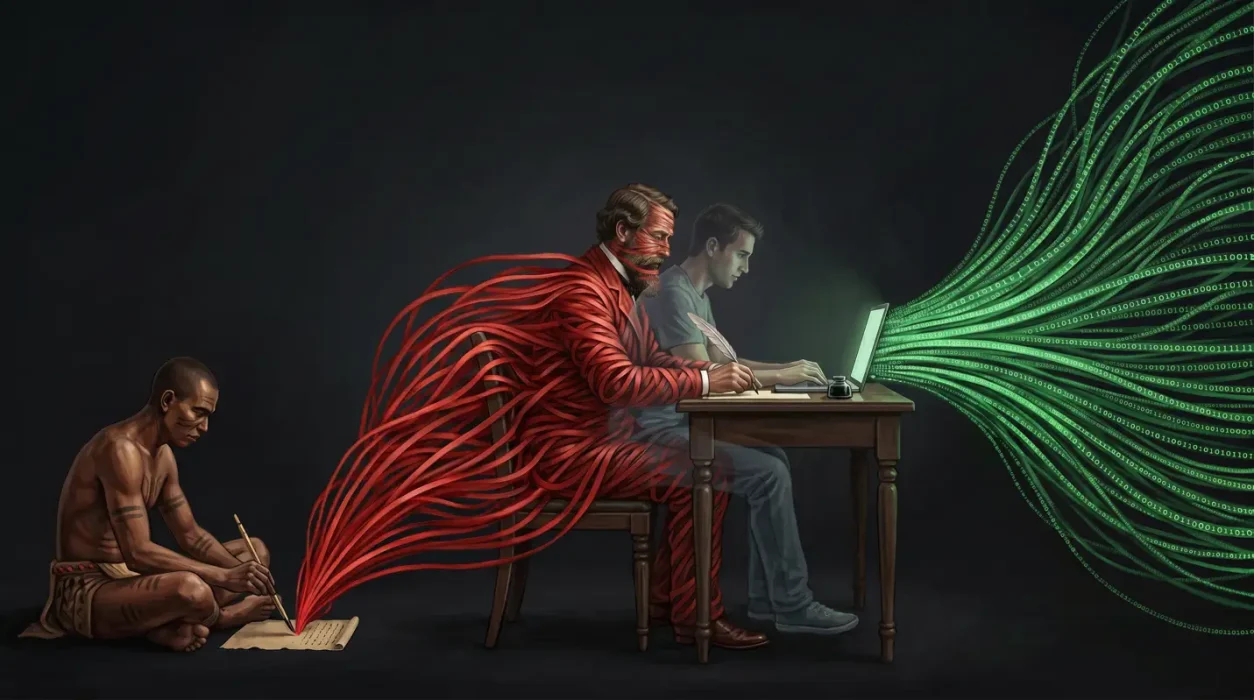

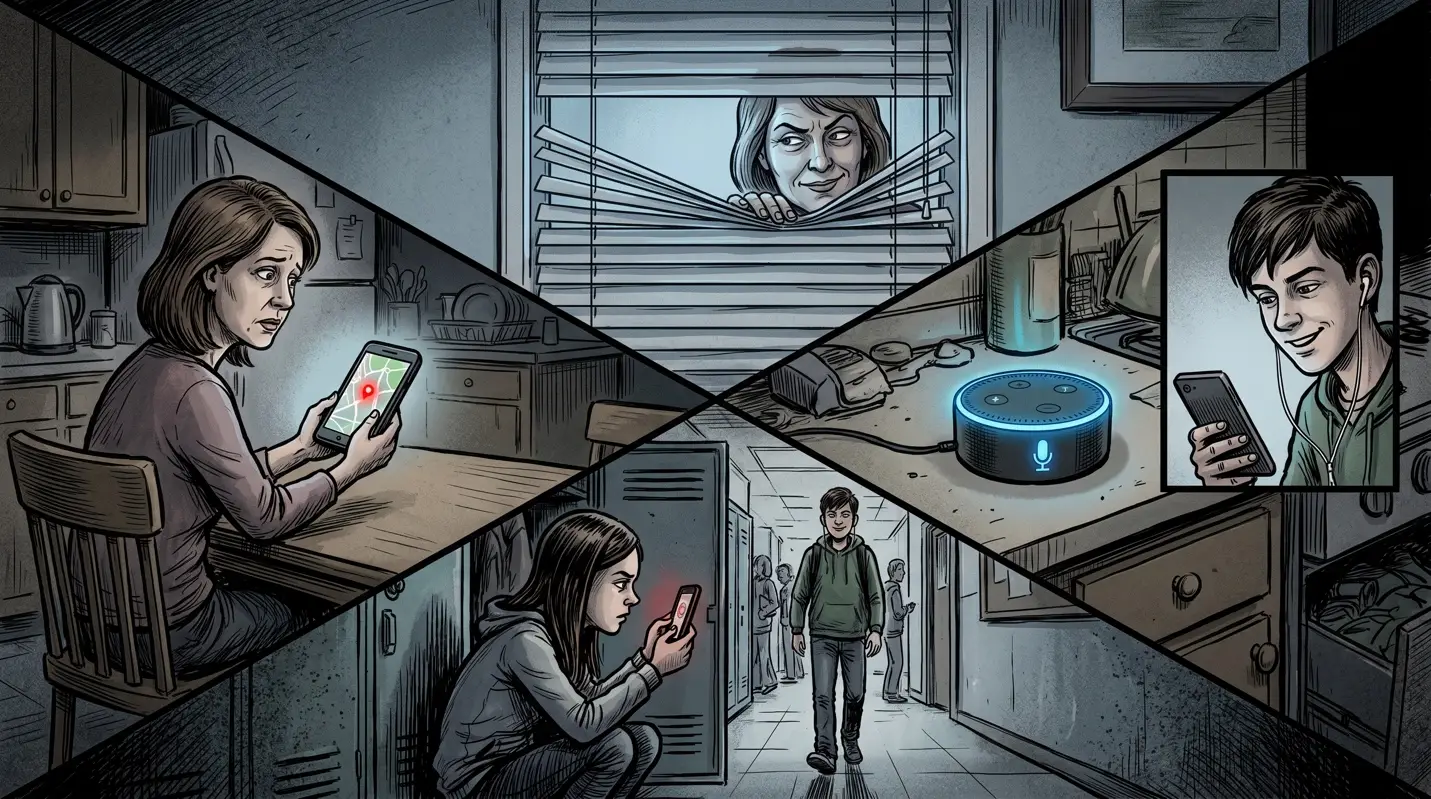

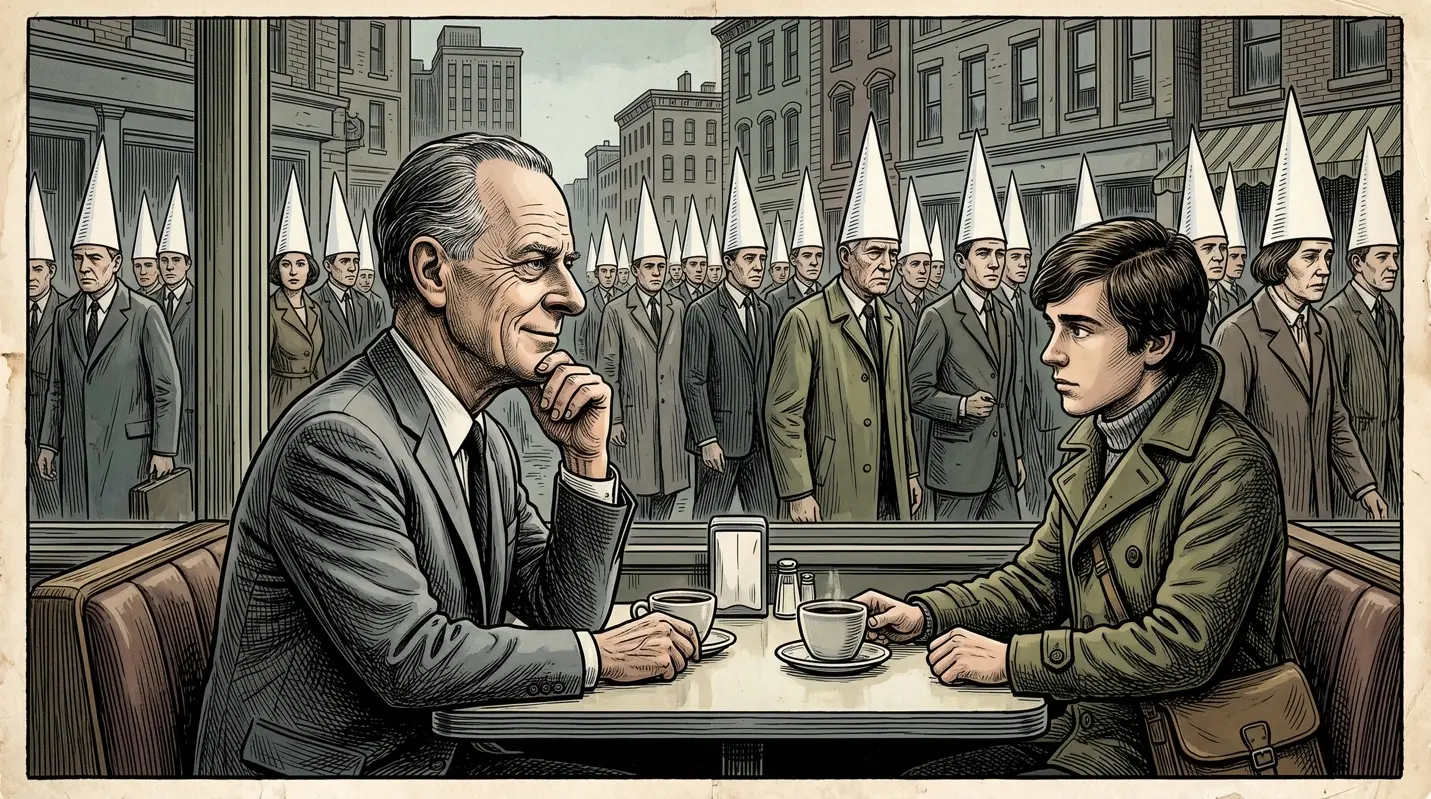
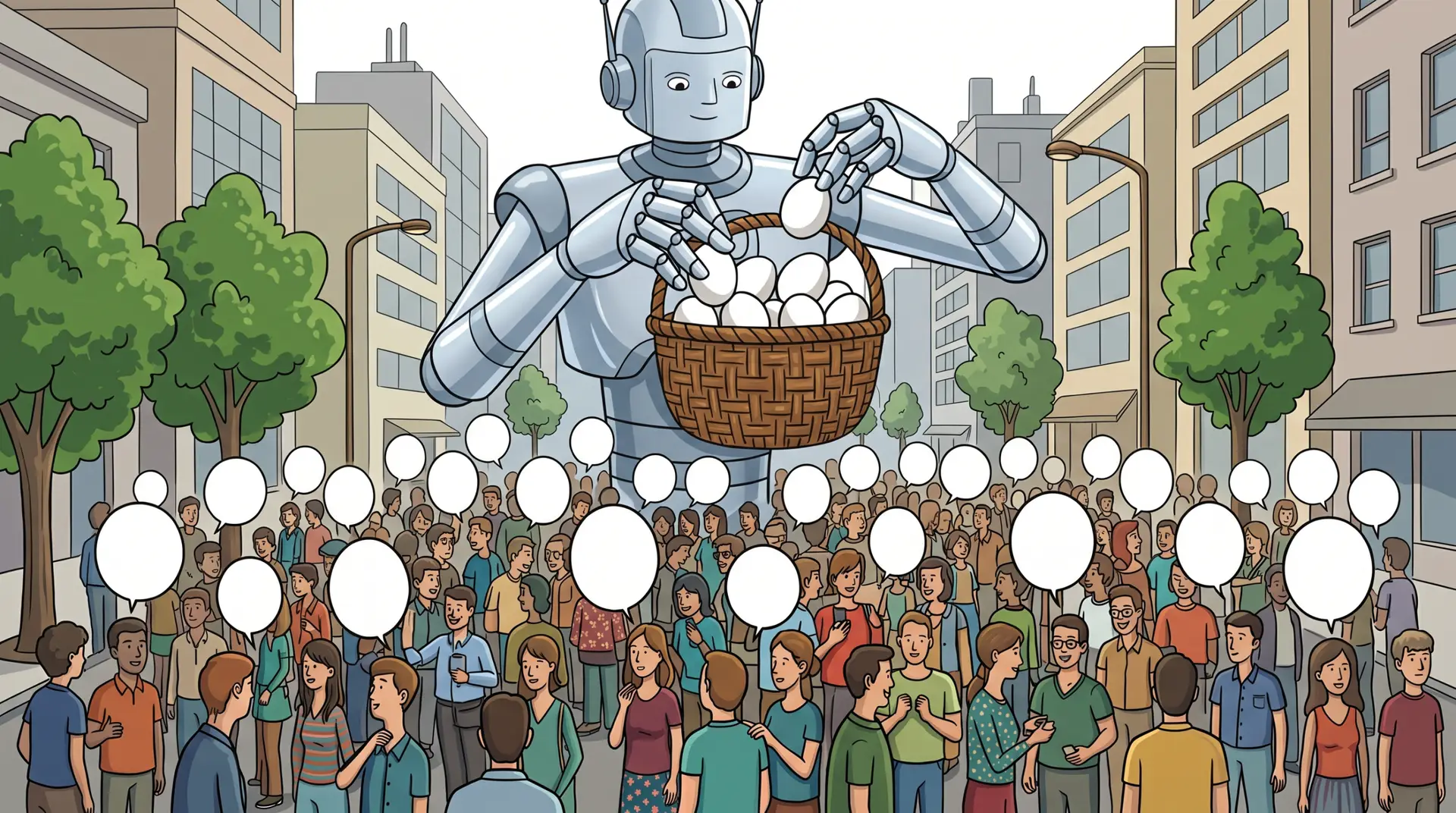
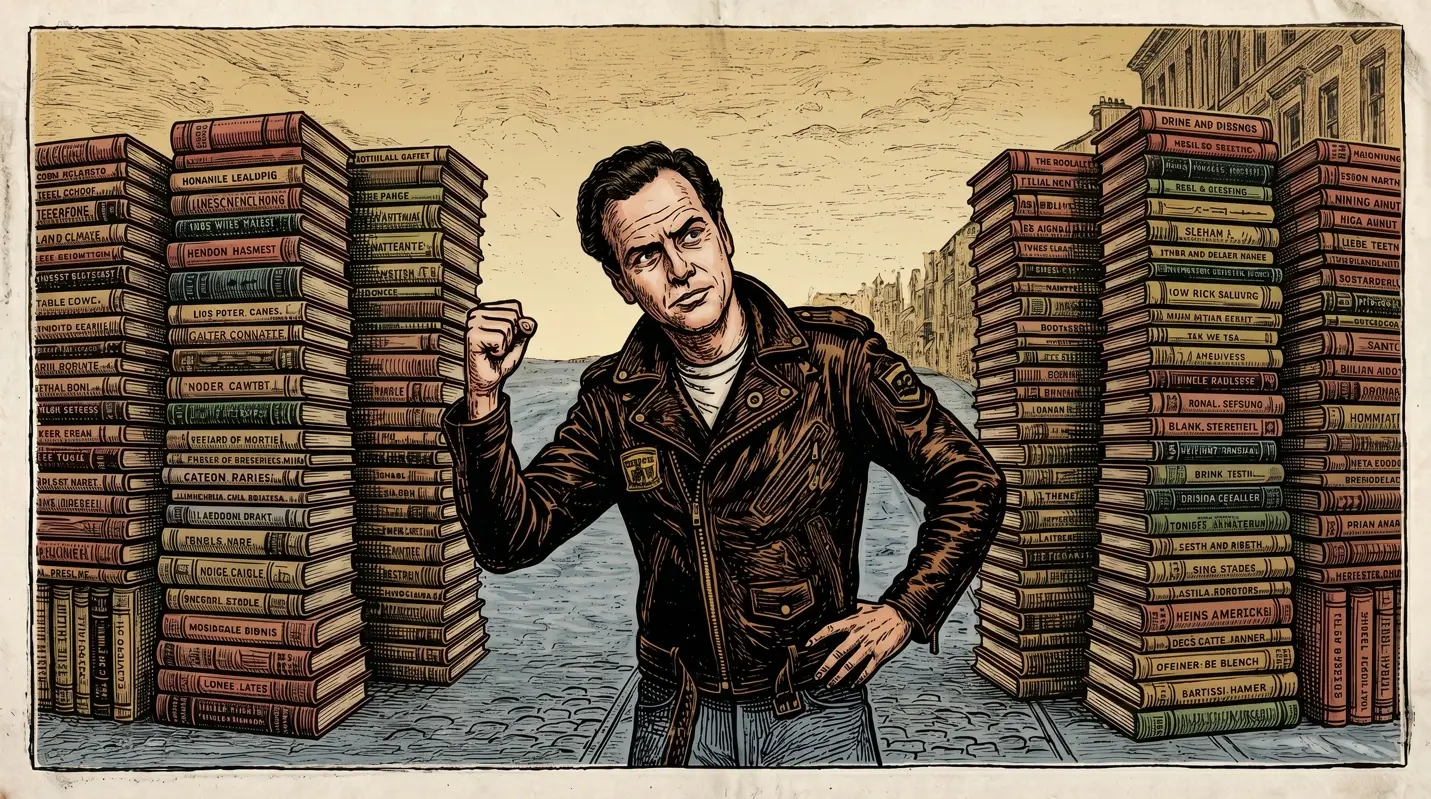

The ways of thinking implanted by electronic culture are very different from those fostered by print culture. Since the Renaissance most methods and procedures have strongly tended towards stress on the visual organization and application of knowledge. Our electronic world now calls for a unified global field of awareness; the kind of private consciousness appropriate to literate man can be viewed as an unbearable kink in the collective consciousness demanded by electronic information movement.
“The Agenbite of Outwit”, In Location Magazine, Vol.1, No.1, (1963), p 123; reprinted in Marshall McLuhan Essays Media Research: Technology Art Communication, (1997), p 125
Year: 1963
Man in the future will not work—automation will work for him—but he may be totally involved as a painter is, or as a thinker is, or as a poet is. Man works when he is partially involved. When he is totally involved he is at play or at leisure.
““The Agenbite of Outwit”, In Location Magazine, Vol. 1, No. 1, (1963), reprinted in Marshall McLuhan Essays Media Research: Technology Art Communication, (1997), p 125
Year: 1963
In this passage he [William Ivins, Prints and Visual Communication] not only notes the ingraining of lineal, sequential habits, but, even more important, points out the visual homogenizing of experience in print culture, and the relegation of auditory and other sensuous complexity to the background. The reduction of experience to a single sense, the visual, as a result of typography leads him to speculate that “the more closely we confine our data for reasoning about things to data that come to us through one and the same sense channel the more apt we are to be correct in our reasoning.” (p. 54)
The Gutenberg Galaxy, 1962, p 125
Year: 1962
Chapter:
Visual Space
Perhaps the effect [of media] is for the media to substitute for reality just in the degree to which they become virtuousos of realistic detail.
Counterblast (1969), p 125
Year: 1969
↪ Also at #4462
Man in the electronic age has no possible environment except the globe and no possible occupation except information-gathering. By simply moving information and brushing information against information, any medium whatever creates vast wealth. The richest corporation in the world, American Telephone and Telegraph, has only one function: moving information about. Simply by talking to one another, we create wealth. Any child watching a television program should be paid because he is creating wealth for the community. But this wealth is not money. Money is obsolete because it stores work (and work, as we have seen, is itself obsolete). In a work-less, non-specialist society money is useless. What you need is a credit card, which is information.
“The Agenbite of Outwit”, In Location Magazine, Vol. 1, No. 1, (1963), p 121, reprinted in Marshall McLuhan Essays Media Research: Technology Art Communication, (1997), p 125
Year: 1963
Chapter:
Information
Man in the electronic age has no possible environment except the globe and no possible occupation except information-gathering.
“The Agenbite of Outwit”, In Location Magazine, Vol. 1, No. 1, (1963), p 121, reprinted in Marshall McLuhan Essays Media Research: Technology Art Communication, (1997), p 125
Year: 1963
Chapter:
Information Overload
Money is obsolete because it stores work (and work, as we have seen, is itself obsolete). In a work-less, non-specialist society money is useless. What you need is a credit card, which is information.
“The Agenbite of Outwit”, In Location Magazine, Vol. 1, No. 1, (1963), p 121, reprinted in Marshall McLuhan Essays Media Research: Technology Art Communication, (1997), p 125
Year: 1963
Chapters:
LOM 2 - Obsolesce | Money
↪ Also at #4756
Reality-testing can no longer follow the linear, factual recital or statistical pattern. There is far too much reality for that. We are obliged to deal with reality in constellations and clusters or not at all.
“New Media as Political Forms”, in Explorations 3, 1954, p 125-126
Year: 1954
Chapter:
Linear and Nonlinear
Father Hopkins, the English poet, may have been trying to substitute syllabic for prosodic stress in English poetry, just as Frank Lloyd Wright seems to have substituted American space for European space in architecture.
Liturgy And Media” in The Critic, Vol.31, No. 3, January-February (1973), p 20, reprinted in The Medium and the Light: Reflections on Religion (1999), p 125-126
Year: 1973
The giant djinns of oriental fancy are pygmy-like in size and power compared even with the superhuman dimensions conferred by our own daily press and weekly magazines on nobody in particular. But even more, movie and TV have the almost uncontrollable power of inflating the most casually selected persons into million horse-powered entities.
“New Media as Political Forms,” in Explorations 3, 1954, p 125
Year: 1954
Chapter:
Media Effects
[Money is a corporate image, depending on society for its institutional status.
Understanding Media (1964), MIT/Routledge edition, p 125
Year: 1964
Chapter:
Money
Reading the history of the newspaper retrospectively we can see that it was not a mere extension of the art form of the book page. As used by Rimbaud, Mallarmé and Joyce the newspaper page is a revolution in itself, juxtaposing many book pages on a single sheet. And the news page was, moreover, more nearly a mass medium not only in reaching more people than the book, but in being more instantaneous in its coverage and communication. Once linked to the telegraph, the press achieved the speed of light, as radio and TV have done since then. Total global coverage in space, instantaneity in time. Those are the two basic characters that I can detect in a mechanical mass medium. There are other characteristics derivative from these, namely anonymity of those originating the messages or forms, and anonymity in the recipients. But in respect of this anonymity it is necessary to regard not only words and metaphors as mass media but buildings and cities as well.
“Culture without Literacy”, in Explorations #1, December (1953), p 125 reprinted in Essential McLuhan, (1995), p 310, additional reprint in Media Research Technology, Art and Communication (1997), p 135. and McLuhan Unbound #6, (2017)
Year: 1953
Chapter:
News
So that, if the book page could imitate visual perspective as in Renaissance painting, setting facts and concepts in proportions that reproduced the optical image of the three-dimensional object-world, the uninhibited world of the press and modern advertising abandoned such realistic proprieties in favor of weighting news and commercial objects by every dynamic and structural device of size and colour bringing words and pictures back into a plastic and meaningful connection.
“Culture without Literacy”, in Explorations #1, December (1953), p 125 reprinted in Essential McLuhan, (1995), p 310, additional reprint in Media Research Technology, Art and Communication (1997), p 135. and McLuhan Unbound #6, (2017)
Year: 1953
Chapter:
News
The reader of the newspaper accepts the newspaper not so much as a highly artificial image having some correspondence to reality as he tends to accept it as reality itself.
Counterblast (1969), p 125
Year: 1969
Chapter:
News
↪ Also at #5078
It was the funeral of President Kennedy that most strongly proved the power of television to invest an occasion with the character of corporate participation”
The Gutenberg Galaxy: The Making of Typographic Man , (1962), p 125
Year: 1962
Chapters:
Participation | Television
Man in the electronic age has no possible environment except the globe and no possible occupation except information-gathering.
“The Agenbite of Outwit”, In Location Magazine, Vol. 1, No. 1, (1963), p 121, reprinted in Marshall McLuhan Essays Media Research: Technology Art Communication, (1997), p 125
In the age of the information hunter, feed-back yields to feedforward, the point of view becomes the probe. Problems become discoveries.
Culture Is Our Business, (1970), p 80
Year: 1970
Chapter:
Hunters of Information